Difficulty: Summiteer (Level 3)
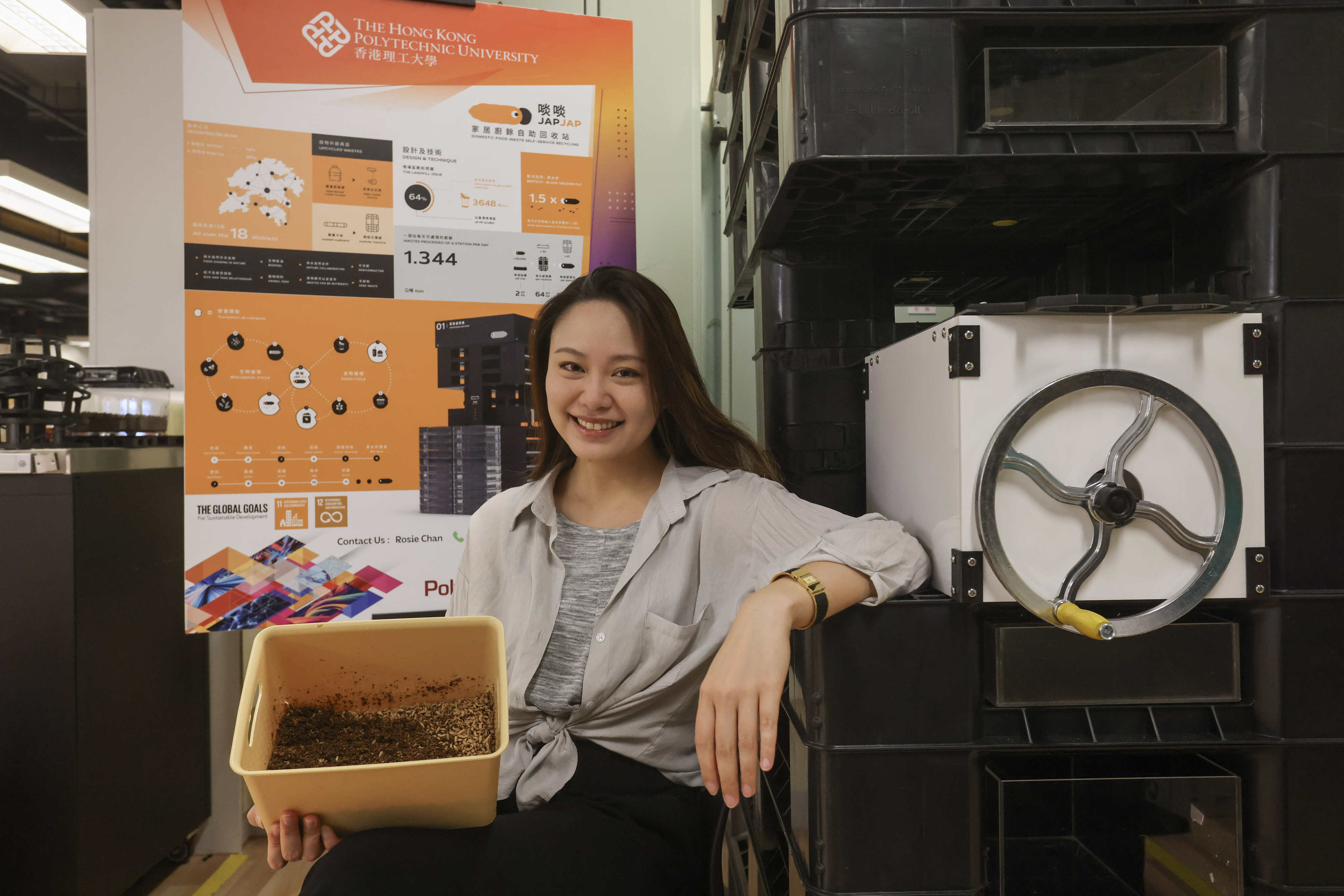
As a student at the Hong Kong Polytechnic University (PolyU), Rosie Chan visited Wan Chai market for her final project. There, she noticed how people threw away piles of food and wooden pallets.
The observation inspired an idea that would eventually become a social enterprise.
Last year, Chan started Japjap, an enterprise aimed at finding better ways to handle food waste.
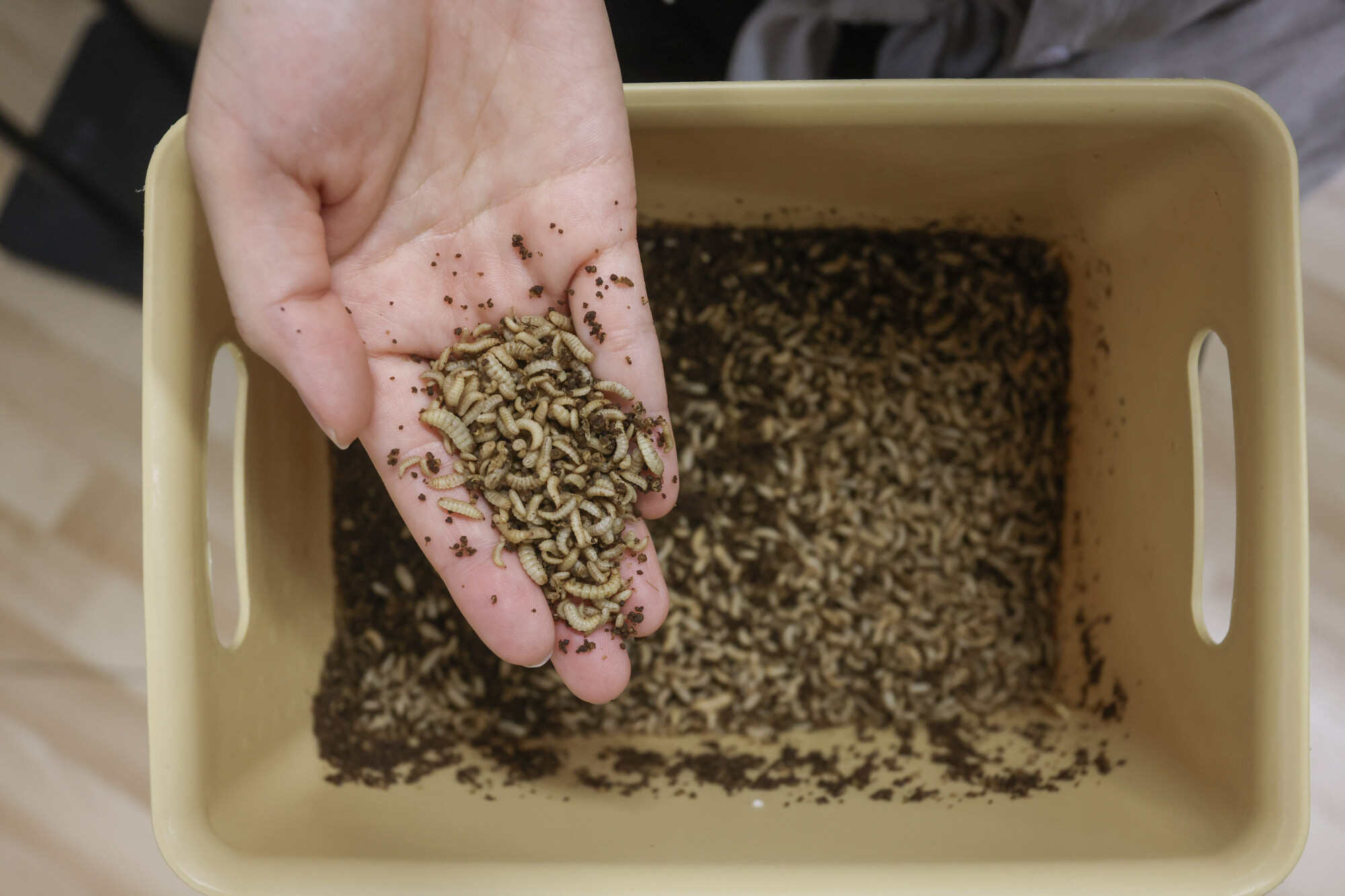
Her system uses black soldier fly larvae to turn food waste into a fertiliser. The flies can also be made into compost, oil or animal food. This process is already being used in places like Britain and Singapore.
Make good from bad
Chan’s system uses upcycled pallets to hold the black soldier flies.
“We want to move away from ... waste processing methods that generate pollutants and greenhouse gases,” she said, referring to Hong Kong’s landfills.
“By processing food waste with insects, we turn it into useful products, returning nutrients from leftovers back into the soil.”
One of Japjap’s biggest problems is people’s fear of black soldier flies.
“But why? They don’t have teeth. They don’t bite, and they’re cleaner than you think,” Chan said. “That’s why education is so important, especially starting with children.”
The first steps
In 2023, Japjap’s first recycling station opened at Yan Chai Hospital Lan Chi Pat Memorial Secondary School. Chan hopes to expand it to more places soon. At the school in Tseung Kwan O, Chan shows pupils how to handle their food waste before feeding it to the black soldier fly larvae. She also leads these science workshops in other schools.
“The first activity is usually to observe and interact with insects. Once kids have touched them, they’re no longer afraid,” she said. “Some are curious – they’ll catch, observe and want to learn about the bugs. Even those who are initially scared often become more comfortable after seeing their friends interact with them.”
Chan also leads farm visits for people of all ages to teach them about organic farming. They pick fruits or vegetables, make food and feed insects with the leftovers.
“This sparks curiosity and questions – like whether insects can eat certain items or even if they themselves can eat insects,” Chan said.
Use the puzzle below to test your knowledge of the vocabulary words in the story.
Quiz time
Stop and think: Japjap aims to reduce food waste. To do this, Chan created a system where black soldier fly larvae makes fertiliser from food scraps.
Think about it: Japjap’s first recycling station opened at a secondary school, and Chan leads science workshops at other schools. They teach children with hands-on learning. Kids can interact with the insects and ask questions about the bugs and the process.
Consider: Chan said that people tend to be afraid of the black soldier flies, which are an integral part of the process. However, Chan responded by saying the flies are harmless; they don’t have teeth, they don’t bite, and they are fairly clean.