Difficulty: Challenger (Level 2)
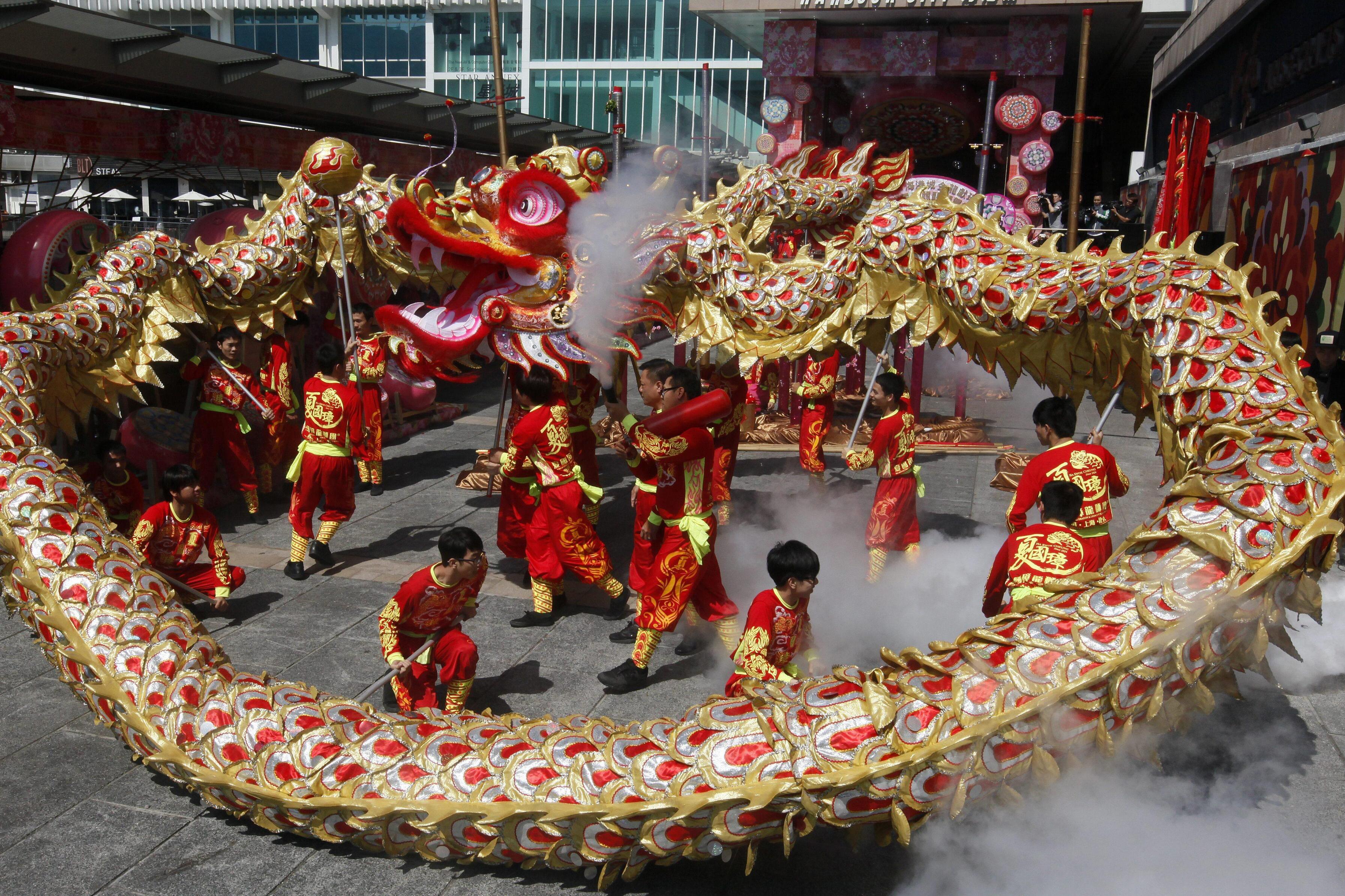
The dragon dance is a traditional performance and ceremony in China. It is usually performed during the Lunar New Year and the Mid-Autumn Festival, symbolising success in the future. It is believed to bring good luck and prosperity, and it wards off evil spirits.
History of dragon dance
The origins of the dragon dance can be traced back to the Han dynasty (206BC - AD220). People performed the dragon dance to pray for rain, especially during dry seasons.
This is because they believed that the mythical creature could control water and rain. The dance is also a way to worship ancestors and pray against insect attacks.
In the Tang dynasty (618 - 907) and Song dynasty (960 - 1279), dragon dancing became a common part of celebrations.
What does it symbolise?
In a dragon dance, the colours have a special meaning. Green symbolises a good harvest for farmers. Gold or silver stands for wealth and good luck. Red represents good fortune.
Performing the dragon dance requires teamwork. It takes 10 to 20 people to move a medium-sized dragon. It is believed that a longer dragon brings more luck. For bigger dragons, you might need hundreds of people.
The dragon has three parts: the head, body and tail. The dragon puppet is usually made with an odd number of parts, as odd numbers are considered auspicious.
Before the performance, the head and tail are attached to the body. During the performance, a person controls the dragon’s movements by holding a rod with a ball at the end, guiding it left and right, back and forth, and up and down. The dragon follows the ball’s movements and looks like it is dancing.
Tai Hang fire dragon dance
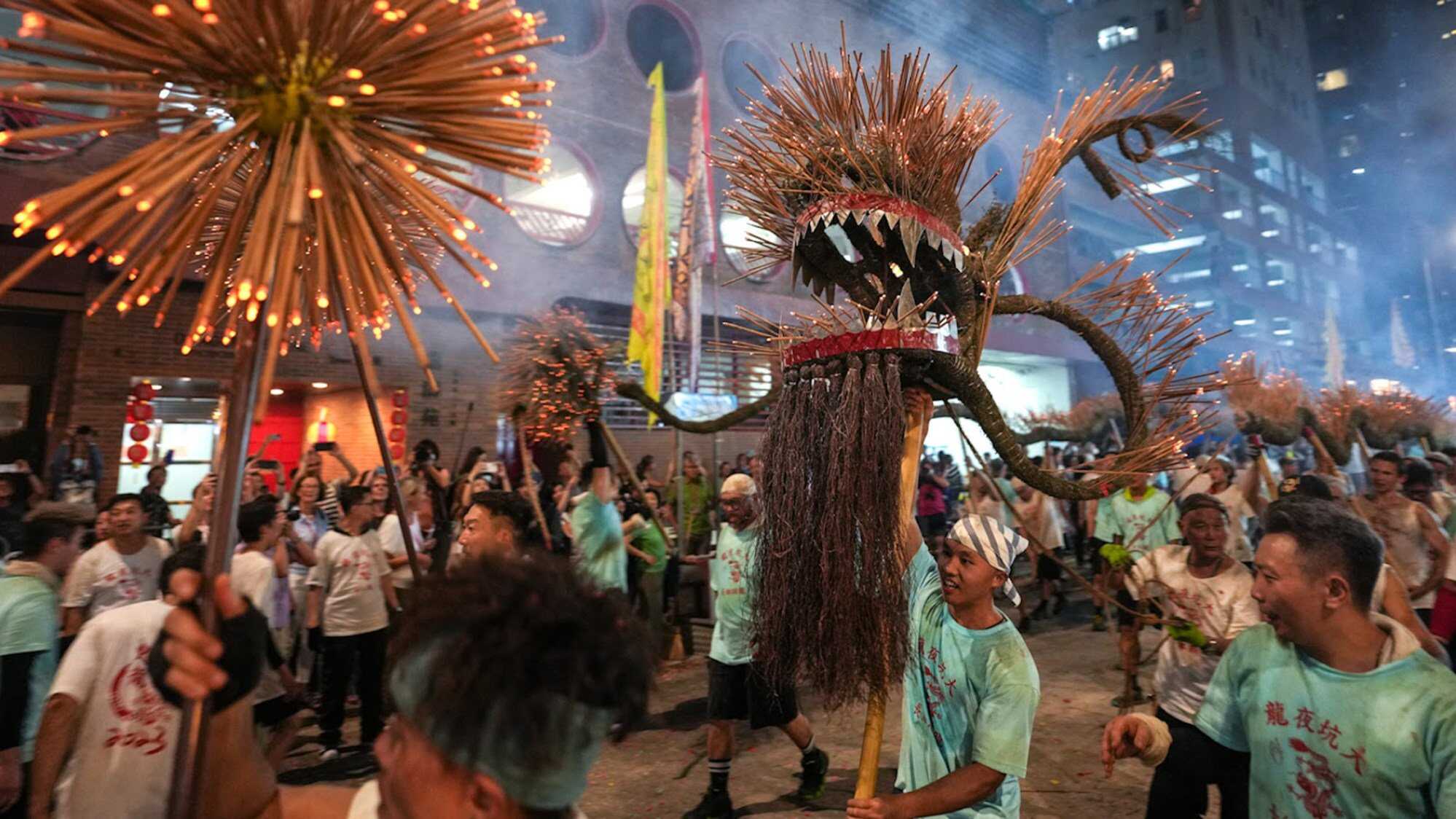
In addition to the typical dragon dance seen during Lunar New Year, Hong Kong has a famous Tai Hang Fire Dragon Dance.
It is a tradition that draws thousands of spectators every Mid-Autumn Festival.
The Tai Hang fire dragon is very impressive, with 12,000 burning incense sticks attached to it.
According to local legend, in 1880, the village of Tai Hang faced misfortune. A villager dreamed that a Buddha instructed them to perform a fire dragon dance for three consecutive nights to get rid of bad luck.
Since then, the people of Tai Hang have continued this tradition as a way to ward off misfortune.
Use the puzzle below to test your knowledge of the vocabulary words in the story.
Suggested answers
-
Before you read: Answers may vary. Every year during Mid-Autumn Festival there is the Tai Hang fire dragon dance which attracts a huge crowd.
-
Stop and think: The dragon costume has an odd number of parts, as odd numbers are lucky. The various colours represent different meanings on the dragon. The longer the dragon, the more luck it will bring.
-
Consider: During the Han dynasty, people performed the dragon dance to pray for rain because the dragon could supposedly control water and rain. It was also a way to worship ancestors and defend people from insect attacks.