Difficulty: Summiteer (Level 3)
In the bustling streets of Hong Kong’s Causeway Bay neighbourhood, tucked away from the shopping malls and bubble tea stalls, lies a unique salon where time appears to stand still.
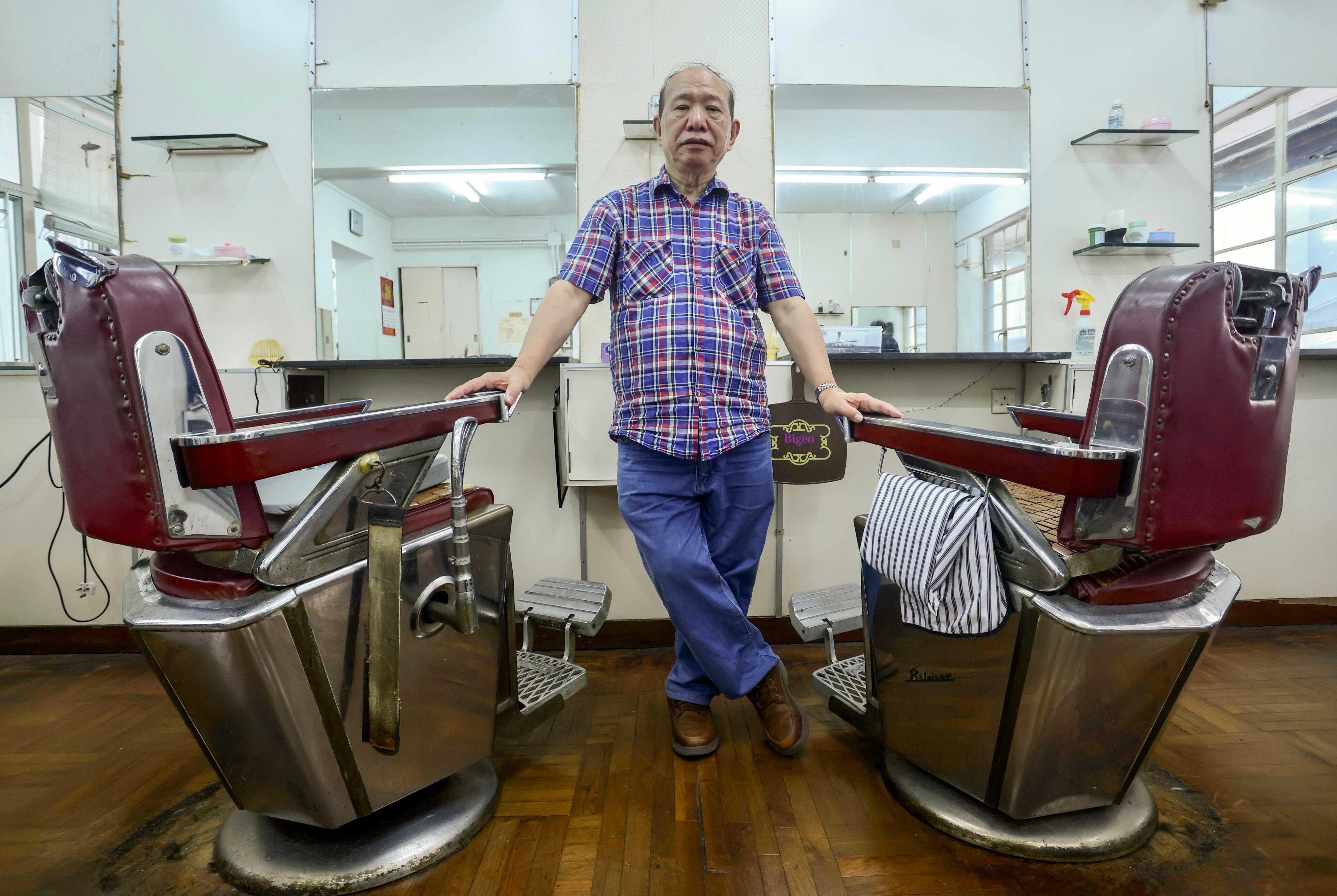
Inside a decades-old building with a manual door lift, you will find Ambassador Barber Parlour, run by Luk Chung-yan. At 78 years old, his hands remain steady as he wields a sharp razor while shaving his customers’ faces with careful movements.
The salon is a living museum, featuring vintage reclining barber chairs, 70-year-old hairdryers that still function and jars of classic hair cream.
While many other Shanghai-style salons in Hong Kong have closed down in recent years, Luk’s establishment has thrived for nearly four decades.
From sweeping floors to styling stars
Luk and his family came to Hong Kong from Shanghai in 1957, and life was challenging for him at the beginning.
“I was 10 years old. My family was struggling to make money, and we lived in a wooden shack. I was forced to become an apprentice barber,” he recalled.
When he was an apprentice, Luk said he needed to do everything from washing hair to chores such as sweeping the floor.
Nevertheless, Luk worked hard and learned quickly, and by the 1980s, his skilled hands styled the hair of wealthy businessmen, politicians and even superstars like Jackie Chan and Leslie Cheung Kwok-wing.
During the 1970s and 1980s, a wave of Shanghai-style salons offered quality grooming across Hong Kong, a step up from common roadside barbers.
A difficult skill
For HK$200, customers can enjoy a complete experience that includes a haircut, wash and shave, along with a friendly “see you again” as Luk holds the door open for them to leave.
However, Luk conceded that barbershops like his were facing a decline, saying it was difficult to find young people who could endure the apprenticeship.
“You have to train your wrist for at least half a year so your hand is flexible enough to shave,” Luk explained. “Many newcomers were scared to learn.”
Although his employees are ageing and business has declined as customers emigrate or get older, Luk said he would not give up.
While young people might prefer fashionable new barbershops, Luk hopes to operate his business for as long as possible.
“I’m not thinking about retiring,” shared the master, who will turn 80 in a few years. “I can still work.”