Difficulty: Summiteer (Level 3)
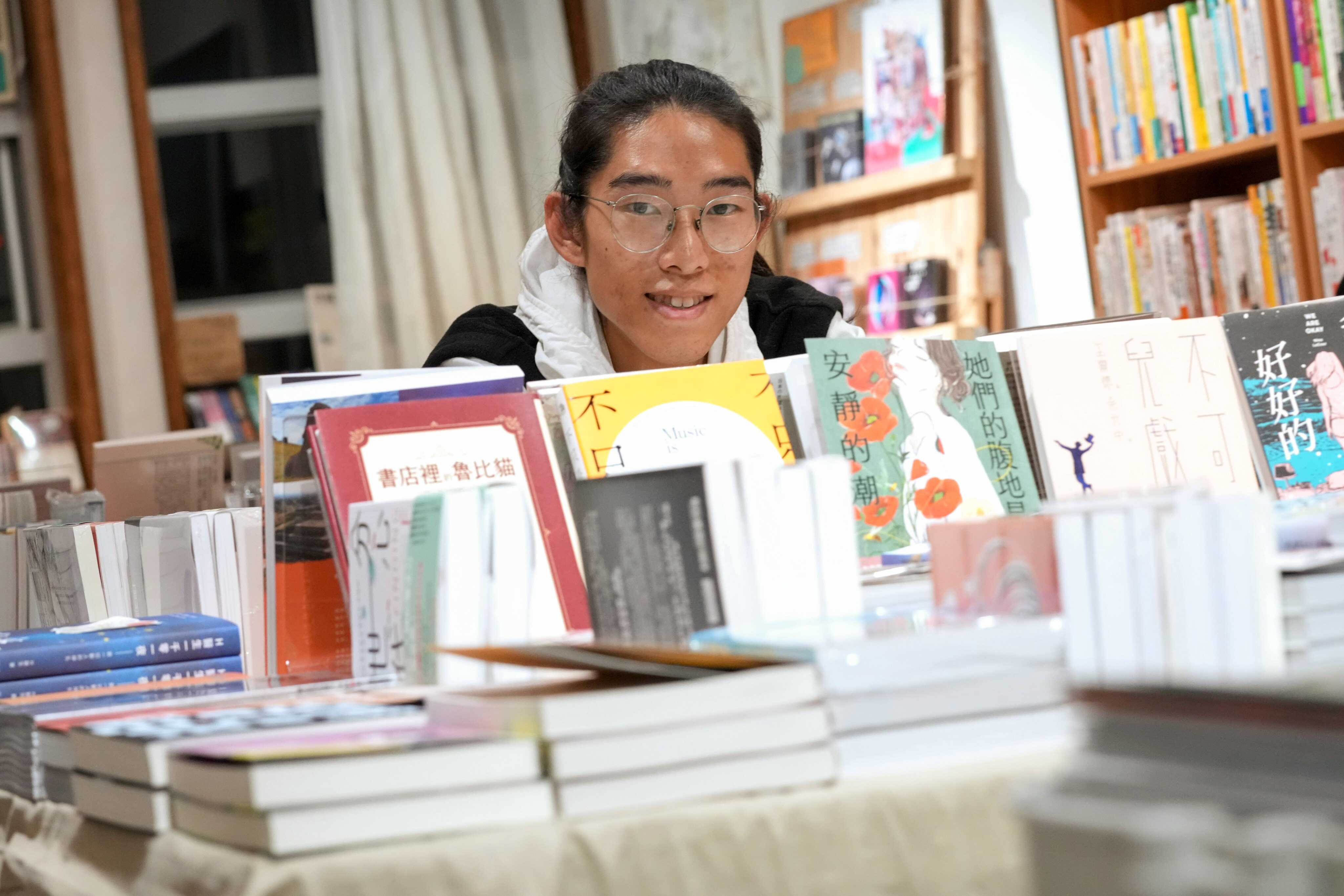
In the corner of a Mong Kok bookstore, a group of strangers sits together to discuss modernism.
“Do you know what the definition of ‘modern’ is?” asked Jerry Pun, who runs these classes under Little DooDoo, a group that encourages wider appreciation for creative writing in Hong Kong.
Pun dives into the works of writer and novelist Franz Kafka – pushing attendees to reflect on modern society.
Since 2021, Little DooDoo has regularly organised public writing classes covering Chinese and global authors, as well as school workshops that teach pupils about literary devices and techniques, such as writing metaphors and building character.
But Pun, 26, did not grow up with plans to become a writer: “As a child, I preferred reading history and philosophy books. I wasn’t very interested in literature.”
Like many students, he once saw writing mainly as something done in exams, but that changed during his first year at university when he took a creative writing course.
“[The course] made me realise that there is a type of writing where you don’t need to care so much about grades [and] right and wrong,” Pun said. “There is so much space to express yourself.”
Taking the plunge
Pun graduated from Baptist University with a degree in creative and professional writing. Not long after, in 2021, he and his friends decided to create an Instagram page – called Little DooDoo – to introduce literature to Hongkongers.
When a university professor invited them to run public creative writing classes as part of a research project, Pun and his friends realised the power of this art form, and they began designing their own writing workshops.
Now, Pun leads Little DooDoo’s classes when he is not working as a private tutor and a part-time lecturer for the Hong Kong College of Technology’s Applied Learning programme.
Literature and expression
For Pun, writing is a way to better understand his personal experiences. He recalled writing about his childhood in Tin Shui Wai, a residential area in the northwestern New Territories near Yuen Long.
Initially, the memories did not seem important, but as Pun began writing, he started to examine moments with more care.
“I had to ask myself why I remember those things from my childhood. What do these memories mean to me?” he said.
Through writing, he started to view his past and present differently.
“This process forced me to think about what I was like as a child and how I now view that child,” he explained.
Pun added that our thoughts could disappear if we do not note them down and develop them.
“If I write a story or a piece, it seems to help me preserve that idea … finding [out] why I think this way or if there are other things that can link to it,” he said.