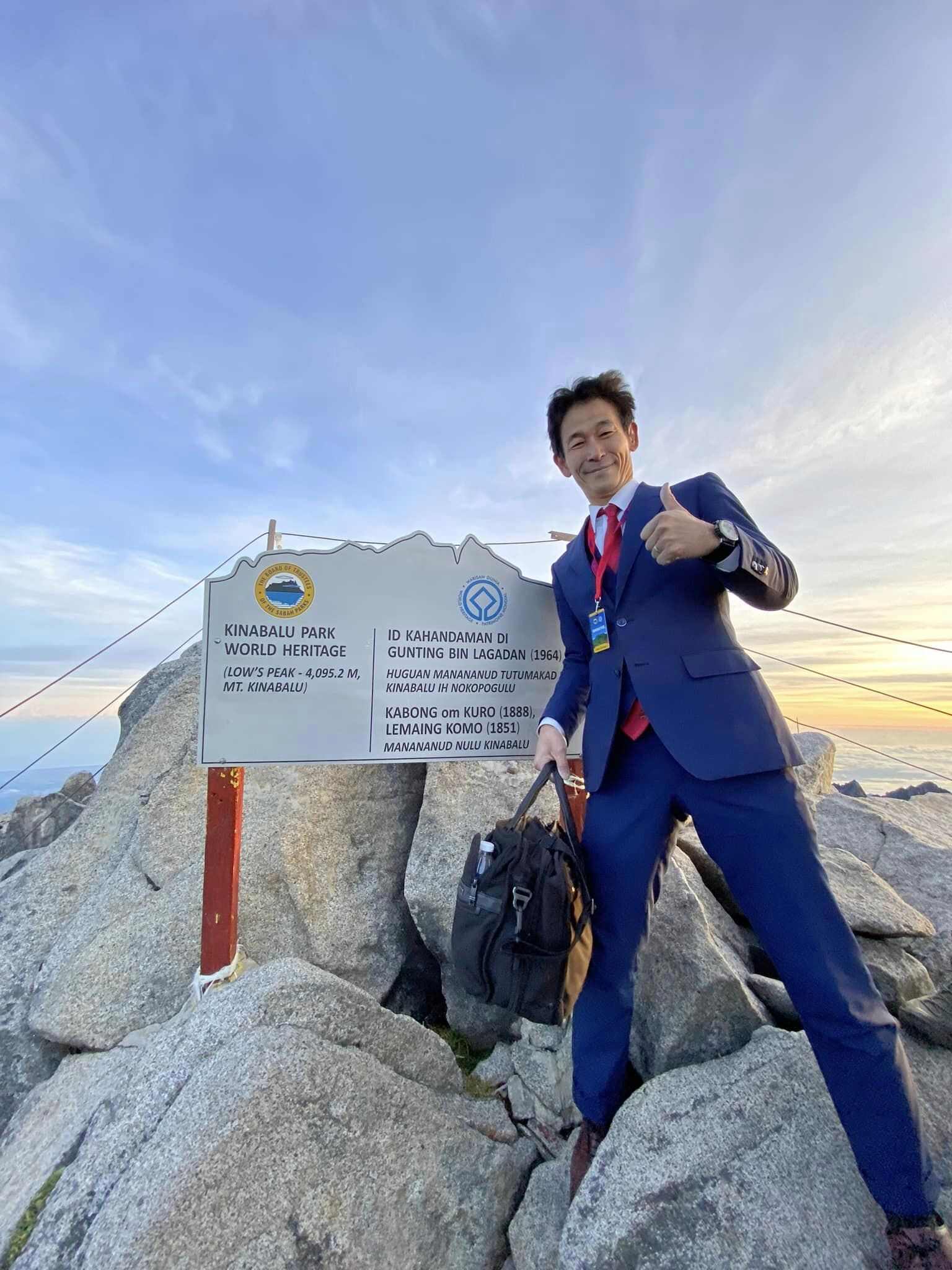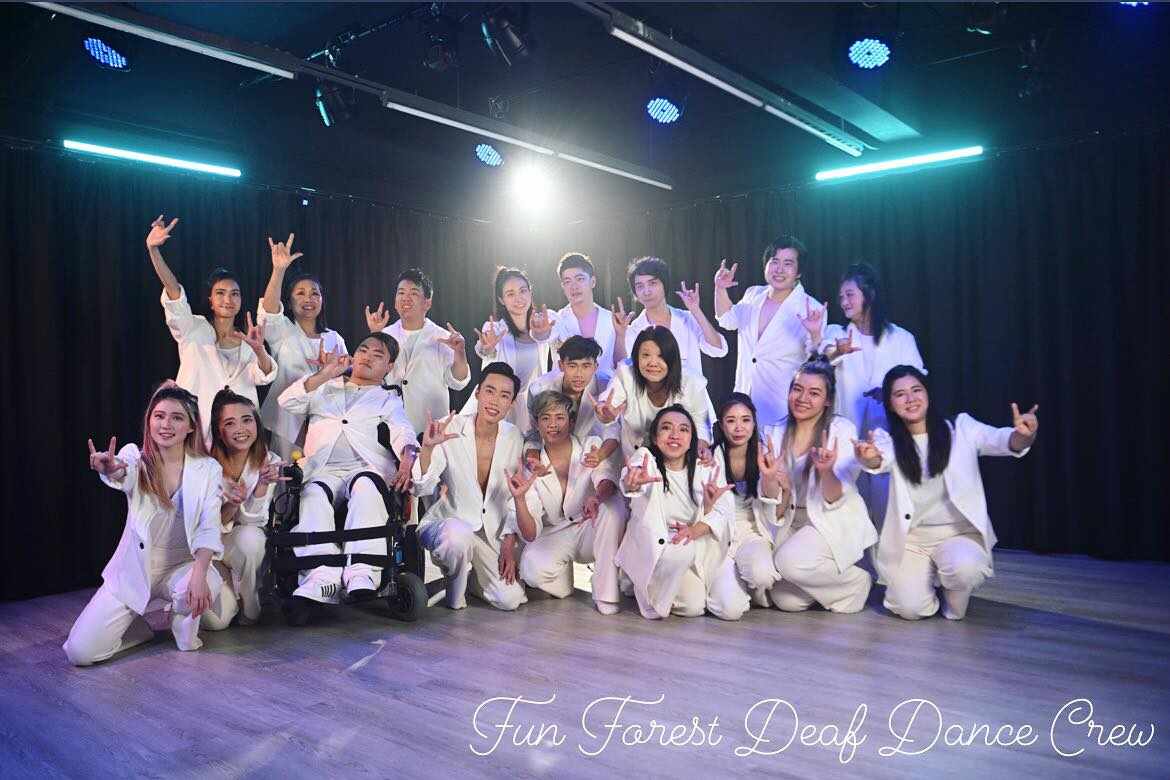
For performer Jason Wong, dancing is an important part of living as his true self.
Jason lost his hearing after a fever at the age of three. He cannot hear most sounds, not even the roar of a plane taking off.
"I am Deaf, but I don't consider myself sick," he says, speaking through a sign-language interpreter. "Even without hearing, I can express with my hands and body movements."
He explains that describing himself as "Deaf" with a capital D means he accepts his identity.

Fun Forest performs "Sign in Dance", a heartening show based on Jason's challenges of becoming a dancer. It is one of the few shows in Hong Kong using sign language, dance and drama.
"People might think Deaf people have some barriers, but in fact, we are capable of doing many things," says Jason. "Art has no limits."
Hong Kong has 47,000 deaf people, and 3,000 of them use sign language. But there is only one school for the deaf, and only 56 sign-language interpreters, so there is not enough support for them.
Jason remembers when he was studying, he was surrounded by hearing people. He could not keep up with teachers who spoke too fast, and sometimes he had to text to communicate with his friends.
"No one understood me," he recalls. "It was like we were from two different worlds."

Last month, his dance crew released a music video titled "Please Believe". The video features performers from all walks of life. Its message is to find your true self.
"I hope the performance can inspire others to stay true to themselves and chase their dreams," says Jason.
Five things to know about
1. A sign language is a way of communicating by using the hands and other parts of the body.
2. Sign languages are an important way for deaf people to communicate. Deaf people often use them instead of spoken languages.
3. Spoken languages use sounds from the mouth and are understood with the ears. Sign languages use hands and are understood with the eyes.
4. Some deaf people can also understand spoken words by looking at a speaker's lips. This is called lip-reading. It is quite hard to learn.
5. There are many different sign languages. Usually there is a different sign language in each country. There are probably at least 130 different sign languages around the world.