




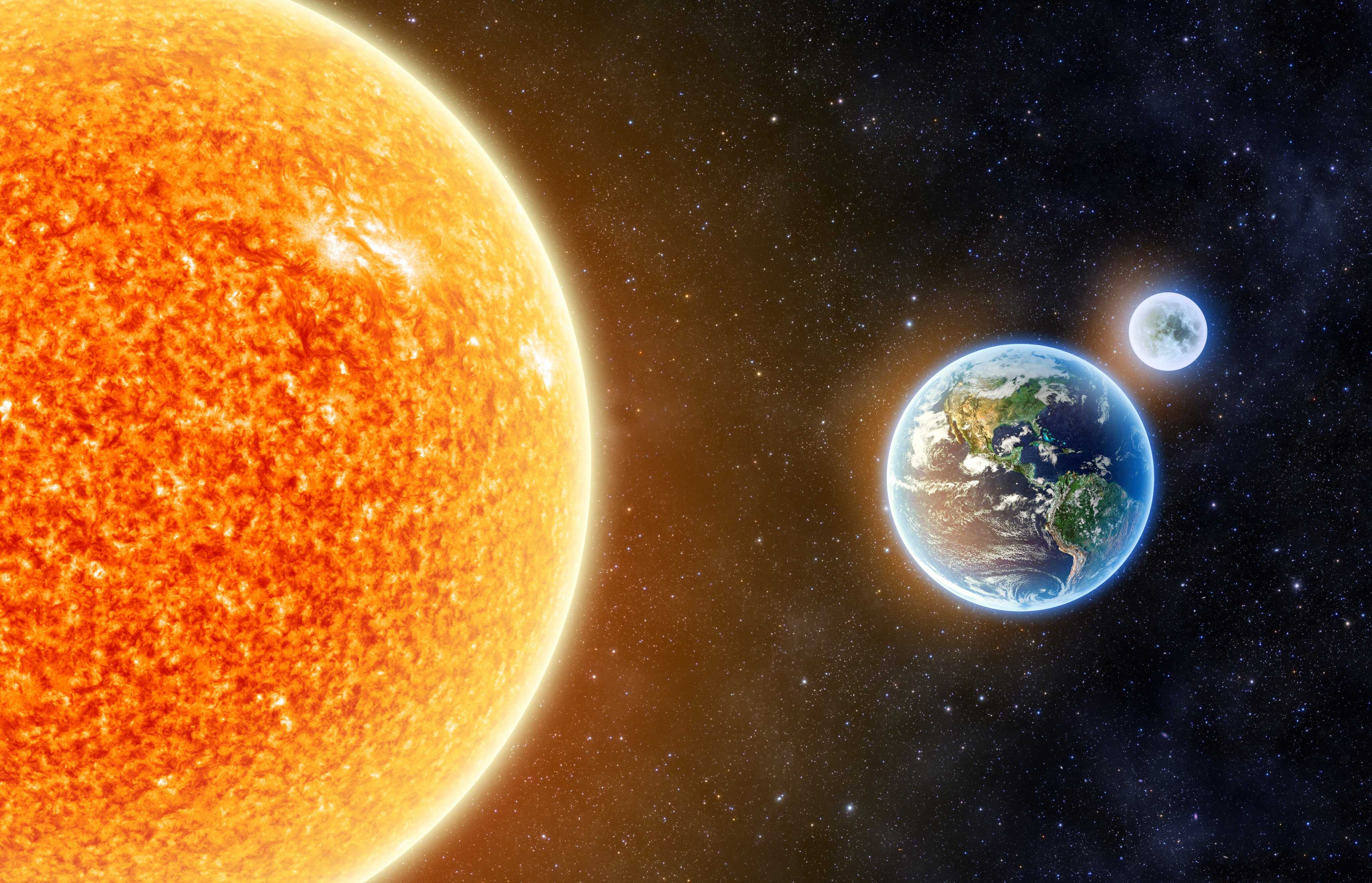
What makes the weather cold in the winter and hot in the summer? You might think this is because the Earth is closer to the sun in summer and farther from the sun in winter. But in fact, the Earth is farthest from the sun in July and closest to the sun in January!
The seasons are related to how the Earth is tilted like a ball on a stick, at an angle of about 23.5 degrees. As it spins around the sun, the tilt makes different parts of the Earth face the sun (see graphic). This also explains why countries such as Japan and Korea are cold in January, but places like New Zealand and Fiji are warm at this time.
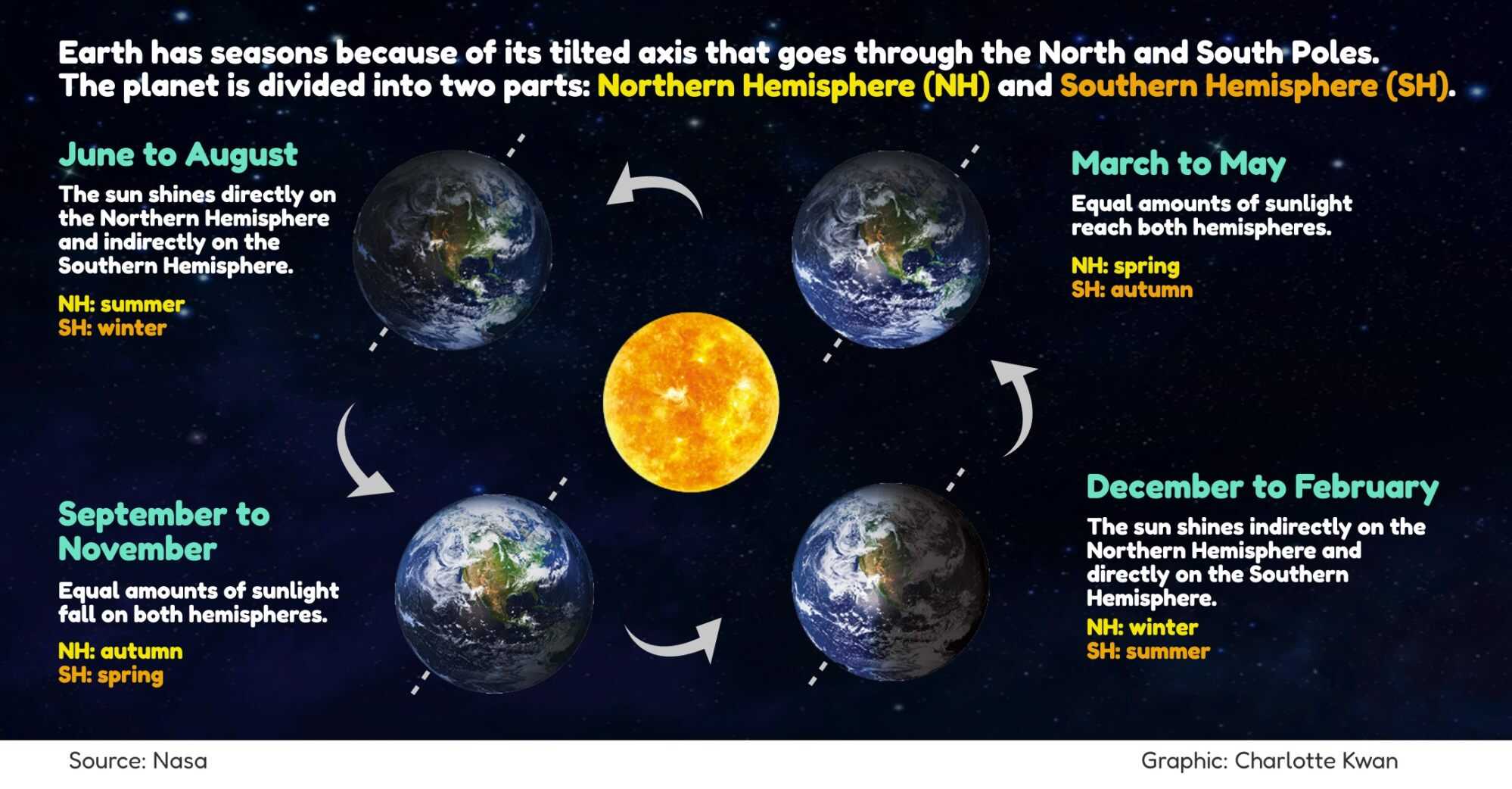
During summer in places like Japan and Korea, which are on the top half of the Earth, the sun’s rays hit our planet at a straighter angle. This means the sun’s heat is more concentrated on a smaller area, making it hotter. Also, summer days are longer, giving the sun more time to heat up the Earth.
During winter in places on Earth’s Northern Hemisphere, the sun’s rays hit our planet at a more slanted angle. This means that the sun’s energy is spread out over a larger area, making it less hot. Also, winter days are shorter, meaning the Earth has less time to heat up.
.jpg?image_process=image/resize,w_3840/quality,Q_75)
