Difficulty: Challenger (Level 2)
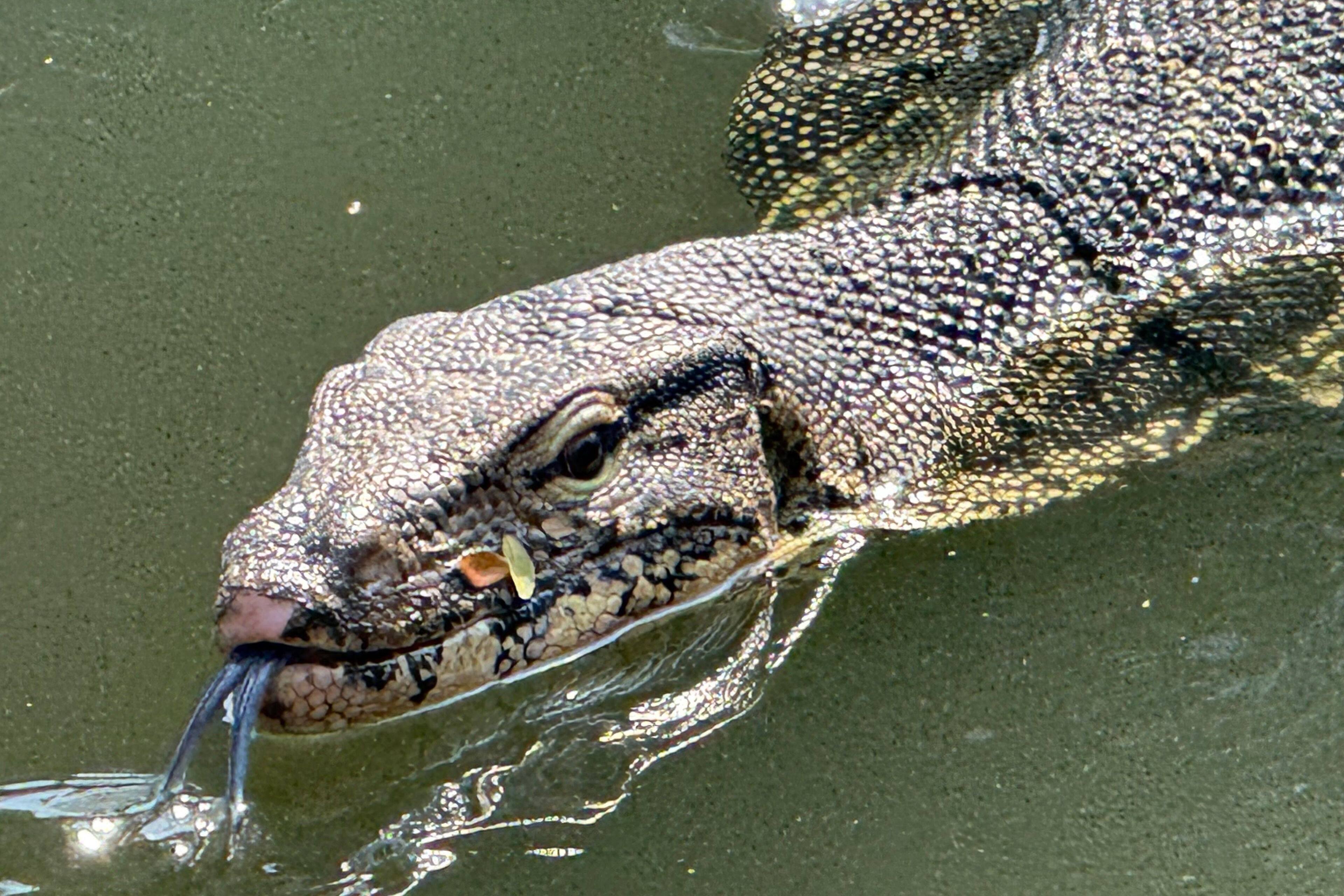
Monitor lizards have been around for millions of years. It is estimated that thousands of these reptiles live in the canals of Bangkok, Thailand. These canals are called khlongs.
“The population is much more dense [in] areas around Bangkok than anyone will find in the wild,” Michael Cota explained. He is a reptile expert from Thailand’s National Science Museum.
The monitor lizards are in the city because of the large food supply there.
“Especially in Lumpini Park, people feed the fish, resulting in an overpopulation in fish, which allows the monitor lizards there to feed much more than in any wild area,” said Cota, who is German-American. He is also involved in the specialist group for monitor lizards of the Species Survival Commission.
As meat-eaters and scavengers, these reptiles feel right at home among people’s trash. Monitor lizards often look around plastic bottles and rubbish for food in the morning.
‘Like little Godzillas’
Do not confuse Bangkok’s scavengers with the world’s largest lizards: Komodo dragons. These giant reptiles live in Indonesia. They can be life-threatening to humans because of their poisonous saliva, biting power and sharp claws.
After the Komodo dragon, Asian water monitors are the world’s second-largest lizard. These reptiles do not have a deadly bite. Still, they seem like they could be in a film.
“They kind of look like little Godzillas,” said Annika, a German tourist who regularly visits Thailand.
The best time to see them
Bangkok is one of the few places where monitor lizards can be observed at such close range.
But in the wilderness of Thailand, they are shy and difficult to spot.
Early morning is the best time to find them. But you can see them at almost any hour, especially on the bridges spanning the city’s canals.
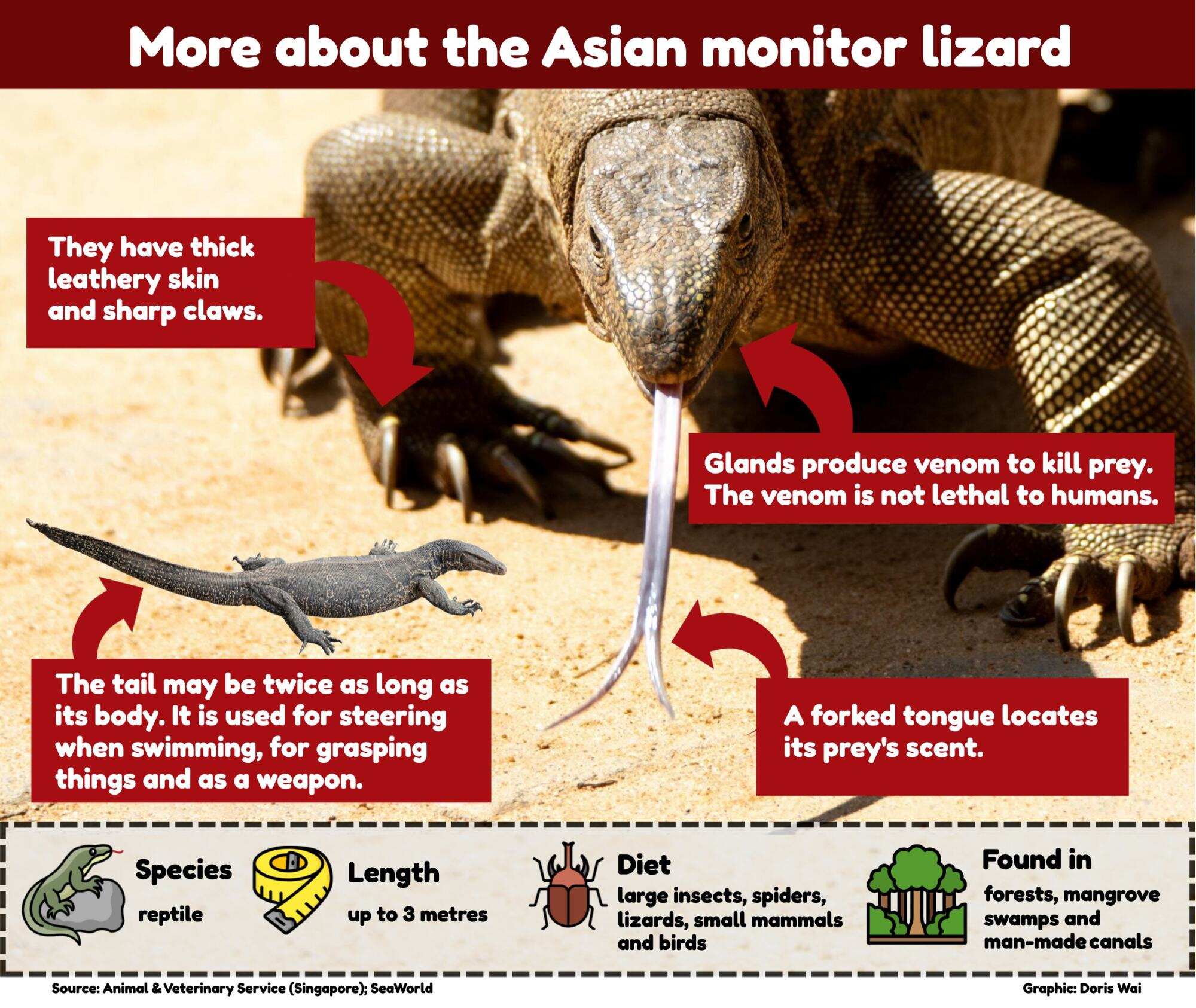
It is also a good idea to leave them alone. Monitor lizards have forked tongues, powerful bodies and sharp claws (see graphic).
“If the monitor lizard inflates its throat, it is warning you to move away,” Cota said.
They can sometimes be photographed up close. But you should never touch them.