YoungPost Club Learn
DOWNLOAD OUR APP
appstoregoogleplay
FIND US AT
My JourneyMy VocabularyMy Leaderboard
My AccountSearchAbout UsContact Us
Subscription Plan
School Subscription
YOUNG POST
NewsTrendingBeing wellLearning zoneShare with usQuizzes
SPARK
NewsTrendingBeing wellLearning zoneShare with usQuizzes
POSTIES
Big readEye on the newsHa-ha-happeningsThings to doYour saySteam studioHealth and happinessQuizzes
Subscribe to Young Post Club to access our great content
ABOUT US|CONTACT US|WRITE FOR US|PRIVACY POLICY|TERMS & CONDITIONS
©2025 Young Post Club. All rights reserved.
My Journey Hello
Brand Avatar
Young Post
My Journey illustration

With a subscription, you can answer quizzes and track your reading progress.

Read / STEAM studio

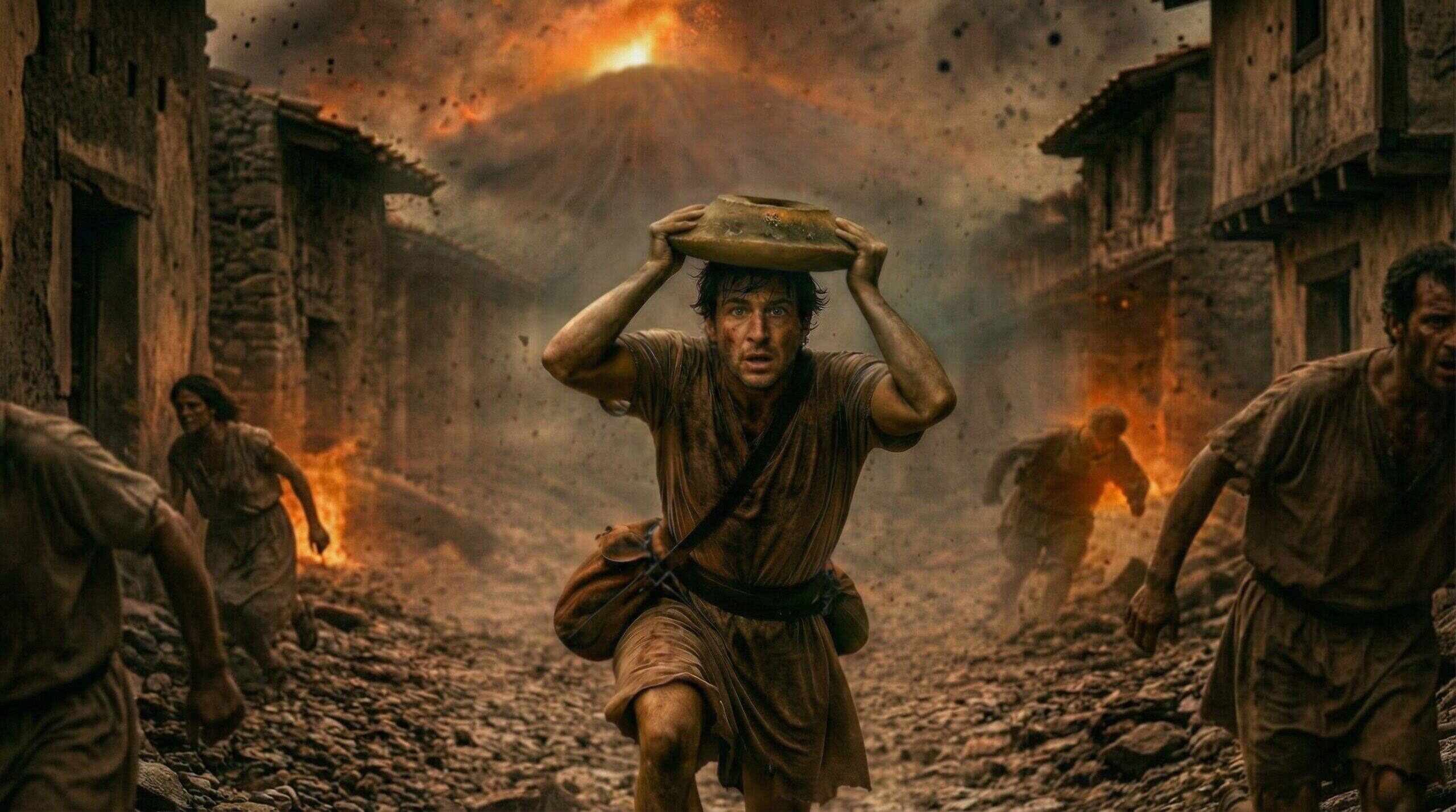
AI-generated photo depicts ancient Pompeii victim’s final moments near Mount Vesuvius

Archaeologists made the image based on the remains of a man found next to a clay mortar he likely used for protection
byReuters
Published: 10:45pm, 17 May 2026
Length: 315 words
AI-generated photo depicts ancient Pompeii victim’s final moments near Mount Vesuvius

This image, generated by AI, recreates the face of a man who was likely shielding himself with a bowl when Mount Vesuvius erupted. Photo: dpa

Difficulty: Challenger (Level 2)

A volcanic eruption ruined the ancient Roman city of Pompeii almost 2,000 years ago. Now, archaeologists in Italy have used artificial intelligence (AI) for the first time to recreate what one of the victims might have looked like.

The Pompeii Archaeological Park shared a picture made by a computer. It shows a man trying to hide while holding a big bowl over his head. Mount Vesuvius is burning in the background.

It is based on the recent discovery of the remains of a male adult outside one of the city’s southern gates.

His remains were found next to a clay mortar that he probably used for protection. Archaeologists think the man was killed by falling volcanic rocks on the second day of the eruption.

He was trying to run to the sea. He had a lamp and 10 bronze coins with him.
“If used well, artificial intelligence can contribute to a renewal ‌of ‌classical studies, illustrating the classical world in a more immersive way,” Gabriel Zuchtriegel ‌said. He is the head of the archaeological park.

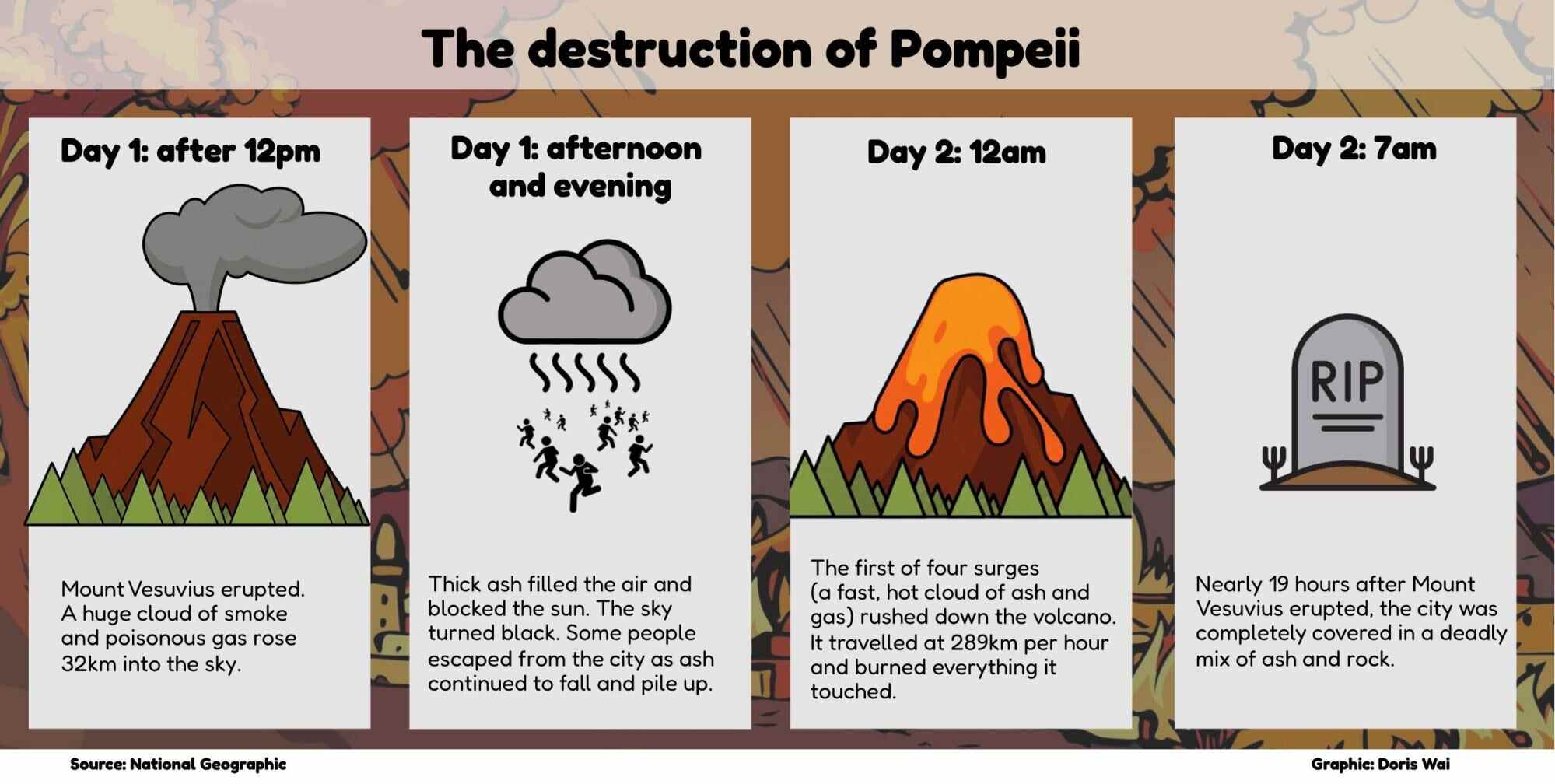
Pompeii was a busy city located about 25km southeast of Naples. In the year 79, a volcano called Mount Vesuvius erupted. This huge event covered the city in ash. It also preserved its buildings, objects and writings. The eruption lasted for two days.

Remains of the ancient city were found in the 1700s. This place is one of the world’s most important archaeological sites.

It is also very popular with tourists in Italy. In 2024, about 4.3 million people visited Pompeii.

IN THIS ARTICLE
History
News from Europe
KEEP READING
cover
Eye on the news
AI transforms India’s Durga Puja festival with innovative designs
12 Oct 2025
cover
Eye on the news
Ancient South American city vanished due to climate change, toads reveal
14 Sep 2025
cover
Eye on the news
Hong Kong weather forecast agency will use more AI to predict rain
24 Aug 2025