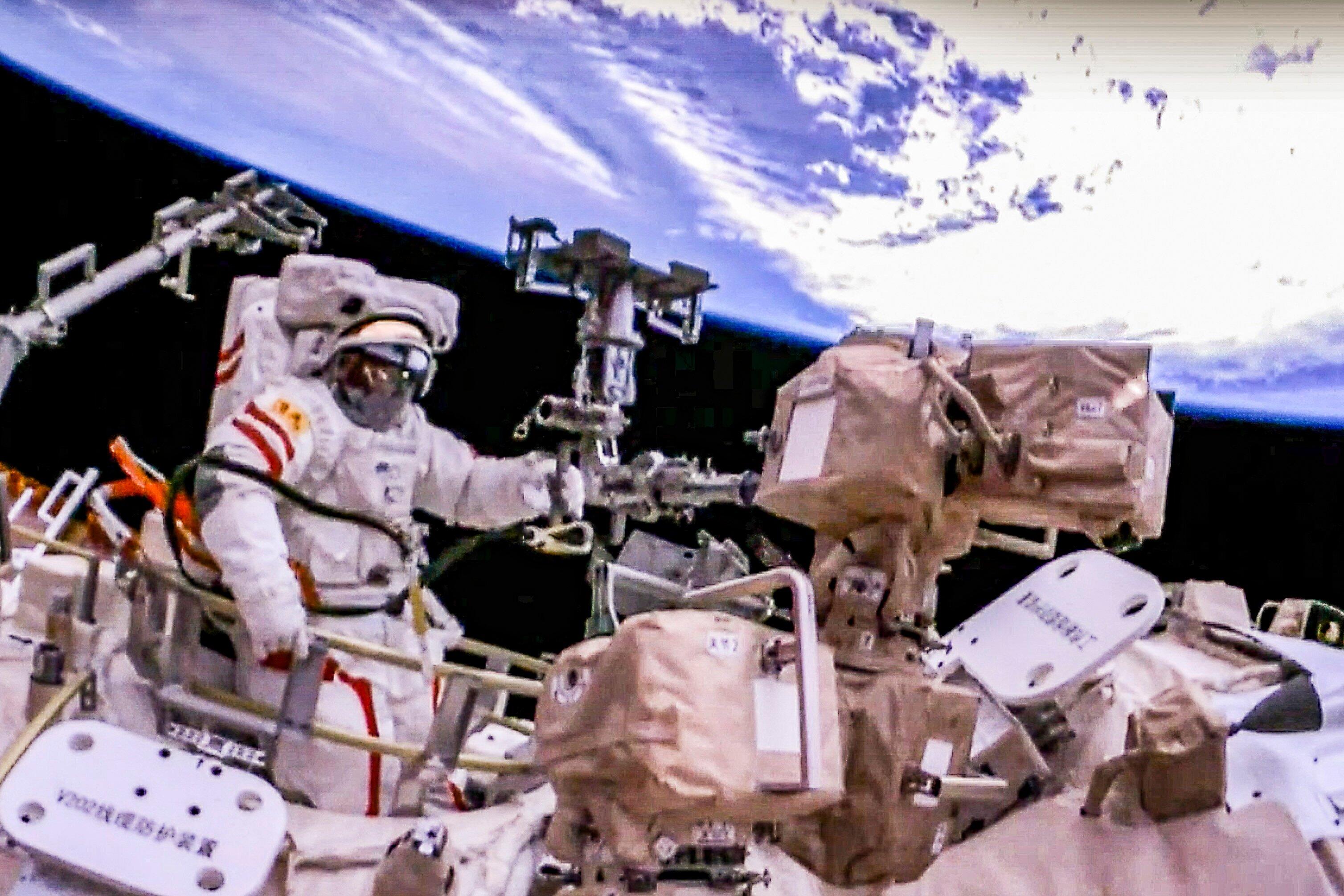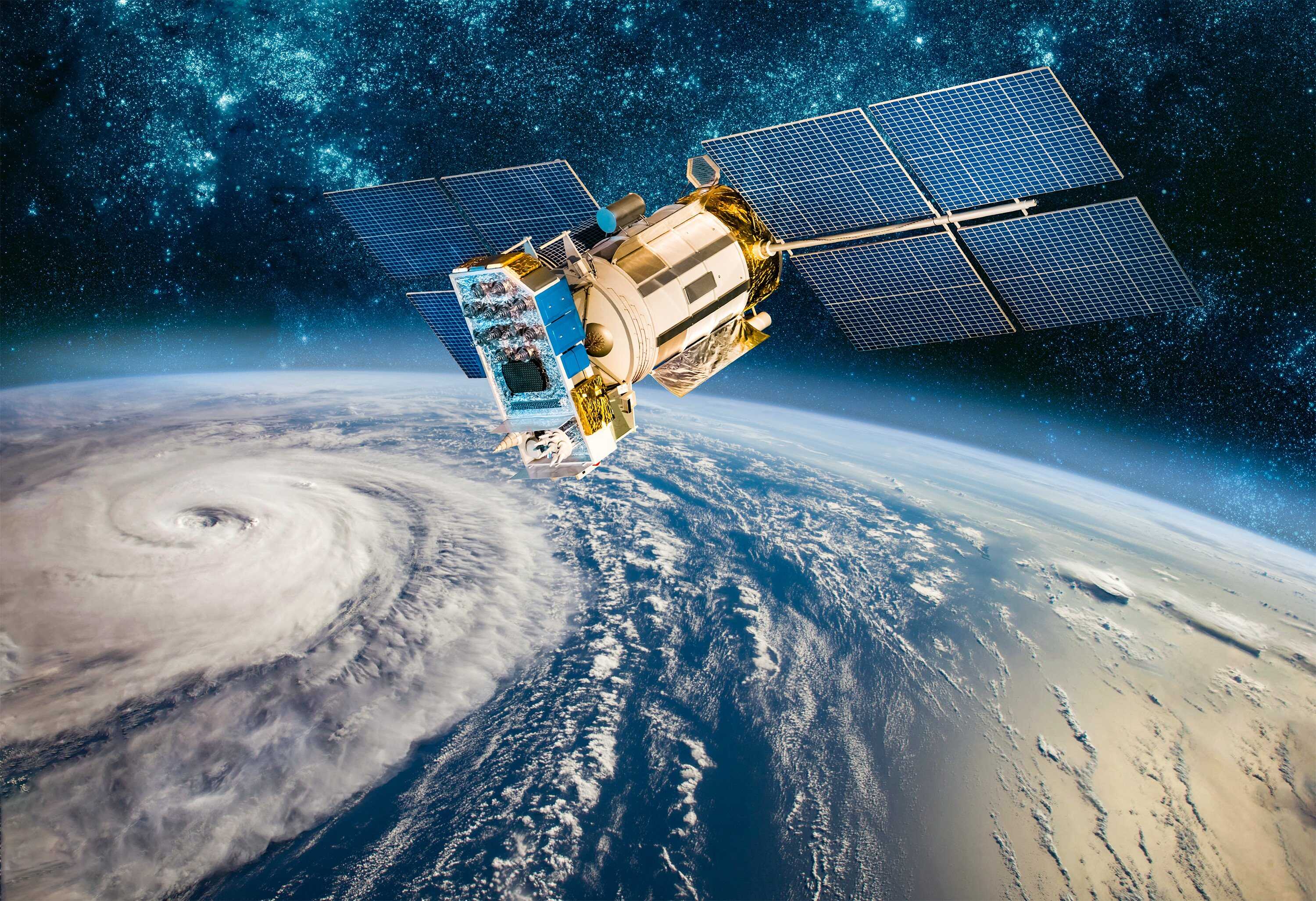
Satellites are large objects that orbit, or move around, Earth or other objects in space.
There are two types of satellites: natural satellites like the moon and man-made satellites. Man-made satellites are machines launched into space to do all sorts of jobs.
Some satellites help us predict the weather. They take pictures of clouds and storms from high up in space. Then, meteorologists can tell us if it will be sunny, cloudy or rainy.
Communication satellites bounce signals from one place to another using radio waves. This is how we make phone calls, text our friends and watch shows from all over the world!
Satellites also send signals to our phones. The signals tell us exactly where we are and how to get to our destination without getting lost.
When we look up at the sky, we probably can’t see any satellites, but those little helpers work hard to make our lives better.
Build a model satellite
Materials:
-
an empty juice box (or any other small box)
-
aluminium foil (or coloured paper)
-
a small plastic bowl or dish (or cut the bottom of an empty plastic bottle)
-
a toothpick or straw
-
scissors
-
tape
Instructions:
-
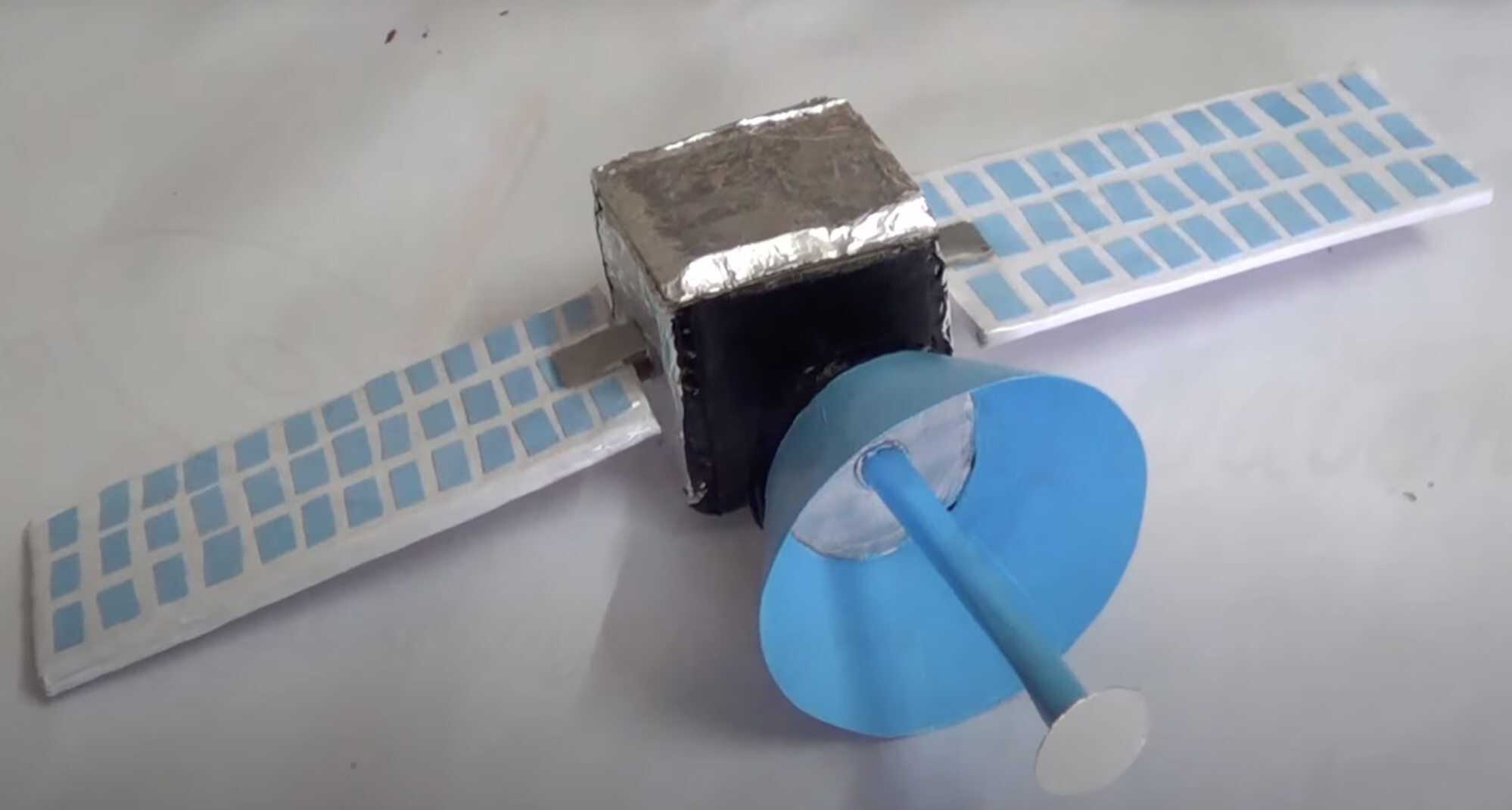
First, your satellite needs a payload module, which holds all of the parts needed to collect scientific information in space. You can use a small box, such as an empty juice box, for this.
-
Next, you need an antenna to help your satellite communicate with Earth even while it’s out in space. Your antenna will be made by taping a toothpick or straw to a small plastic bowl or dish. Then, attach this to the bottom of your payload module (the box from Step 1).
-
Now, you have to power the satellite. Collecting energy from the sun is a great way to do this. Fold or cut the aluminium foil (or coloured paper) into two long rectangles. Tape these to the sides of your payload module.
-
Your satellite model is ready to launch into space!
Galaxy jar
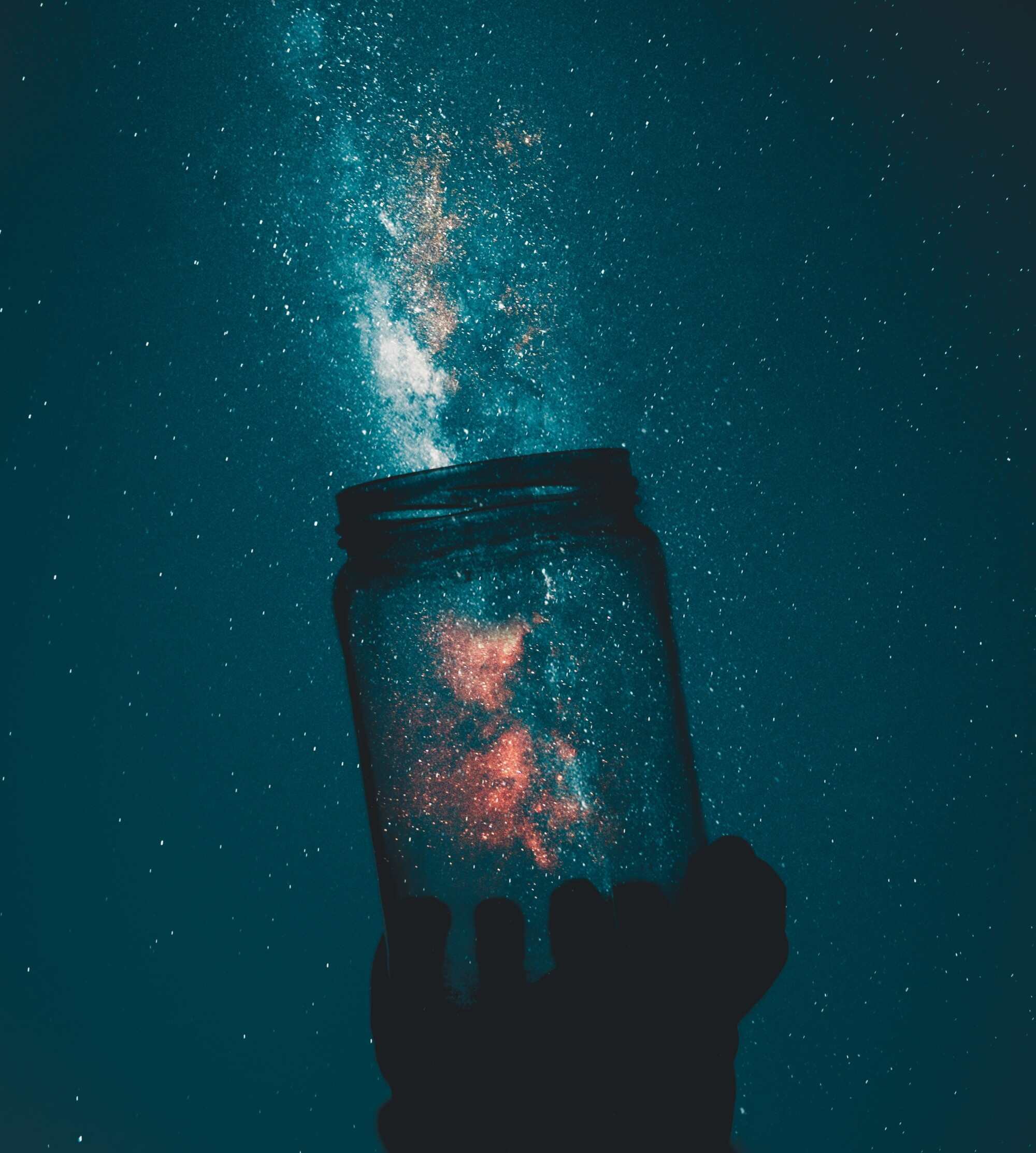
Materials:
-
an empty glass jar or container
-
cotton balls
-
glitter
-
water
-
food colouring
Instructions:
-
Fill the jar with water until it’s about three-quarters full.
-
Tear the cotton balls into small pieces until they look like fluffy clouds. Place them in the jar.
-
Sprinkle different coloured glitter into the jar.
-
Add a few drops of food colouring to the water.
-
Close the lid of the jar tightly and shake it gently to see your mini galaxy come to life. The glitter represents stars, and the cotton balls are planets.