Difficulty: Explorer (Level 1)
Marine fossils are the remains of sea creatures that lived long ago.
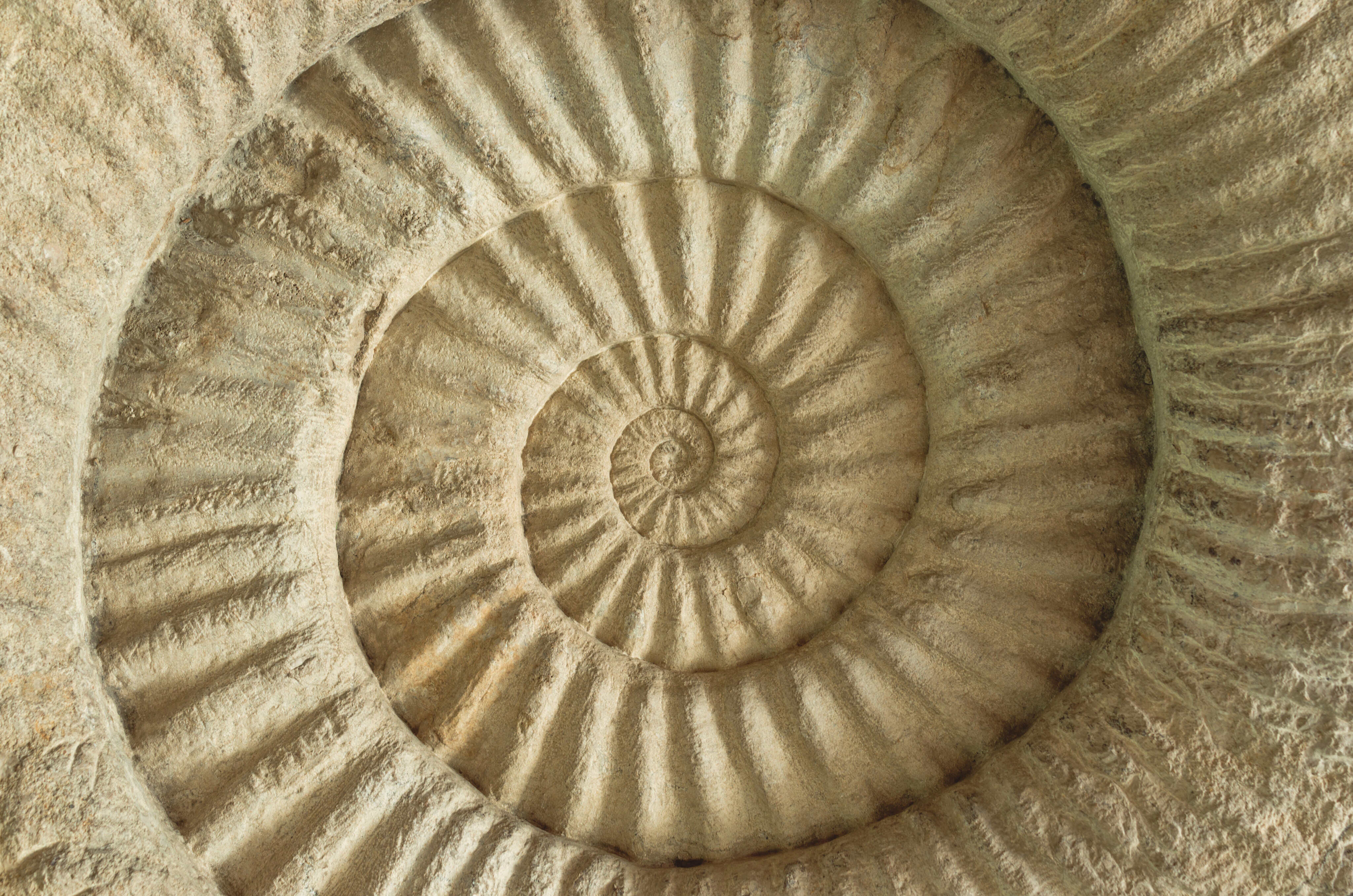
One of the most famous marine fossils is the ammonite. This animal had a coiled shell and lived in shallow seas. They first appeared about 450 million years ago and died out about 66 million years ago. These spiral-shaped creatures came in different sizes. Some were just a few millimetres. But others could even have been 3.5 metres tall! Ammonites are extinct now, but they are closely related to today’s squid and octopuses.
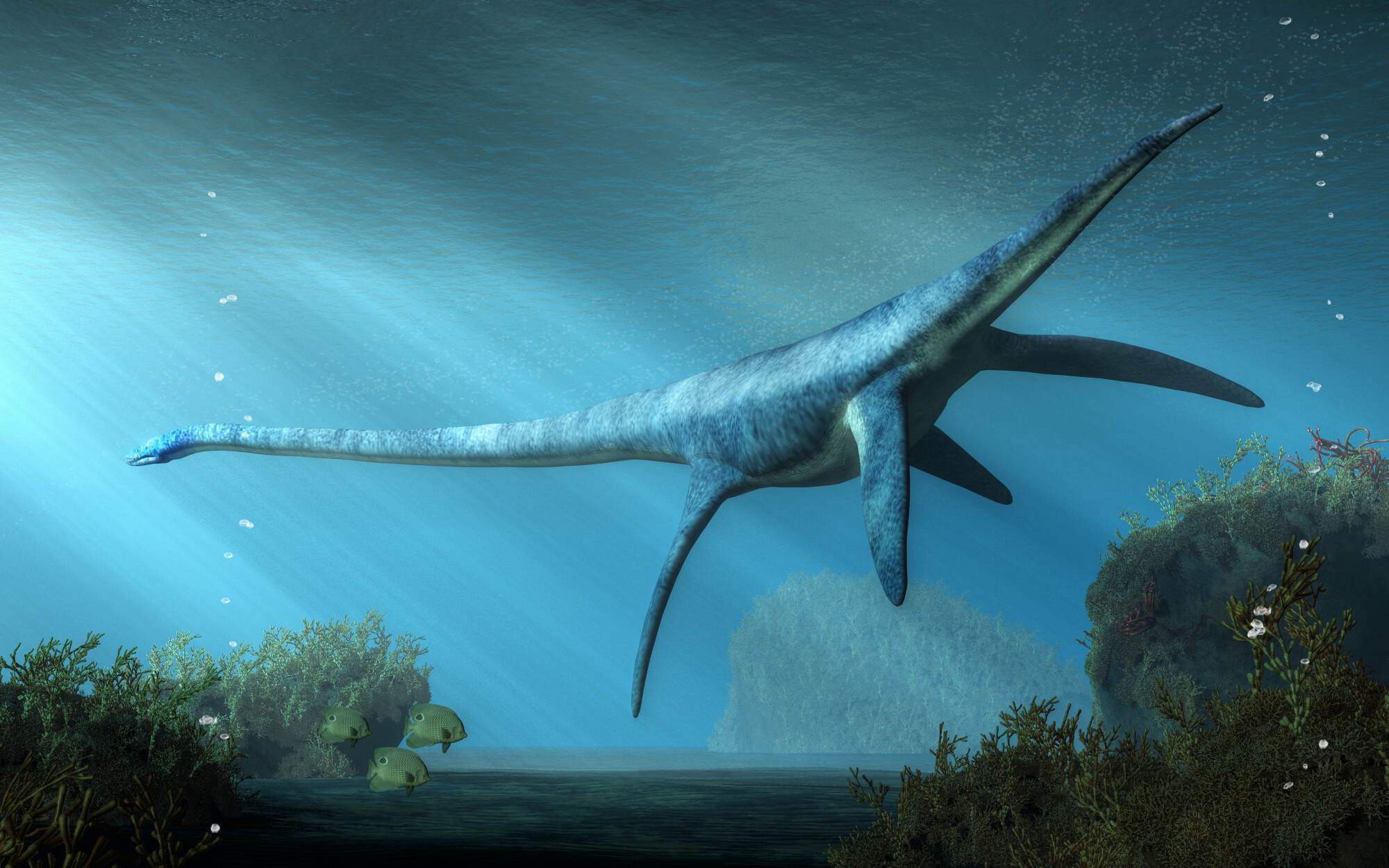
Let’s not forget about the mighty marine reptile known as the plesiosaur! They first appeared about 215 million years ago and were around for more than 100 million years.
Plesiosaurs were massive animals that could grow to be 15 metres long. Many of them had large bodies and small triangular heads. Their sharp teeth helped them to grasp and crush fish, squid, clams and crustaceans.
Scientists have found crushed clams and snails in the fossilised stomachs of plesiosaurs. They also found large, polished pebbles called gastroliths. These pebbles could have been used for crushing the hard shells the plesiosaurs ate.
The researchers believe the gastroliths helped the plesiosaurs to eat many different foods. This could be why this group of marine reptiles survived for so long.
Make your own fossils
Materials
-
1 cup of flour
-
¼ cup of salt
-
warm water
-
objects to fossilise (such as seashells or small toys)
-
baking sheet
-
paint and brushes (optional)
Directions
-
Preheat your oven to 100 degrees Celsius.
-
Mix the flour and salt in a bowl. Add warm water one spoon at a time until the mixture sticks together. Use your hands to mix the dough until it forms a big ball.
-
Pinch off some dough and roll it into a ball. The amount you need depends on the size of your object. Flatten the ball until it is 1cm thick.
-
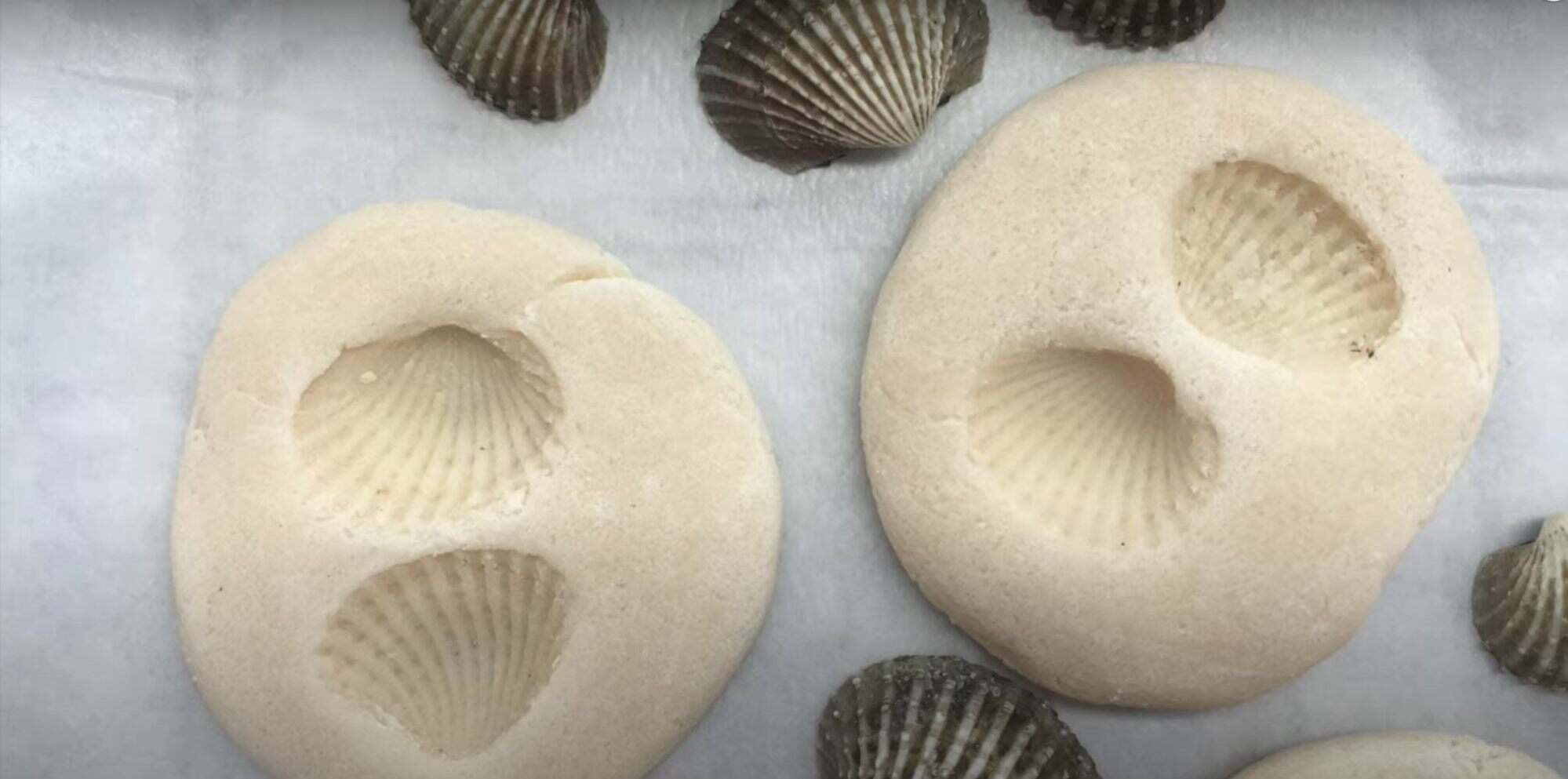
Press one object into the dough to make an imprint. Make sure it does not go through the dough. Repeat with the other objects. This step is similar to how some real fossils form. Dirt around the organism turns to stone. After the body dissolves, it leaves a mould.
-
Put the fossils on a baking sheet, and bake it for 90 minutes. Once it cools, you can paint it.
Gastrolith pets
Materials
-
2-3 pebbles
-
paint and brushes
-
glue (optional)
-
cardboard pieces (optional)
Directions
-
Some animals eat rocks to help them digest their food. They are called gastroliths. You can design your own using rocks. Decide if you want to make it look like a creature, a food item, or anything else you can think of!
-
Use your paint to draw on the pebbles. Wait for each layer of paint to dry before you add the next layer. Give your gastrolith a face. Paint the whites of the eyes and teeth, and then the black outlines.
-
You can even cut out arms and legs from the cardboard pieces and stick them on the gastroliths.
-
Give your gastrolith a name. Then, use them to tell others what you’ve learned about dinosaurs!