Do you have something to share? Share your stories, school events and more using this form.
In 17th century Frankfurt, now in Germany, Maria Sibylla Merian was born into a family of printers.
Before English biologist Charles Darwin pointed his binoculars towards finches and Austrian scientist Gregor Mendel scattered pea seeds over his garden, Merian was painting butterflies.
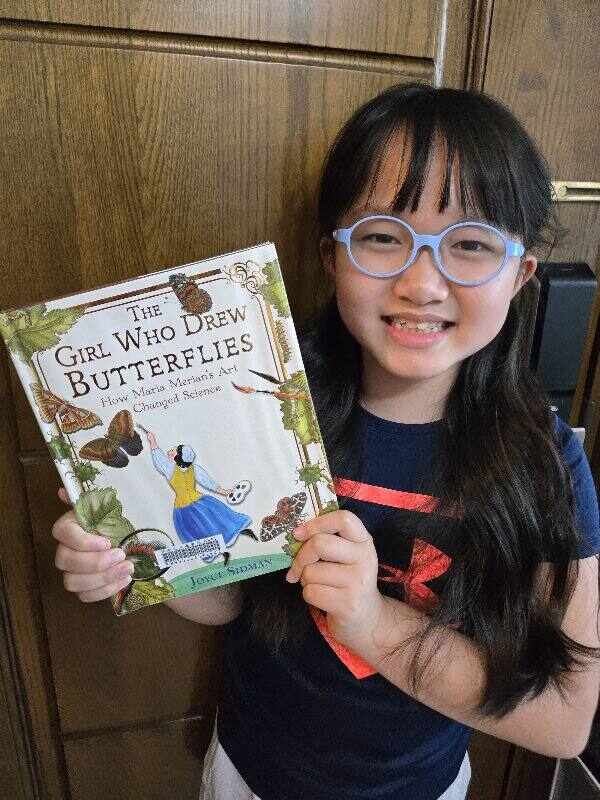
In the book, The Girl Who Drew Butterflies: How Maria Merian’s Art Changed Science, Joyce Sidman leaves us marvelling at Merian’s stunning life. The book boasts a plethora of Merian’s illustrations, vividly painted and featuring a central host plant with the four stages of a butterfly or moth.
My favourite chapter is “Flight”, in which Merian set sail for Suriname, accompanied by no one but her younger daughter Dorothea. In 21 months, they catalogued countless butterflies, moths and other wonders of South America.
When Merian’s tropical fever became severe, she and Dorothea were forced to return to Amsterdam. After her journey back, she published her third and final book, Metamorphosis Insectorum Surinamensium.
Merian listed the common and binomial names of the featured animals beneath vibrant paintings on vellum, a type of material made from cattle’s skin.
I highly recommend this book to young butterfly and moth aficionados, aspiring ecologists seeking inspiration and young people wishing for more information about Merian.
Sidman has armed the book with easily comprehensible vocabulary and vivid illustrations, making The Girl Who Drew Butterflies a perfect book for children.