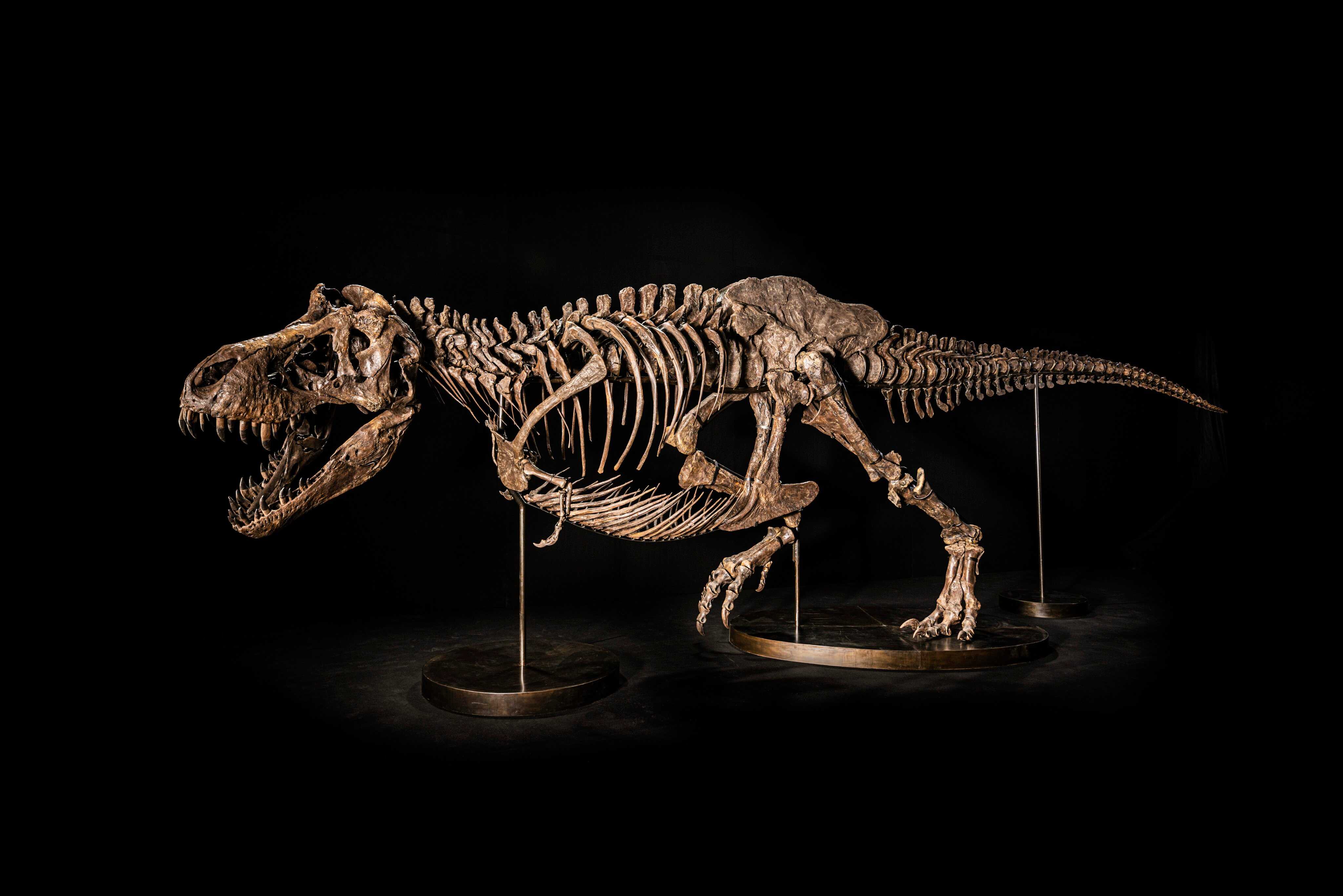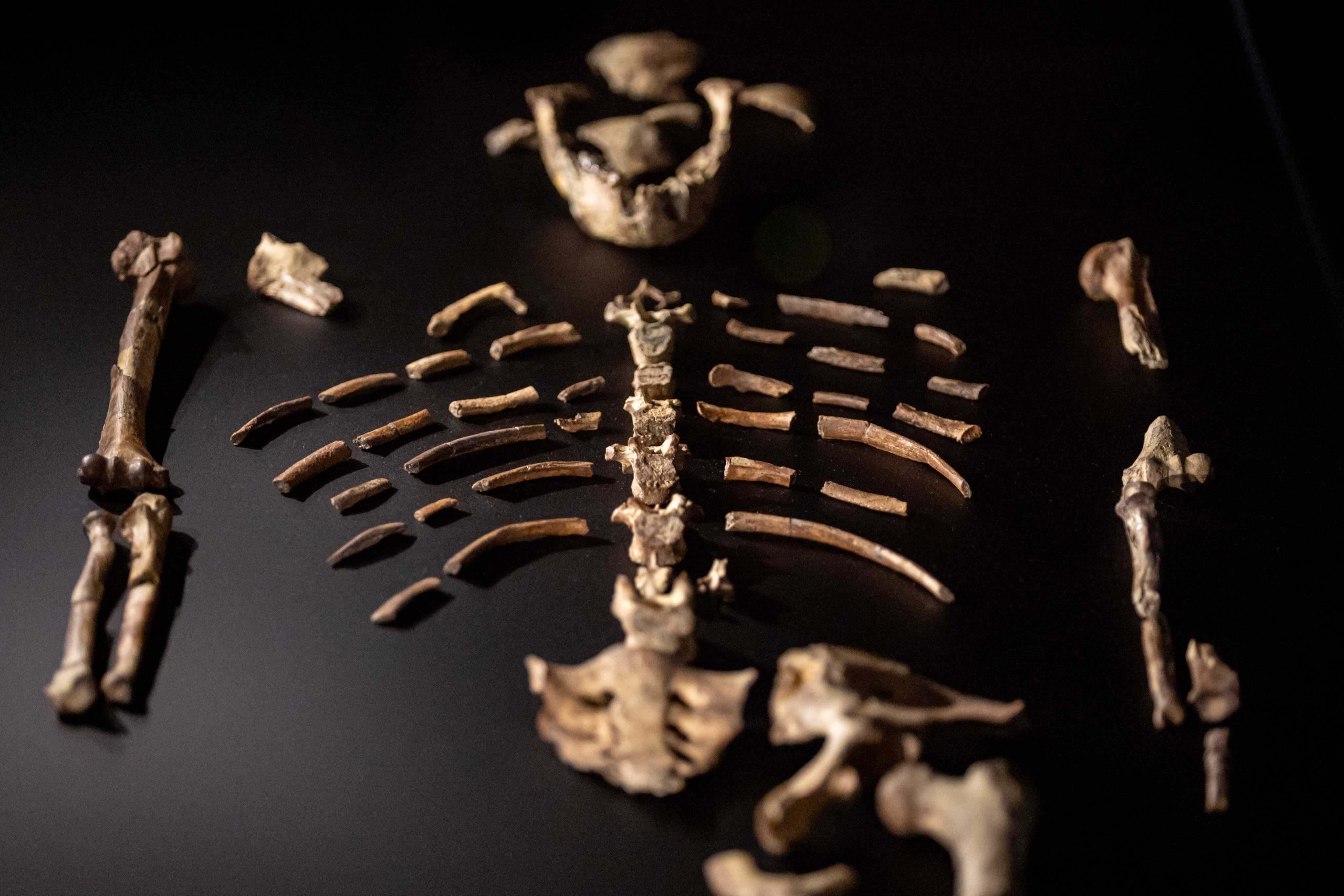
The bone pieces of Lucy, a human ancestor that lived about 3.18 million years ago, are usually kept in Ethiopia. Last month, they were shown in Europe for the first time at the Czech National Museum in Prague.
Lucy’s bones are shown next to Selam, the fossil of a baby Australopithecus. Selam lived about 100,000 years before Lucy, and her fossil was discovered in the same area 25 years later.
“Selam has never been displayed outside Ethiopia, and Lucy was only once exhibited in the United States,” said National Museum director Michal Lukes.
The old bones of Australopithecus afarensis were found in Ethiopia in 1974. This discovery was the most complete ever at that time. It changed how people understood our ancestors.
Australopithecus afarensis is thought to be one of our ancestors, but it looked more like an ape. They had long, strong arms compared to their legs. They did not have important features that humans have, like a bigger brain.
A precious exhibit
The remains were lent by Ethiopia’s National Museum in Addis Ababa.
“Lucy ... revolutionised the course of the study of human ancestors, first because of its completeness and second because of its age,” said Ethiopian Heritage Authority director Abebaw Ayalew Gella.
“Selam is a unique fossil for its age ... This is a fossil of a baby who died at two years and seven months old.”
In her current form, Lucy consists of fossilised dental remains, skull fragments, parts of the pelvis and femur.
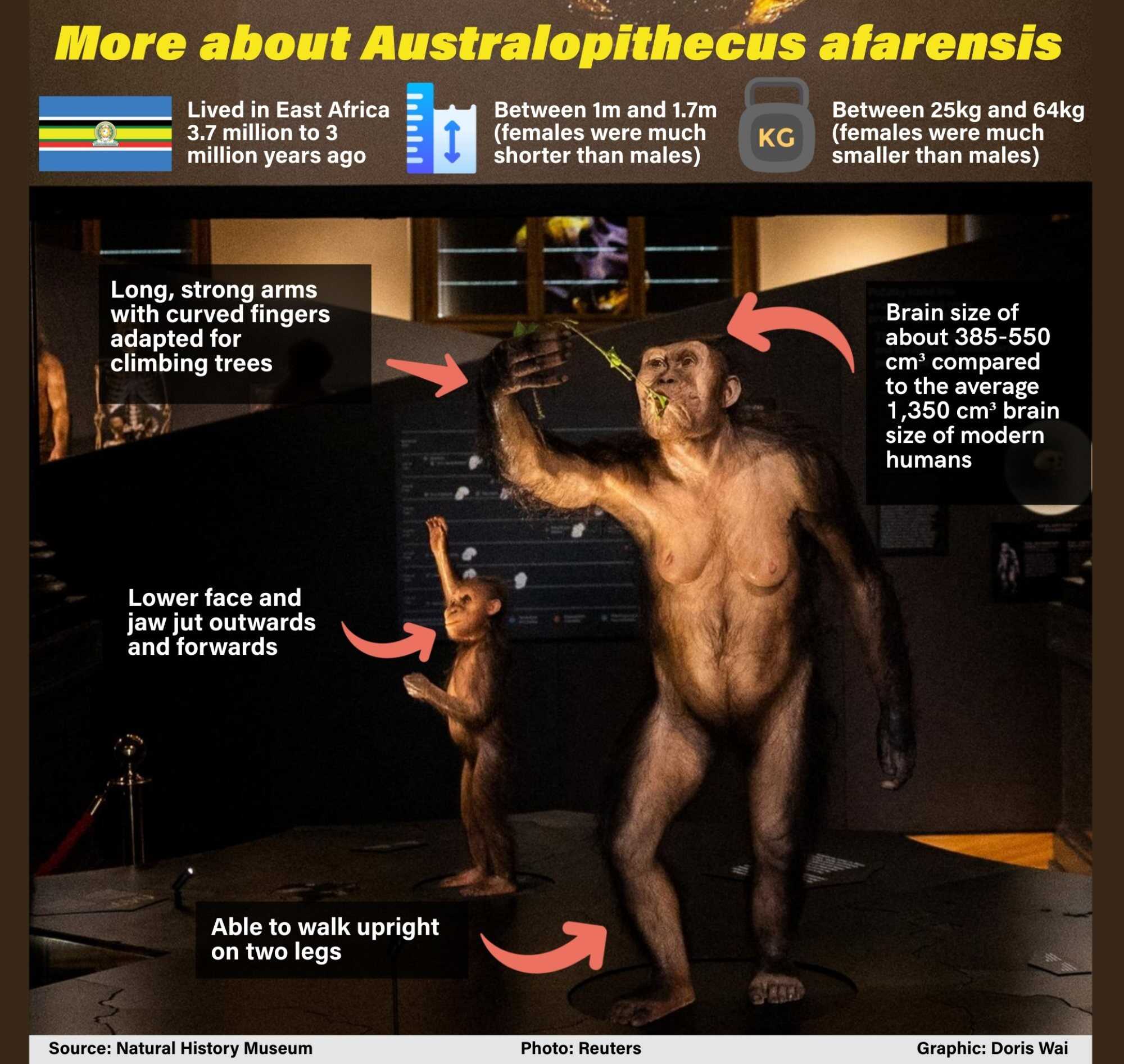
Lucy’s skeleton is 1.1 metres tall and weights 29kg. It last left Ethiopia between 2007 and 2013, when it visited US museums.
The hominid was named after The Beatles’ song “Lucy in the Sky with Diamonds”. After discovering Lucy, the researchers listened to that song.
What do we know about Lucy?
Lucy walked on two legs and is thought to have died aged between 11 and 13. This age was considered an adult for this species.
Lucy was long considered the oldest human ancestor ever found. But she lost that status in 1994 after the discovery in Ethiopia of Ardi. Ardi was a female Ardipithecus ramidus who lived 4.5 million years ago.
In 2001, Toumai – a skull dated to six or seven million years old – was found in Chad. This suggested that the human family may go much further back than previously thought.
In a 2016 study, researchers said Lucy had strong upper arms. This suggested she regularly climbed trees and nested in branches at night. She also had weaker legs that were not used for climbing and were not helpful for walking.