In Germany, Moravian stars from the eastern village of Herrnhut have become popular in recent years.
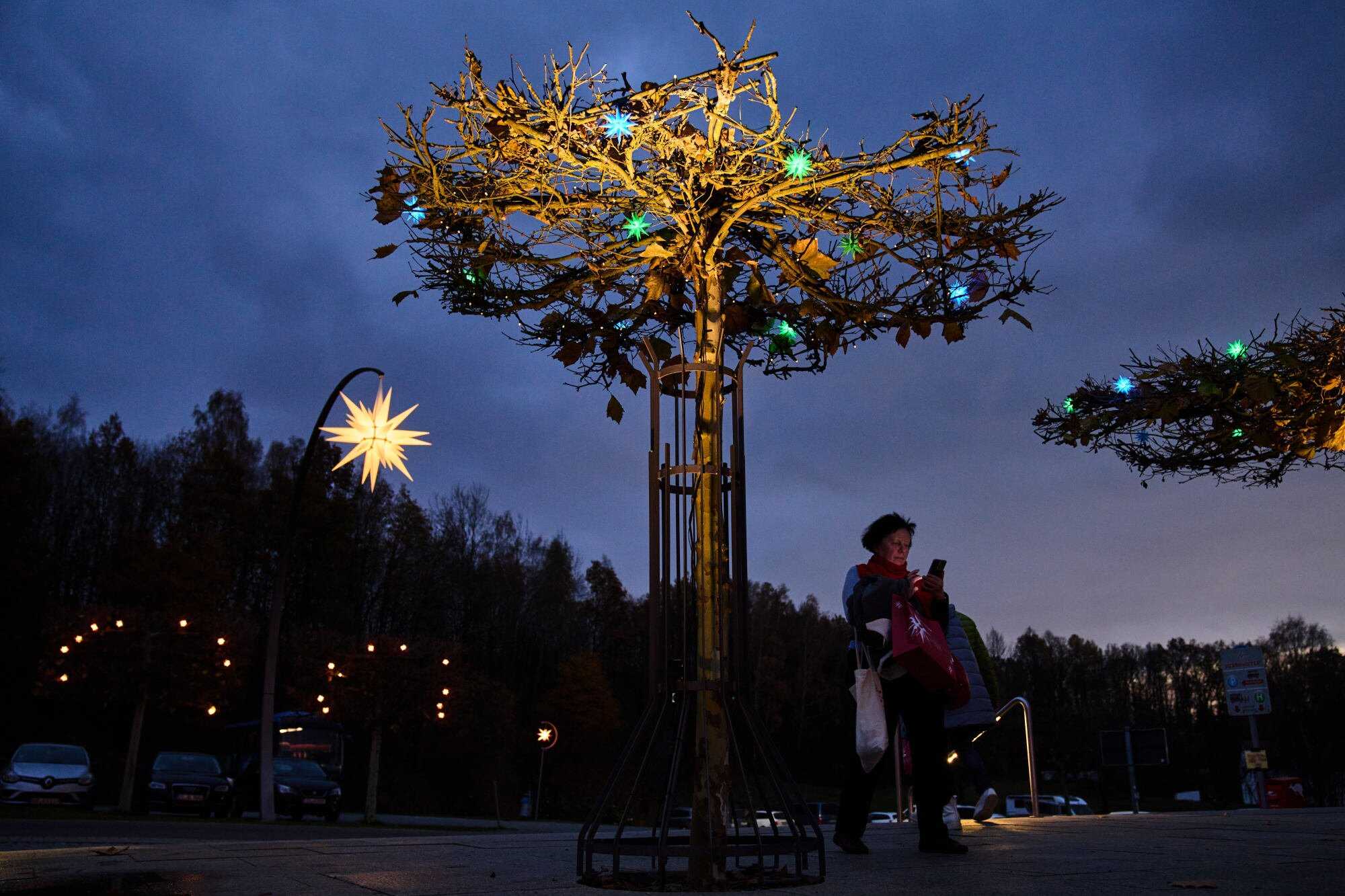
They decorate church steeples, flat windows and even government buildings in Berlin during Advent.
“It’s the symbol of the Star of Bethlehem, which guided the three wise men to the Christ Child in the manger,” said Katja Ruppert, managing director of the Herrnhuter Sterne manufacturing company.
The stars have been handmade for over 180 years in Herrnhut. Refugees from the Moravian church founded this village around 1722 after fleeing from the historical provinces of Bohemia and Moravia. These areas are now located in the Czech Republic.
The Moravian church is one of the world’s oldest Protestant denominations.
It was made in a geometry lesson
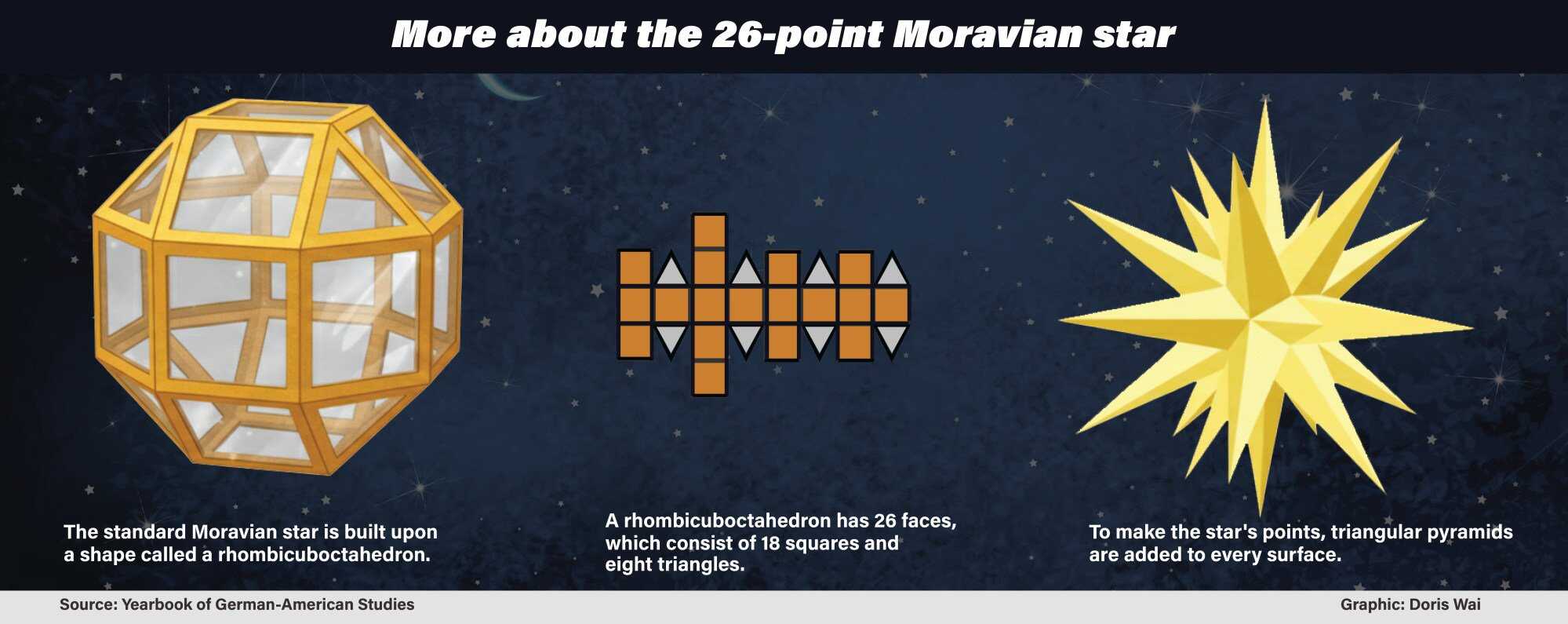
Church members were very active in education. In fact, the famous Moravian star was created in one of the schools they founded. A maths teacher asked his students to create a “truncated cuboctahedron with 17 four-corner based points and eight three-corner based points”.
That initial cardboard star was patented in 1925. Its points were designed to be taken apart for shipping and later put together again.
Originally, the points of the Moravian star were white and red, symbolising both “purity and the blood of Jesus Christ”, Ruppert explained.
As the production of the stars expanded, so did the range of colours. Today, they are made of paper or plastic and can be monochrome – a single colour – multicoloured, or feature patterns. Dubbed “literary stars”, some are even made out of the pages of old books.
There are also stars with floral spring patterns for those who want to keep the decorative ornaments up in their homes year-round.
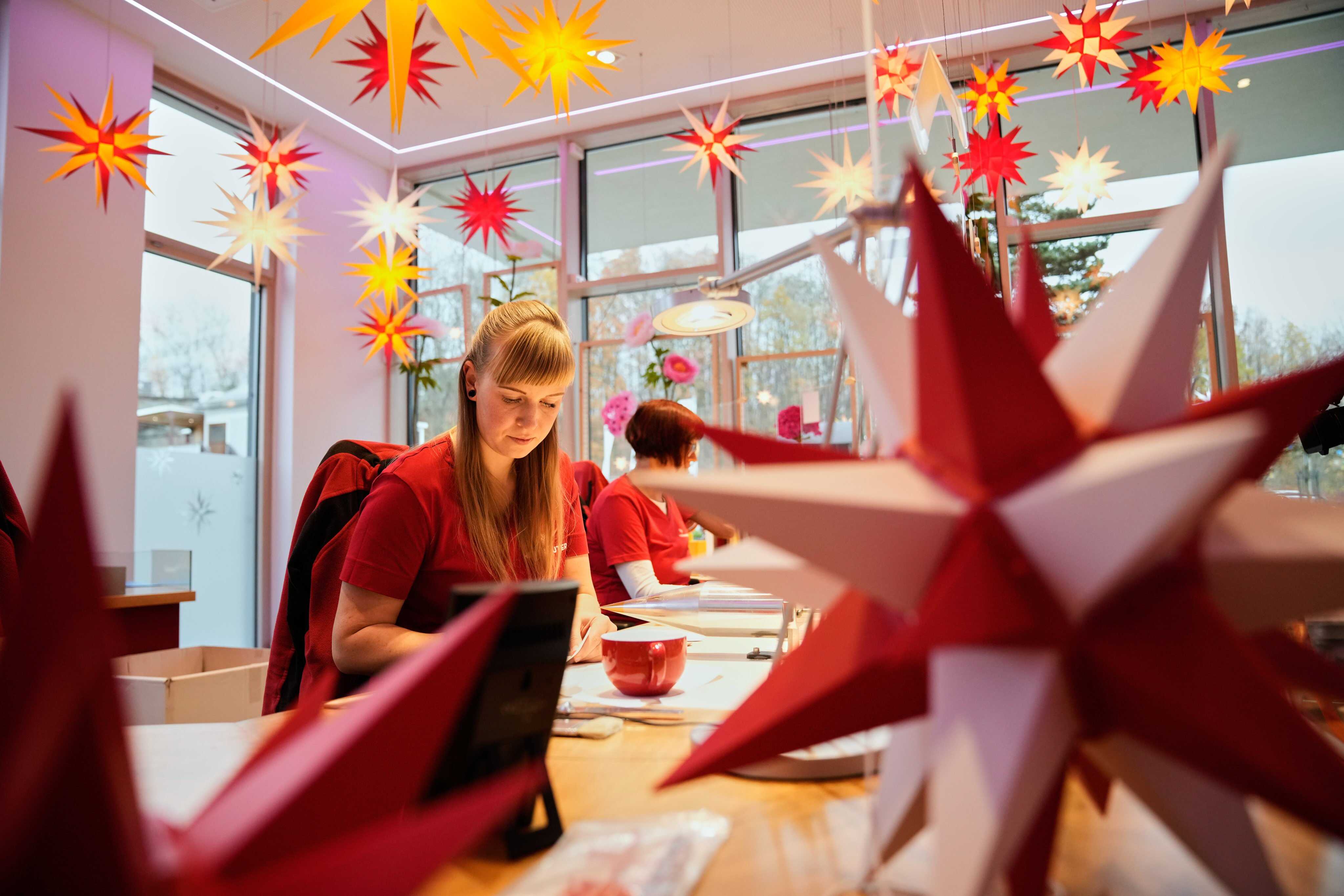
Recently, the company opened a handicrafts workshop in Herrnhut where people can make their own stars. There is also a big showroom where people can view and buy different varieties.
Nowadays, about 230 employees make more than 820,000 stars every year. More than 60,000 people visit the store and workshop annually, mostly during the weeks before Christmas.
What are other variations of the Moravian star?
The stars can have 20, 26, 32, 50, 64 or 110 points, but the most popular form is the 26-point star. It is composed of 18 square and eight triangular cone-shaped points. The 26th point is missing, so it can be hung up easily.