Deep Dive delves into hot issues in Hong Kong and mainland China. Our easy-to-read articles provide context to grasp what’s happening, while our questions help you craft informed responses. Check sample answers at the end of the page.
News: An AI assistant tool on the rise
-
Hong Kong authorities caution against popular artificial intelligence agent OpenClaw
-
The AI tool performs real-world tasks for users, which could lead to data breaches
OpenClaw has exploded in popularity. But the new artificial intelligence (AI) tool has also raised security concerns. The free, open-source AI agent was developed by Austrian software engineer Peter Steinberger. It performs real-world tasks for users, much like a supercharged digital assistant.
The system uses large language models (LLMs) and asks users to grant permissions to control applications. This includes messaging apps such as WhatsApp and Telegram, email and even online banking accounts.
An AI agent differs from chatbots like ChatGPT or Google’s Gemini, which mostly “talk”. Once connected, the agent can independently manage files, emails, calendars and more. It can perform tasks on a computer, including coding and booking tickets.
Mainland Chinese and Hong Kong authorities have cautioned against its use. They noted OpenClaw’s potential risks. This includes allowing unauthorised outsiders to access user data and control their devices.
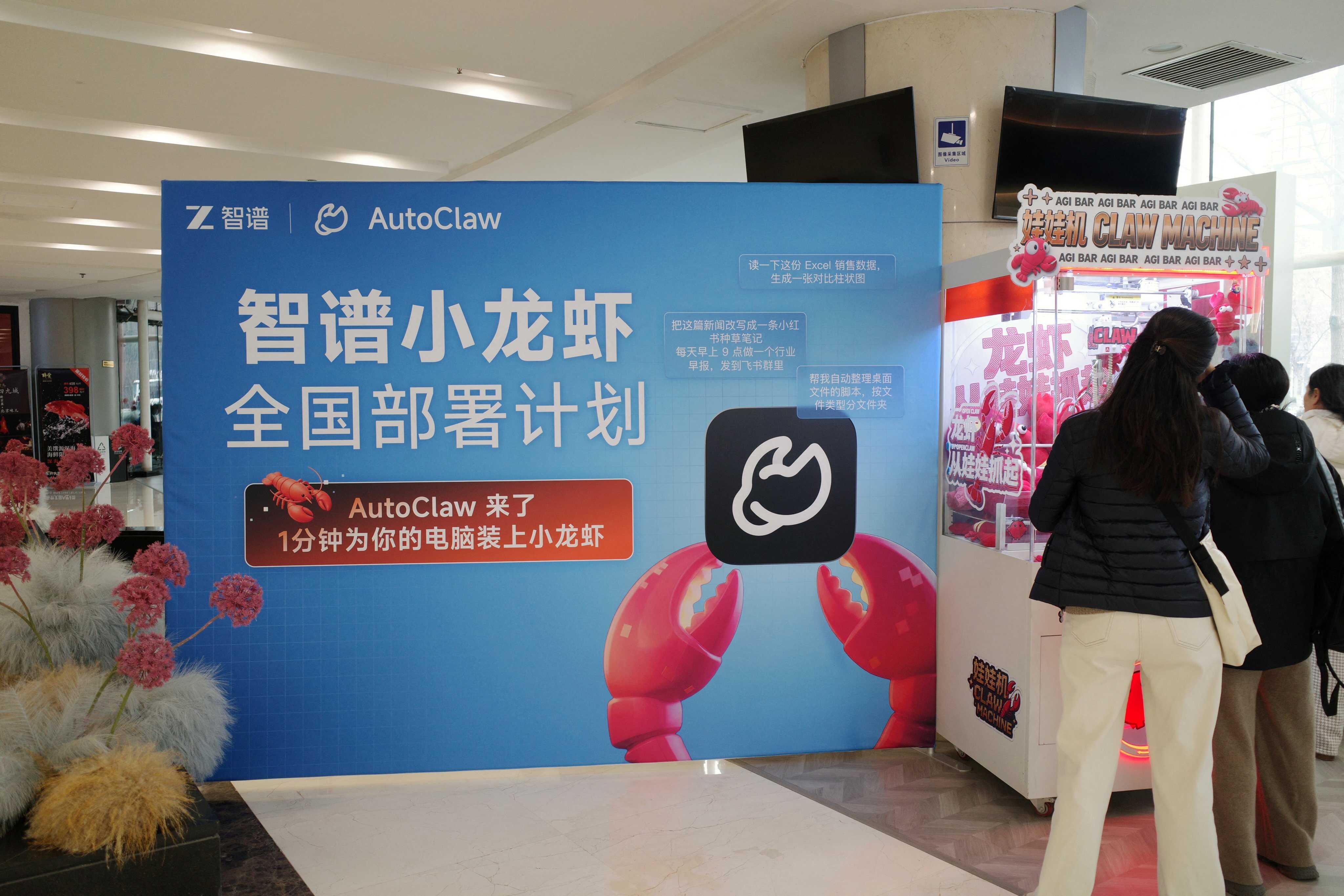
But some in Hong Kong have already adopted the tool. They have been exploring its potential as a personal assistant. OpenClaw’s logo, a red lobster, has led many to affectionately describe using it as “raising lobsters”.
Adam Chan, 46, has worked in educational technology for more than two decades. He first experimented with OpenClaw several months ago. He raised a lobster and nicknamed it “Baby Colin”.
“I started using OpenClaw because I wanted it to surprise me and tell me things I did not know,” he said. “I told Baby Colin to learn interesting things at night. Later, I found it had learned all sorts of quirky science – like the ingredients in toothpaste that protect tooth enamel.”
The agent is powered by a database and tokens – the unit that LLMs process text with. Chan said that the tool’s learning speed and memory made it feel like a pet or person growing through exploration.
Chan’s wife, Jay Kwong, also raises a lobster. She has nicknamed it “Puppycat” and said it has become her life manager. Puppycat scans Facebook for community events, suggests music festivals to Kwong, includes ticket-buying guides and sends reports.
“It feels like having an extra real person – a helper and friend,” Kwong said. “I no longer need to open many apps; it replaces my accounting, recipe storage and calendar reminders.”
Question prompts
1. Which of the following statements is false, according to the information in the news?
(1) OpenClaw is a generative AI tool that mainly produces content for users.
(2) The AI agent is becoming popular across China despite security concerns.
(3) Hong Kong authorities have fully supported using OpenClaw.
(4) Many users view OpenClaw as a life manager that runs errands for them.
A. (1), (2) only
B. (1), (3) only
C. (2), (4) only
D. (3), (4) only
2. List ONE way people use OpenClaw and explain why they choose to do it.
3. Would you want to use OpenClaw right now? Explain why or why not using the news, glossary and your own knowledge.
Infographic
Question prompts
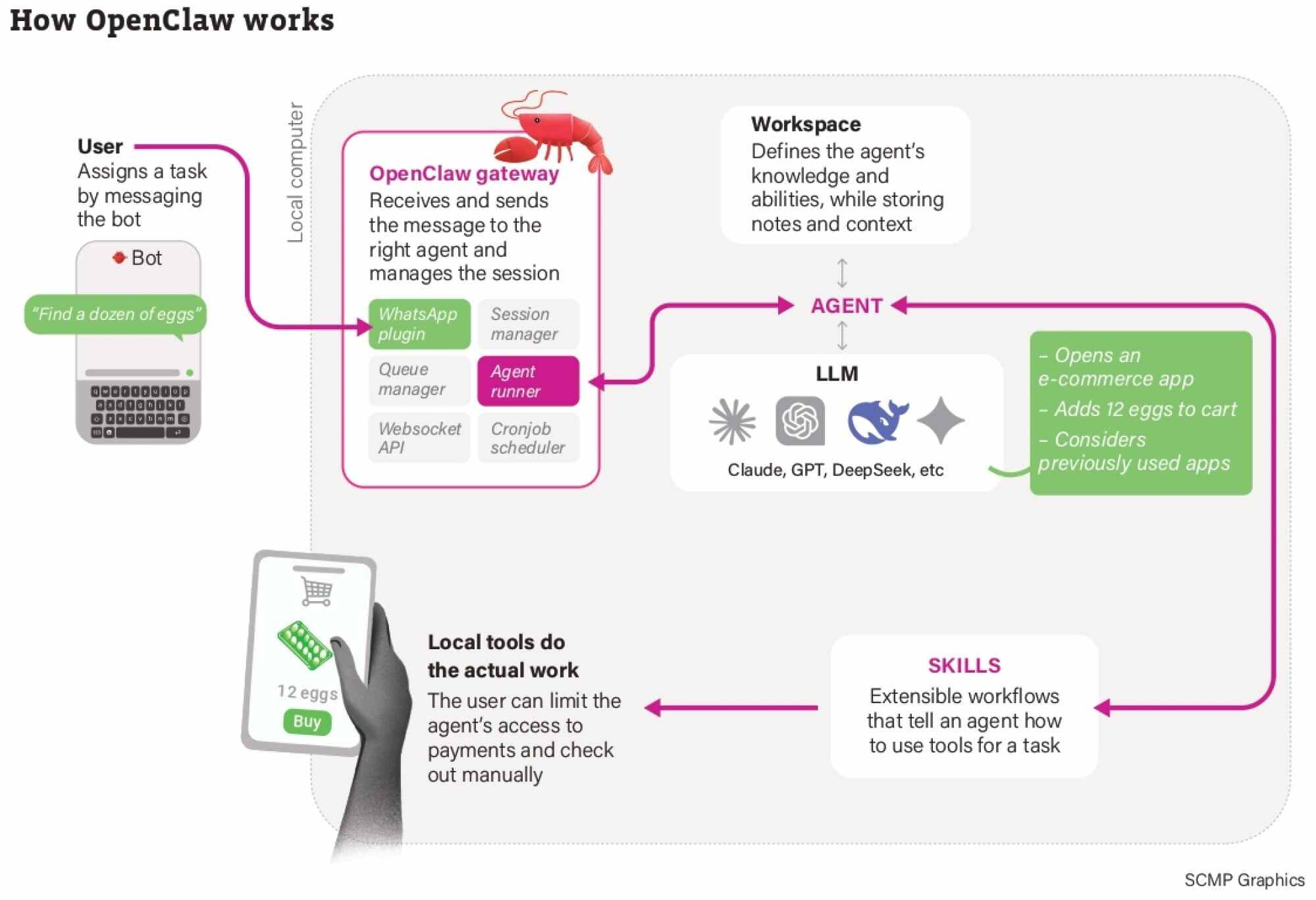
1. Describe how OpenClaw helps the user find 12 eggs.
2. Why might someone choose to check out manually?
Glossary
open-source: a computer software and its source code that can be used, studied, changed and distributed by any public user for any purpose
large language models (LLMs): artificial intelligence trained on a huge amount of text from books, websites and other sources that can “understand” and generate human language. OpenClaw is the “hand” that executes tasks, and LLMs, like OpenAI’s ChatGPT or China’s DeepSeek, are the “brains”.
potential risks: OpenClaw in particular could be dangerous since it makes use of a wide range of external tools provided by third parties – known as skills – to perform tasks

Sample answers
News
-
B
-
One way a user in the article uses it is to have their lobster scan Facebook for events and create ticket-buying guides. The AI agent can autonomously manage files, emails and calendars. It performs real-world tasks for users, much like a supercharged digital assistant. (accept all reasonable answers)
-
I would be interested in trying OpenClaw, but I would also be very cautious about using it right now. According to News, OpenClaw is a free, open-source AI agent that connects with large language models to perform real-world tasks like sending messages, managing emails and even booking tickets. It appears to be a convenient tool, as it could save me a lot of time and help organise my life more efficiently, much like how Jay Kwong’s “Puppycat” assists her with daily activities. However, I am concerned about the potential security and privacy risks. Authorities in Mainland China and Hong Kong have warned against using OpenClaw, as it could allow unauthorised users to access private data and control devices. Since it requires users to grant access to sensitive accounts like email and online banking, it could leak personal information and lead to hacking attacks. In conclusion, while OpenClaw seems innovative and useful – combining the “hands” of automation with the “brains” of large language models – I would probably wait until stronger security protections are guaranteed before using it. (accept all reasonable answers)
Infographic
-
After receiving a request from the user, OpenClaw sends a message to the right agent to perform the task, which here is an order on an e-commerce app. It uses information from a large language model to understand which e-commerce app is needed. It adds 12 eggs to the cart, and then a user can check out either manually or grant OpenClaw access to their bank account to make the payment.
-
A user might choose to check out manually to limit the agent’s access to payment applications, to avoid unwanted payments or data breaches.