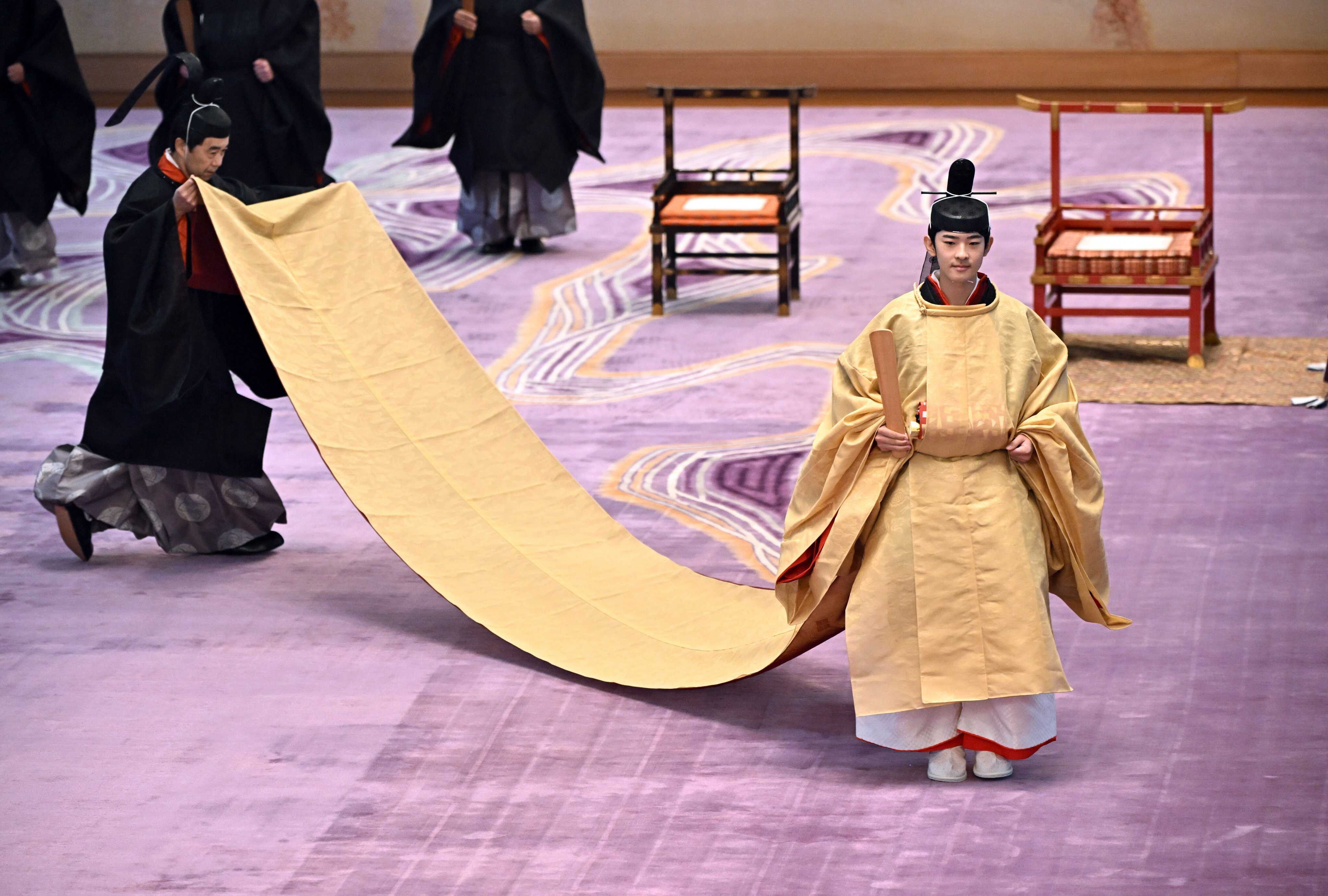
[1] Prince Hisahito is the first male royal in Japan to reach adulthood in 40 years. He could also be the last. The palace rituals to formally recognise Hisahito as an adult are elaborate. They are also a reminder of the potentially bleak future for the world’s oldest monarchy. This is because Japan has a male-only succession policy – and it’s losing numbers.
[2] Hisahito is second in line to the Chrysanthemum Throne. He is likely to become emperor one day. However, after him, there is no one left. This leaves the Japanese imperial family with a dilemma. Is it time to reverse the 19th-century ruling that banned women from inheriting the throne?
[3] Hisahito is a first-year student at the University of Tsukuba, near Tokyo. He enjoys playing badminton and is studying biology. The prince loves bugs and is especially devoted to dragonflies. He has already co-authored an academic survey of the insects on his estate grounds. In his debut news conference in March, the prince said he hoped to help protect insect populations.
[4] Hisahito was born on September 6, 2006. He is 19 years old. He is the only son of Crown Prince Akishino – the heir to the throne – and his wife, Crown Princess Kiko. He has two older sisters, Princess Kako and Mako, a former princess. Mako lost her royal status when she married a “commoner” in 2021. Hisahito’s coming-of-age rituals took place this month, a year after he became a legal adult. This is because Hisahito wanted to concentrate on his university entrance exams.
[5] Hisahito could become Japan’s last emperor. His father is the younger brother of Emperor Naruhito. The ruling monarch of Japan only has one child, a daughter. Hisahito’s father, Akishino, was the last male to reach adulthood in the imperial family. That means Hisahito and his father are the only two male heirs who are younger than the Emperor. The former Emperor’s younger brother is third in line to the throne. However, he is already 89 years old.
[6] The shortage of male heirs is a serious concern for Japan’s imperial family. Historians say the country’s monarchy is at least 1,500 years old. The issue reflects Japan’s ageing and shrinking population. Japan has had female emperors before. There have been eight, but none produced an heir during their reign. The most recent female emperor was Gosakuramachi, who ruled from 1762 to 1770. Succession became legally restricted to men for the first time through a constitutional ruling in 1889. The 1947 Imperial House Law also only allowed men to inherit the throne.
Source: Associated Press, September 6
Content provided by British Council