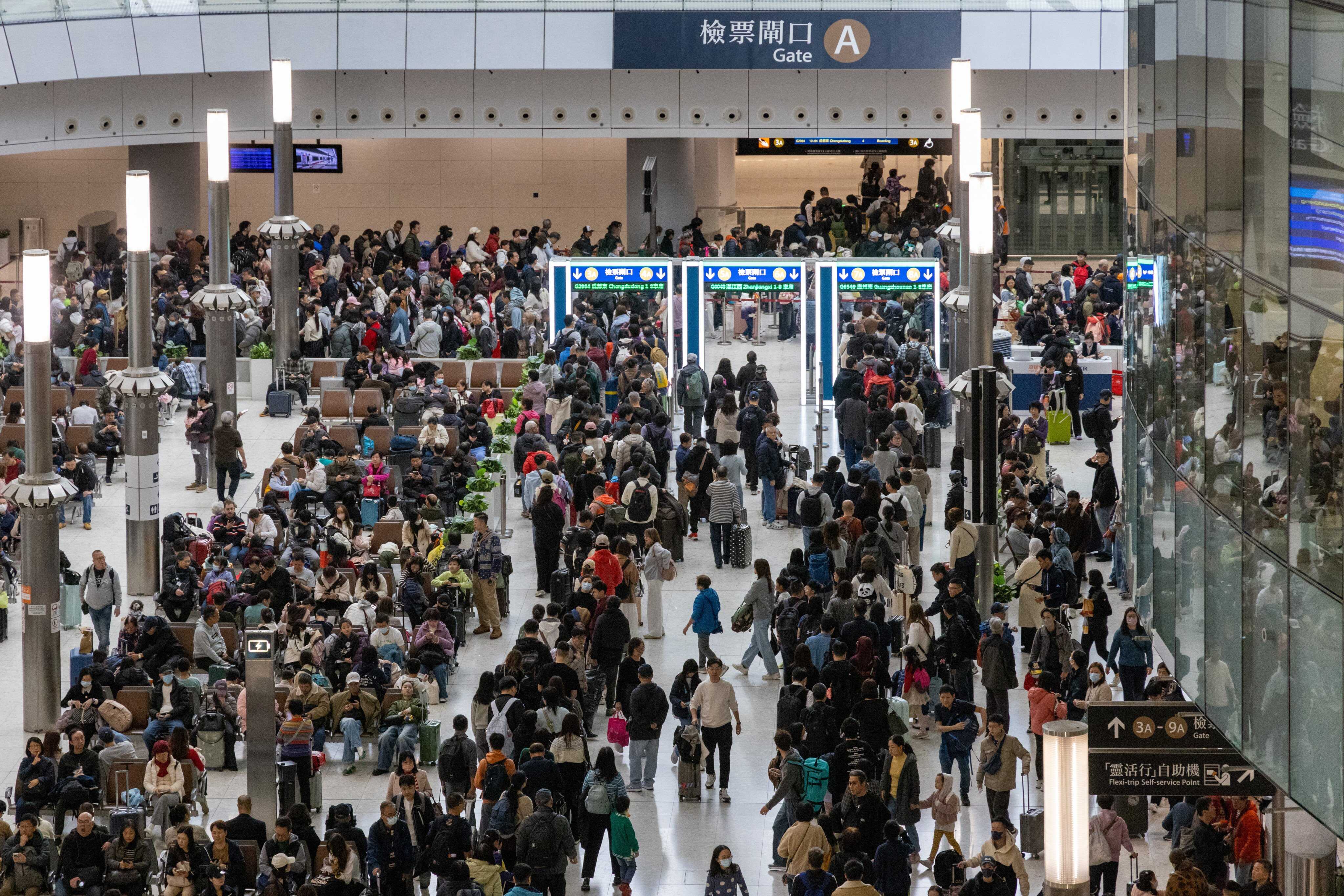
[1] Last year, passengers took more than 30 million trips on Hong Kong’s high-speed train that crosses borders. This was a 17 per cent increase from 2024 and set a new record.
[2] The MTR Corporation said that on December 27, West Kowloon train station set a new record for the most passengers in a single day. About 140,000 people used the train that day.
[3] The company said that the number of users last year was the highest ever. They added that since the service began in September 2018, more than 100 million passenger trips have been taken. “Currently, the majority of [high-speed rail] passengers are short-haul travellers, accounting for approximately 80 per cent of the total,” the company said.
[4] “The proportion of Hong Kong residents [using the service] has steadily increased from about 30 per cent initially to approximately 45 per cent,” it added. Mainland Chinese and overseas travellers accounted for the rest of the users.
[5] Jeny Yeung Mei-chun is the first female CEO of the company in 45 years. She said they are working with other companies and local officials on both sides of the border to add more stops to the train services.
[6] Mark Chong Ho-fung, a lawmaker from the Roundtable party, said that the high-speed train should be as easy and flexible as the MTR system. He suggested that passengers should be able to enter the station without buying tickets in advance.
[7] This means that passengers could buy tickets for any open seats or standing spots. It could help more local people, especially those living in Kowloon West and Hong Kong Island. “Currently, it takes only 14 minutes to travel from West Kowloon terminus to Futian station, and 18 minutes to Shenzhen North station,” Chong said. “But passengers are required to arrive at the station 30 minutes early to enter the gate, which undermines efficiency.”
[8] Timothy Chui Ting-pong is the executive director of the Hong Kong Tourism Association. He said that the MTR Corporation could add more medium-distance routes. He suggested connecting to cities like Zhanjiang in Guangdong, Guiyang in Guizhou province, and some places in Hunan and Hubei provinces. Other possible stops could include cities located south of the Yangtze River.
Source: South China Morning Post, January 4