Every week, Talking Points gives you a worksheet to practise your reading comprehension with exercises about the story we’ve written.
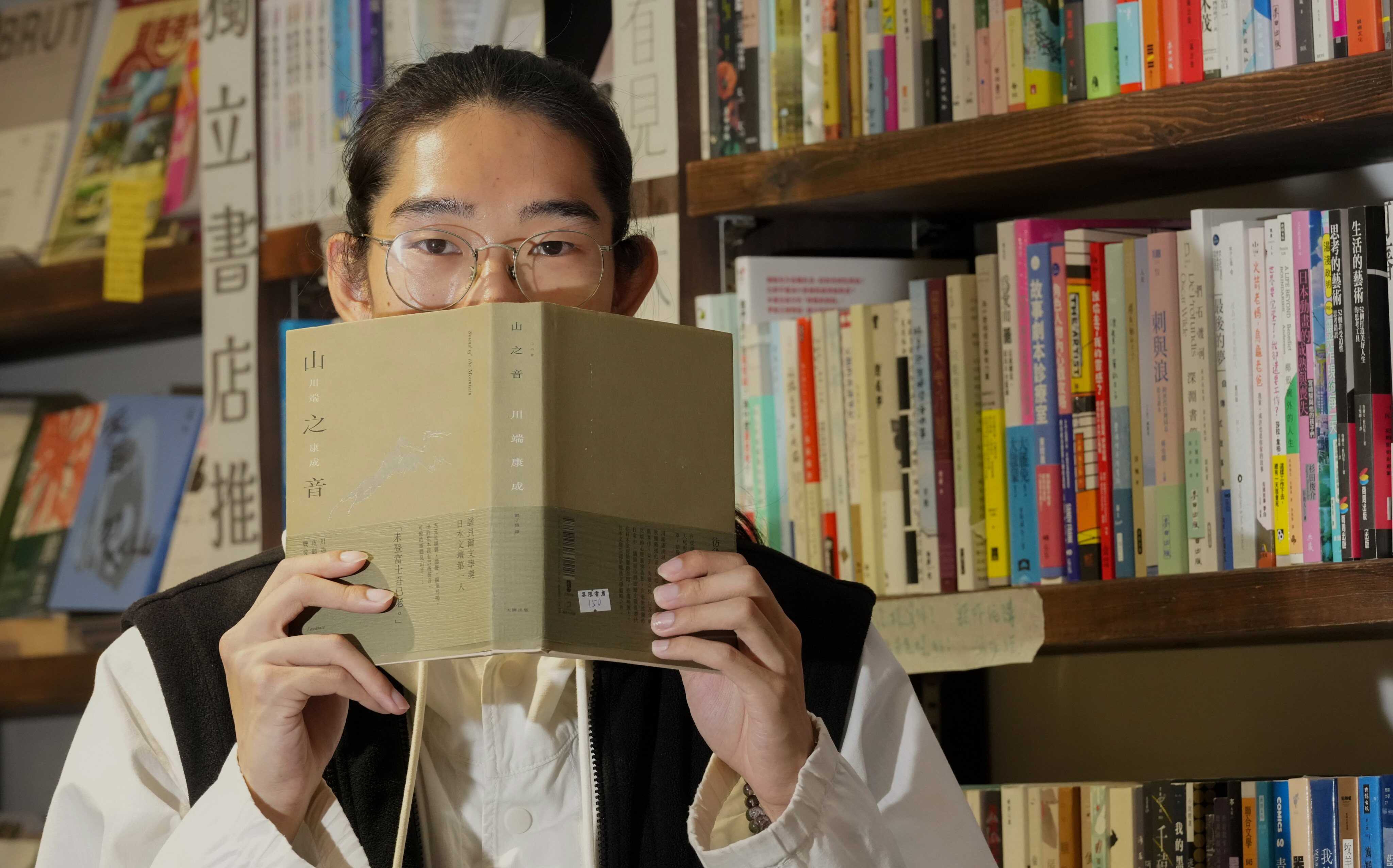
In a Mong Kok bookstore, a group of strangers sat together to discuss modern society.
Jerry Pun was teaching this class. It was part of a literary group called Little DooDoo. Pun started this group to encourage Hongkongers to enjoy creative writing.
At the workshop, Pun dived into the works of writer and novelist Franz Kafka. He pushed attendees to reflect on how modern life could be strange and lonely.
Since 2021, Little DooDoo has regularly organised public writing classes covering Chinese and global authors. It also holds school workshops that teach pupils about literary devices and techniques. Topics include how to write metaphors and build character.
But Pun, 26, did not grow up planning to be a writer: “As a child, I preferred reading history and philosophy books. I wasn’t very interested in literature,” he said.
Like many pupils, he used to see writing as something done in exams. He thought it was just about having the right structure and style.
That changed when he took a creative writing course during university.
“[It] made me realise that there is a type of writing where you don’t need to care so much about grades [and] right and wrong,” Pun said.
“There is so much space to express yourself.”
Inspiration for expression
For Pun, writing is more than storytelling – it is a way to better understand his experiences.
He said he was influenced by Chinese novelist Mo Yan, who won a Nobel Prize and writes about his childhood. Pun was also inspired by French writer André Breton, whose works explored people’s dreams.
At first, Pun’s childhood memories did not seem important. But as he began writing about them, he looked at those moments more carefully.
“I had to ask myself why I remember those things from my childhood. What do these memories mean to me?” he said. “This process forced me to think about what I was like as a child and how I view that child.”
Art of writing
Pun wants to make writing feel less scary, especially for pupils. He recalled teaching a Form Four student who had grown up in different cities and struggled with writing in Chinese.
To help, he introduced her to Chinese writer and scholar Yu Qiuyu. Yu has written about travel, culture and nostalgia. After the student connected her experiences with Yu’s works, she used his writing technique to express herself.
In his classes, Pun explains an author’s background and analyses their works. Then, participants try their hand at writing. They use the literary techniques and themes they have just discussed and explored.
This process helps his students better understand how and why authors write.
While he does not oppose artificial intelligence (AI), Pun said he noticed more pupils relying on the technology. But he noted that students would still need strong writing skills to craft AI prompts.
Pun stressed that writing should not just be about the final product. It should include the entire process from thinking of the initial idea and understanding the emotions to organising your thoughts.
“AI can make more perfect, flawless, structured articles, but the joy of writing [lies in] the process of thinking and organising your ideas – which AI can’t replace,” he said.