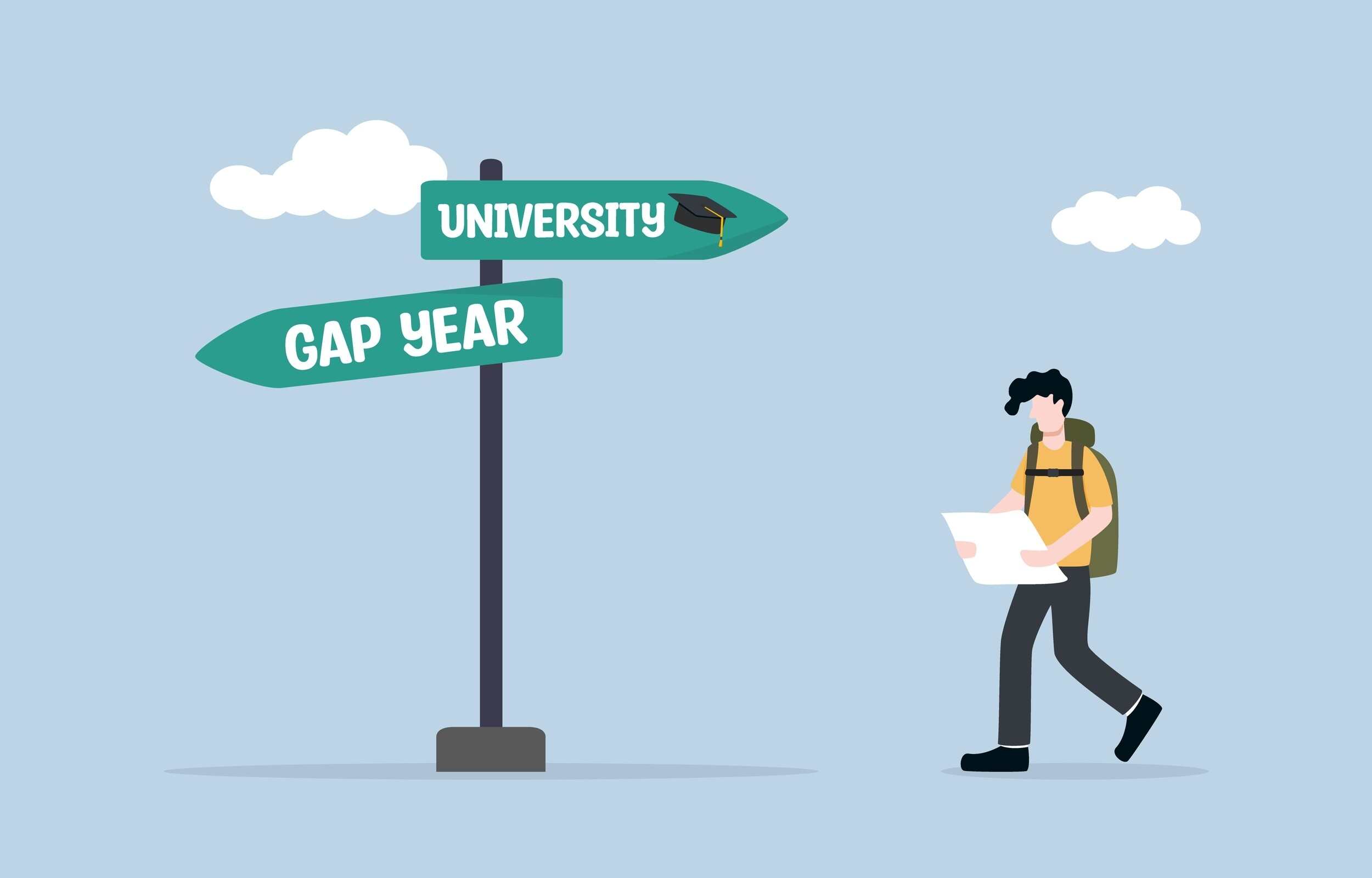
Thousands of students in Hong Kong are anxiously waiting to see if they have been accepted into their dream university programmes. The results for the Joint University Programmes Admissions System (Jupas) will be released on August 6.
If you don’t receive the results you were hoping for or if unexpected circumstances arise, remember there are still options available to you – one of which is taking a gap year.
Young Post spoke to two individuals who took unexpected gap years; they explained how the decision positively impacted their academic and career prospects.
Gaps, goals and growth
Flight changes and quarantine protocols during the Covid-19 pandemic posed unique challenges for students planning to study overseas.
For Brian Yeung Ching-hong, who had to remain in Hong Kong at the beginning of the pandemic, he knew that taking online classes at the University of California, Los Angeles, would be challenging.
“It’s quite difficult to wake up at like, 3am and still contribute in a seminar,” said Yeung, who studied history.
“Also [I would have had to] pay the tuition ... the best way was to take a gap year to save the tuition [and] to gain some work experience.”
Yeung took a gap year from the end of 2020 to the end of 2021, during which he interned at the South China Morning Post.
Now, he is pursuing a graduate degree at the University of Chicago, and he has taken another gap year to care for his father, who is facing a health challenge. Yeung returned to Hong Kong in May and is once again interning at the South China Morning Post.
“I think it was the best decision to come back to Hong Kong because I don’t want to regret anything,” said Yeung, who is 25.
“The best part, of course, is to be able to see my father, my family, and also, at the South China Morning Post, I have to take up more responsibility.”
Yeung said that, although the gap years interrupted his education, the experience would ultimately benefit him in the long run.
“You can always learn,” he said. “Right now, I think having a degree is more common. What makes you [stand out] is ... experience or insights you gain outside of school.”
Yeung said that students looking to take gap years should try new things.
“Or when unexpected things you didn’t plan [for] happen ... try to solve them,” he said.
Finding purpose in pause
For 21-year-old Haana Rizvi, taking a gap year was something “that hadn’t really been on my radar until ... Covid”.
Rizvi graduated from secondary school in Hong Kong in 2021. Initially, she wanted to study in the UK but ultimately decided against it because she was unwilling to quarantine during breaks to visit her family in Hong Kong.
During her gap year from 2021 to 2022, she stayed in Hong Kong, took online classes, explored her interests, and participated in volunteer work.
At first, it wasn’t easy because most of her friends were taking the next big step in life by going to university, Rizvi explained, adding that she had to “go through that mental challenge of overcoming the fact that it’s OK where you are right now, it’s OK if other people are starting university and you’re not”.
Rizvi also expressed her frustration that she could not take advantage of her gap year by securing an internship in healthcare, her desired field.
“It was really difficult because everything healthcare-wise was just like, shut down in Hong Kong,” she said. “The hospitals were overflowing, packed with patients. It was obviously not the ideal time to hire students.”

Thankfully, many positives came from her gap year, including her decision to study biomedical sciences.
“Because of Covid, there were so many new biomedical discoveries, like vaccines and the nature of the virus .... that was also really mind-opening for me, because I realised that this is a really interesting field,” said Rizvi, who is about to enter her final year at the University of Hong Kong.
She appreciates her gap year not only for helping her choose her programme and school, but also because it provided a much-needed break after she had spent most of her life studying.
Rizvi advised students considering a gap year to take time to think about what they genuinely want.
“Trust your gut and go for it,” she said. “It’s the first [decision] you make as a young adult, [and it] will help you with your confidence as well in the future.”