




Every week, Talking Points gives you a worksheet to practise your reading comprehension with exercises about the story we’ve written.
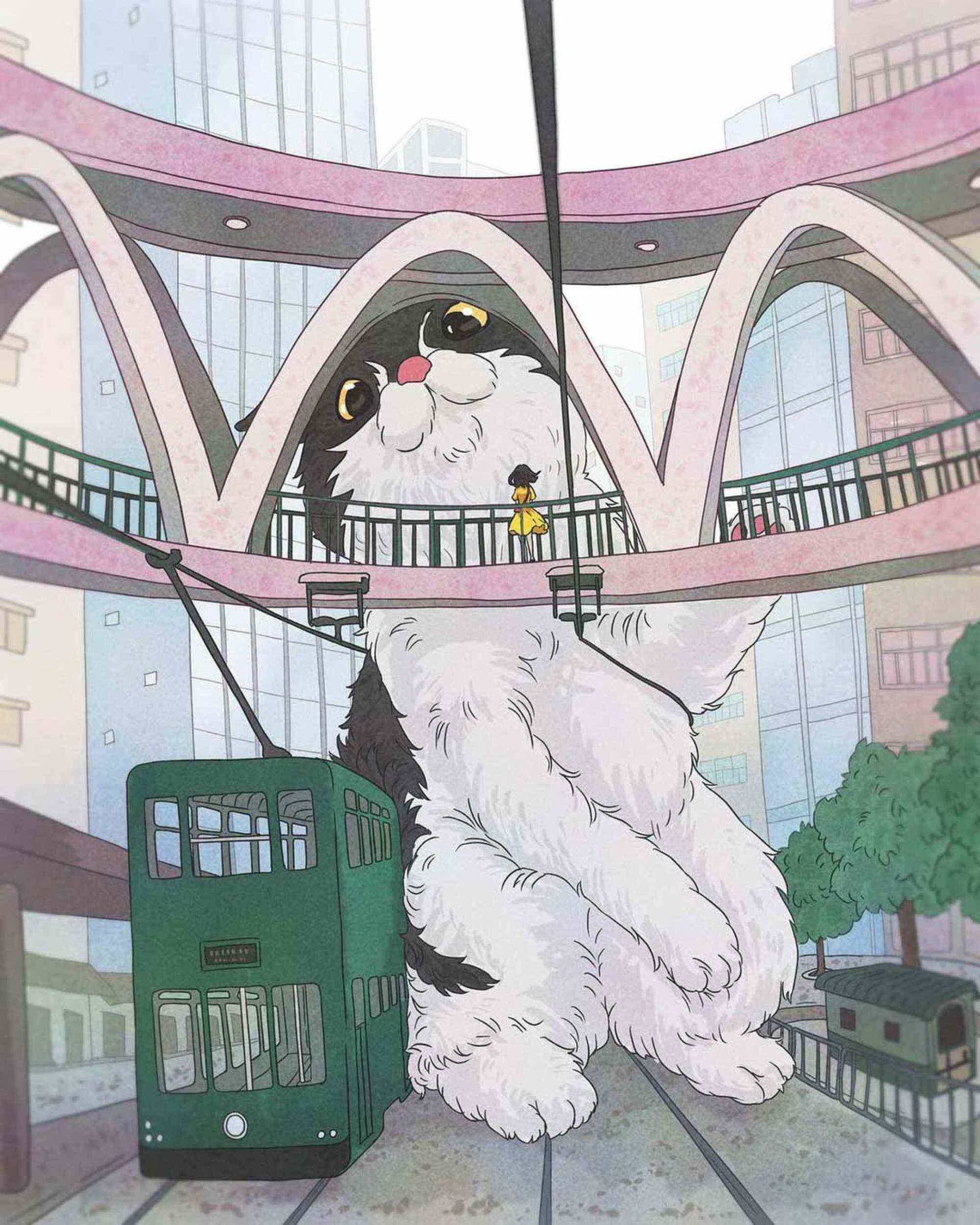
It all began with a stand-off between a shy Yorkshire terrier and a wary cat named Eevee.
Hong Kong illustrator Maf Cheung recalled the endearing moment when her pup was sized up by her friend’s suspicious cat, crouching under a chair.
“My dog is extremely introverted and not social at all, while Eevee is one of those cats that bullies the weak but fears the strong,” recalled Cheung, who is in her 30s. “Since my Yorkie was bigger, Eevee gave her this sceptical look and chose a very cautious, safe spot.”
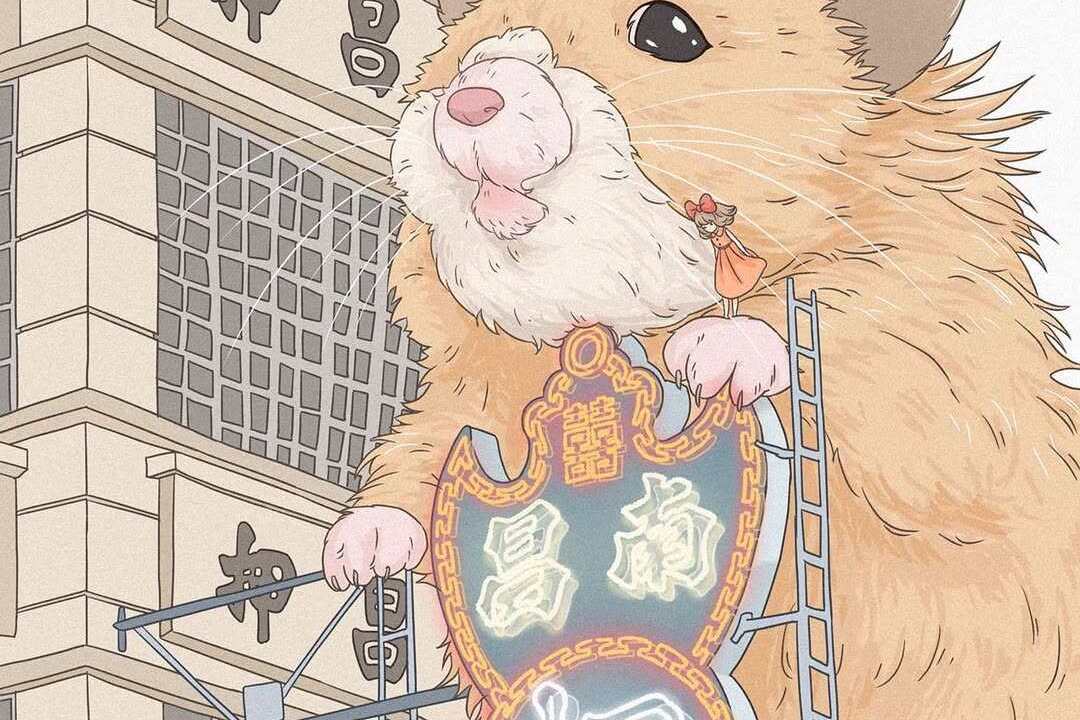
This brief encounter sparked the first piece in Cheung’s “Hong Kong Giant Animal Series” in which playfully oversized animals roam freely in the city.
In the first work of this series, a towering cat modelled after Eevee peeks through a circular pedestrian bridge in Causeway Bay. The fluffy feline dwarfs a passing green tram as if it were a toy.
“The way she looked at us felt like she was judging all of humanity,” Cheung said.
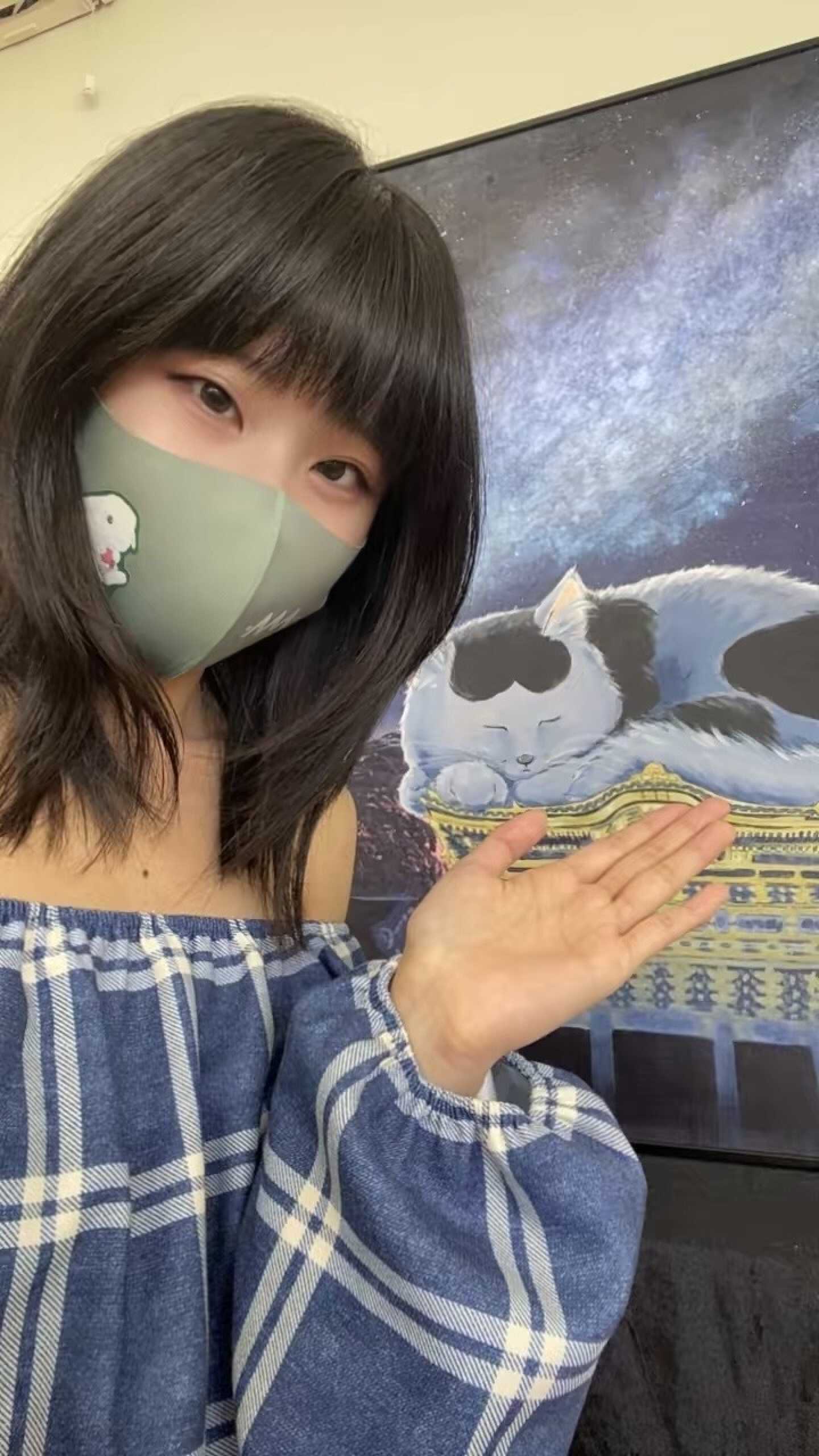
She has worked on the series since 2022 and compiled 90 of the pieces into a book published in 2023. It features not only common pets like cats and dogs, but also rarer animals such as Chinese white dolphins and chinchillas.
Beyond animals, Cheung also aims to capture Hong Kong’s nostalgic scenes and storied shops – especially those that have disappeared. One of her pieces features a giant sparrow at the former Hung Hom station.
“A fan messaged me and said, ‘It’s perfect that you drew a sparrow there because, in my experience, the sparrows at Hung Hom are the fattest in all of Hong Kong because they eat McDonald’s,’” Cheung said.
Man Tsang’s comic adaptation of Star Wars: Thrawn launches Hong Kong artists to the global stage
Reimagining Hong Kong
When Cheung was in primary school, her best friends weren’t her classmates; they were her dad’s pets: goldfish, koi, turtles, birds, chinchillas and even hawks.
“I spent more time with those animals than I did playing with other kids. Even when we had family gatherings, I preferred being with the pets,” she said.
As an adult, Cheung still finds solace in her animal friends.
“By making them giant, I’m projecting my feelings onto them. These are the beings I trust, the ones that help me relax,” the illustrator said.
Cheung’s blend of realism and fantasy started with Hayao Miyazaki’s Nausicaa of the Valley of the Wind.
“That’s where the fairy-tale dreaminess in my art comes from,” she said.
Another master of animated films who has influenced her is Satoshi Kon.
“His stories blended reality with the subconscious – mental illness, psychological stress – everything that exists only in the mind,” she said. “So the dreamlike aspects of my work aren’t just about being cute – they reflect deeper emotional realities too.”
The creator said her favourite in the animal series is of a flying squirrel saving a girl at Lei Tak Estate.
“That piece was actually about processing my own negative emotions at the time. A lot was happening in Hong Kong then, and I was feeling overwhelmed,” she explained.
“I imagined – what if in that moment, a giant flying squirrel came to save me? That idea brought me comfort.”
Explore beyond what you know
Cheung has also created two artworks set in Japan, one of which was selected for an exhibition that ended last month at the Tokyo Metropolitan Art Museum.
For the project, she spent a month in Japan immersing herself in local life, and she chose to feature Ueno, a district in Tokyo, and Tosho-gu Shrine, part of a Unesco World Heritage site.
“Ueno is ... home to shodo [Japanese calligraphy], which is recognised as an important intangible cultural heritage. I found it fascinating how the area is working to preserve and revisit that tradition,” she said.
“As for Tosho-gu ... I remember looking up at the night sky there, filled with stars and the Milky Way,” she said. “Inside one of the shrine’s towers, I saw a well-known cat sculpture and imagined it coming to life, peacefully sleeping under the night sky.”
Artist Tommychief Oil’s works help Hong Kong’s lost landmarks find new life
Cheung encouraged aspiring artists in Hong Kong to also look beyond the city’s art scene.
“One of the unique things about Hongkongers is how international we are: we speak multiple languages; we’re curious about other cultures, and that global mindset is a real strength,” the artist said.
Her advice to young illustrators is to take the time to find their artistic voice.
“Art is inherently slow. It grows from experience and reflection – and those things need time to settle and take shape,” she said.
To test your understanding of this story, download our printable worksheet or answer the questions in the quiz below.
