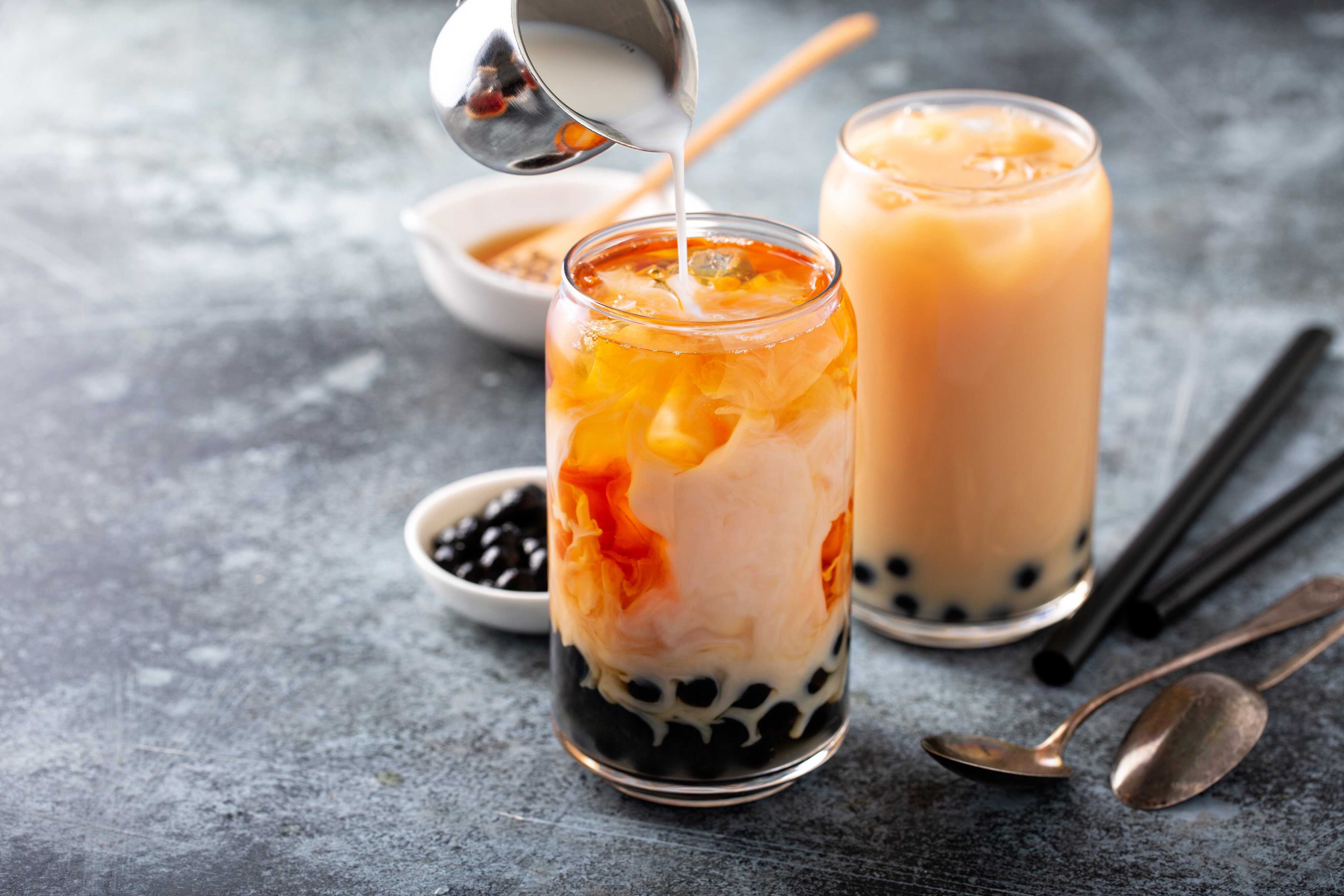
As summer approaches, there is nothing quite like a cup of bubble tea to cool you off and satisfy your taste buds. While some may see the drink as a simple concoction, most bubble tea lovers would agree that the boba’s texture is important in determining how enjoyable the drink will be.
A boba, or tapioca ball, is an edible translucent sphere produced from tapioca, a starch made from the root of the cassava plant.
Starch is a complex carbohydrate that has different proportions of two polysaccharides: amylose and amylopectin. Different starches – such as potato, corn or cassava – have their own ratio of these polysaccharides. Polysaccharides are a type of complex carbohydrate linked together by many sugar molecules.
Amylose is a type of polymer found in starch. It is composed of hundreds to thousands of glucose units. Amylopectin, on the other hand, is made up of thousands to millions of glucose units. Amylopectin makes up about 80 per cent of tapioca starch, and this is the key to why boba is so irresistibly chewy.
Preparing boba starts with placing the hard pearls in boiling water. This process breaks the hydrogen bonds that are holding the amylose molecules together. The glucose units in amylose can now slip and slide, resulting in a gel-like texture and increased volume. This process is called gelatinisation (see graphic).
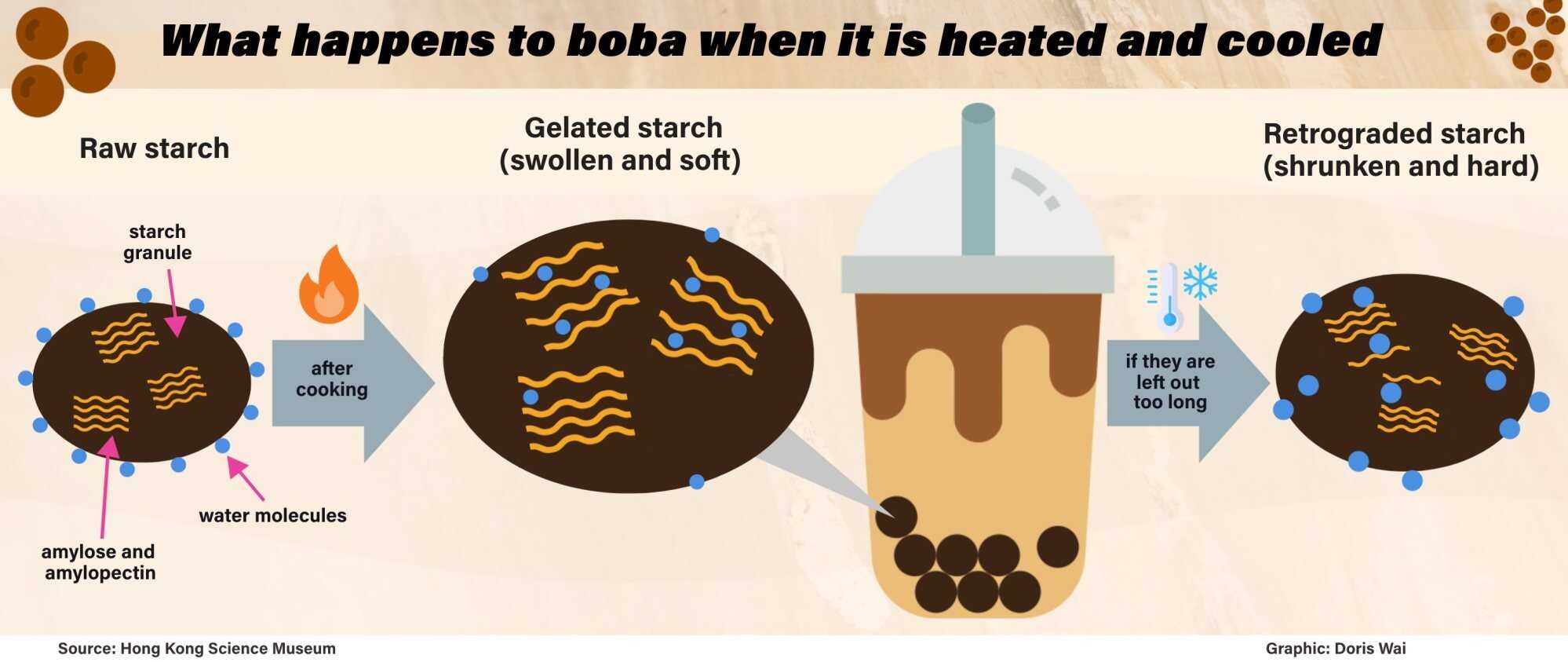
Gelatinisation also occurs in amylopectin. However. amylopectin does not interact with water as easily as amylose does. When heated, amylopectin forms a less rigid gel, which makes the boba chewy.
After the tapioca pearls have been cooked, they must be cooled immediately to “lock in” the starch molecules and prevent them from becoming too soft or mushy. This is why boba is typically served in cold drinks – it stops them from further expanding in the water.
A layer of brown sugar syrup is usually added to the tapioca pearls, and the syrup acts as a protective shield to keep them from drying out.
When the boba sits out for too long, the starch starts to reorganise and lose moisture. When this happens, the amylose and amylopectin chains rearrange themselves and form structured regions within the starch, creating a dense and rigid texture. This transformation is called retrogradation. So when boba is left out, it becomes hard and unpleasant to eat.
Now that you know the secrets of boba, you can create your own fabulous bubble tea concoctions. All you need is to cook the boba and let the pearls swell to your desired chewiness. Add a little brown sugar syrup to keep them moist and flavourful. Then, let them cool down in a cup of chilled tea to complete your refreshing treat!
How herbal tea culture is being brewed for a new generation
Young Post has partnered with Hong Kong Science Museum and Hong Kong Space Museum to encourage your pursuit of science. Every month, the museums answer questions about the world around us, the cosmos and beyond.