




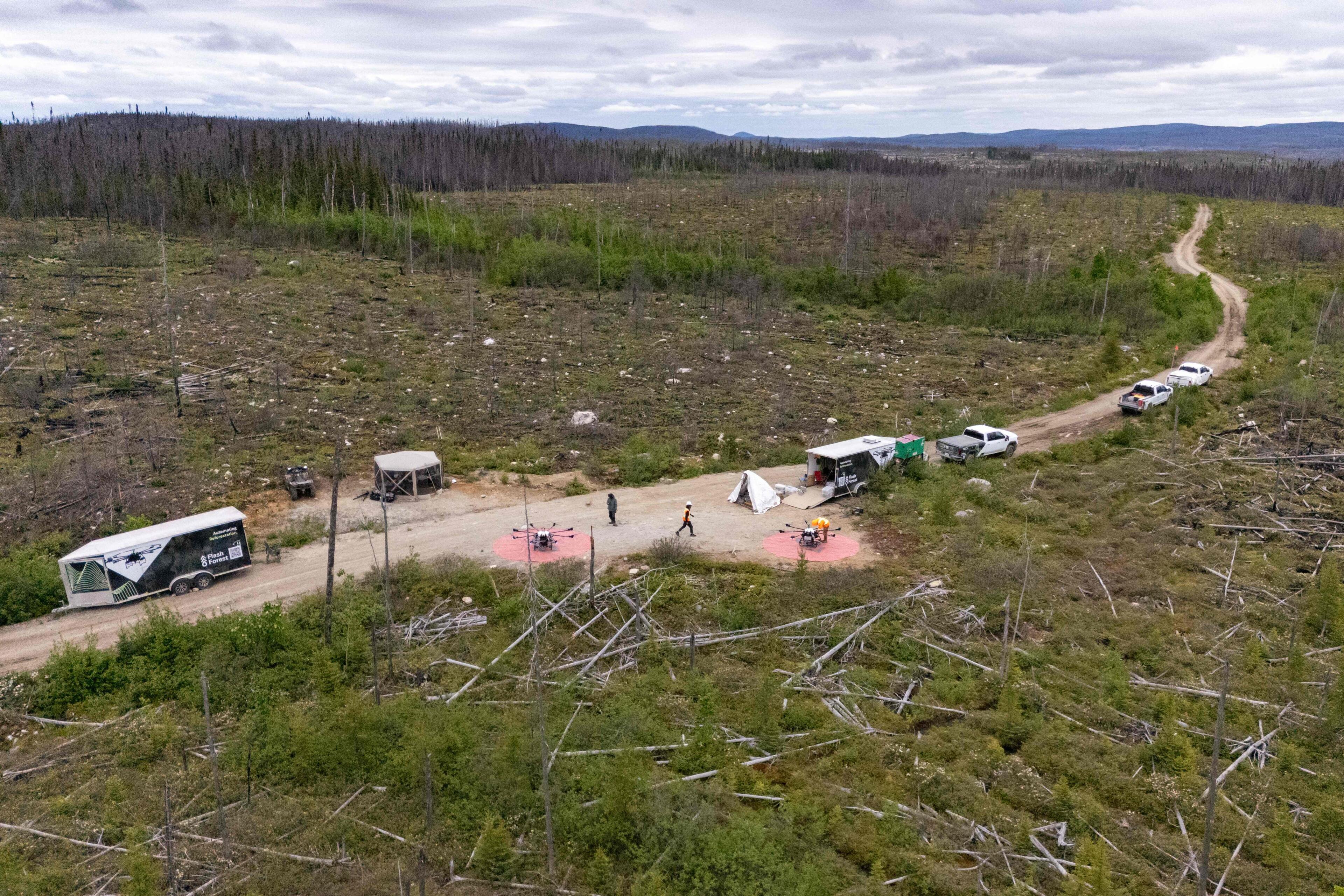
A large aerial drone could be seen flying over the charred remains of Canadian forests devastated by wildfires, shooting seed capsules to the ground to accelerate reforestation.
This part of the northern Quebec province was ravaged by megafires in the summer of 2023. Now, for the second consecutive year, a pilot project is using drones to plant new black spruces and jack pines.
Rather than simply dropping ordinary seeds from high above, Flash Forest, the company leading the initiative, uses seeds protected in capsules with water, nutrients and fungi to maximise their growing potential.
This is a “niche” drone reforestation technique that Flash Forest has “spent the last five years narrowing in on,” co-founder Cameron Jones said.
The company focused its efforts on forests scorched in the last year or two, excluding older burn sites that already have vegetation that can crowd out new seeds.
March 2025: Rain offers some respite from South Korea wildfires, death toll rises
It is no longer feasible to wait for Canada’s forests to bounce back all on their own, given that millions of hectares of forests are destroyed each year.
In 2023, Canada experienced a record year of wildfires, with blazes affecting every province, ultimately burning nearly 18 million hectares (44 million acres) of land. Quebec, and particularly this area in the north of the French-speaking province, was hit especially hard.
Drone operator and geospatial data scientist Owen Lucas said this method uses artificial intelligence to map out the sites ahead of time.
“Then we pick our sites based on climate variables, physical attributes, and topographic variables to make sure we’re putting the seeds in the right place,” he said, his eyes fixed on the drone’s remote controls.
The company also has projects in another Canadian province, Alberta, as well as in Colorado, United States. Each drone can deliver seeds to plant 50,000 trees per day.
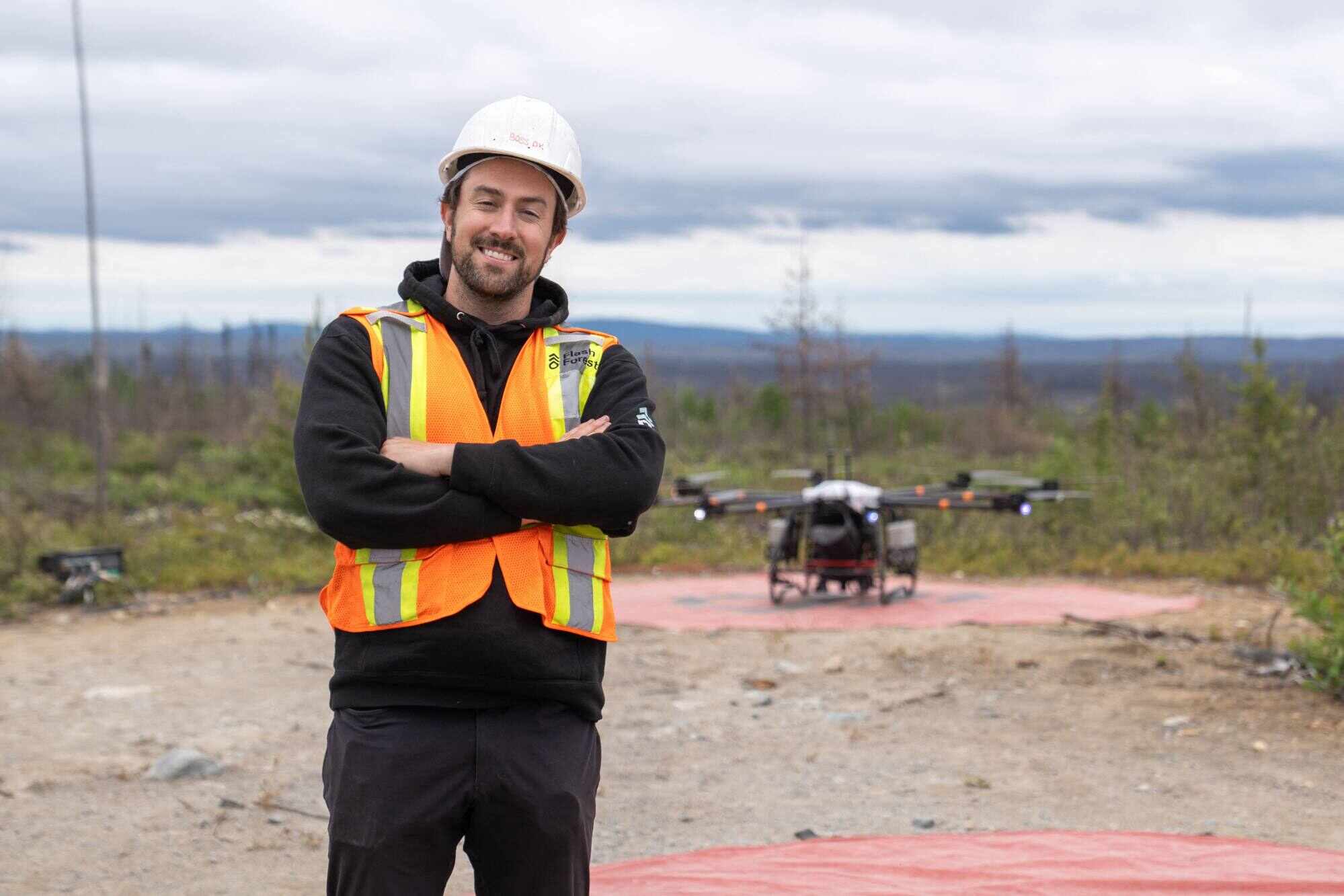
“When you’re out here planting, you don’t see the impact, but when you come back in the fall and you see them growing, you know you’re doing a positive thing,” Lucas said.
Megafires are being fuelled by drought, which experts say is linked to global warming.
“It’s sad to have lost so much forest,” lamented Angel Mianscum, one of the Indigenous leaders of a nearby Cree community.
She was, however, pleased to see there are now “innovative ways of doing things”. The Cree community has worked directly with Flash Forest to plan the local reforestation.
Indigenous communities are the most affected by fires in Canada because they are often remote and deep in the boreal forest.
January 2025: Los Angeles wildfires force thousands to evacuate as toxic smoke spreads
“We are increasingly forced to reforest in Canada. Boreal forest trees are adapted to fires, but today, the conditions are becoming more complicated,” said Maxence Martin, professor of forest ecology at the University of Quebec in Abitibi-Temiscamingue.
He points out that in 2023, for example, very young forests burned.
“If the forest is too young, it will take a very long time to start regenerating, so planting is the only option.”
While the use of drones can help reach certain areas more quickly, it also has its downsides: many seeds end up wasted. Seeds are complicated to harvest, which means Canada is short, Martin said.
