




This story was updated on December 1, 2023 to make the language more accessible for our readers.
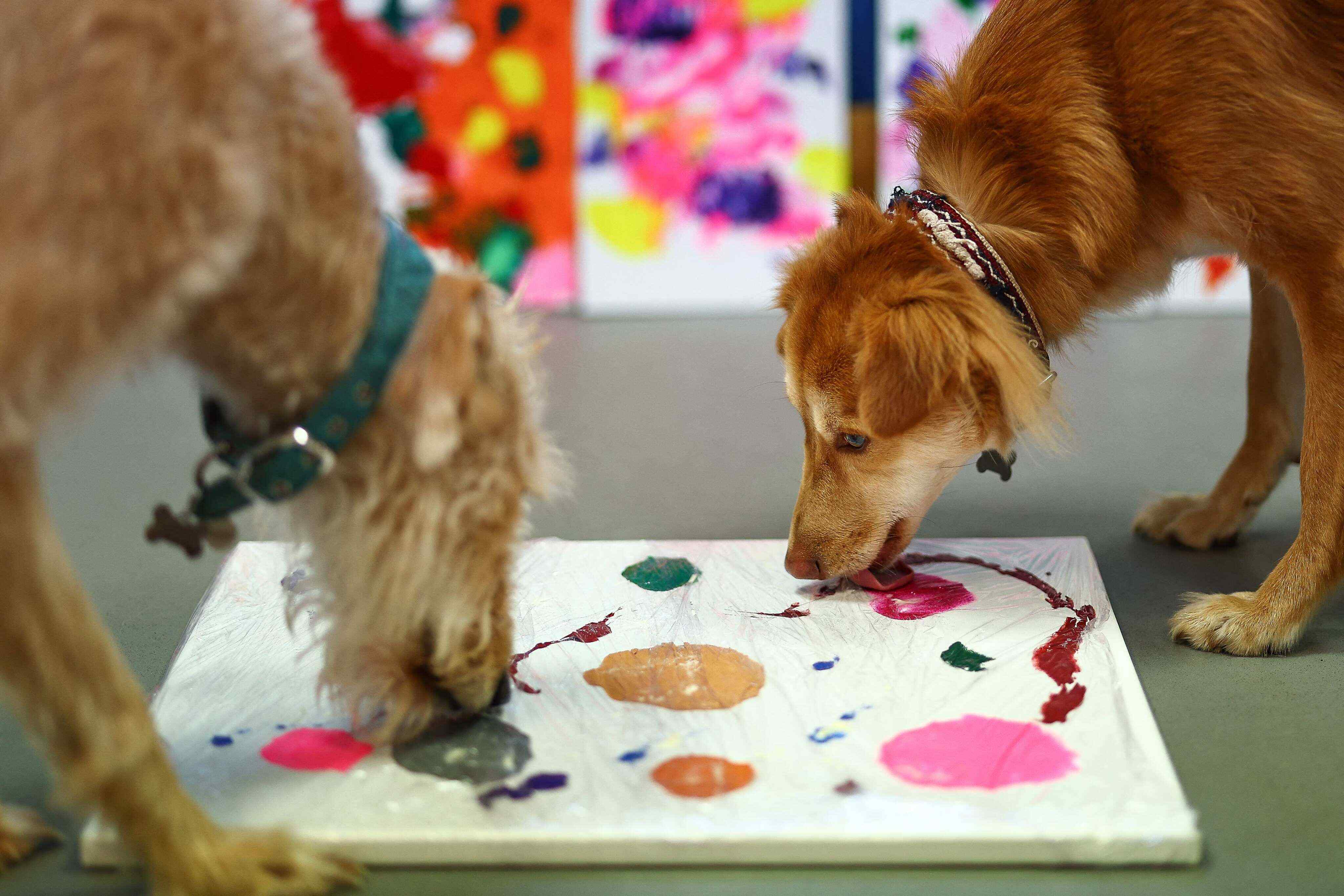
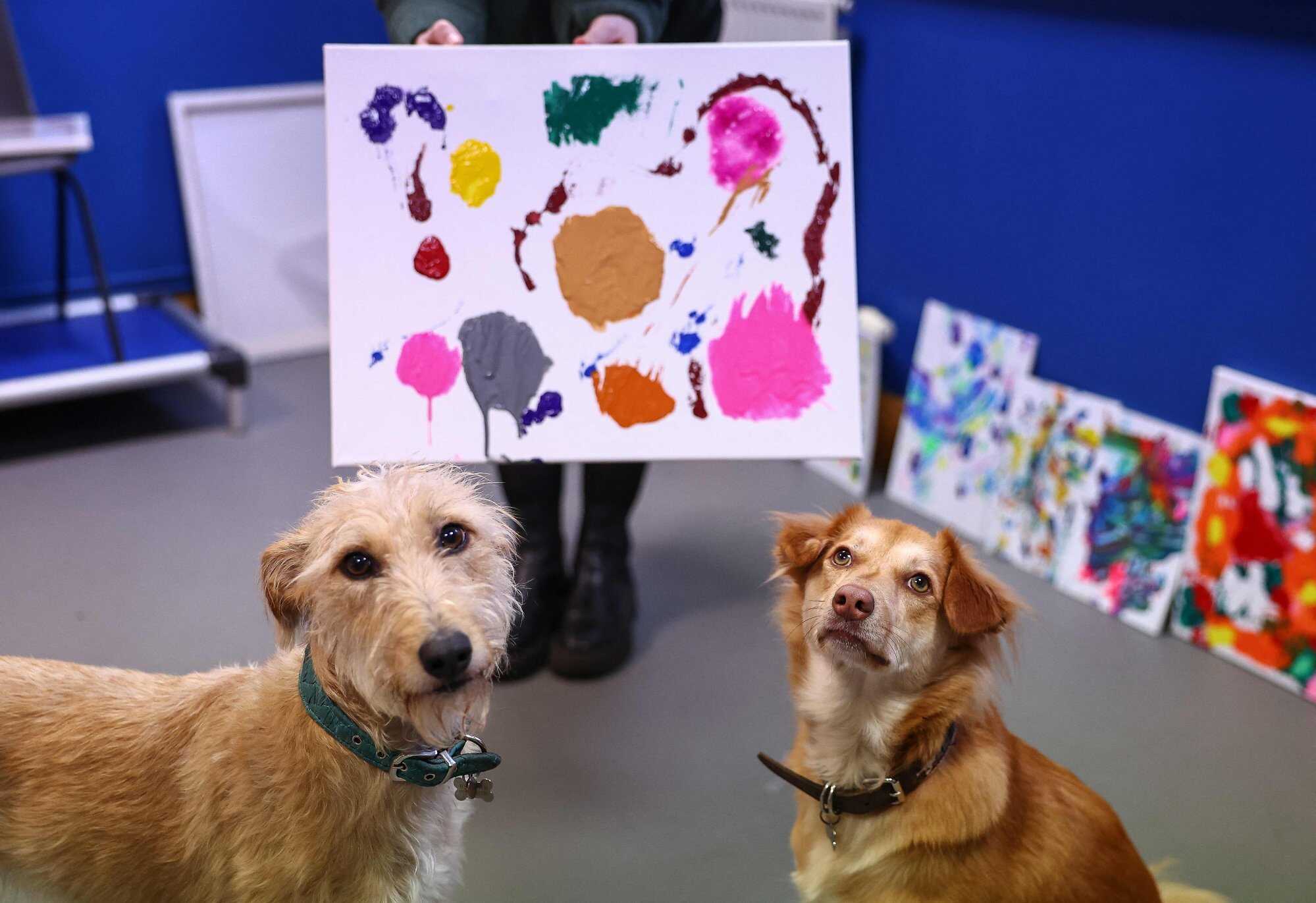
Rescue dogs Rosie and Alba are hard at work on their canvases in their studio in Bristol, Western England, redefining what abstract art is – one tail swish at a time.
To the untrained eye, their artwork at Bristol Animal Rescue Centre (ARC) could be seen as childish and messy. But the two canines have a far more important job than pleasing critics: helping the ARC raise money.
Why are there so many strays in Britain?
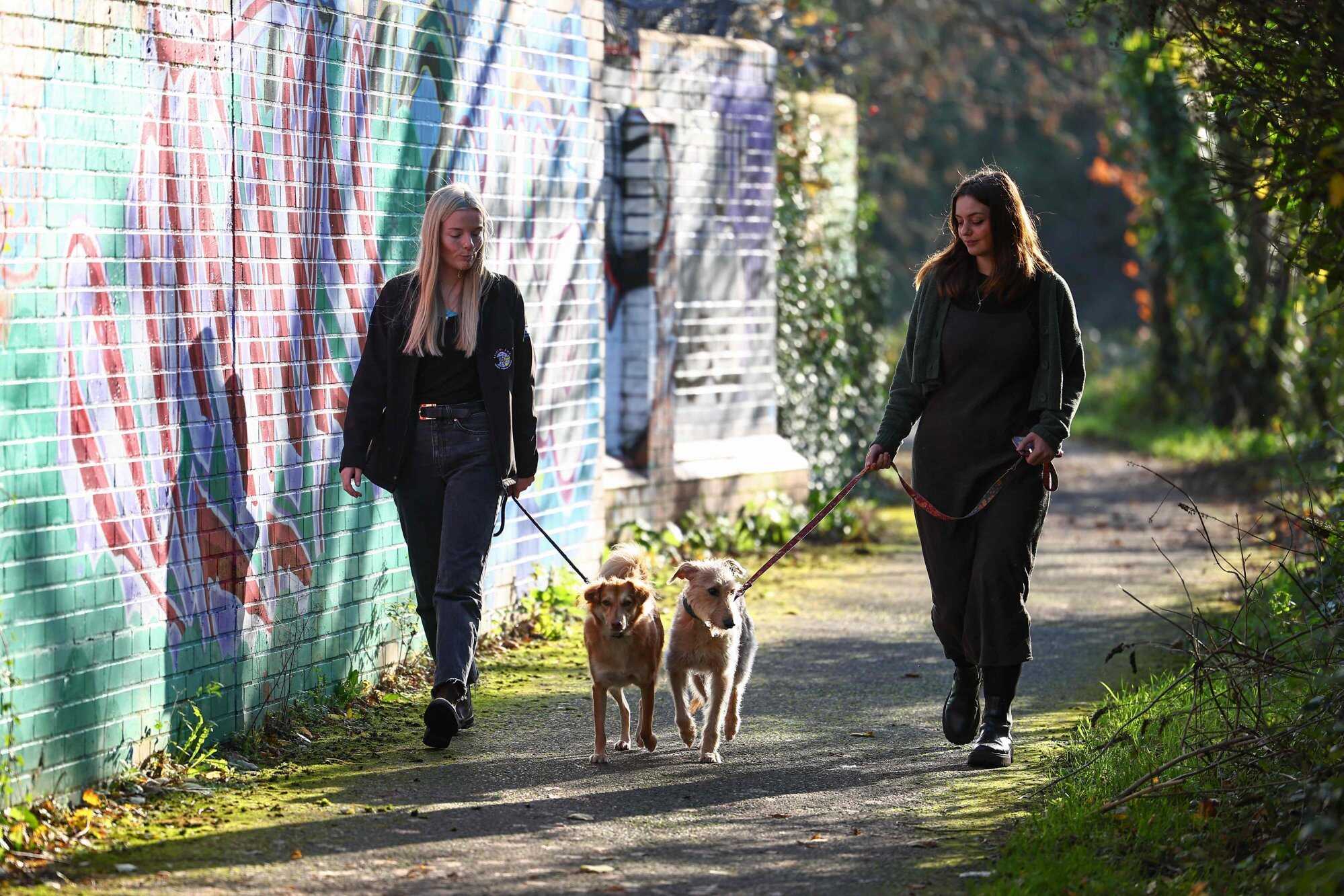
In the United Kingdom, prices for everything are going up, and many people are abandoning pets they bought during the Covid-19 pandemic. This has caused an increase in stray animals, and the ARC is struggling with the financial costs of helping these creatures.
“People just can’t afford insurance and veterinary care and just to look after their dogs in general,” said Bee Lawson, an animal behaviour specialist at the ARC. “At the moment, we are just taking in strays because we are experiencing such a high level of dogs coming in.”
The Royal Society for the Prevention of Cruelty to Animals (RSPCA) has said it is “desperately concerned” about how many animals are being abandoned as winter approaches.
How one cartoonist transforms old city of Shanghai with cat murals
As of the end of October, the RSPCA in England and Wales received 17,838 reports of abandoned animals. If the trend continues, the animal welfare charity said it expected to see around 21,417 reports in 2023, compared to 16,118 reports in 2020.
“Many rescue centres are full to bursting, so we are facing an unprecedented winter crisis,” said RSPCA inspectorate commissioner Dermot Murphy.
Because of this crisis, the privately funded ARC has had to come up with creative ways to bring in money.
Mutt Gala
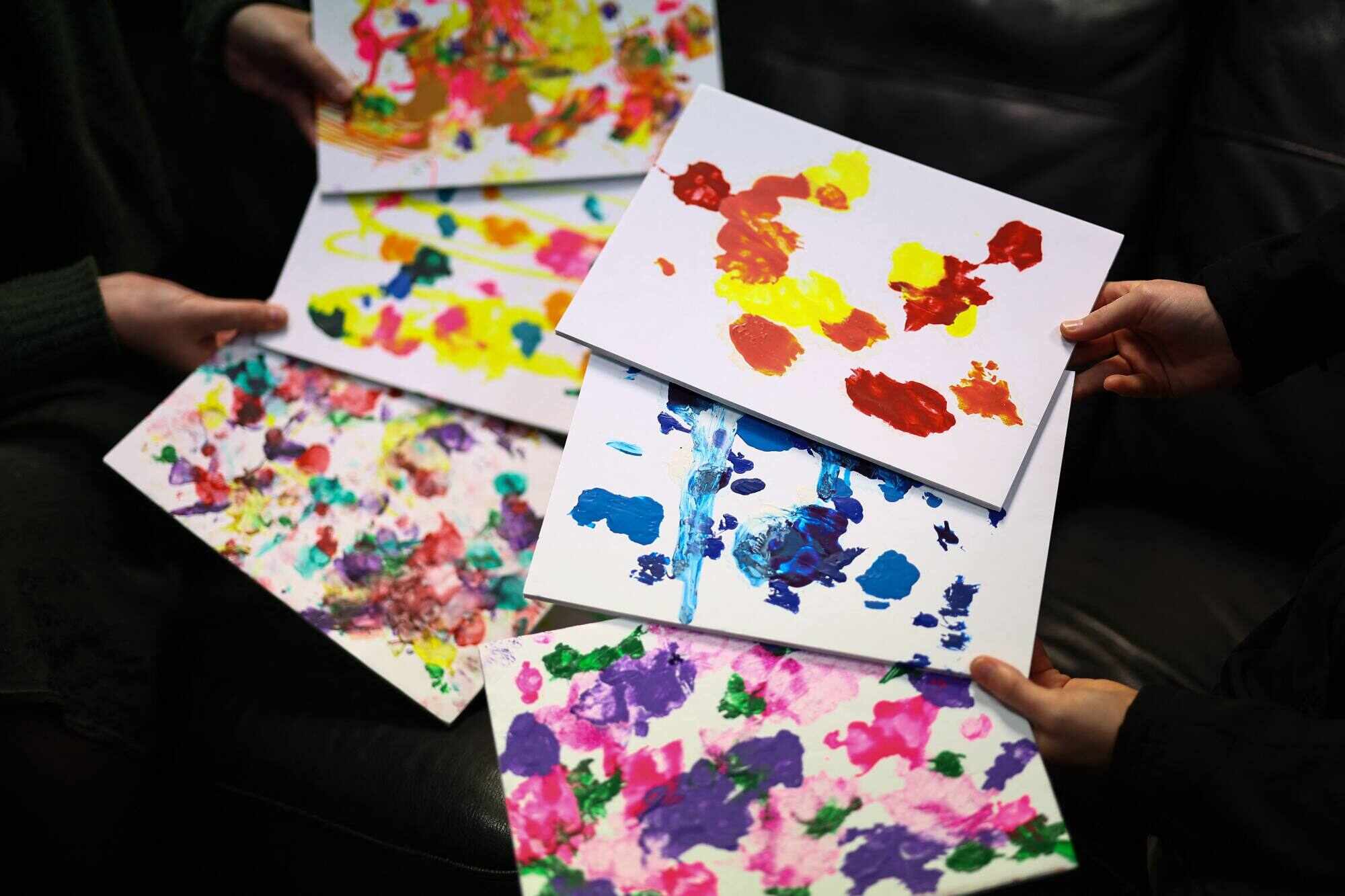
One of the ARC’s ideas was to hold an online “Mutt Gala” in December, where they would auction art made by animals.
With their snouts and paws, Rosie, Alba and a pack of strays currently boarding at the centre have been more than willing to help.
Lawson said painting was used as a therapy tool for stray dogs, who often arrived at the centre traumatised after their abandonment and living alone on the streets.
“Anything that encourages sniffing, licking and chewing is really beneficial because those are actually naturally calming behaviours for dogs,” she said. “It triggers the neurotransmitters in a dog’s brain to release the happy chemicals.”
As families leave villages under development plan, their dogs need homes too
“We basically get a blank canvas or something similar to that, put some non-toxic paint on the canvas, cling film on top of that, and then we put on their favourite treats,” said Jodie Bennett, a community and engagement officer at the centre.
Carers at the ARC use peanut butter and “squeezy cheese”, which encourage the dogs to sniff, lick and get creative on the canvases.
The more energetic dogs walk on their canvases while others use their whole bodies to create their art.
Up-and-coming artists
Bennett said Major, a white husky rescue dog, was one of the ARC’s more popular artists, with his two works Excited I and Excited II drawing interest from critics and art investors.
“His paintings show how he loves the feeling of excitement,” she added. “They’re really big and bold and all over the place, like Major’s personality, so look out for him. He is a big up-and-coming artist.”
A yellow, orange and red abstract piece named Burning Man was by a cat called Cammie, who arrived unexpectedly during one of the painting sessions. This artwork had also drawn keen interest, Bennett said.
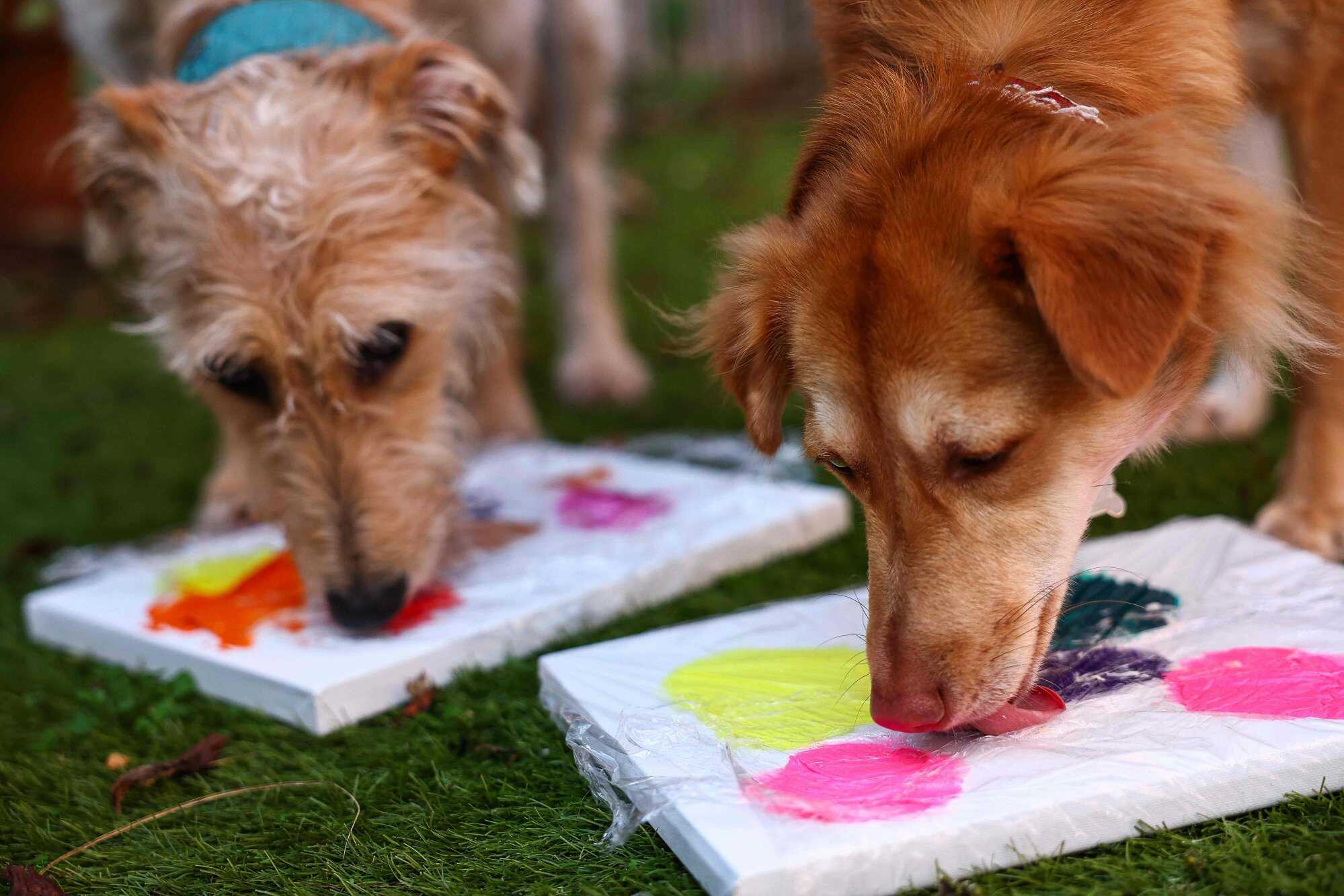
As for Rosie and Alba, their work was “pretty good”, Bennett said. Both managed to produce some notable pieces that raised a few eyebrows in the local dog art community.
“I’m very proud of them, and I would hang it up on my wall, definitely,” she said.
With practice, they might even find their work in the famous galleries of the Tate museum one day.
