




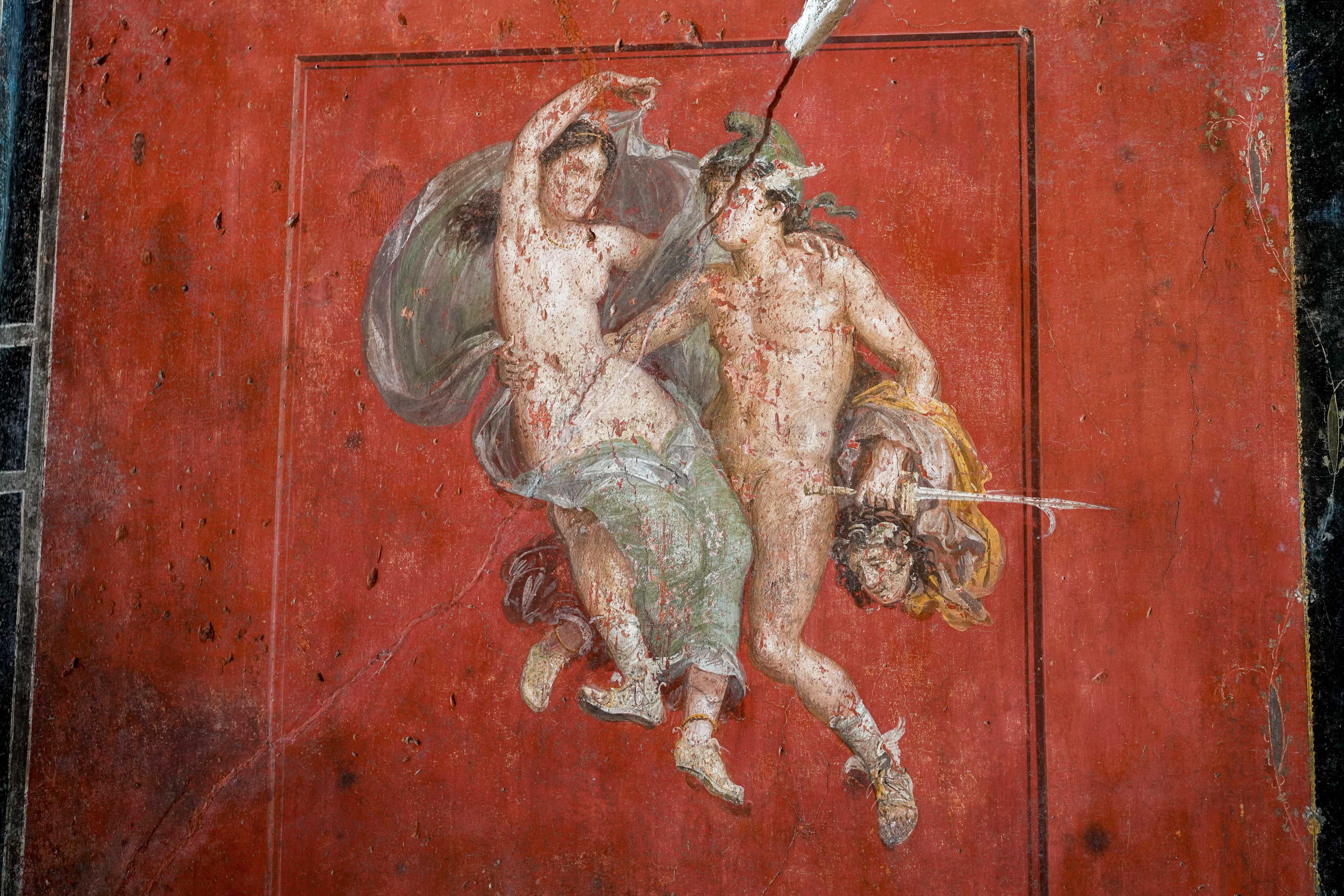
A new project in Pompeii is combining traditional dyeing techniques with colourful frescoes, to revive the daily life in the ancient city before the eruption.
The inspiration comes from frescoes unearthed inside the archaeological site that show winged cupids dyeing cloth, gathering grapes for wine and making perfumes.
“It is very close to the actual reality,” the archaeological site’s director, Gabriel Zuchtriegel, said of the images.
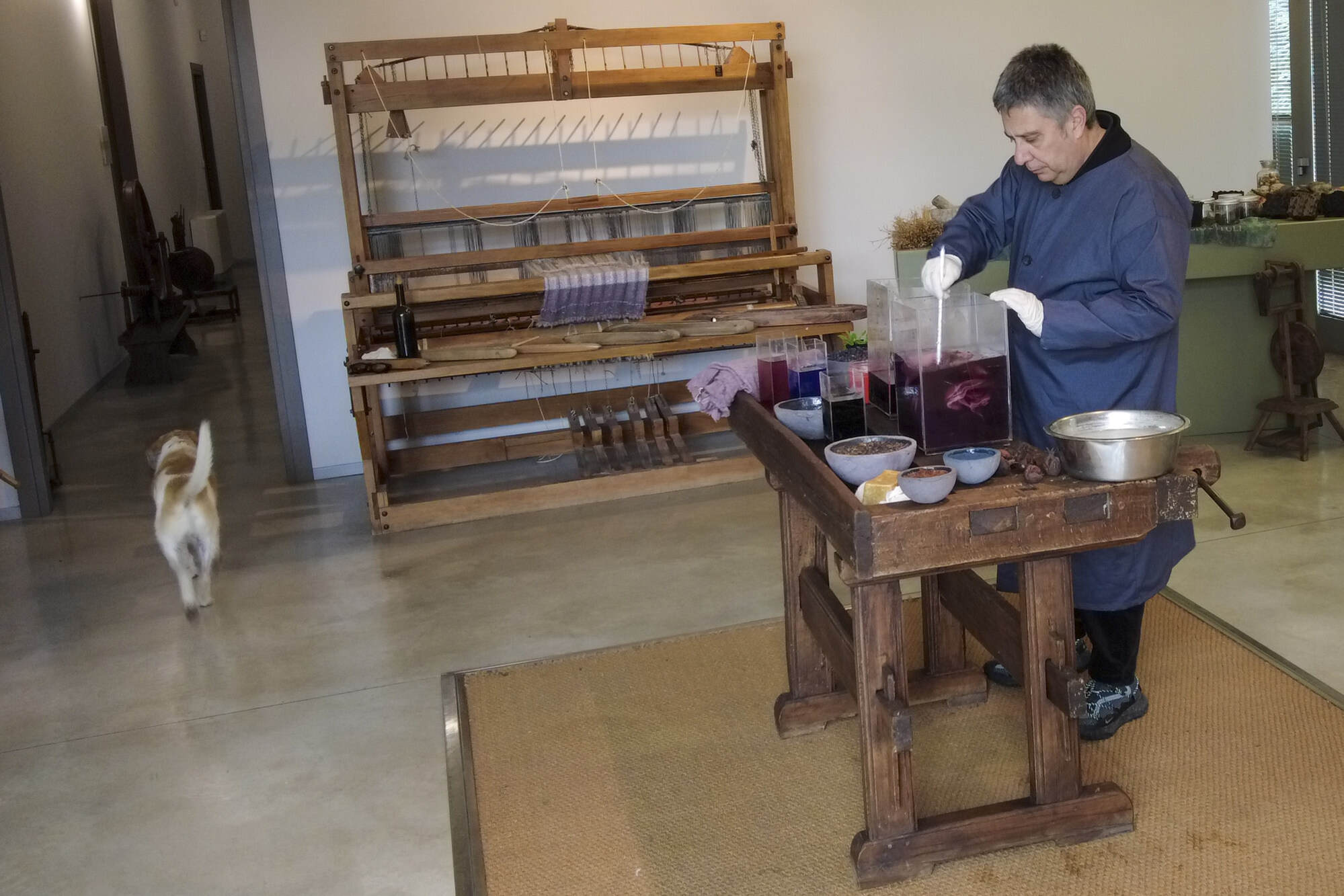
For the project, Zuchtriegel tapped a master dyer based in Umbria, Claudio Cutuli, who uses dyes that he makes from plants in his own clothing line.
Dutch art sleuth recovers 6 stolen paintings
Cutuli uses the root of “rubia tinctorum”, or rose madder, for the famous Pompeiian red. He uses walnut husks for brown, elderberries for black and grey and cardamom for the amber, yellow and shades of green.
With the Pompeiian colour palette, Cutuli is dyeing scarves with motifs taken from the House of Vetti frescoes, which include the cupids. The rich home, like the rest of Pompeii, was buried under ash.
Half of the profits from the scarves’ sale will help fund further restoration efforts at the once-sprawling city, where gardeners recently recreated a nursery that includes plants that were used for dyeing before Pompeii’s destruction.
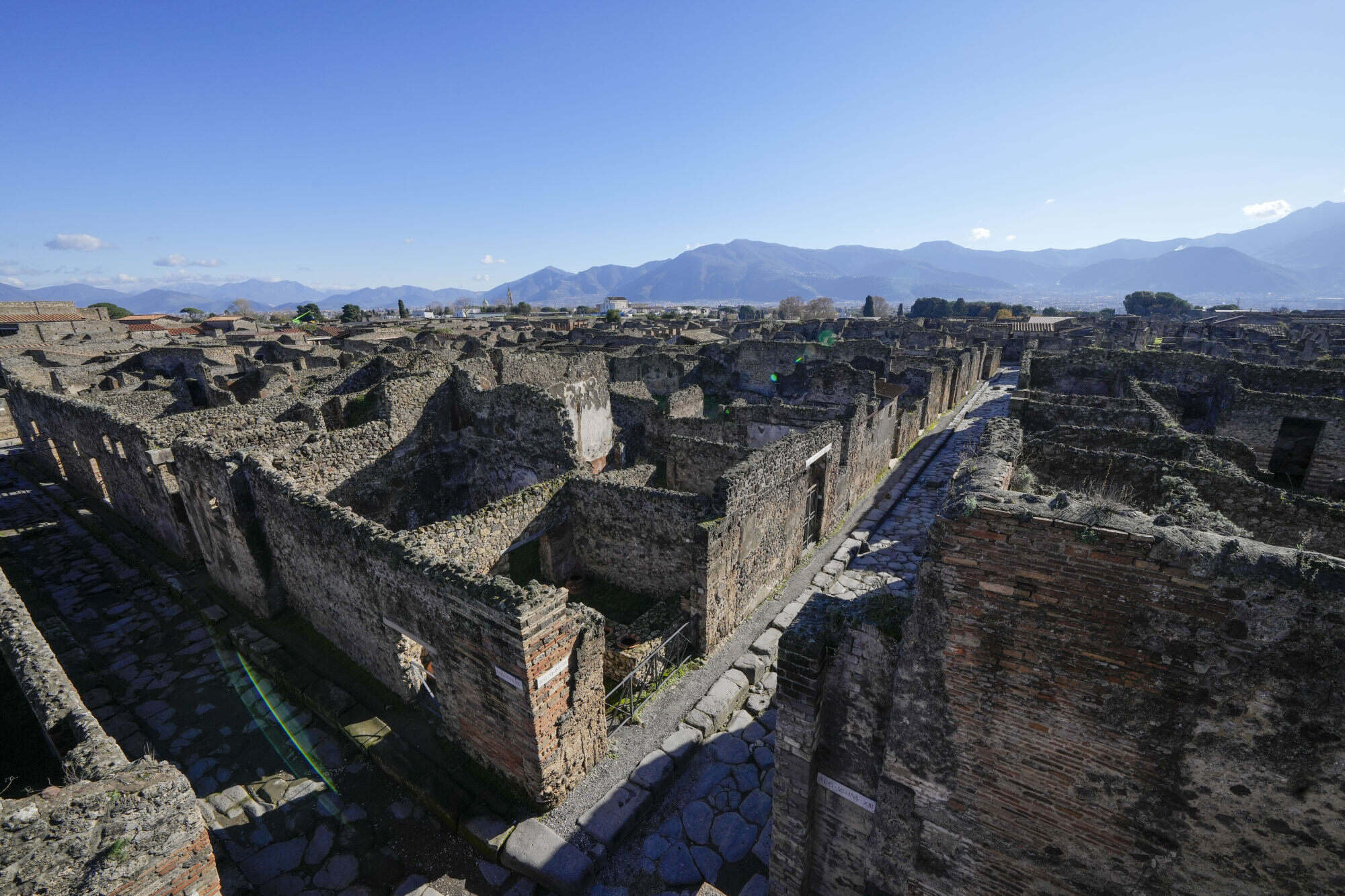
Garden historian Maurizio Bartolini said that roots, bark and flowers were often used in dyeing. Rosehip, for example, made a soft pink “that was one of the most used colours”, he said.
Frescoes in the archaeological site show wealthy Pompeiians dressed brightly in purple, green, pinks, blues and yellows. The hues were achieved by boiling the dyed textiles in metal-lined vats at workshops run by slaves who, by contrast, wore plain, brown tunics.
“It’s quite unpleasant conditions for the slaves who worked here,” archaeologist Sophie Hay said. “You have got the furnaces going, and it would be hot, crowded and noisy, because people would be shouting when they come in to see if their stuff is ready yet.”
For Zuchtriegel, textile dyeing is another way to bring Pompeii back to life for modern visitors.
“It is part of a scientific and cultural project to create awareness that history is not only the big monuments and beautiful paintings,” he said.
“There’s also another history, of the economy, the daily life, the lives of the majority which often are not represented in the great narratives.”
