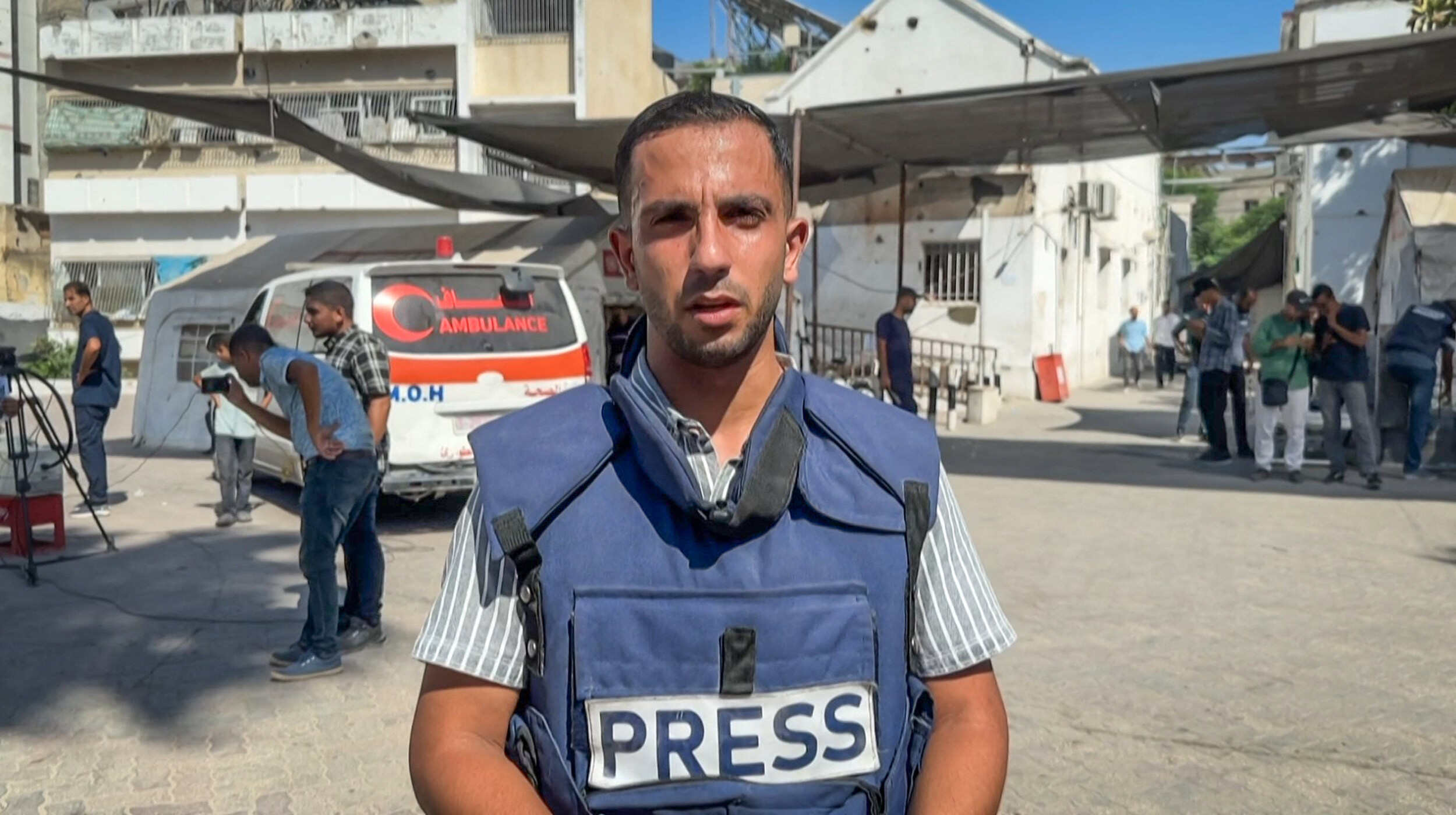
An Israeli strike on an Al Jazeera tent in Gaza City killed two of its correspondents and three cameramen on Sunday, the Qatar-based broadcaster has said.
The attack was the latest to see journalists targeted in the 22-month war in Gaza, with around 200 media workers killed over the course of the conflict, according to media watchdogs.
“Al Jazeera journalist Anas al-Sharif has been killed alongside four colleagues in a targeted Israeli attack on a tent housing journalists in Gaza City,” Al Jazeera said.
“Al-Sharif, 28, was killed on Sunday after a tent for journalists outside the main gate of the hospital was hit. The well-known Al Jazeera Arabic correspondent reported extensively from northern Gaza.”
The channel said that five of its staff members were killed during the strike on a tent in Gaza City, listing the others as Mohammed Qreiqeh, along with camera operators Ibrahim Zaher, Mohammed Noufal and Moamen Aliwa.
Why did Israel target these journalists?
The Israeli military admitted in a statement to targeting al-Sharif, labelling the reporter as a “terrorist” affiliated with Hamas.
Journalists’ groups and UN Special Rapporteur Irene Khan have said Israel’s claims against al-Sharif are unsubstantiated.
Following the attack, the Committee to Protect Journalists (CPJ) said it was “appalled” to learn of the journalists’ deaths.
“Israel’s pattern of labelling journalists as militants without providing credible evidence raises serious questions about its intent and respect for press freedom,” CPJ regional director Sara Qudah said.
“Journalists are civilians and must never be targeted. Those responsible for these killings must be held accountable.”
In July, the Committee to Protect Journalists issued a statement calling for his protection as it accused the Israeli military’s Arabic-language spokesperson Avichay Adraee of stepping up online attacks on the reporter by alleging that he was a Hamas terrorist.
Al-Sharif was one of the channel’s most recognisable faces working on the ground in Gaza, providing daily reports in regular coverage.
Following a press conference by Prime Minister Benjamin Netanyahu on Sunday, where the premier defended approving a new offensive in Gaza, al-Sharif posted messages on X describing “intense, concentrated Israeli bombardment” on Gaza City.
One of his final messages included a short video showing nearby Israeli strikes hitting Gaza City.
The Palestinian Journalists’ Syndicate condemned what it described as a “bloody crime” of assassination.
Israel and Al Jazeera have had a contentious relationship for years, with Israeli authorities banning the channel in the country and raiding its offices following the latest war in Gaza.
Qatar, which partly funds Al Jazeera, has hosted an office for the Hamas political leadership for years and been a frequent venue for indirect talks between Israel and the militant group.
Risk of ‘another calamity’ in Gaza
Since Israel has sealed off Gaza, many media groups around the world depend on photo, video and text coverage of the conflict provided by Palestinian reporters.
Media watchdog Reporters Without Borders (RSF) said in early July that more than 200 journalists had been killed in Gaza since the war began, including several Al Jazeera journalists.
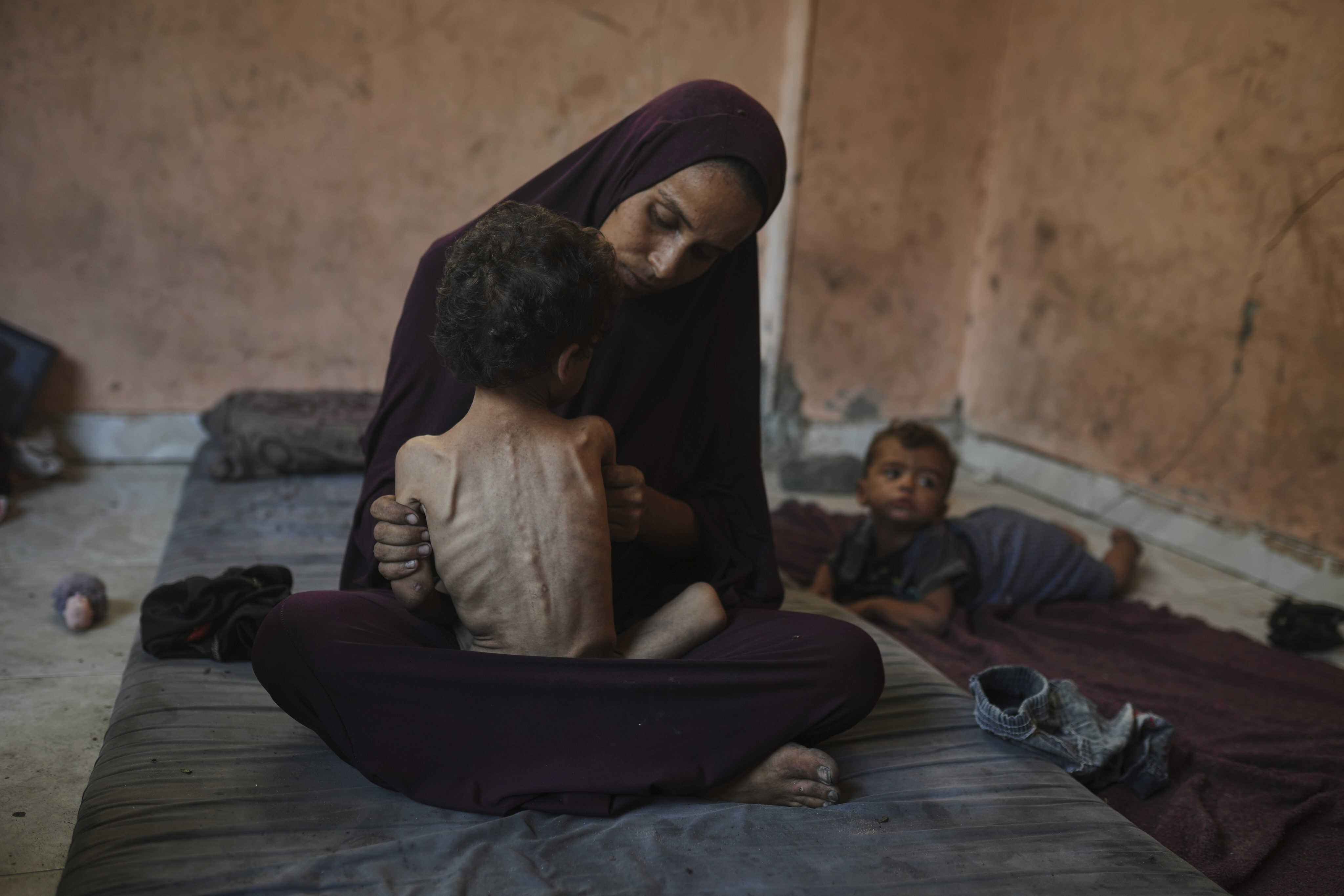
International criticism is growing over the plight of the more than 2 million Palestinian civilians in Gaza, with UN agencies and rights groups warning that a famine is unfolding in the territory.
The targeted strike comes as Israel announced plans to expand its military operations on the ground in Gaza, with Netanyahu saying on Sunday that the new offensive was set to target the remaining Hamas strongholds there.
He also announced a plan to allow more foreign journalists to report inside Gaza with the military, as he laid out his vision for victory in the territory.
A UN official warned the Security Council that Israel’s plans to control Gaza City risked “another calamity” with far-reaching consequences.
“If these plans are implemented, they will likely trigger another calamity in Gaza, reverberating across the region and causing further forced displacement, killings and destruction,” UN Assistant Secretary General Miroslav Jenca told the Security Council.