




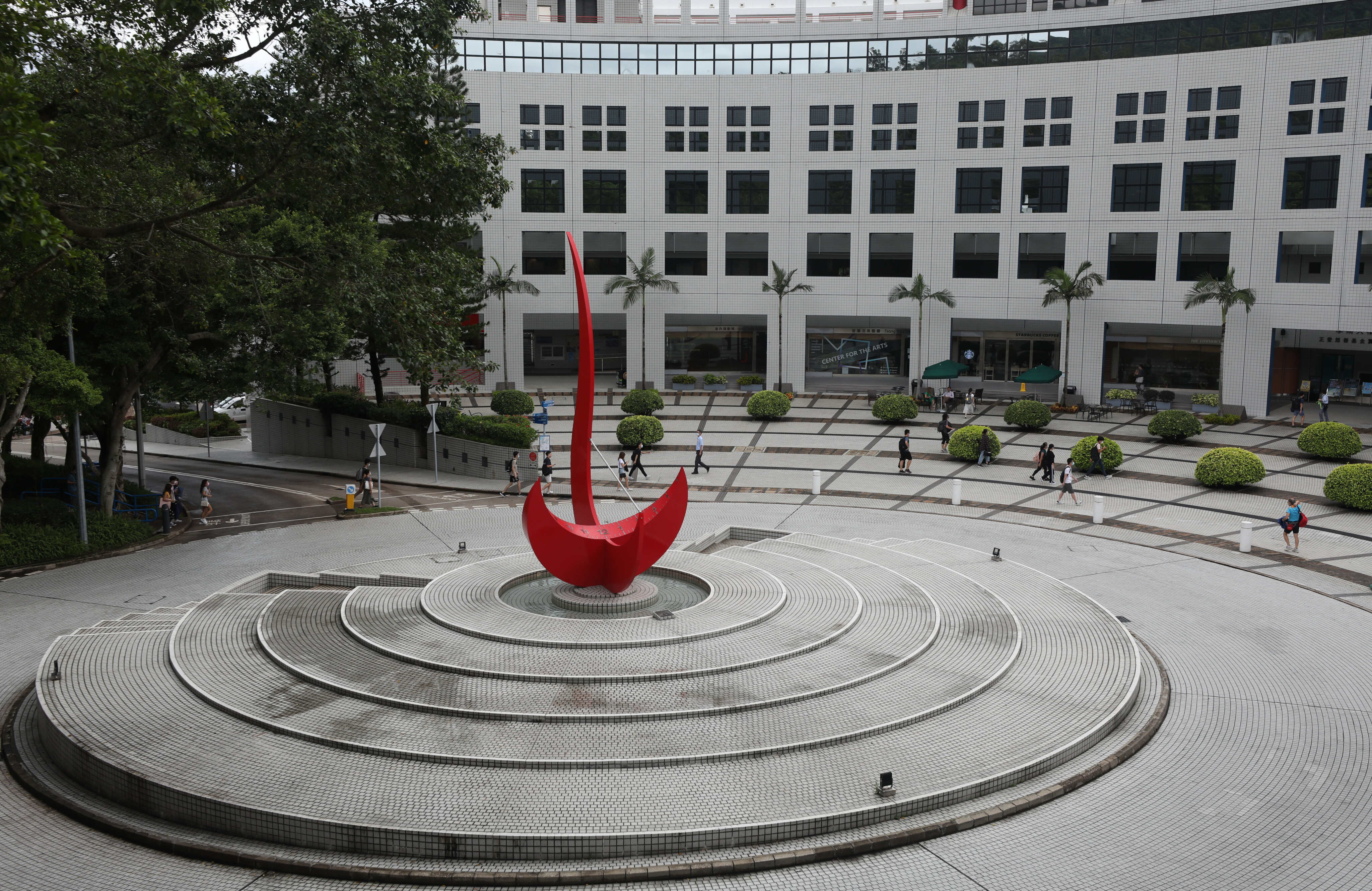
Following the recent ban on international student admissions by the United States government, five Harvard postgraduates have accepted scholarship offers from the Hong Kong University of Science and Technology (HKUST).
A HKUST spokeswoman confirmed that the university had extended offers to six Harvard postgraduate students.
“The university has extended admission offers to six postgraduate Harvard offer holders and current students, whose research spans science, technology, humanities, and cross-disciplinary fields,” the spokeswoman said.
“To date, five of these applicants, including students from Pakistan, Georgia and mainland China, have accepted their offers.”
Five were offered scholarships by HKUST, the spokeswoman added.
She added that HKUST had received nearly 200 inquiries from students worldwide since announcing support measures for those affected by recent US policy changes.
A spokeswoman for the Education Bureau said it was “very pleased” to see that local universities were responding proactively and closely monitoring the situation. She said that the bureau would continue to keep a close eye on the needs of students whose studies had been affected by the shifting global landscape.
Last month, US authorities said that international students at Harvard University had to either transfer or leave the country.
Hong Kong students criticise US visa changes
The US Department of Homeland Security cited the university’s alleged “coordinated activity” with the Communist Party of China as the basis for the ban, marking a significant escalation in tensions between President Donald Trump’s administration and the Massachusetts-based educational institution.
HKUST is the first university in Hong Kong to announce that Harvard students have formally accepted offers.
On May 23, HKUST said it was “opening its doors to Harvard students amid global academic shifts”, inviting international undergraduate and postgraduate students currently enrolled there, as well as those with confirmed offers, to continue their studies at the university.
On the same day, Secretary for Education Christine Choi Yuk-lin said her bureau had contacted all local universities and urged them to proactively facilitate eligible students’ relocation to Hong Kong.
On Monday, a US federal judge blocked the Trump administration from implementing its plan to bar foreign nationals from entering the US to study at Harvard.
HKUST, meanwhile, said it had received nearly 20,000 non-local undergraduate applications for the 2025-26 academic year, a record number, competing for around 800 places. This marks a significant increase from around 15,000 applications last year.
International applicants came from more than 85 countries and regions, including Germany, France, Kazakhstan, Mongolia, the United Arab Emirates, the Philippines, Vietnam, Thailand and Uzbekistan.
“This unprecedented volume of new applications is expected to bring HKUST’s non-local student intake for the 2025-26 academic year to the maximum level allowed by the government,” it said.
In October 2023, the government announced a plan to double the enrolment cap for non-local undergraduates at publicly funded universities from 20 per cent of approved student numbers to 40 per cent.
Separately, a spokesman for the Chinese University of Hong Kong confirmed it had recently received inquiries from international students at US institutions interested in transferring.
“The university will consider such applications and promptly notify the relevant departments and divisions for follow-up,” he said.
Xiang Zhang, president of the University of Hong Kong (HKU), told the South China Morning Post in an exclusive interview last week that he was “sympathetic” to the challenges faced by Chinese students and scholars in the US. He noted that geopolitical tensions between the US and the mainland meant HKU could recruit talent affected by the friction.
Zhang said that HKU had received about 300 inquiries from affected US students and made “multiple offers” after screening, though he did not disclose how many had been admitted.
