




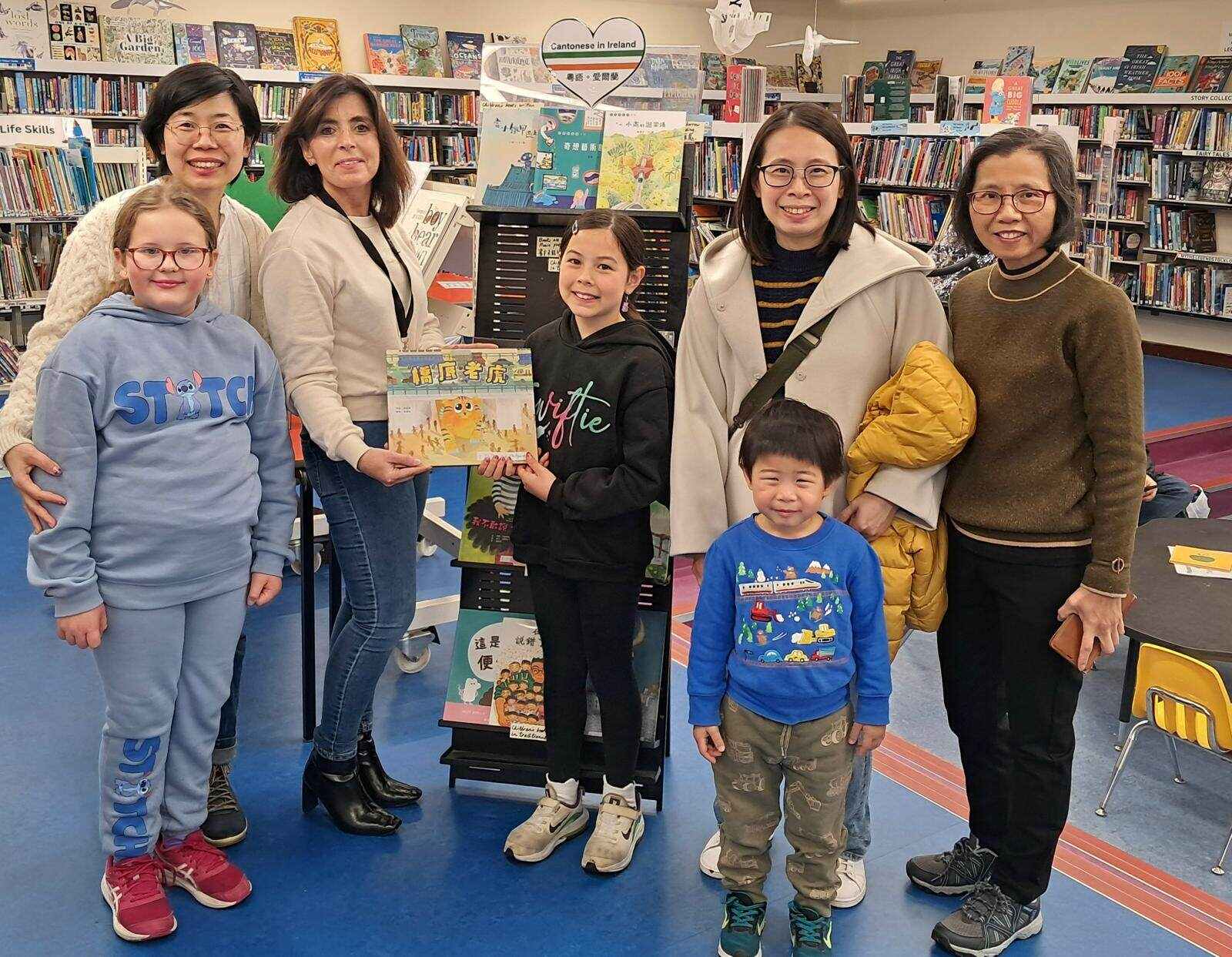
Before you read: A competition is encouraging young people to write in Cantonese, challenging the perception that it is only a spoken language. The campaign aims to preserve cultural identity abroad and promote written Cantonese.
Think about it: How can encouraging young people to write in Cantonese help preserve the language in bilingual communities around the world?
When Peg Chiu first started telling bedtime stories to her young daughter in Ireland, something did not sit right. The picture books she found were written in standard Chinese – distant and foreign to the everyday Cantonese that shaped her world growing up in Hong Kong.
So each night, Chiu would translate on the fly, rephrasing the words into the familiar tones of her mother tongue.
“I started to wonder, why should it be this way?” she said. “Why can’t we read and write the way we speak?”
That question led to something much bigger.
Hong Kong immigrant mums’ Cantonese books teach kids their mother tongue
This summer, Chiu and a group of language advocates from around the world launched “Writing from the Heart: A Global Cantonese Writing Initiative for Youth” – an open call inviting young people aged 5 to 18 to submit original works written in Cantonese.
The campaign spans from Vancouver to Sydney and aims to do more than just encourage storytelling; it is an attempt to reframe how Cantonese is used and valued, especially among diaspora youth around the world.
“We want children to feel that writing in Cantonese is not only valid, but beautiful,” Chiu said. “It’s not just slang. It can be literary, it can be expressive, and it can be theirs.”
A language at the margins
Unlike Mandarin, which has a standardised written form, Cantonese has long occupied an ambiguous space in the Chinese-speaking world. Spoken by over 80 million people globally, Cantonese thrives in conversation. But in formal settings, it is often sidelined.
Schools in Hong Kong have traditionally discouraged students from writing in colloquial Cantonese in essays and exams, and textbooks are written in standard Chinese.
This separation creates a peculiar dilemma for families raising children abroad: their kids grow up speaking Cantonese at home but have few resources to read or write in the language.
“Here in Ireland, I’m often the only one speaking Cantonese to my daughter,” Chiu said. “She can understand and speak fluently, but reading and writing? That’s another story. Most learning materials are in Mandarin. I end up translating everything.”
It is heavy lifting for many Hong Kong parents overseas, and a lonely one.
Hongkonger’s Cantonese annotation font sets tone for non-native learners
In recent years, the city’s emigration wave means many young families have resettled in the UK, Canada and Australia. While older generations once maintained Cantonese in tight-knit Chinatowns, today’s immigrant families are more integrated, which can mean fewer opportunities to pass down the language.
“The difference now is that we want our children to belong in both worlds – to integrate where they live, but also to stay connected to their heritage,” said Chiu. “That’s where writing comes in. It’s a powerful way to hold on to language and identity.”
The competition originated from a group of like-minded educators, parents, and community leaders from Ireland, Australia, and the UK, aiming to keep Cantonese alive in their communities.
Judges include award-winning Hong Kong screenwriter Stella Tse and linguist Lau Chaak-ming, founder of Jyut6 Din2 (粵典), an online Cantonese dictionary.
What sets this initiative apart is its openness. There is no theme or rigid format. Participants can write poems, plays, short stories, or diary entries. The goal is simple: just write in Cantonese, in their own words.
“We want children to express what matters to them in their own voice,” said Chiu. “It could be a dream, a pet, a memory, anything. We didn’t want to limit their imagination.”
Language as identity
For many Hongkongers abroad, Cantonese is more than a communication tool; it is a lifeline to identity, culture and community.
“When I speak to my daughter in English, something gets lost,” Chiu said. “I can’t connect with her in the same deep, emotional way. Cantonese is the only language that feels truly intimate for us.”
She believes that preserving a mother tongue helps children develop a stronger sense of self, especially when growing up between cultures.
“Sooner or later, all kids ask: ‘Who am I?’ And language plays a huge role in answering that.”
The Hongkonger said she hopes to spark conversation about Cantonese learning through the contest.
Cantonese podcast helps immigrant kids from Hong Kong tune in to their roots
“People are still confused. Is this proper writing? Is it OK to write like we speak? These questions are important. If this initiative helps even a few people rethink what Cantonese writing can be, that’s already a win.”
She knows the road ahead will not be easy. Promoting written Cantonese, especially among children raised to believe it is “improper”, is an uphill climb. But she is hopeful and determined to make this more than a one-off.
“This is just the beginning,” she said. “We hope to run it again next year, and the year after. It takes time to shift mindsets. But change always begins with a story.”
Every participant will receive a digital certificate and feedback. Winners will receive gift vouchers, and selected works will be published with Jyutping annotations in a digital anthology.
Submissions for the “Writing from the Heart” Cantonese writing competition are open until July 31, 2025. For more information, visit @cantonese.youth on Instagram or email [email protected]
