




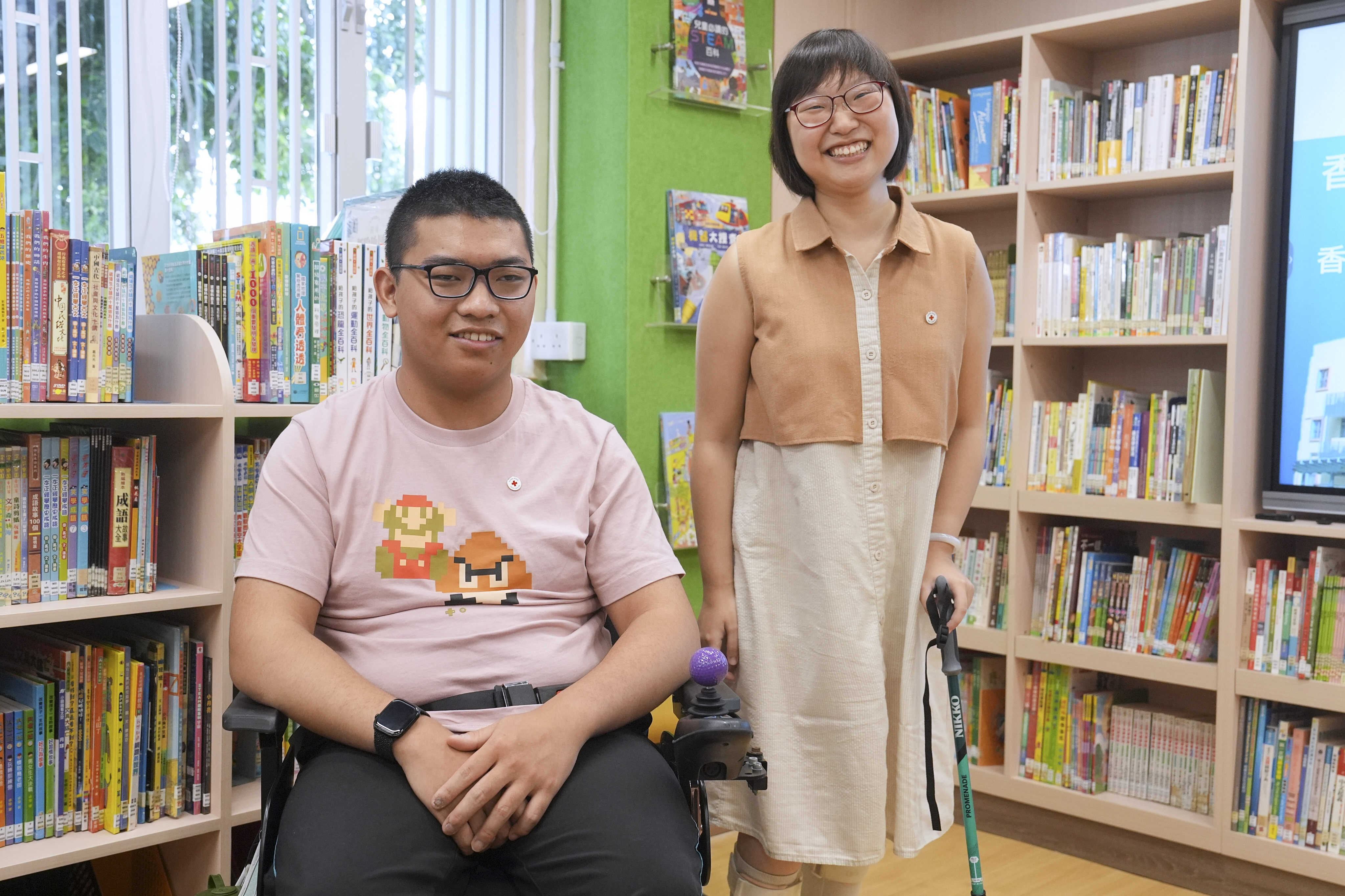
Chen Ngai-lam, a student with cerebral palsy, was overjoyed when she learned her results for Hong Kong’s university entrance exams on Wednesday.
The student at Hong Kong Red Cross Princess Alexandra School received 10 points on her Diploma of Secondary Education (DSE) exam.
“I was only predicted 8 points,” grinned Chen.
She has received offers from HKUSpace for a higher diploma in Chinese for professional communication and from Baptist University’s associate degree in media and film studies.
Chen’s journey through the DSE was particularly challenging. Her condition, a type of neuromuscular disease affecting posture and movement, meant she needed double the time of regular students to complete her exams due to weakened hand muscles.
She also needed a magnifying glass to read her exam papers. Yet, she faced these hurdles with an unwavering spirit.
“You must be solid in your goals,” Chen said. “Believe in yourself and don’t think you’re any worse than others.”
Equally overjoyed was Yan Kit-ho, who also lives with cerebral palsy and scored 10 points.
“I was only predicted 7!” Yan exclaimed.
He vividly recalled a difficult moment during the exams when searing wrist pains flared up mid-paper, forcing him to stop. Despite this setback, he remained resilient.
Super scorers in Hong Kong’s DSE exams share the secrets of their success
Nurturing environment
Both students credit their success to the unwavering support of Hong Kong Red Cross Princess Alexandra School, which is designed for students with special educational needs (SEN).
In 2022, the city’s Legislative Council estimated that more than 8,000 students study at special SEN schools, with around 180 students attending Princess Alexandra.
Vice-principal Cheung Hei-tsing said he recognised the unique potential in both Chen and Yan, encouraging them to explore their passions.
“Chen has a real passion for Chinese literature and history,” Cheung said. “She diligently reviewed required excerpts, which significantly improved her ability to memorise and recall, ultimately boosting her grades.”
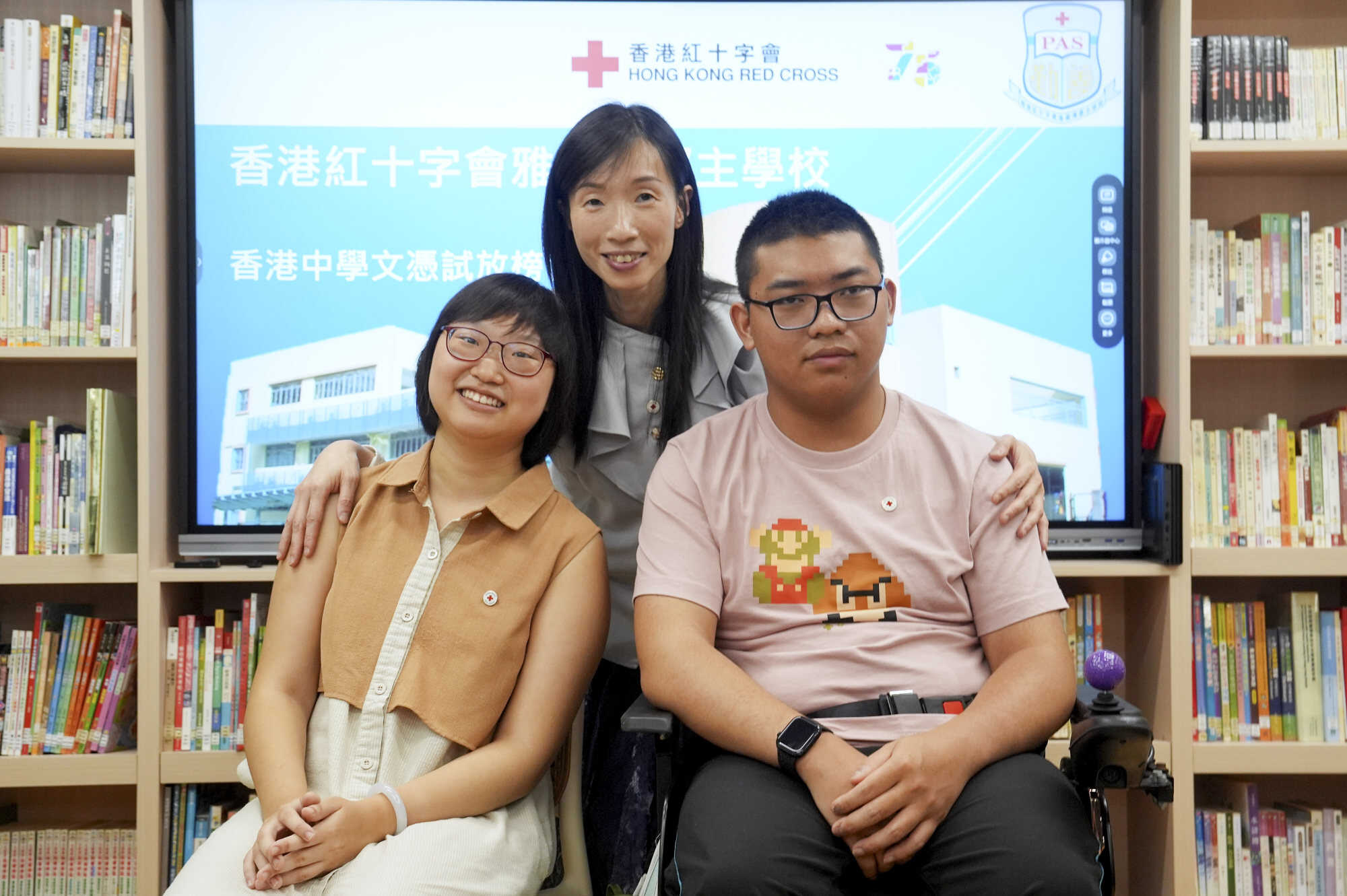
This nurturing environment allowed Chen to connect her love of television with her passion for the Chinese language, sparking her dream of becoming a scriptwriter.
Chen said writing scripts allows her to be creative and tell stories about relationships – romance, friendships and family.
“I admire how stories can be retold in ways that can help others,” she smiled. “I want to hone my craft to create my own world, where anything is possible, even the weird and wonderful. One day, I will use these skills to create a better, happier society.”
For Yan, technology is a driving force. “While I don’t talk a lot, I think I’m quite a philosopher,” Yan cheekily admitted.
“I must have a dream; it is the most important thing to me. Without one, I am like a salted fish.”
Despite his wrist pains impairing his writing, his love for data and technology propelled him through difficult mathematics sections.
“His performance here is the best I’ve ever seen,” Cheung praised.
14 years of the DSE: how Hong Kong has performed in its university entrance exams
Meeting individual needs
Last year, Yan, Chen, and some of their classmates competed in an interschool theatre festival. The Princess Alexandra team was selected from hundreds of schools, mostly from the regular education stream, to perform in a final showcase at the Tsuen Wan Community Hall.
“I learned how to put myself in another person’s shoes and became more adaptable,” said Yan of his performance as a security guard. “For example, it taught me how to fold clothes!”
Meanwhile, Chen won an award for most outstanding performer. “It felt amazing to achieve so highly, even while judged alongside regular schools,” she said.
Principal Vien Sing Ying-yu emphasised the school’s unique philosophy. “Each student is unique,” she stated. “As staff, we must prepare accordingly for every student’s individual needs.”
“Most importantly, we build good connections with their family. Every week, our teachers communicate with parents,” she explained.
“Some find it more difficult to accept their children’s conditions, and we must work closely with them. Parental education is a pillar of our school, just as much as the students are.”
