





Have something to say? Send us a letter using this form.
Japan’s anime industry is a global powerhouse
Tong Lap-hin, Tsuen Wan Public Ho Chuen Yiu Memorial College
Many people, regardless of age, are interested in watching animation. It is addictive: once viewers watch one episode, they are eager for the next.
In 1908, French artist Émile Cohl created the earliest known example of a complete traditional hand-drawn animation on standard cinematographic film.
Walt Disney’s studio would then lead the golden age of animation in the United States, after the 1928 short Steamboat Willie – featuring Mickey Mouse – popularised films with synchronised sound.
In Japan, the animation boom was driven by the diversity of manga – comics or graphic novels – created by different artists. Examples include Dragon Ball and Doraemon. Studios began animating popular manga, successfully exporting anime around the world. Interest in Japanese animation would surge further when Hayao Miyazaki’s masterful films garnered international acclaim.
Seriously cute: psychologist explains Chiikawa’s popularity among Hong Kong youth
Today, the internet offers convenient ways to watch animation, unlike earlier when people had to buy cinema tickets or DVDs. This accessibility not only makes it easier to view anime but also exposes its unique blend of art and storytelling to new audiences.
Research suggests that anime’s popularity stems from its imaginative worlds and compelling narratives, which transport viewers to realms beyond everyday reality.
Under the pressures of school or work, teenagers and adults often find comfort in anime, especially series that explore themes of love, friendship and personal growth. Viewers reclaim a sense of confidence, identifying with favourite characters.
Another factor in anime’s success is the depth of its character development and world-building. A great anime balances story, setting and character arcs. Series like JoJo’s Bizarre Adventure, Bocchi the Rock! and Attack on Titan excel in these areas, earning massive fan followings.

The rise of anime in Japan has also created numerous career opportunities for animators, manufacturers and artists. As fandoms grow, third-party companies profit from character-branded merchandise – figures, apparel, collectibles – and fans eagerly purchase these items.
Animation studios even collaborate with restaurants on themed events, where patrons can enjoy special menus and photo ops. Meanwhile, streaming services monetise high-quality, ad-free anime through subscription models.
Japan’s anime industry is a global powerhouse. In 2023, anime-related exports brought in 3.35 trillion yen (HK$179 billion) helping rejuvenate the economy. Today, Japan is celebrated not only as an economic leader in animation but also as a cultural icon – the “home of anime”.
Preparing for a natural disaster
Benjamin Liu Junxiang, Pui Kiu College
As a secondary school student aware of and concerned about the environment and its degradation, I want to share my thoughts on the article “Myanmar’s 7.7-magnitude quake raises concerns over infrastructure in seismic regions”, published April 29.
The article highlights how Myanmar used to rely on low-rise, timber-framed buildings in the past. However, there has been a shift to building new high-rise constructions made from reinforced concrete. These new constructions have created an urgent need for stricter building codes and disaster preparation measures.
Myanmar’s 7.7-magnitude quake raises concerns over infrastructure in seismic regions
The comments by experts, including Ilan Kelman’s observation that “earthquakes don’t kill people; collapsing infrastructure does”, emphasise a government’s responsibility to ensure its citizens’ safety through proper infrastructure planning.
I was particularly struck by Rebecca Bell’s explanation of the potential for large-scale ruptures along the Sagaing Fault.
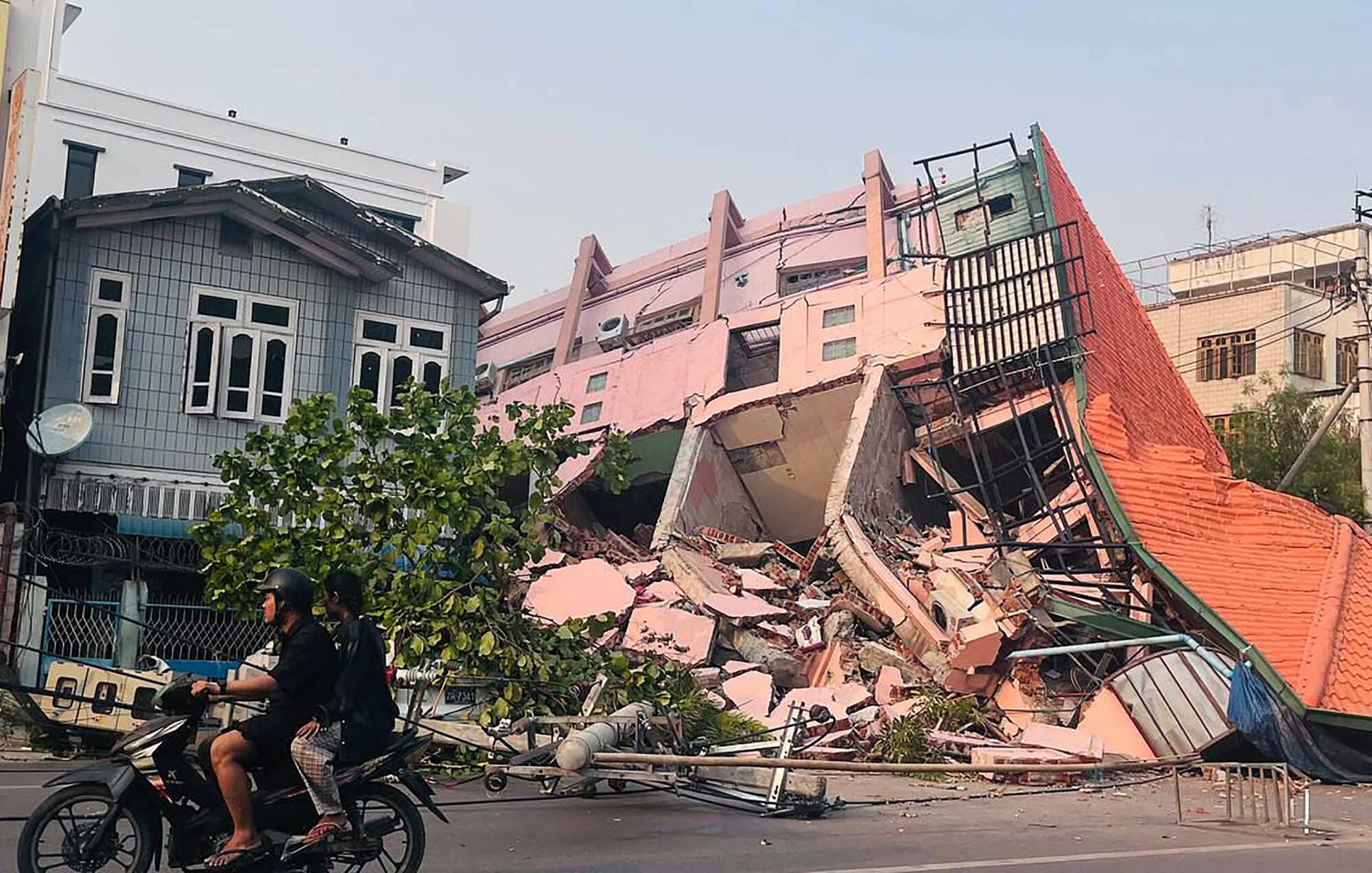
Given that these high-rise buildings are relatively new compared to the traditional structures they are replacing, robust engineering practices that account for seismic activity (earthquakes) are crucial.
As a student, I believe education plays a vital role alongside technological and structural advances. Incorporating disaster preparation measures into school curricula will help future generations become responsible citizens who understand why we need resilient infrastructure.
In earthquake-stricken Myanmar, rescuers dig through debris with hands
Furthermore, I think the article underscores a broader point about urban planning and disaster management in regions vulnerable to natural hazards.
Large governments and communities must examine the safety and sustainability of their living environments. This includes regular inspection of buildings, enforcing up-to-date construction codes and educating the community about emergency response.
I appreciate Young Post’s efforts in bringing up these important discussions; highlighting infrastructural vulnerabilities amid rapid modernisation is a necessary step toward safer urban development. I hope policymakers will take these concerns seriously and implement the necessary changes that will protect citizens from future disasters.
