




Have something to say? Send us a letter using this form.
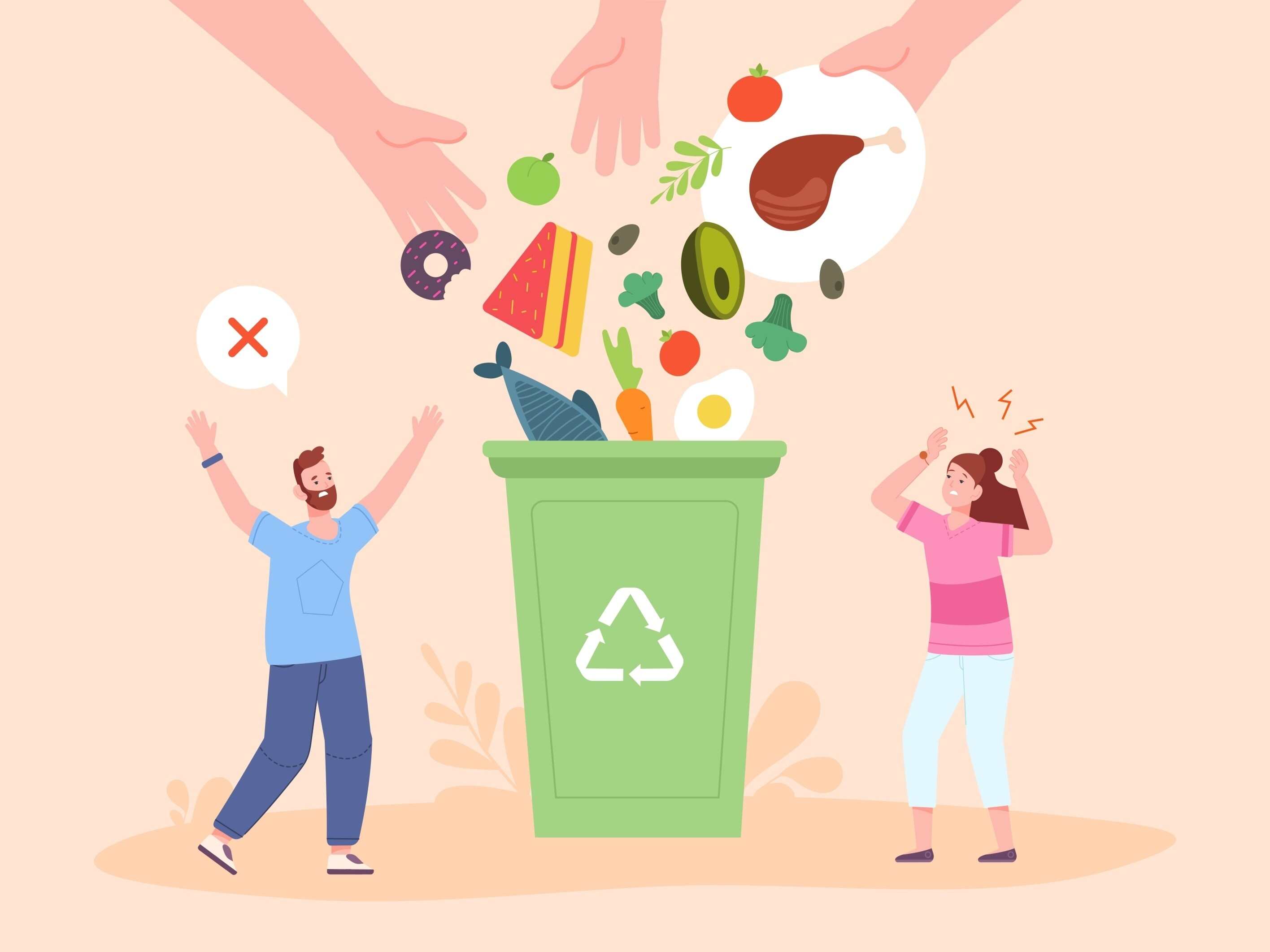
Tackling Hong Kong’s food waste
Bethany Tai, Valtorta College
As I have witnessed countless layers of leftovers buried beneath new piles of waste in landfills, I am writing to express my concerns about the serious food waste problem in Hong Kong. I would also like to suggest ways to alleviate issues caused by food waste.
Firstly, our landfills are running out of space. It is common knowledge that Hong Kong’s three landfills are expected to be full by the 2030s. Constructing a new landfill might seem like a solution; however, due to the limited availability of land in Hong Kong, this option appears unlikely to be realised.
Relying on incinerators could produce harmful gases, further contributing to air pollution. Therefore, there is a significant lack of space to manage the overwhelming and increasing food waste.
While as citizens we may not have the capacity to manage food waste fully, we can reduce our own waste and thereby lessen the burden on landfills. For example, it is advisable to take only a suitable amount of food at gatherings and ensure there are no leftovers.
Food waste is bad for the planet and our wallets, so why do we still do it?
Secondly, food waste also leads to massive energy waste. According to the Health Bureau, about 90 per cent of our food in Hong Kong is imported from other regions. The transport of such a large volume of food utilises non-renewable fuels, and significant resources – including water and nutrients from soil or feed – are expended in food production.
When tonnes of food is wasted, it represents not only a loss of food but also a waste of energy. Thus, we can see that wasting food leads to a further waste of energy.
To mitigate this issue, we should avoid irrational consumption and refrain from purchasing food that is not essential. This practice not only saves us money but also helps reduce food waste.
Thirdly, we are wasting food resources that many people need for survival. An article published by the Secretary for Environment and Ecology on May 7, 2024, states that about 3,330 tonnes of food waste is produced daily in Hong Kong.

To put that into perspective, this is roughly the weight of 19 blue whales, the largest mammals on Earth, discarded every single day. Meanwhile, 343 million people face acute food insecurity, experiencing severe hunger that leads to millions of casualties, including deaths and nutritional deficiencies.
We throw away valuable food simply because we do not want it, while others desperately seek a meal.
To help ease this situation, we can donate unwanted, unopened, and non-expired food to local food banks, which allows us to provide fresh food for those in need and reduce starvation. Additionally, we can support the World Food Programme with monthly donations to assist those affected by hunger in developing countries.
In conclusion, food waste leads to numerous severe problems. However, as members of our community and the global population, we must take action against food waste.
Staying safe from scams
Henry Li, Wah Yan College, Hong Kong
I am writing in response to the article by Salina Li titled “Hong Kong fights back against rising frauds with ‘despicable banana,’” published in the South China Morning Post on March 12.
In her article, Salina Li mentions that the Hong Kong Monetary Authority has recently released a new anti-deception video called “Click the Links, Fall for Scams!” In the video, a banana character symbolises unscrupulous scammers. This is a pun in Cantonese referring to “trap”, serving as a reminder for citizens to be wary of seemingly friendly strangers. In 2024, the Hong Kong Police Force recorded a total of 44,480 deception cases.
It is undeniable that internet fraud is a pressing issue today. Citizens, including myself, receive countless fraudulent calls, messages and advertisements daily. These deceptive traps are becoming increasingly sophisticated and can easily ensnare us. The perpetrators can pretend to be anyone – government officials, software developers, or friends.

I believe online fraud is a serious social issue that requires urgent attention, and I would like to offer suggestions for how we can better protect ourselves against online scams.
First, we should never click on unfamiliar websites or hyperlinks. There is no flawless fraud, just careless minds that fall for it. According to Help Net Security, a website dedicated to cybersecurity news, and Bolster AI, a company focused on phishing protection, around 18,000 fraudulent sites are created daily, and 13.4 million unique phishing and scam pages are currently present online.
Furthermore, scammers use a technique called “spamdexing” to ensure that fraudulent sites rank high in search results, as noted by LastPass, a well-known password management application. These alarming statistics indicate that the top search results may be unsafe websites. Thus, it is clear that we should never click on unfamiliar sites. If we must, it is recommended to use a separate device without any personal information.
Secondly, use strong passwords and avoid reusing passwords across different accounts. As stated by JumpCloud, a cloud-based identity and access management platform, 70 per cent of passwords can be cracked in less than one second.
Cloud Security Alliance, a leading organisation focused on security in cloud computing, reports that over 80 per cent of hacking-related breaches are attributed to weak or stolen passwords. Therefore, it is crucial to use strong passwords and never reuse them.
Thirdly, always verify before sharing personal information. With the rise of artificial intelligence, phishing messages have become more convincing and deceptive.
According to NordVPN, a well-known cybersecurity software company, phishing emails can still achieve a click-through rate of up to 54 per cent, even with awareness campaigns, especially when they contain AI-generated content. It is crucial to be vigilant regarding the messages and emails we receive.
With the correct anti-deception methods and heightened awareness, we can protect ourselves from scams. Parents should also educate their children about these practices to ensure safer internet usage for future generations.
