




Deep Dive delves into hot issues in Hong Kong and mainland China. Our easy-to-read articles provide context to grasp what’s happening, while our questions help you craft informed responses. Check sample answers at the end of the page.
News: Hong Kong’s plan to tap into the silver economy
-
Authorities have set up a task force to boost elderly consumption and encourage them to work
-
Spending by those aged 60 and above accounted for 11 per cent of the city’s GDP in 2024
Hong Kong authorities have announced a wide range of measures to tap into the multibillion-dollar “silver economy”.
These include steps to boost consumption and develop tailor-made products for the elderly. They also want to strengthen insurance protections to encourage older residents to re-enter the job market.
Deputy Chief Secretary Warner Cheuk Wing-hing is the leader of a new working group aimed at harnessing the economic benefits of the city’s ageing population.
“The amount of spending by people aged 60 and above reached about HK$342 billion in 2024, about 11 per cent of the city’s GDP. Economic advisers estimate the figure will reach HK$496 billion by 2034,” he said.
“The elderly make up a large proportion of Hong Kong‘s population and have certain economic conditions and purchasing power. They are a huge consumer group that cannot be ignored, and they create a huge demand for products and services related to the silver economy.”
He said the plan could boost Hong Kong’s economy and drive overall economic development. Promoting high-quality “silver products” and services could also help the elderly enjoy the results of Hong Kong’s development.
Deep Dive: Hong Kong workers say they are losing jobs under labour import scheme
Cheuk said the measures would cover consumption by the elderly, developing the “silver industry” and related financial products, and taking steps to welcome residents aged 50 and above back into the labour market.
Older people in Hong Kong, with their savings, greater awareness of quality of life and willingness to spend on themselves, are increasingly recognised as an emerging consumer market. According to official estimates, people 65 and over would constitute more than a third of the population by 2043.
The government will promote products targeting the elderly at major exhibitions. Restaurants would also be encouraged to offer discounts and special meals for senior citizens in the third quarter of the year.
Authorities will encourage the elderly to rejoin the job market by launching dedicated retraining courses. They will also review cash and award incentives for older workers and the companies that hire them.
Lawmaker Frankie Ngan Man-yu welcomed the government’s efforts but urged authorities to repurpose some job centres to focus on elderly employment.
He said Hong Kong’s labour force participation rate for people aged 55 to 64 was estimated at 58.6 per cent, lower than that of other advanced economies.
Staff writers
Question prompts
1. According to News, which of the following statements are true?
(1) The Hong Kong government plans to develop specialised products and strengthen insurance protection to support the elderly.
(2) The amount of spending by people aged 60 and above accounted for about 11 per cent of Hong Kong’s GDP in 2024.
(3) The silver economy plan does not include measures to encourage elderly residents to rejoin the workforce.
(4) Dedicated retraining courses and incentive reviews are part of the government’s strategy to help older residents re-enter the job market.
A. (1), (2) only
B. (2), (4) only
C. (1), (3) only
D. (3), (4) only
2. List TWO reasons why the ageing population in Hong Kong is being recognised as an emerging consumer market.
3. To what extent do you think these new measures could help senior citizens re-enter the job market? Explain using News, Glossary and your own knowledge.
Photo

Question prompts
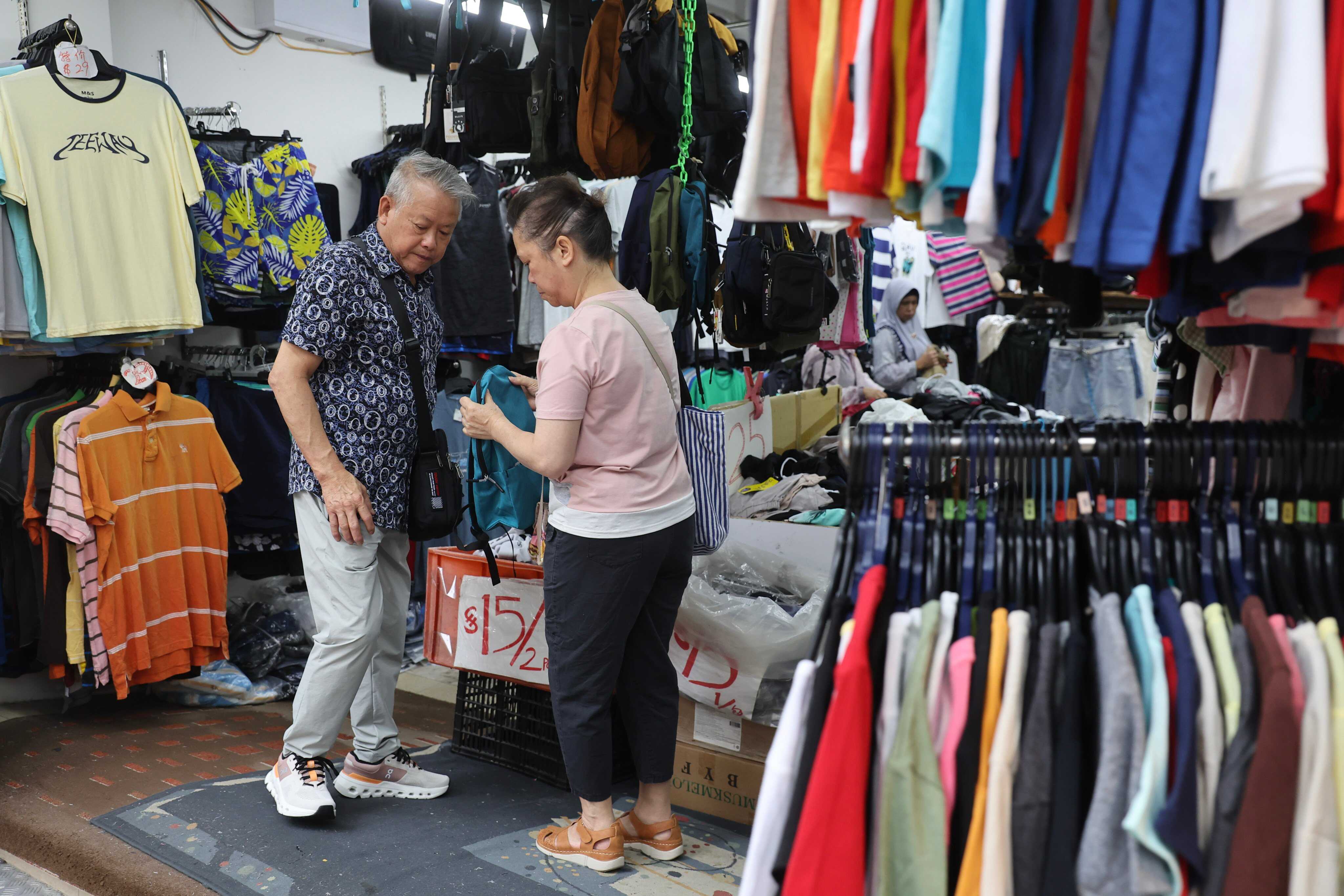
1. What is being shown in the photo? How does it relate to the information presented in News?
2. Do you think the government’s measures to encourage elderly spending will be effective? Why or why not? Explain using News, Glossary and your own knowledge.
Chart
Question prompts
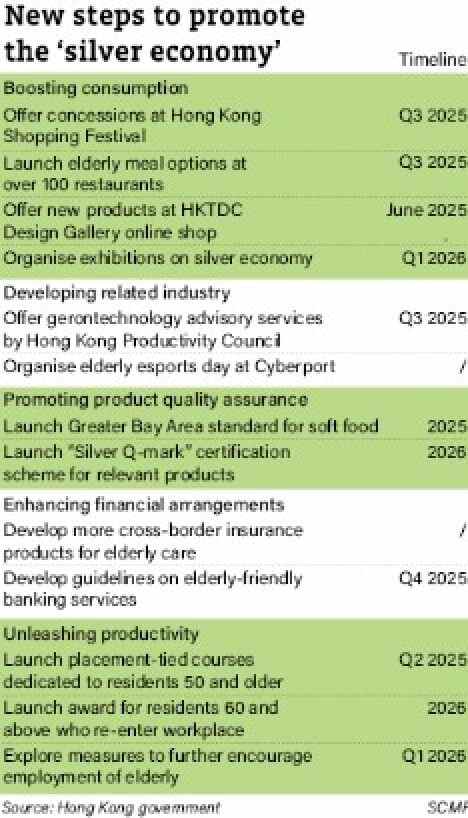
1. Name TWO measures the Hong Kong government will take in 2025 to help boost elderly consumption.
2. Which of the measures do you think will benefit the elderly the most? Explain using News, Issue, Glossary and your own knowledge.
Issue: Better employment support for the city’s elderly
-
Experts say that senior citizens need employment support to rejoin the job market
-
The number of people aged 65 and above in Hong Kong is expected to increase to 2.67 million in 2043
Hong Kong’s plan to bolster the spending power of elderly residents and promote the “silver economy” requires comprehensive employment support, such as flexible retirement plans and improved medical insurance, analysts have said.
“As the population ages, the elderly are becoming healthier and wealthier,” said Paul Yip Siu-fai, a professor at the department of social work and social administration at the University of Hong Kong. “Providing more preferential offers will help drive the silver economy.”
Still, more needed to be done to spur the overall growth of the market surrounding the needs of the elderly, he said.
The city’s elderly population has created a huge demand for products and services in healthcare, leisure and recreation, and home and personal care.
To develop industries related to the demographic, the Hong Kong Science and Technology Parks Corporation and Cyberport will encourage companies under their wing to develop gerontechnology.
But Yip said the latest blueprint lacked critical elements, including steps to encourage and enable the elderly who were physically fit to remain in the workplace, which he said could make better use of their productivity and provide them with more disposable income.
Government departments and private companies should also adopt flexible retirement age policies to allow older employees to keep working, he added.
Yip said some employers were reluctant to hire elderly workers because of the cost of medical insurance and suggested authorities offer to share part of the expense.
He also urged the government to carry out additional studies on population trends and include more voices of elderly residents when formulating policies.
Deep Dive: Role of community pharmacies as Hong Kong aims to revamp public healthcare
Sze Lai-shan, deputy director of the NGO the Society for Community Organisation, welcomed the government’s plans but said the measures lacked innovation and were too piecemeal, doubting their effectiveness.
She agreed with Yip that the government should encourage older people to continue working by offering co-payment of medical insurance, as well as further relaxing the threshold for people to receive a government allowance for low-income working households.
Companies should also provide working environments and flexible arrangements that are suitable for older people, she said, saying there should be a focus on creating employment opportunities for the elderly.
The government said it would launch dedicated retraining courses, double the number of job fairs for older residents, and review employment schemes for the elderly.
In addition, the insurance industry has been exploring ways to improve elderly welfare, such as a proposed tax deduction for premiums on deferred annuity products to encourage voluntary retirement savings.
Staff writers
Question prompts
1. Which of the following statements are true?
(1) Technology companies in Hong Kong are being encouraged to develop more products and services for older people.
(2) Experts believe that current government measures fully address the employment and healthcare needs of the elderly.
(3) The Hong Kong government has already implemented a flexible retirement age policy across all departments.
(4) Analysts say that offering retail discounts alone is not enough to drive the silver economy.
A. (1), (2) only
B. (2), (4) only
C. (1), (4) only
D. (3), (4) only
2. Using Issue, list TWO employment challenges the city’s elderly population faces.
3. Do you agree with Sze that the measures to drive the “silver market” are too piecemeal and ineffective? Explain using Issue, Glossary and your own knowledge.
Glossary
silver economy: economic activities, products and services designed to meet the needs of older people. According to estimates by the Hong Kong government, by 2043, people aged 65 and over will make up more than a third of the city’s population, indicating significant potential for financial gain by catering to this market.
GDP: stands for gross domestic product. It measures the monetary value of final goods and services produced within a country or territory during a specified period.
purchasing power: the ability of individuals to buy goods and services with their income
gerontechnology: technology designed to support the health, work, and daily life of elderly people
disposable income: money left for spending or saving after taxes and basic expenses are paid
deferred annuity: financial products that will provide income at a future date in exchange for fees paid now

Sample answers
News
1. B
2. Older people in Hong Kong have substantial savings and purchasing power, with those aged 60 and above spending HK$342 billion in 2024. They also have a greater awareness of quality of life and a willingness to spend money on themselves. (accept all reasonable answers)
3. The new measures could significantly help senior citizens re-enter the job market; however, their effectiveness will depend on their implementation. According to the news, the government plans to launch retraining courses and review incentives for older workers and companies that hire them. These steps directly address skill gaps and motivate both seniors and employers.
Ageism and outdated skill sets are common obstacles that older job seekers face. Suppose the retraining programmes are aligned with market needs, for example. In that case, digital literacy, part-time or flexible roles, and public attitudes shifting to value older workers’ experience could have a meaningful impact. However, without proper follow-through, some initiatives might not achieve their full potential. (accept all reasonable answers)
Photo
1. The photo shows the Working Group on Promoting Silver Economy, a government task force focused on increasing elderly consumption. The group was mentioned in the news story, alongside examples of measures the task force hopes to implement.
2. Introducing new products and services for the elderly may be an effective way to encourage them to spend. However, the simple fact is that many of them may not have money to spend in the first place. Hong Kong aims to encourage more seniors to return to the workforce, which would give them more disposable income, but it will need to address issues such as poor health and outdated skills. Retraining programmes could help some elderly Hongkongers gain new skills, but it remains to be seen whether these programmes will be effective. There are also other issues to address, such as workplace ageism.
While the government is off to a strong start, continued evaluation and expansion of support systems are needed to ensure real, long-term improvements in elderly employment. (accept all reasonable answers)
Chart
1. Two measures include offering concessions at the Hong Kong Shopping Festival and launching elderly meal options at over 100 restaurants, both by the third quarter of 2025. (accept all reasonable answers)
2. Among the new steps to promote the “silver economy,” the measure that likely benefits Hong Kong’s senior citizens the most is the launch of placement-tied courses dedicated to residents aged 50 and above. This step goes beyond short-term consumer incentives and tackles a core issue: employment.
Many elderly residents face barriers such as outdated skills, age discrimination, and health-related concerns. Providing retraining opportunities directly linked to job placements helps address these challenges by equipping older people with up-to-date skills and increasing their chances of re-entering the workforce. This not only boosts their financial independence and confidence but also enhances their social inclusion and mental well-being. (accept all reasonable answers)
Issue
1. C
2. They face a lack of flexible retirement policies and costly medical insurance.
3. Yes, I agree with Sze’s view to some extent. While the government has launched promising initiatives, such as retraining courses and job fairs, the measures appear scattered and lack a long-term, integrated strategy. Sze pointed out that without innovative ideas and stronger support for elderly employment, such as co-payment of medical insurance and better working conditions, these actions may not be enough to create a lasting impact. For the silver economy to thrive, more comprehensive policies and support systems tailored to the elderly’s needs are essential. (accept all reasonable answers)
