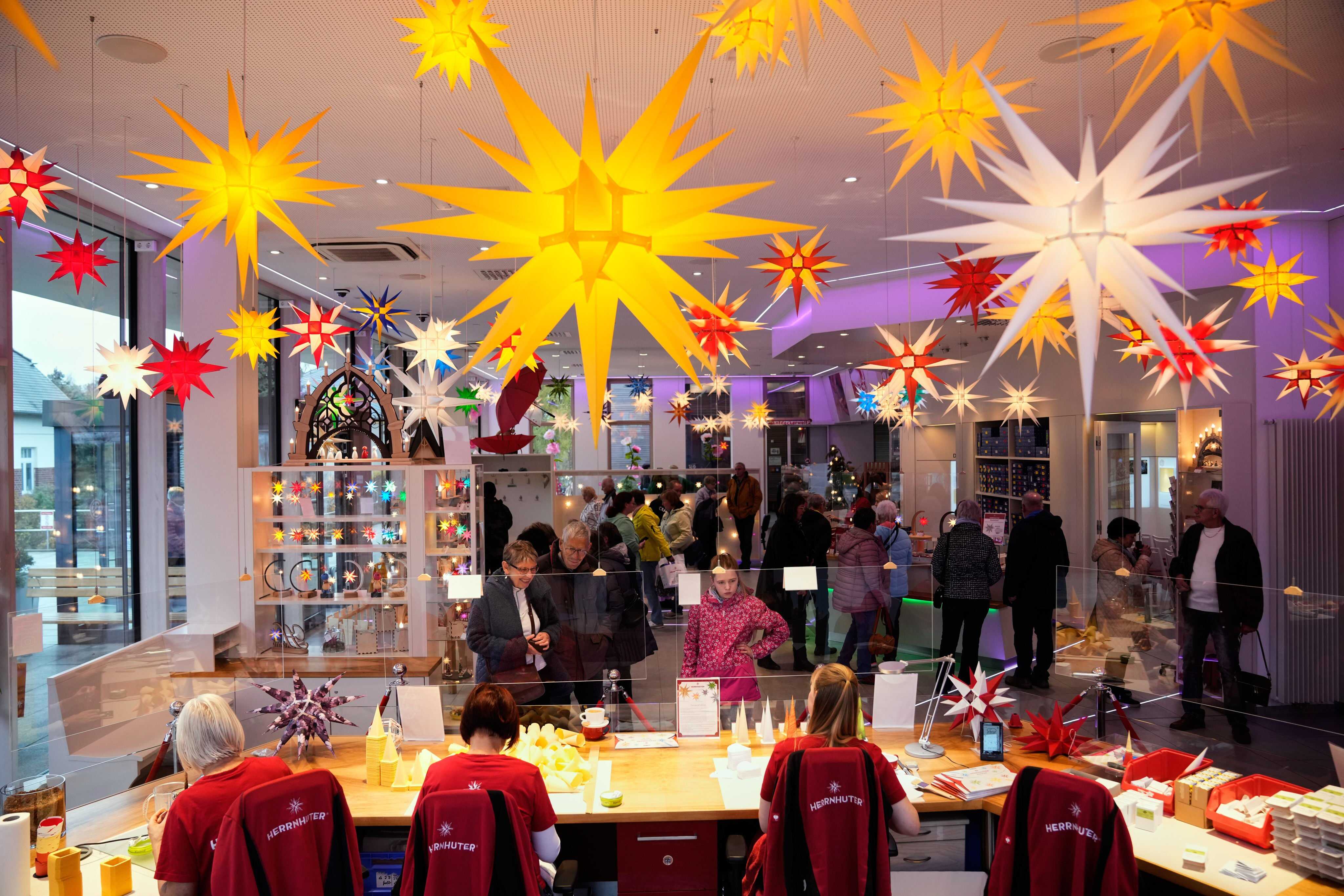
Bright Christmas stars are a well-known sight throughout Germany during the darkest days of the year. Among them, Moravian stars, originating from the eastern village of Herrnhut near the Polish and Czech borders, have gained particular fame and popularity. These stars can be seen decorating church steeples, flat windows and even the chancellery in Berlin during the Advent season.
“It’s the symbol of the Star of Bethlehem, which guided the three wise men to the Christ Child in the manger,” said Katja Ruppert, managing director of the Herrnhuter Sterne manufacturing company.
The stars have been handcrafted in Herrnhut for over 180 years. Herrnhut was established by refugees from the Moravian Church, who fled from the historical provinces of Bohemia and Moravia, now part of the Czech Republic. Members of this church, one of the oldest Protestant denominations in the world, sought refuge in this German region in 1722.
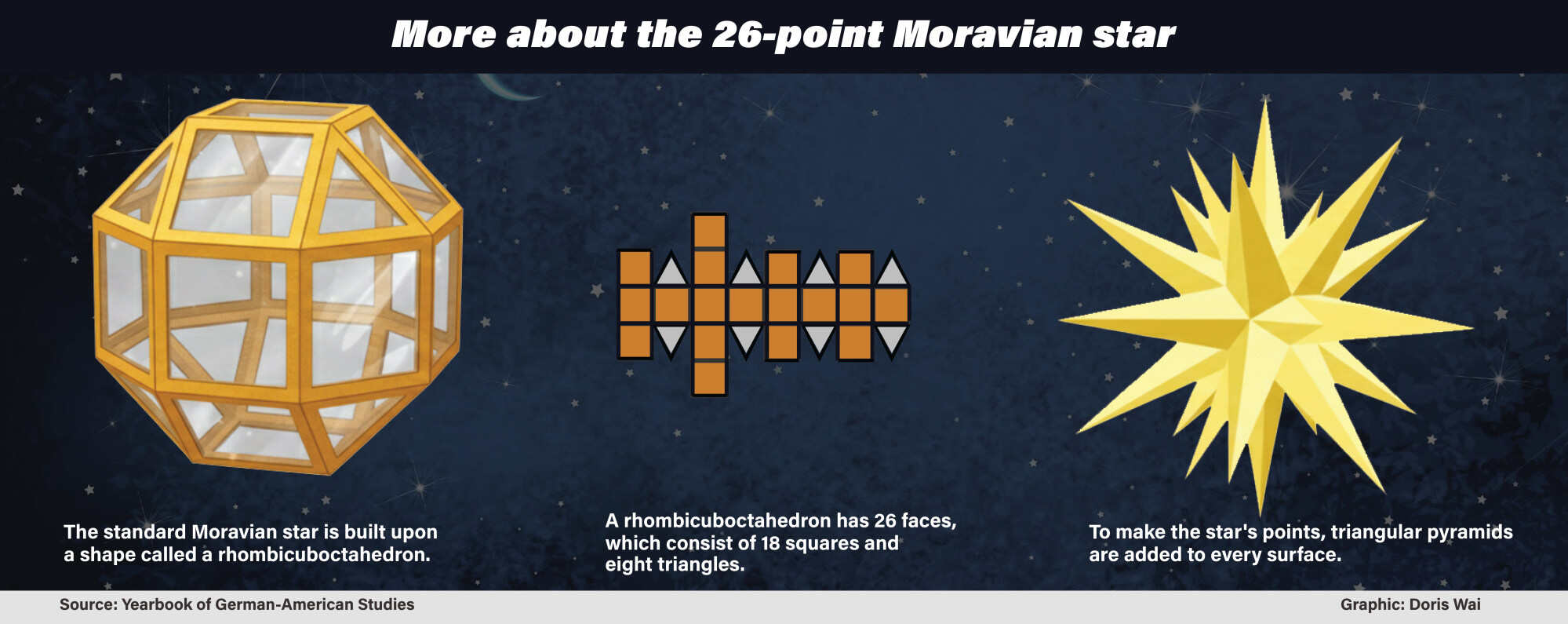
The star was created during a geometry lesson. Church members were highly involved in education. The Moravian star was designed in one of the schools they established, when a maths teacher asked his students to design a “truncated cuboctahedron with 17 four-corner based points and eight three-corner based points”.
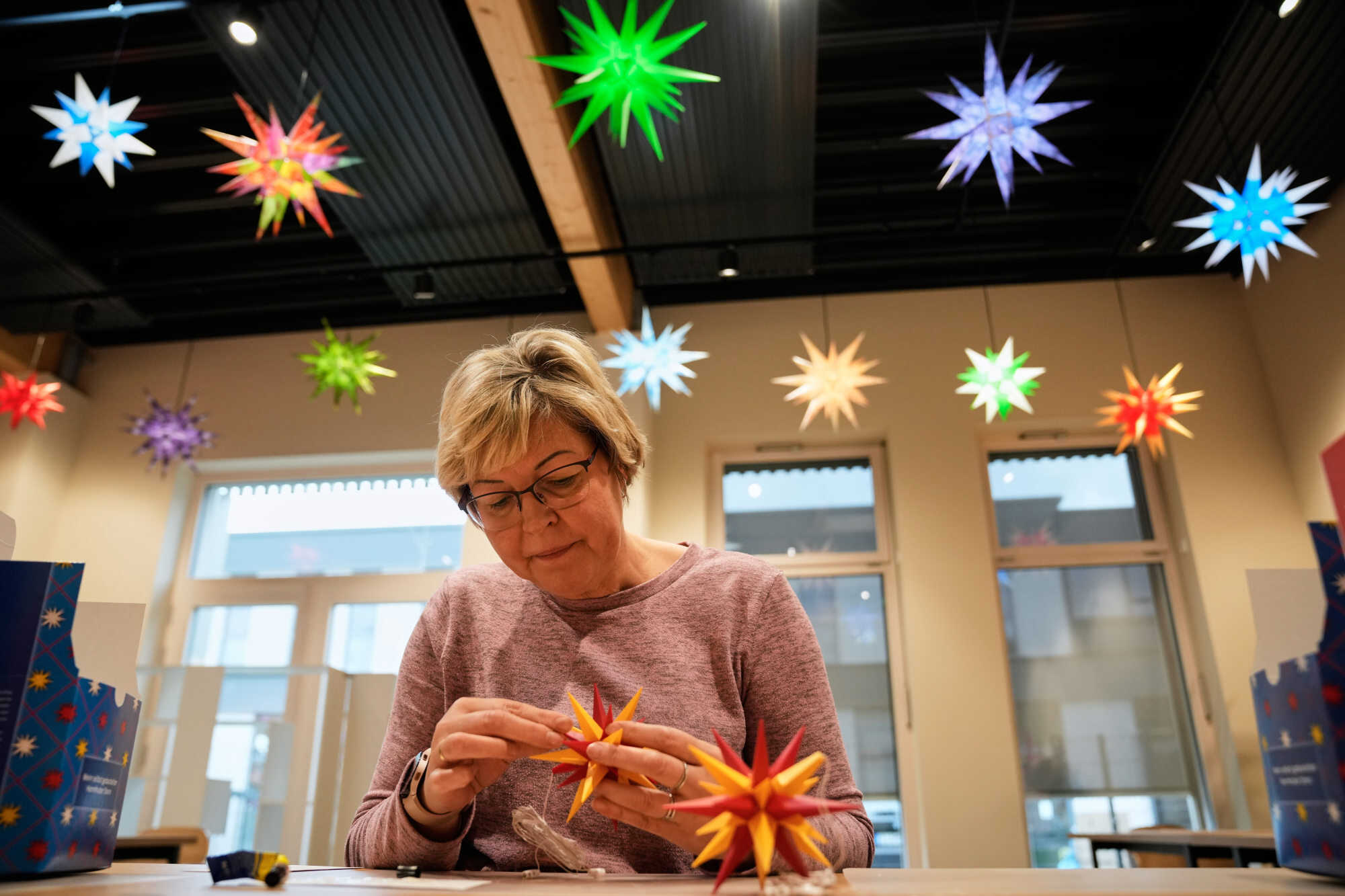
The original cardboard star was patented in 1925, designed so its points could be dismantled for shipping and easily reassembled later.
Initially, the points of the Moravian star were coloured white and red, symbolising “purity and the blood of Jesus Christ”, Ruppert said.
As the production of stars expanded, so did the variety of colours available. Today, they are made from paper or plastic and come in monochrome, multicoloured or patterned designs. Some use pages from old books and are known as “literary stars”.
There are even stars with floral spring motifs for those who want to keep the decorative ornaments up in their homes year-round.
The company recently opened a handicrafts workshop in Herrnhut, where people can create their own stars. There is also a big showroom where people can view and buy different varieties, such as this year’s special edition: a shiny, collectible purple star.
Currently, around 230 employees produce more than 820,000 stars each year. More than 60,000 people visit the store and workshop annually, primarily during the weeks leading up to Christmas.
What are some other variations of the Moravian star?
The stars can have 20, 26, 32, 50, 64 or 110 points, but the most popular form is the 26-point star
(see graphic). It is composed of 18 square and eight triangular cone-shaped points. The 26th point is missing, so it can be mounted or hung up more easily.
No matter how many points a star has, it still has a symmetrical shape, meaning that all the sides look exactly the same.
Some believe the 26-point star is linked to Hebrew numerology, in which the number 26 corresponds to the name of God.