Read the following text, and answer the quiz questions below.
[1] As Hong Kong’s typhoon season unfolds, climate change risks are intensifying the strength of tropical storms, causing potential disasters in their path. Low-lying areas, particularly Tai O—a small fishing village on Lantau Island—are especially at risk. In recent years, this tranquil community of stilt houses and winding waterways has faced a growing number of extreme weather events that threaten both the lives and livelihoods of its residents.
[2] Located in a remote area and with many elderly residents, Tai O lacks many of the resources required to combat natural disasters, which are often accompanied by heavy rainfall and high winds. Recent extreme weather, like that experienced during super typhoons, brought record-breaking storm surges that submerged entire neighbourhoods, with floodwaters reaching 3.36 metres in some instances. “Back in 2018, Typhoon Mangkhut caused severe flooding in our village and seriously disrupted our daily lives,” recalled Tai O resident Samuel Wong.
[3] The village’s once-rich biodiversity is also under threat. Formerly an abundant species in the area, the Chinese bahaba, known locally as the “Tai O Fish”, is critically endangered. Warming waters, habitat loss and overharvesting have diminished marine life, while coastal erosion has reduced natural protection from incoming waves, leaving the area more exposed to storms.
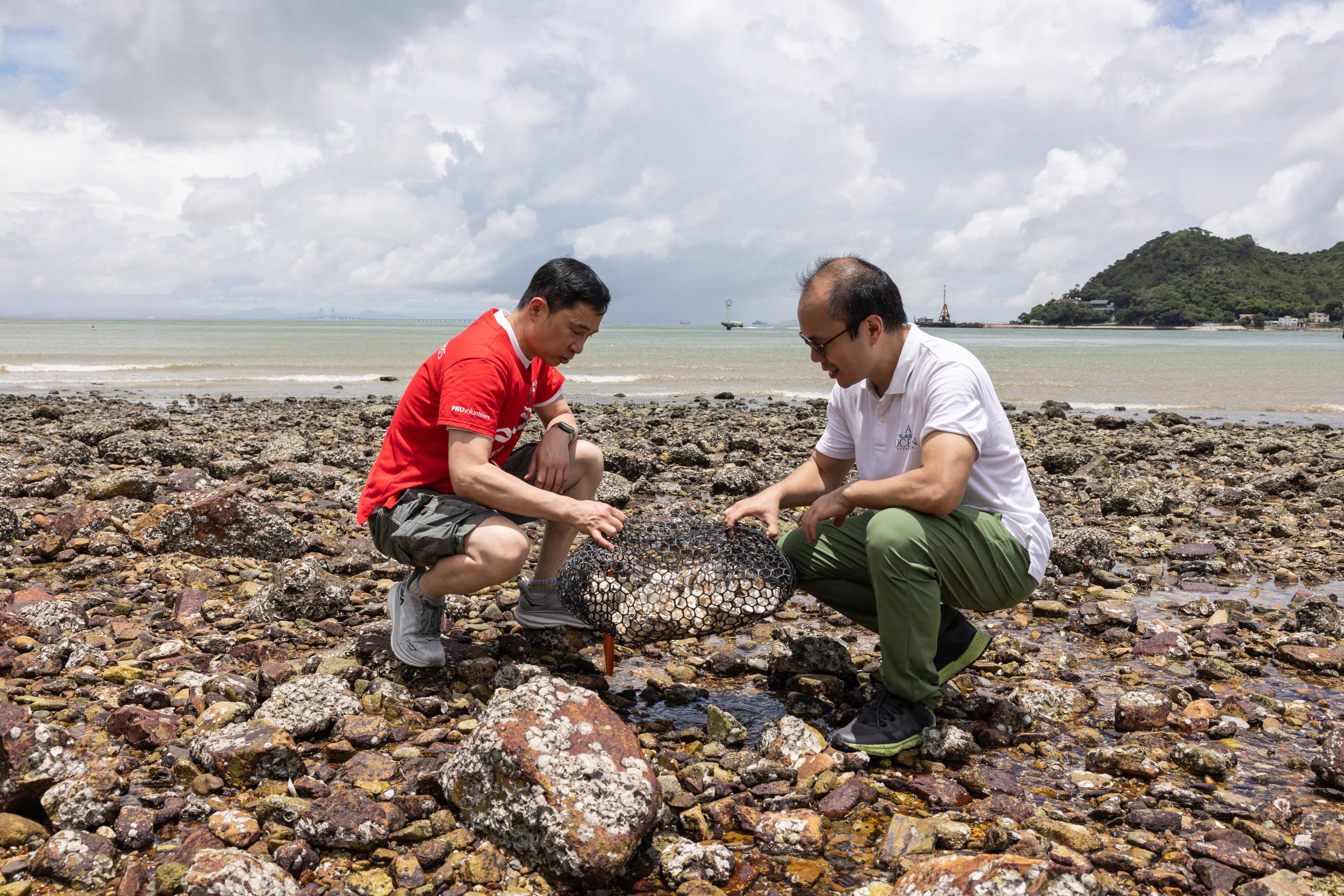
[4] In response to these challenges, A Plastic Ocean Foundation is spearheading an initiative to promote sustainable coastal management. Using eco-friendly units made from seashells, the foundation re-engineers the sea floor as a nature-based alternative to traditional sea walls. “Living shorelines can help increase seabed complexity,” explained Willy Kwong, the foundation’s director. “This added complexity not only helps reduce wave energy, but also provides a habitat for marine life.”
[5] The project utilises locally sourced bivalve shells, including oysters. After thorough cleaning and treatment to eliminate potential contaminants, these shells are shaped into modules that form a sustainable marine structure. These modular wire reefs (MWR) help stabilise the shoreline and provide structural support for marine habitats.
[6] “Bivalve shells provide a natural and effective substrate that encourages the settlement of sessile marine organisms, particularly filter feeders such as barnacles and oysters,” Kwong said. “When used within MWR structures, these shellfish help attract a thriving community of marine life. The filter feeders, in turn, enhance local biodiversity and contribute to water purification, allowing nature to gradually restore balance with minimal human intervention.”
[7] Since 2023, the NGO has installed two modular reefs in Tai O, taking into account the existing biodiversity, the distance from shipping lanes and the range of benefits for the environment and local communities. “We carefully select sites where shellfish, fish larvae or horseshoe crabs are likely to be found, while ensuring that our MWR structures do not interfere with local fishing activities,” Kwong said. “Priority is given to areas identified in our baseline assessments as having erosion issues or important ecological value.”
Source: South China Morning Post, August 29