Content provided by British Council
Read the following text and answer the quiz below.
[1] In 2022, when the Jumbo Floating Restaurant capsized as it was being moved to an undisclosed location, it felt like an important part of Hong Kong’s culinary history sank with it. Three years later, a similarly abandoned floating restaurant in the city was revived for a one-night-only dinner on November 22. The event was orchestrated by Sacha Yasumoto, the founder of Dangerous Dinners, an annual event that takes guests to fascinating and previously inaccessible destinations.
[2] The dinners, which usually take place in beautiful abandoned buildings temporarily transformed by Yasumoto and her partners at Heaven Scents Events, are small but glamorous events that are often attended by an affluent crowd. Previous venues include Yu Yuen, a country villa in Yuen Long that once belonged to Hong Kong industrialist Tsoi Po-tin, and a post-war army barracks near Tuen Mun.
[3] This time, at one of the last floating restaurants in Hong Kong, the cost for a table of 10 was HK$72,000 (US$9,250). The latest dinner was a tribute to the city’s legacy of floating restaurants, a chapter in Hong Kong’s cultural history born from the tradition of sampan seafood feasts in the Aberdeen Typhoon Shelter. There were once three floating restaurants in Aberdeen, the most well-known being the Jumbo Floating Restaurant, which opened in 1976. These restaurants became monumental tourist attractions, notably catering to many Japanese tourists during the economic boom in the 1990s.
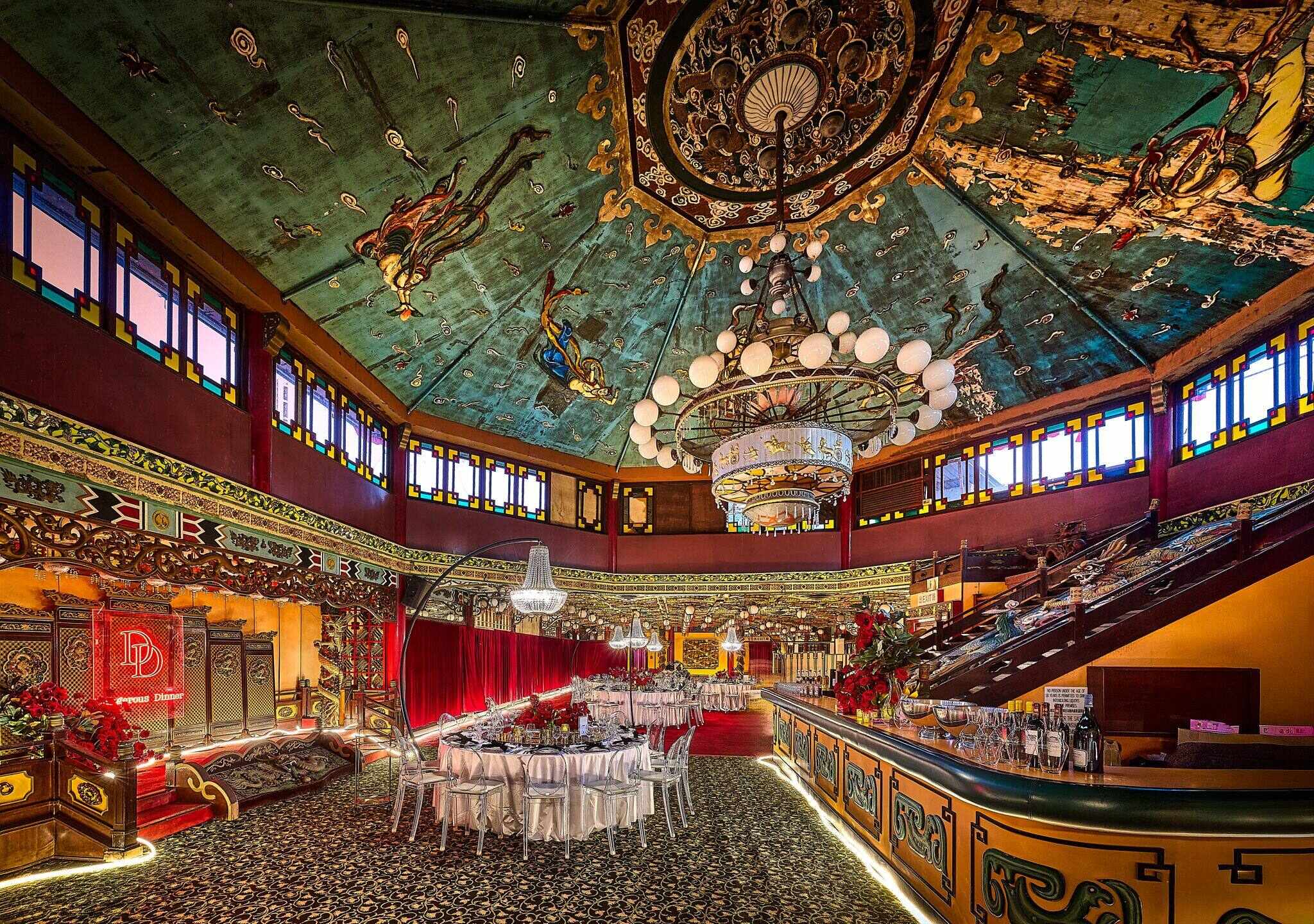
[4] The floating restaurants symbolised Hong Kong’s vibrant fusion of tradition and modernity, hosting everyone from Hollywood stars to foreign dignitaries, all drawn by the novelty of dining extravagantly on the water. However, changing tourism trends and the restaurants’ immense operating costs led to their decline. One by one, they closed, with Jumbo, the last, shutting in 2020 as a result of the Covid-19 pandemic.
[5] The original interiors of this floating palace are incredibly detailed. The ceilings and cornices are adorned with dragons and symbolic motifs in faded, yet still vibrant, colours, including huge carvings depicting the “eight immortals” of Chinese folklore. A grand dragon and phoenix are depicted on a rising section behind the bar. Yasumoto and her team illuminated the interiors with portable chandeliers and LED lights, and used partitions to conceal worn walls. A new carpet was shipped in to cover some of the flooring that had been damaged by the elements.
[6] What made this Dangerous Dinner more challenging than previous ones was the threat of damage that extreme weather events can do to a vessel resting at sea. “I think my biggest fear [was] actually a typhoon, because if a big typhoon hits, I don’t know what damage it’s going to do,” said Yasumoto, who planned the event during Hong Kong’s stormy summer months. “But fears and challenges, they’re all part of it. That is what makes a ‘dangerous dinner’.” Luckily, the typhoons of 2025 did not cause significant damage. Guests were thrilled to be part of the experience, with many nostalgic for the floating restaurants of yesteryear.
Source: South China Morning Post, November 30