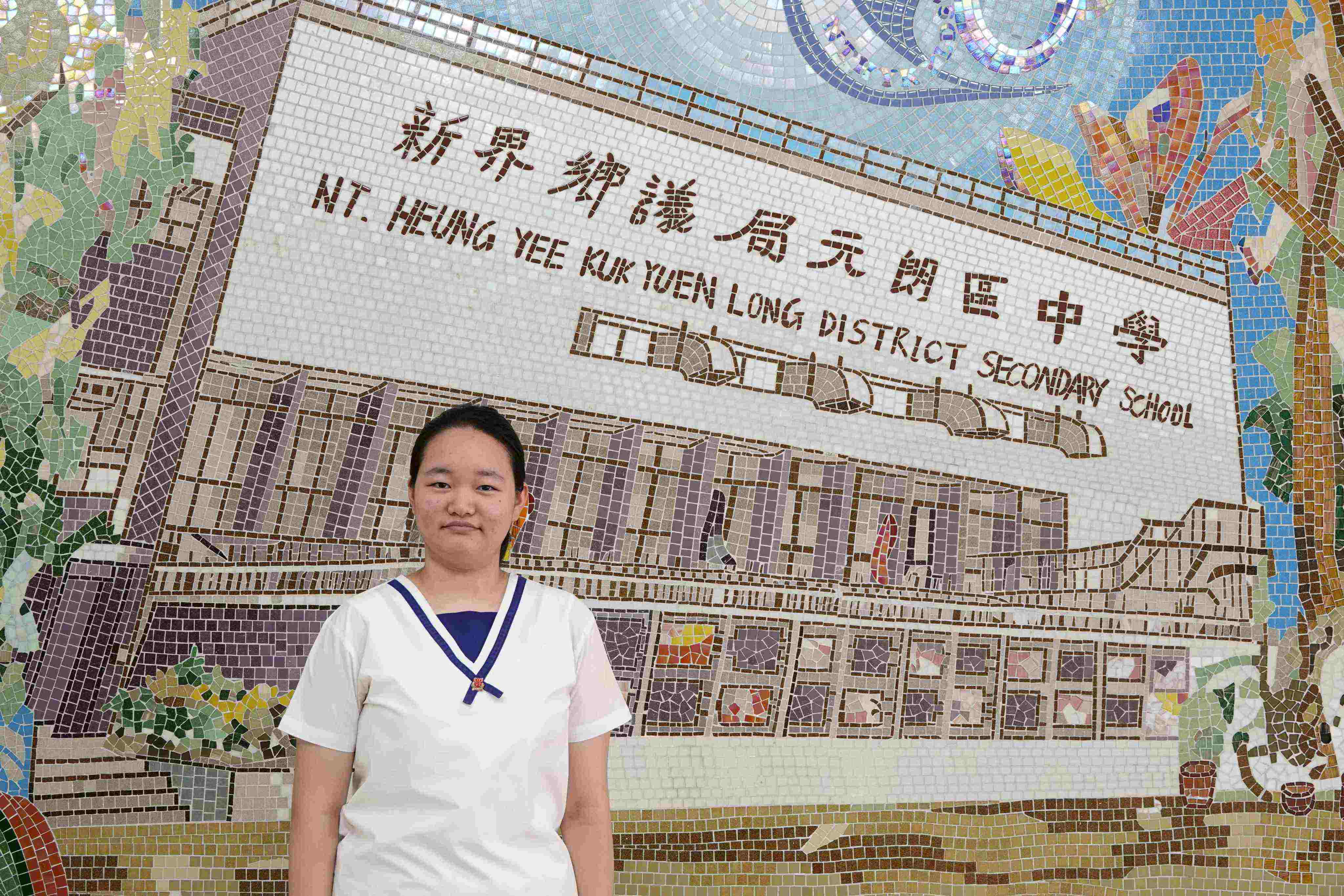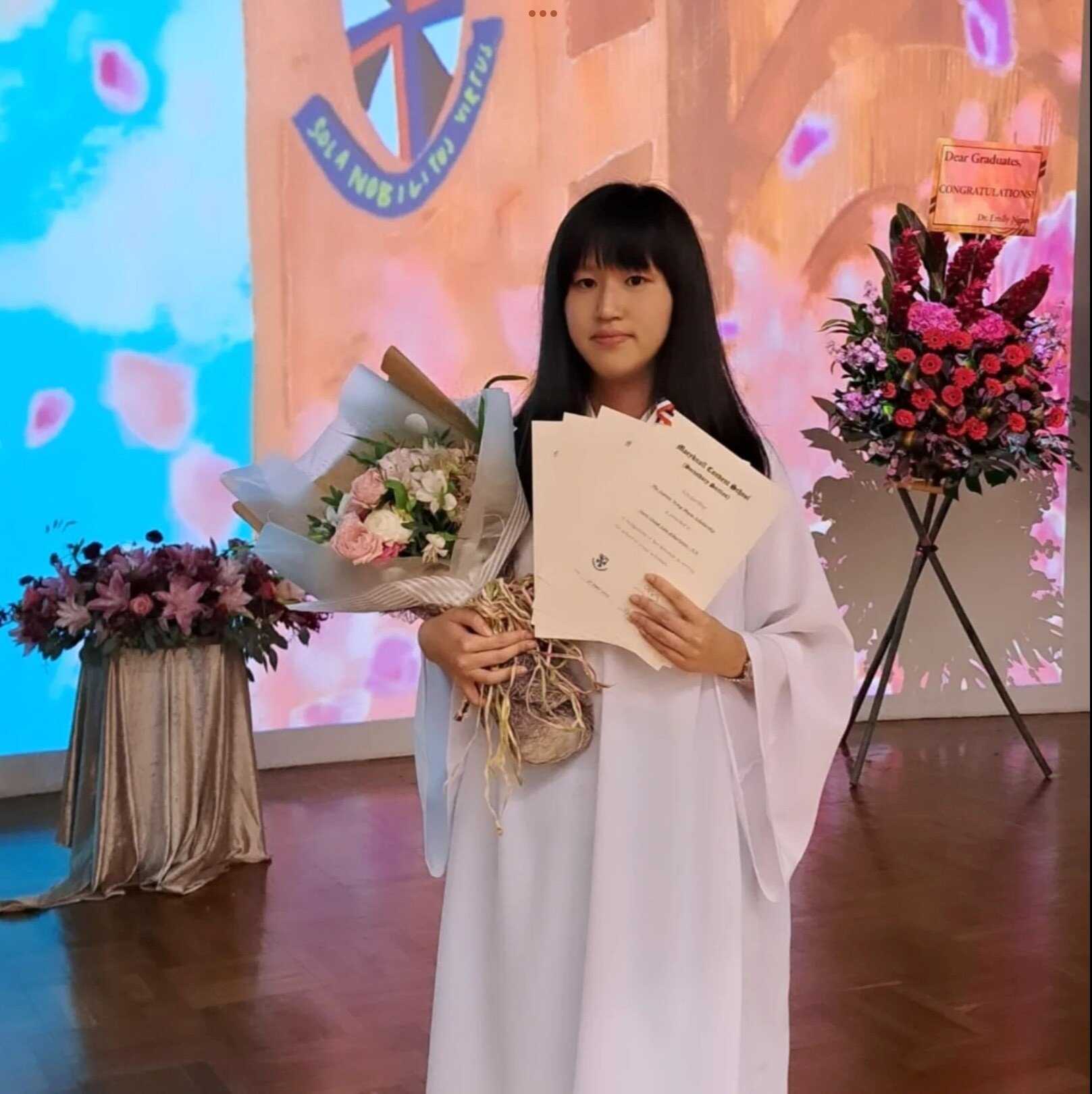
As soon as Helen Ching put on the sash as the head girl at Diocesan Girls’ School, she began her mission to transform the school into a purpose-driven community.
Under the 17-year-old’s leadership, the school prefects’ board collaborated with the student metaverse committee to host a hybrid Christmas Bazaar featuring both virtual and in-person components.
“I would never have believed that the prefects’ board could organise an event of such scale – it feels almost magical,” the Form Six student recalled.
Beyond the fun and festivities, every dollar raised was donated to charity, reflecting Helen’s belief that leadership grounded in service can create a lasting impact on both the school and society.
Thanks to her achievements, Helen was recognised as one of the finalists in the Grand Prize category of the 2024/25 Student of the Year Awards. These awards were organised by the South China Morning Post and solely sponsored by the Hong Kong Jockey Club.
During the Christmas Bazaar, the Diocesan Girls’ School campus featured 70 sales stalls and game booths, while an online replica in the metaverse was bustling with activity.
This whirlwind of coordination taught Helen vital lessons about time management, manpower distribution and, above all, the power of collaboration.
“I saw first-hand the strength of a group united by a common goal,” she said.
Motivated by this experience, Helen became even more committed to empowering others to drive meaningful change.
Driven by the belief that technology should be accessible to all, she trained over 60 classmates in algorithms and data structures. Additionally, she launched weekend workshops on large language models for underprivileged children and developed an AI chatbot service project to assist them with their homework.
By combining education with social impact, Helen transformed abstract coding concepts into a tool for promoting equity.
The teen’s mastery of STEM subjects was developed in intense competitions.
In recent maths modelling tournaments that lasted for five days, she used her knowledge to tackle challenges such as pet abandonment and sustainable land use planning. Her team followed a systematic approach: they identified the contributing factors, expressed them mathematically, implemented the model in code, tested it with real data and conducted sensitivity analyses to improve its robustness. Their solutions received international recognition.

Helen has also excelled on the Olympiad stage. After dedicating 127 hours to intensive training with university professors, she earned a silver medal at the 2024 China Girls’ Mathematical Olympiad.
Through her self-study of intermediate algorithms and by teaching courses in C++, a programming language, and Olympiad in Informatics, Helen guided her team to a first runner-up finish in the 2024/25 Hong Kong Girls’ Olympiad in Informatics, where she also secured the individual championship. To prepare, she completed 66 hours of training with Hong Kong’s team.
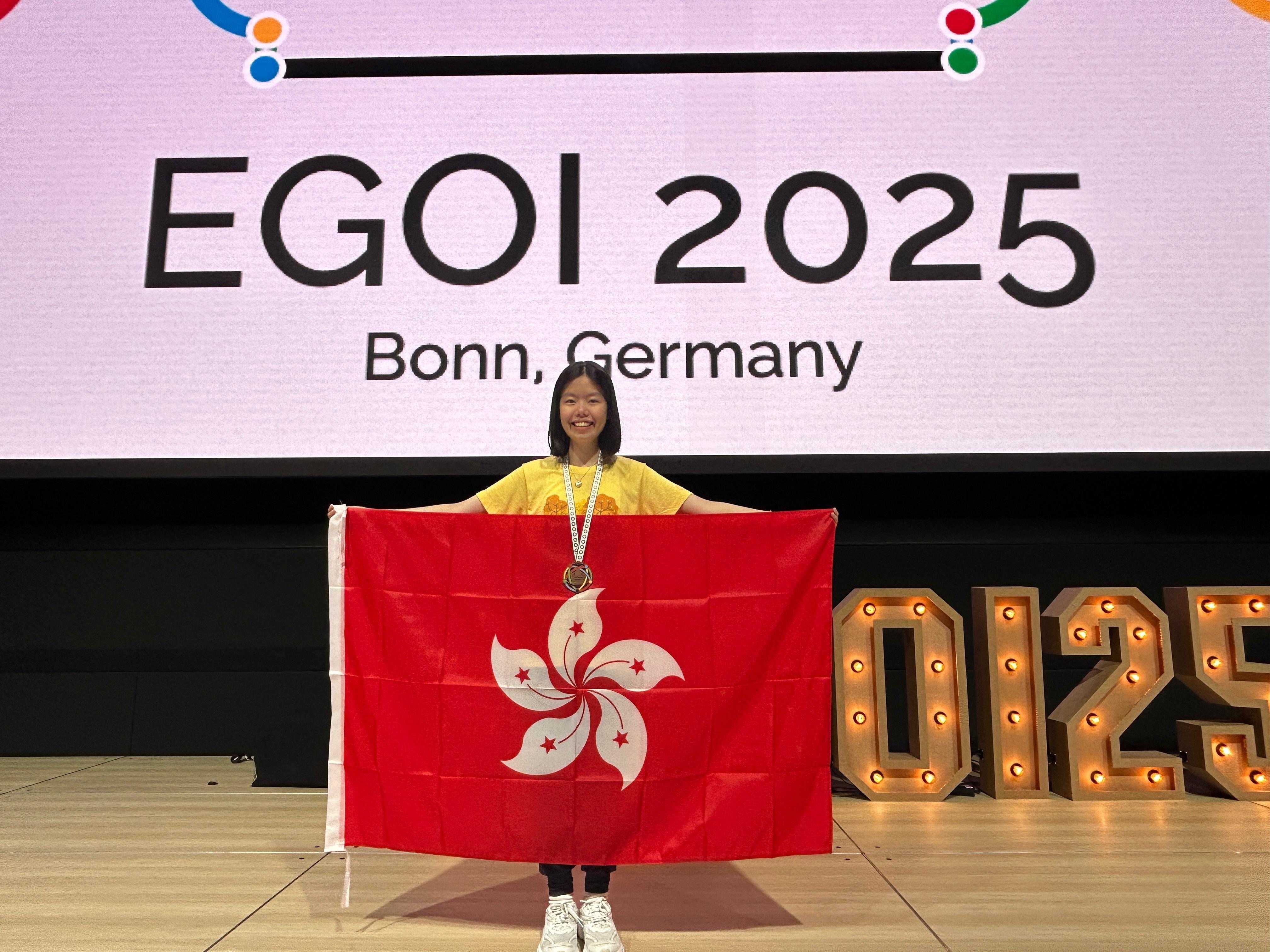
She also led the city’s inaugural delegation to the 2025 European Girls’ Olympiad in Informatics and brought home a bronze medal.
“These victories equipped me with advanced knowledge and sharpened my ability to stay calm under pressure,” she said.
Beyond equations and loops, Helen is also a four-time champion of the Hong Kong Schools Speech Festival. She once addressed audiences at Google’s Women Techmakers event on how to nurture student leaders. For her, public speaking and STEM are two sides of the same coin.
“Working on STEM solutions is significant, but it’s equally important to explain and be transparent about the rationale and process behind those solutions,” she noted.
Helen’s passion for sharing stems from a simple belief: “We are never too young to suggest solutions to real-world problems,” she said.
She advocates for the “power of collective impact”, encouraging every knowledgeable person to “spread their joy of learning and service to inspire others”.
Helen aspires to be a computer scientist focused on sustainability. Concerned about the rising energy demands of AI data centres, she plans to explore algorithm optimisation and streamline computation at its core.
“I want to build a better tomorrow by reducing AI’s carbon footprint – so that technology’s next breakthroughs can power social well-being rather than threaten energy security,” she said.