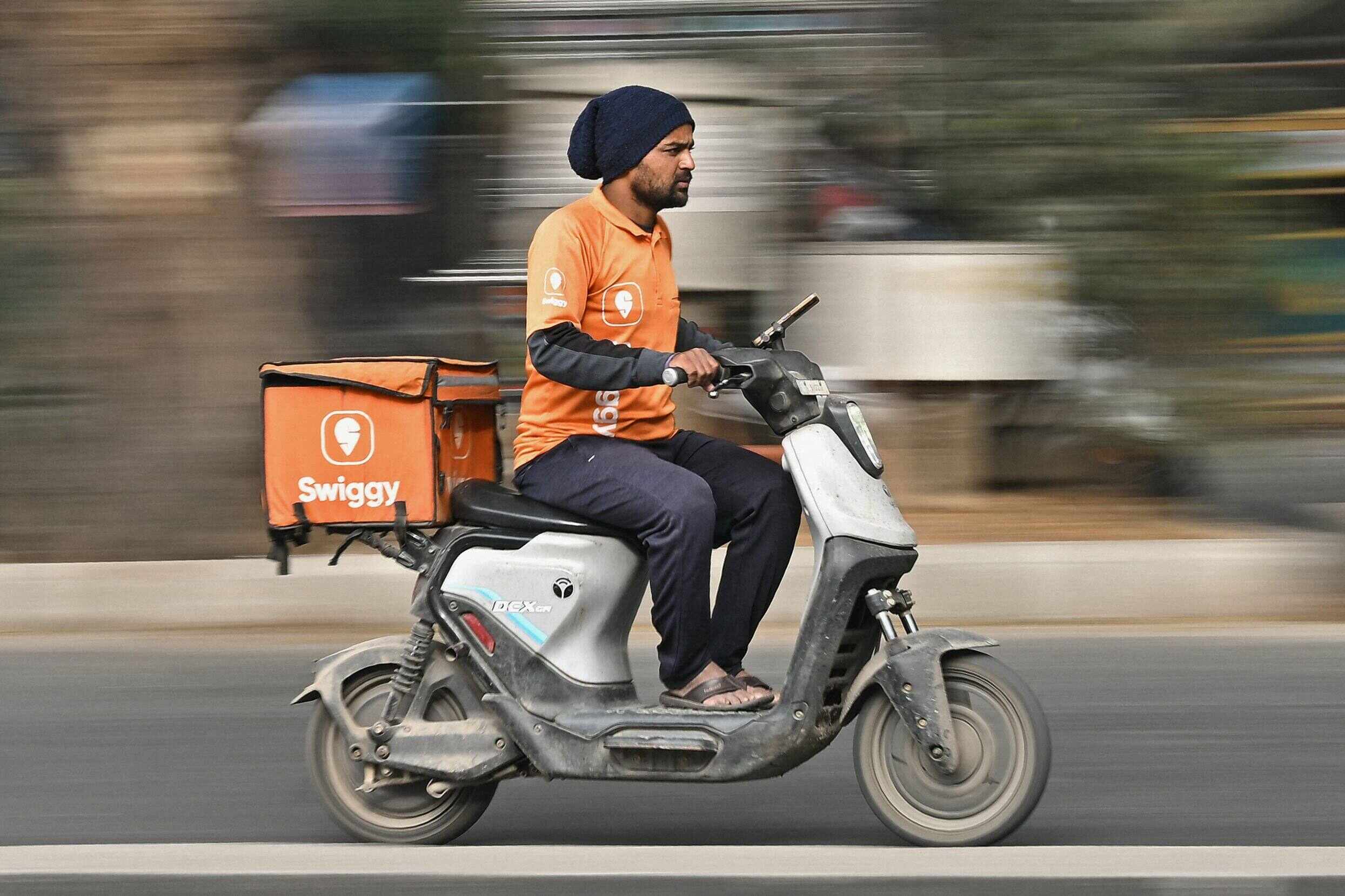
A mid mounting concerns that ultra-tight deadlines worsen safety and working conditions for gig workers, the Indian government has asked quick commerce companies to drop their 10-minute delivery promises.
More than 200,000 gig workers staged protests across major Indian cities during the peak delivery period on New Year’s Eve. They aimed to highlight their demands for legislative protection, social security benefits and better wages, according to the Indian Federation of App Based Transport Workers.
They also protested automated systems used by platforms to penalise workers for late deliveries and lower their ratings, sparking a debate over quick commerce, a trend that has caught on worldwide.
Quick commerce firms in India, such as Zomato, Blinkit and Swiggy, have downplayed the recent strike, stating that the disruptions involved only a fraction of workers.
India’s gig economy is rapidly growing, with about 7.7 million workers in 2020-21, according to government think tank NITI Aayog. This segment of the workforce is projected to reach 23.5 million by 2029-30.

A rising middle class has stoked demand for an array of near-instant delivery services, ranging from restaurant food to groceries. But the emerging debate questions the service’s necessity if it pushes workers to jump traffic lights to meet schedules and maximise daily earnings.
“When delivery commitments are framed as minutes rather than outcomes, risk is always transferred downwards, to riders who face pressure to rush, accept opaque incentive structures and bear penalties for delays often outside their control,” said Raj Kapoor, president of India Blockchain Alliance.
“Who is accountable when safety is compromised? And how sustainable is a model that treats human labour as infinitely elastic?”
Karan Taurani, executive vice-president at Elara Capital, a London-based investment bank, said 10-minute delivery models did not warrant safety concerns. He noted that firms had put in place measures such as extensive store networks and robust technology to ensure deadlines could be comfortably met.
Zomato CEO Deepinder Goyal defended the company’s delivery model, suggesting the role was used as a flexible source of income rather than a full-time job.
But Aparna Mittal, a corporate lawyer and founder of Samana Centre, a leading anti-discrimination consultancy, disagreed with Goyal’s assessment.
“The facts are quite the contrary. Millions are dependent on gig work of this kind as their main source of income, and the practical realities they face remain deplorable,” Mittal said.