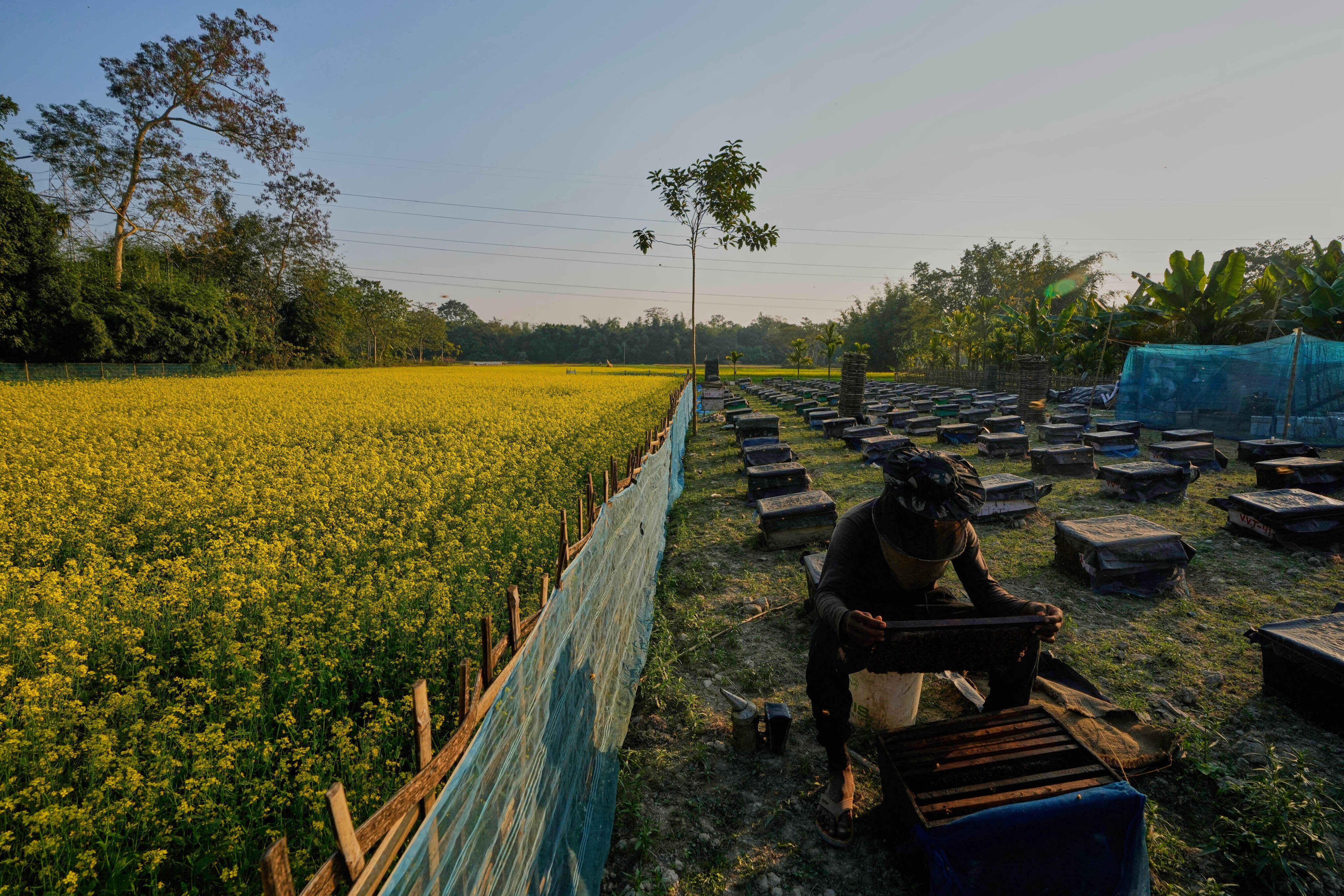
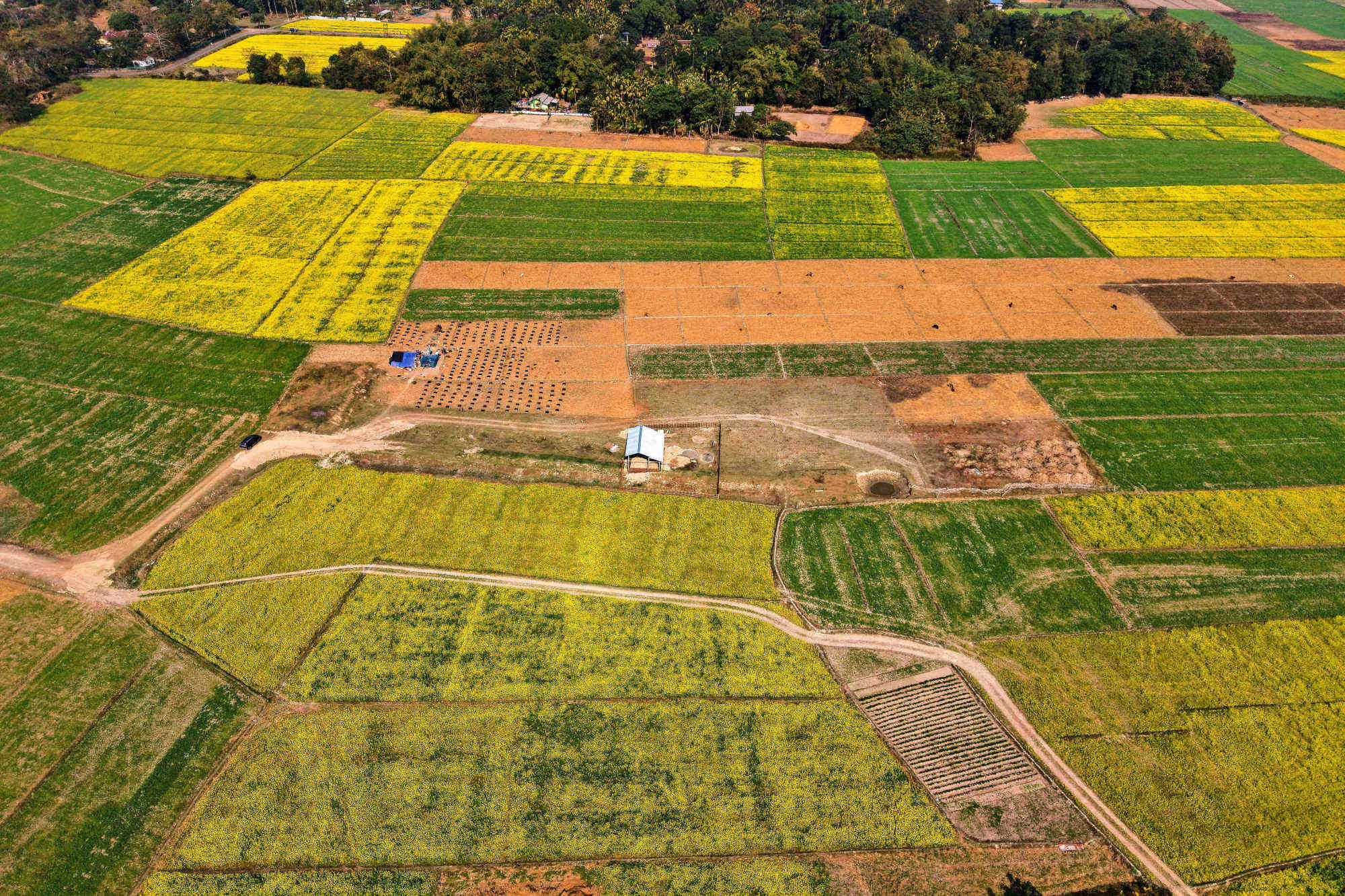
The beekeepers rise early, having travelled a long way to spend the winter months in the electric yellow mustard fields of Assam. They are determined to make the trip worthwhile.
At dawn, they have a simple breakfast and won’t eat again until dusk. They will spend the entire day checking the hives and using smoke to disperse the bees so they can collect thick, golden honeycombs to sell overseas.
It is a demanding job, and bee stings are a common part of their work. At night, the workers settle in under blue tarpaulins, often thinking about the families they left behind, sometimes for months at a time, in order to move their wooden bee boxes to this location. However, the harvest provides a way to make ends meet.
“I earn an income, that’s why I do business,” said Karan Raj, a beekeeper from Bihar.
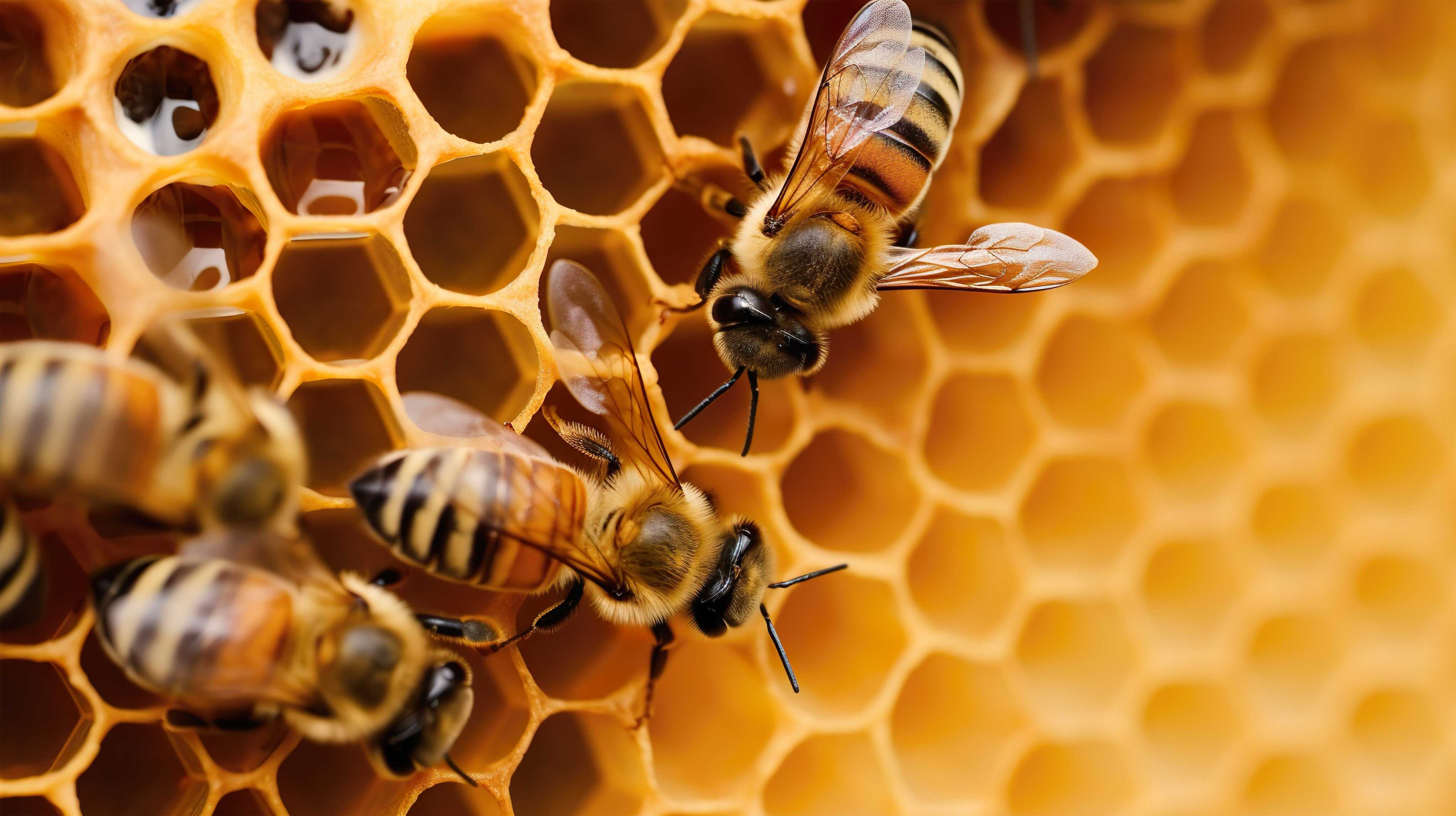
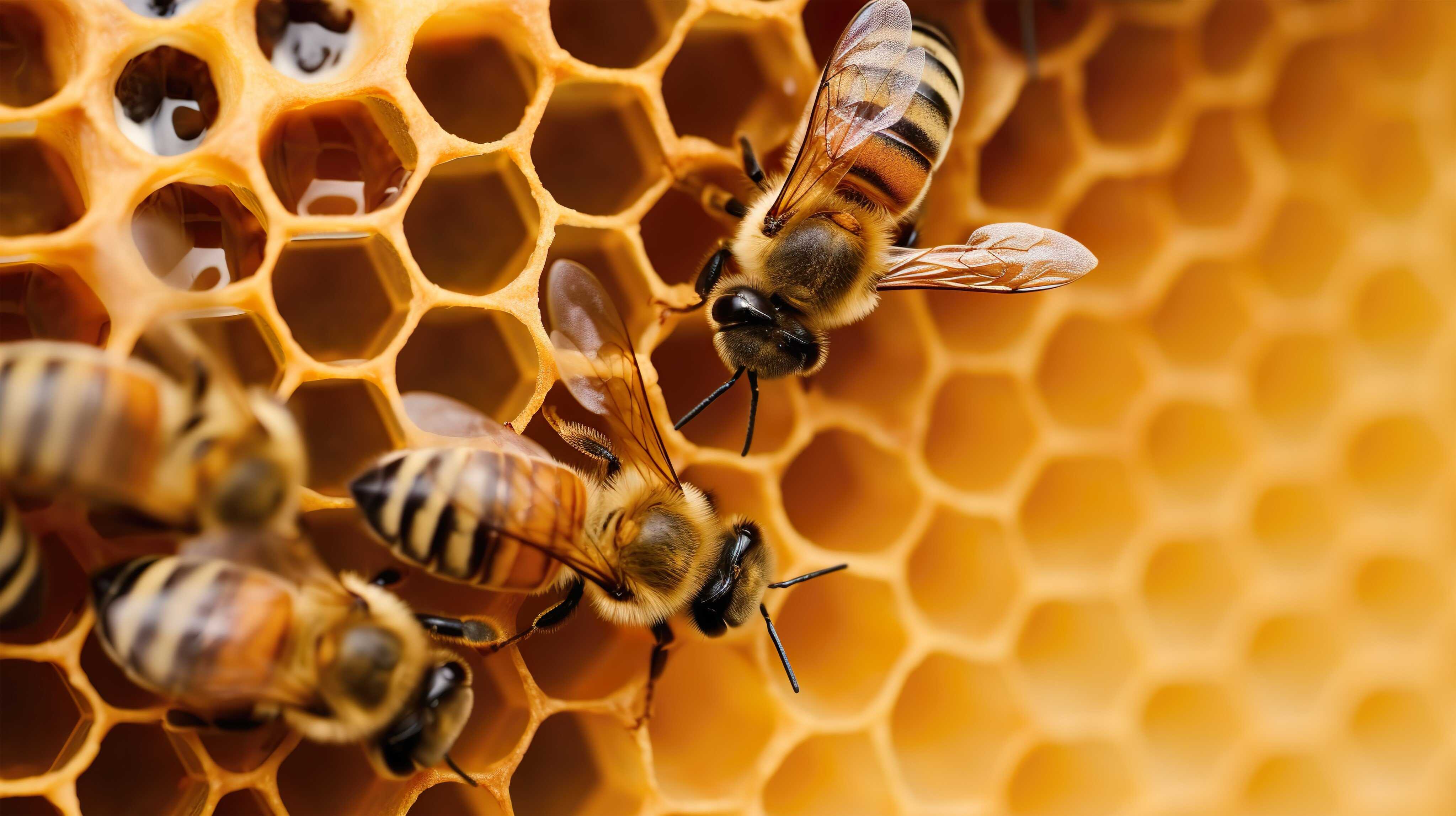
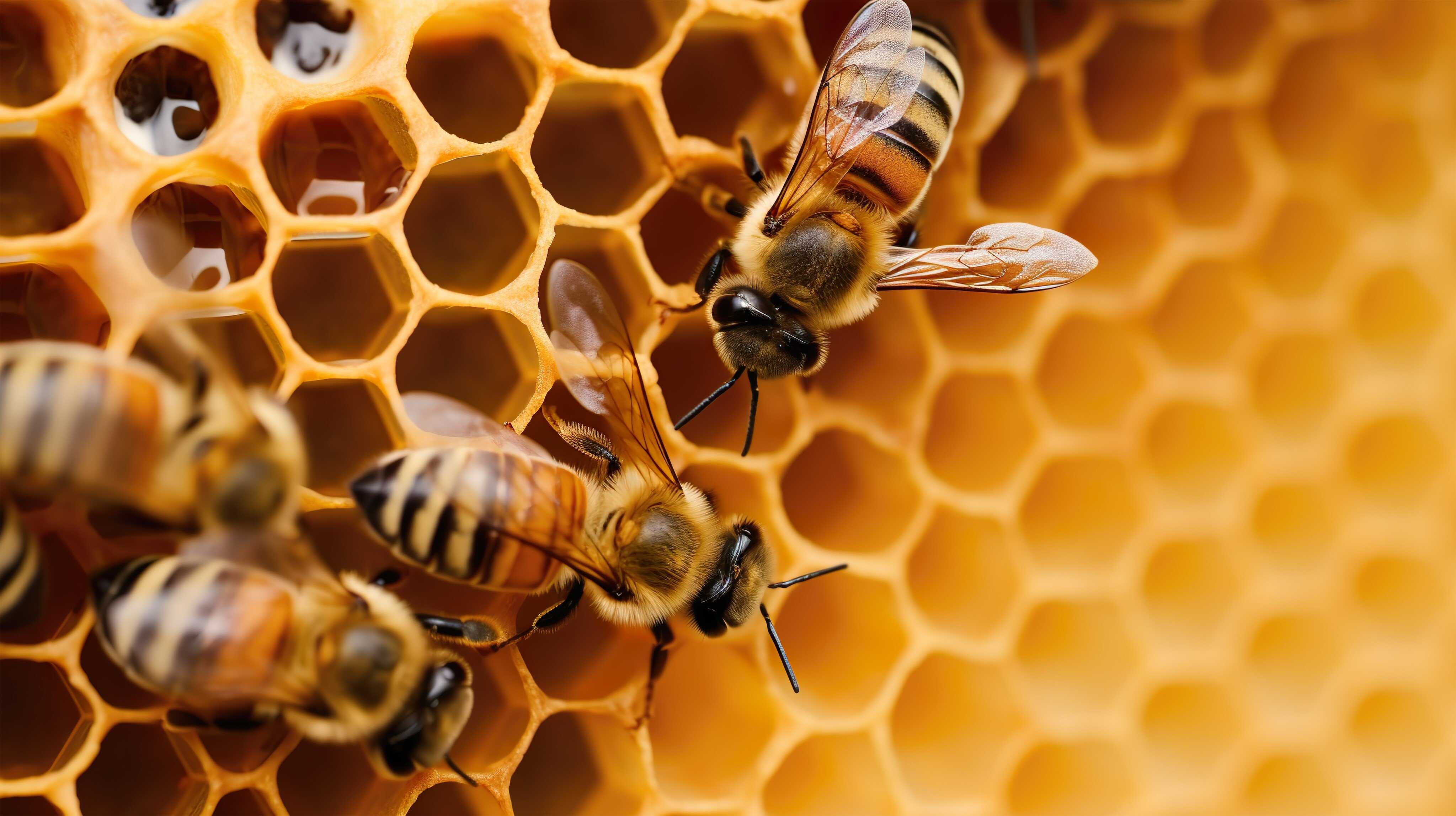
Migratory beekeepers have moved their colonies of bees from field to field in India for decades, following the bloom of flowers to help farmers with pollination and to collect honey.
The practice is relatively new but growing in Assam, where local and migratory beekeepers alike are turning to the farms in the region to support what they say is a growing demand for honey. But climate change threatens all that. Beekeepers are persisting in the face of floods, more powerful monsoons and extreme heat, as well as development that changes the landscapes bees rely on.
“If the weather is fine, the production will be fine. If the weather spoils, then there is no production. Weather has an effect. The weather needs to be good,” said Ranjeet Kumar, another beekeeper.
Impact of extreme weather
Assam, nestled east of Bangladesh and south of the Himalayas, is a region where the extremes of climate change have already unleashed catastrophe as human-caused warming makes rainfall more intense and erratic. Flooding and landslides in 2024 killed over 100 people, and many farmers have seen their crops destroyed and had to evacuate repeatedly.
“The pattern of rain is changing,” said Mukul Kumar Deka, who studies honeybees and other pollinators at Assam Agricultural University. When it’s too dry for too long, there’s less nectar available. When it’s too hot or too rainy, the bees stay in their hives.
Assam is now seeing over 20 more heat-wave days than it did 10 years ago, and both average maximum and minimum temperatures have increased by about 2 degrees Celsius (3.6 degrees Fahrenheit), according to 2025 research from Madhya Kamrup College in Assam.
“Nowadays, most of the farmers are getting less honey,” Deka said.
Beekeeping persists
Migratory beekeepers usually use Western honeybees, a departure from the practice of many traditional growers who keep local species of bees.
Those local species, however, are in some cases under greater threat due to extreme weather and human development of projects like highways that plough through their habitats.
“The bees that are in the trees, the ones that are in the forest, those bees have reduced drastically,” Raj said. For the Western ones, he said, “We feed them sugar and raise them, and this is why they survive, as long as we care for them”.
As more migratory beekeepers turn to Assam and bring commercial honeybees with them, that could create competition with small farmers who are increasingly turning to beekeeping for money.
“If we try to rear the Western honeybee in more numbers, there will be a problem to our indigenous species,” Deka said.
But some programs still encourage farmers to rear local bees and it’s especially critical for small farmers living below the poverty line. Besides selling honey, the pollination helps their crops, said Sujana Krishnamoorthy, executive director of the Under the Mango Tree Society, a nonprofit that teaches beekeeping to small farmers.
“We’re also having to train farmers on how to better manage climate events,” Krishnamoorthy said. But beekeeping still helps. They become a little more resilient to climate change because they get extra income from honey products as well as improved pollination that increases crop yields. She added that many of the traditional crops grown by small farmers, like hedgerow or medicinal plants, are still fairly climate-resilient.
Despite climate change, experts think beekeeping will persist. In some cases, the government is subsidising beekeeping equipment, said Deka of Assam Agricultural University.
“There may be ups and downs, but ultimately, beekeeping will be sustained here,” Deka said.