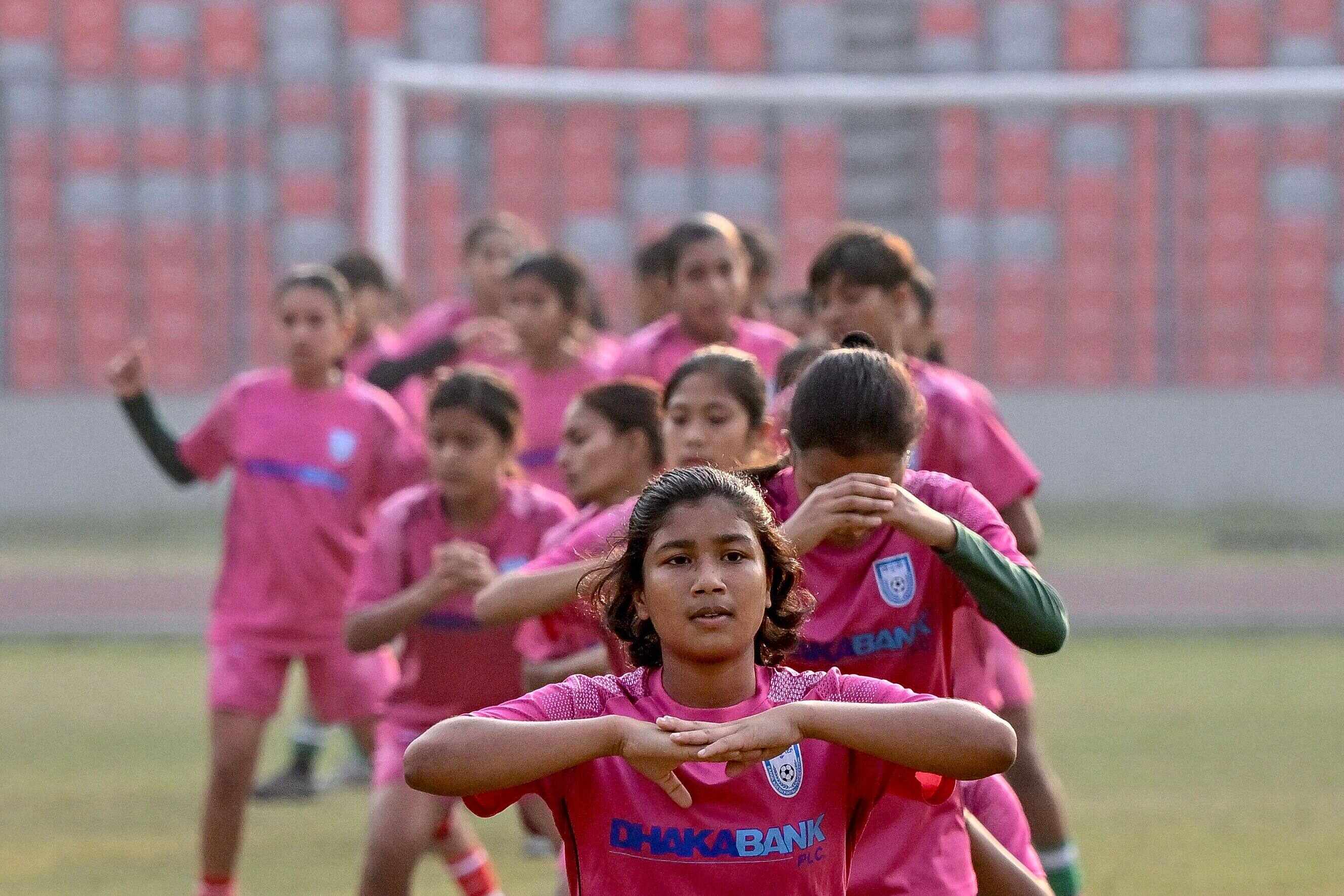
In Bangladesh, social stigma, family expectations, poverty and religious conservatism have historically pushed women and girls to the sidelines in sports. However, the national women’s football team of this South Asian country, with a population of 170 million, achieved a significant milestone by qualifying for its first-ever Women’s Asian Cup.
The first women’s football league matches took place in 2011, and the squad, known to fans as the Red and Green, has continued to push forward despite deeply rooted prejudices.
“Many more girls would have joined us if the community had been even slightly supportive,” said the team’s captain, Afeida Khandaker.
Two years of political turmoil have only intensified the challenges faced by the country. Following the 2024 uprising that overthrew the government, Islamist activists have increasingly targeted Bangladeshi women, accusing them of not being modest enough. Last year, several women’s football matches were cancelled due to pitch invasions and threats of violence.
Although the Bangladesh Nationalist Party, which won the general elections, has pledged to support women’s rights, the unprecedented success of an Islamist coalition has raised concerns about regressive gender policies.
Skipper Khandaker, who is from a southern district where Islamist lawmakers were recently elected, understands the responsibility of being a role model.
“My sister and I both wanted to be footballers, and for that my parents – especially my mother – had to endure bitter words,” said the 20-year-old, who started playing at the age of five.
Her father, Khandaker Arif Hossain Prince, backed his daughters’ athletic ambitions, but he noted that not all families have that luxury.
“Our aspiring footballers come from marginalised families, and it is often not possible for them to provide financial support,” Prince said.
After years of building grass roots support for women’s football, the Bangladesh Football Federation (BFF) is starting to see a payoff. More than 40 football clubs across Bangladesh now train girls from the age of nine.
“We didn’t even have a national women’s team before 2008,” said Mahfuza Akter Kiron, 59, head of the BFF women’s wing. “It was a real struggle for them to
play football.”
While salaries for national team players remain low, especially compared with those of men’s players, the small sums have brought stability to dozens of families.
Organisers said that as progress in women’s football becomes evident, sponsors are beginning to show interest and people’s attitudes are shifting.
“People seem happy now,” Khandaker said.
“They gather to see me when I go home.”