Deep Dive delves into hot issues in Hong Kong and mainland China. Our articles provide context to grasp what’s happening, while our questions help you craft informed responses. Check sample answers at the end of the page.
News: China’s dominance in critical minerals
-
Rare earth minerals are crucial for US smartphones, electric vehicles, weapons and more
-
China has been using its control of critical minerals to fight back against US tariffs
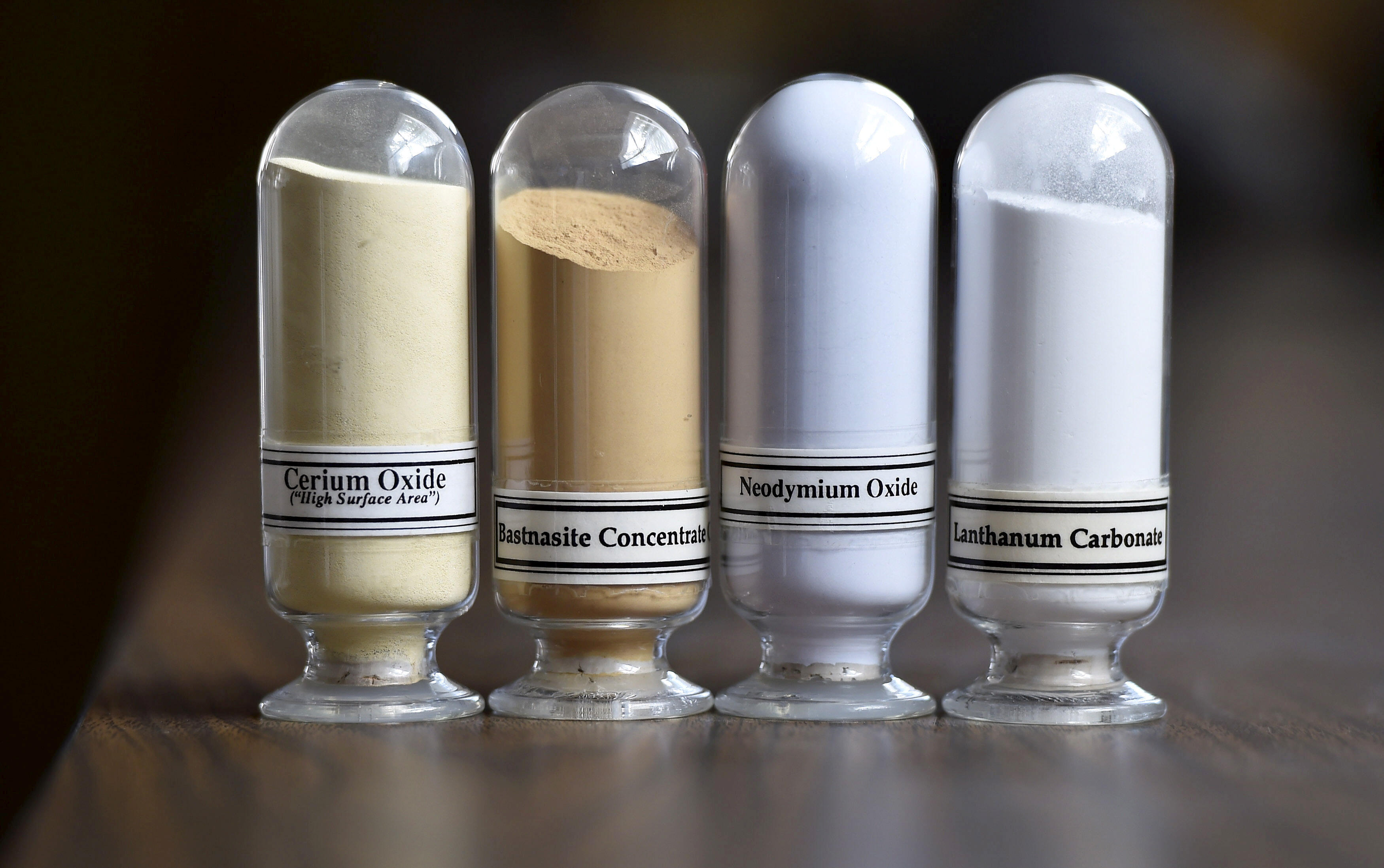
Rare earth minerals are crucial for many technologies, from smartphones to electric vehicles and weapons.
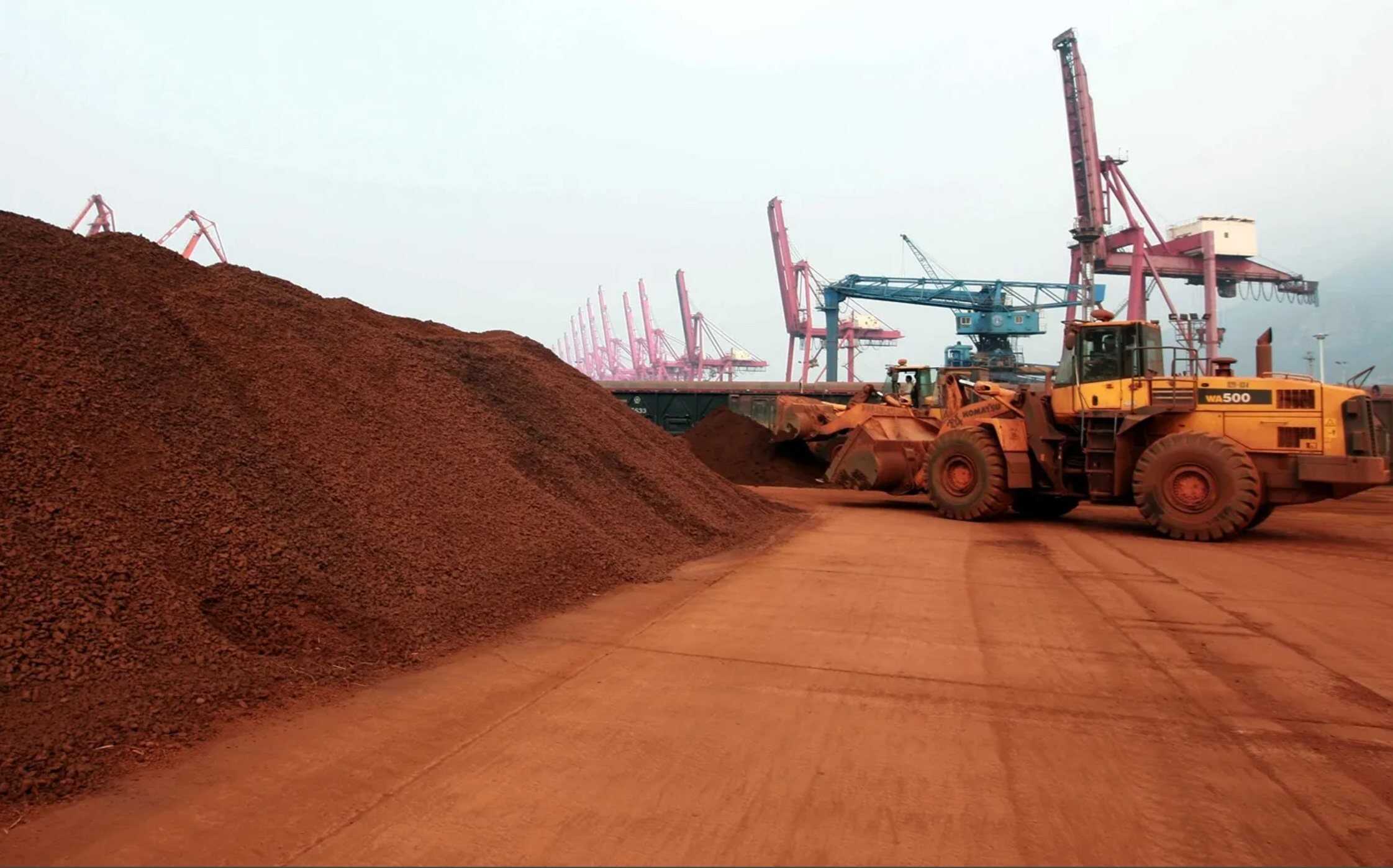
China is the world’s largest producer and consumer of rare earths and the magnets they are used for. In 2024, its reserves held about 44 million tonnes of rare earth minerals. Besides rare earths, China also has an edge in most other critical minerals. For example, China controls 98.8 per cent of global output of refined gallium.
Meanwhile, the US is a major importer of rare earths. These are needed for the country’s defence, energy, electronic, smartphone and electric vehicles industries.
The US relies on China for 70 per cent of its rare earths and 99 per cent of its heavy rare earths, according to a report published November 13 by a US-based think tank, the Council on Foreign Relations.
After US President Donald Trump imposed sweeping new tariffs on Chinese goods in April, Beijing tightened export restrictions on several key minerals. China’s exports of rare earth magnets slowed over the following months, sparking concern among Western manufacturers.
In early October, China announced more export controls related to rare earths. This expanded the scope of the previous restrictions. Analysts said the country was trying to fight off US attempts at getting a better position in the critical minerals supply chain.
But in late October, Trump and President Xi Jinping met in South Korea and reached an agreement. For one year, China would suspend the rare earth export controls it announced earlier that month.
Trump’s administration later said it hoped to secure a finalised deal on rare earths with China by Thanksgiving. This is a US holiday that falls on November 27.
With Beijing’s export restrictions, the US Department of Defence faces a growing risk to military readiness and supply chain security. China’s control in critical minerals has given the country the power to negotiate with the US amid Trump’s tariffs.
These minerals are required for various American advanced weapon systems. This includes precision-guided missiles, fighter jets, naval warships and submarines.
More than 80 per cent of the US weapons system supply chains reportedly incorporate antimony, gallium or germanium.
Staff writers
Question prompts:
-
List THREE uses of rare earth minerals.
-
Why did China tighten export restrictions on critical minerals?
-
How have China’s export controls on rare earths affected its negotiations with the US? Explain using News, Glossary and your own knowledge.
Graphic
Question prompts:
-
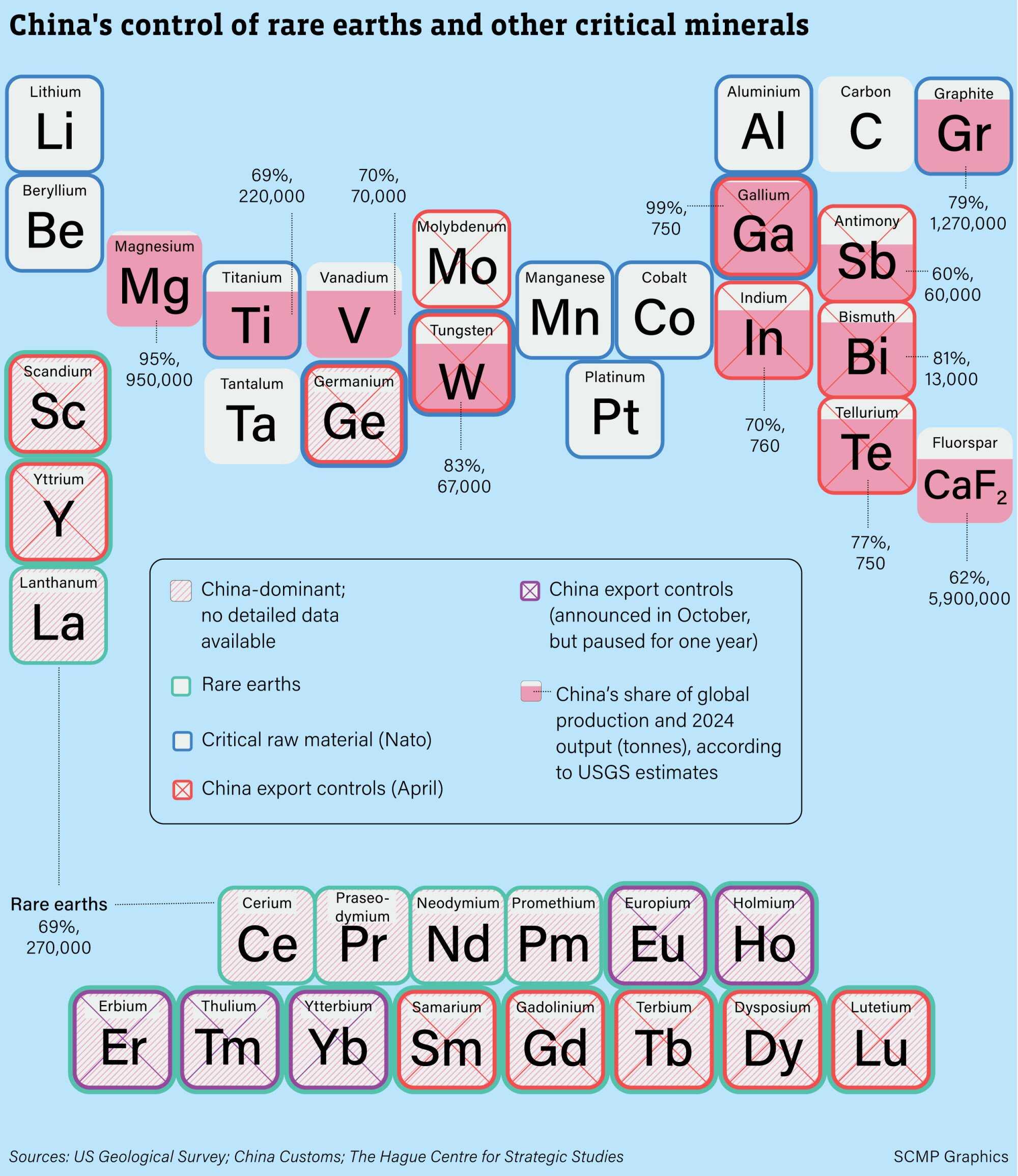
Which rare earth minerals are currently subject to China’s export controls?
-
According to the chart, which critical mineral is most dominated by China? How does this benefit China?
Issue: How other countries might respond to China’s leverage over rare earths
-
China is using its export controls to bargain with the US in their trade war
-
Researchers worldwide are finding new ways to produce magnets without using any critical materials
Morgan Stanley researchers have published a report about China’s measured assertiveness on critical-material controls. It is titled “Navigating China’s Export Control Playbook and Market Impact”.
According to the report, Beijing will continue to use critical-material controls as a calibrated system to reshape tech restrictions by America and its allies.
Even amid a temporary truce after the October meeting between presidents Xi Jinping and Donald Trump, it is still likely that China would use its critical-material controls to respond in certain situations.
For example, the report noted that if a US ally were to block exports of semiconductor chips to China, Beijing’s countermove might be to target exports of rare earths to that ally.
The report pointed out that China’s semiconductor self-sufficiency ratio remains low, at 24 per cent, and expected it to only reach 30 per cent by 2027. Even for advanced node logic chips, where localisation has made more progress, the report noted that Chinese graphics processing units (GPUs) could fulfil only half of China’s artificial intelligence demand by 2027.
Meanwhile, software support for the production of semiconductor chips remains a critical weakness for China – with the country’s self-sufficiency ratio of electronic design automation (EDA) software at 16 per cent in 2024.
In this sense, the report’s analysts expected that US software controls would slow China’s ability to design its own advanced semiconductors in the near term.
China’s critical-material curbs could also push other countries to diversify supply chains more quickly.
The report said that researchers worldwide were exploring cost-effective ways to develop magnets that would not need rare earths. Instead, they aim to use alloys of other metals, including iron, cobalt and nickel.
Though it may take years to develop, these moves reflect coordinated efforts among countries to connect their critical mineral supply chains with political allies.
In terms of rare earth reserves, the report said China held 49 per cent of the global market share. But rare earth elements are spread throughout the globe, so reserves alone do not confer dominance.
China’s global share of mine production is 69 per cent, according to the analysts. They added that expanding mining capacity would take at least three to five years.
For magnet supply, the analysts said China controlled 90 per cent of the global market share, and that this was the most difficult segment to replicate because it required technical knowledge.
In terms of battery production and sales, China’s global market share is 86 per cent for electric vehicle batteries and 92 per cent for energy storage system batteries. The report said China would be able to maintain its strong dominance in lithium-ion batteries. This is because it controls every part of the supply chain, can update its technology rapidly and can produce them at a scale and cost that no other country can match.
Staff writers
Question prompts:
-
What leverage does the US have over China in semiconductor chip technology?
-
Name TWO ways that other countries are trying to diversify their supply chains for
critical materials.
-
Why is it challenging for other countries to reduce their reliance on China’s rare earths and batteries? Explain using News, Issue and your own knowledge.
Illustration
-
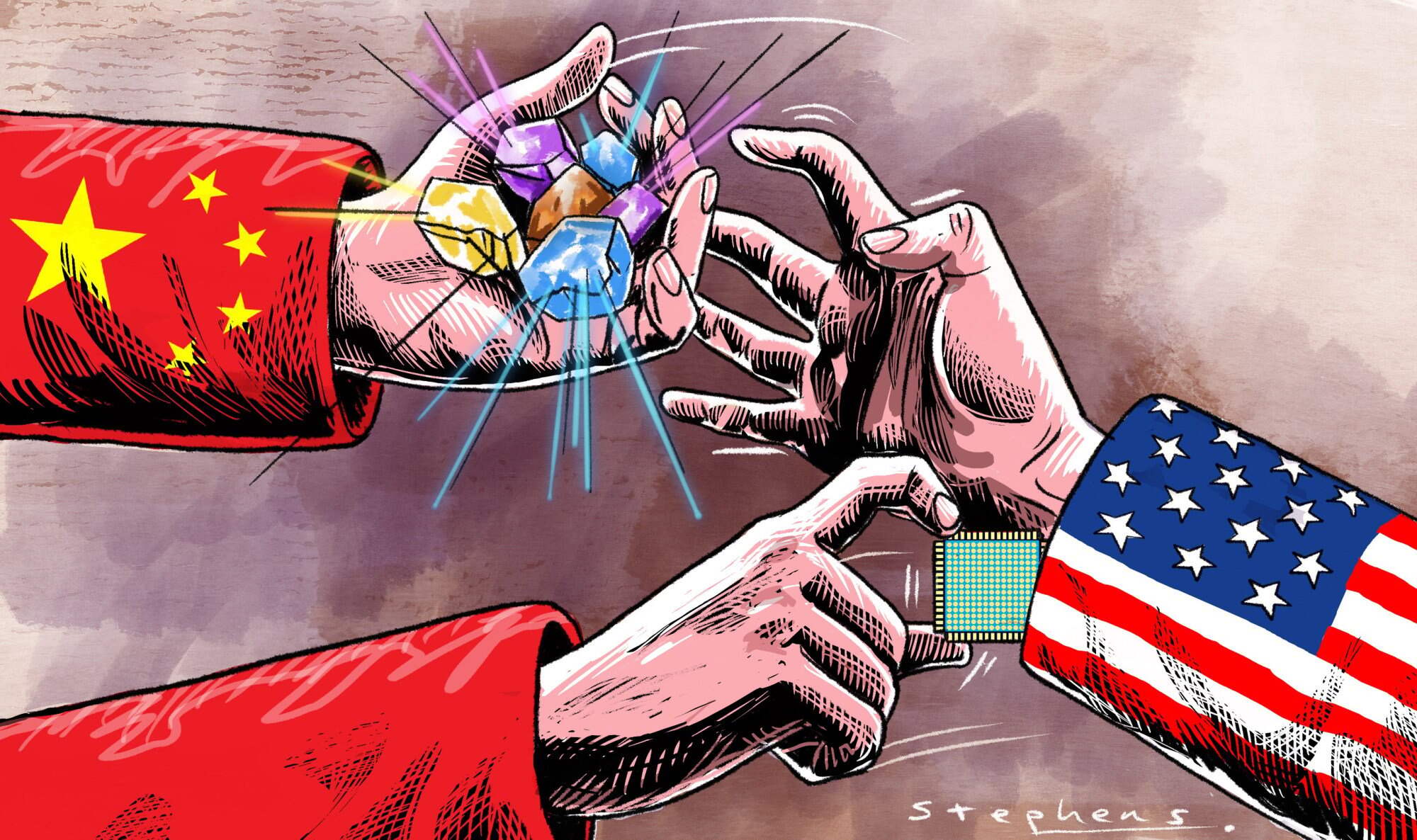
What does the illustration suggest about the dynamic between China and the United States in relation to critical minerals and semiconductor chips?
-
Because of these dynamics, what are the potential responses that the United States and China can take? Explain using Issue, Glossary and your own knowledge.
Glossary
-
rare earth minerals: a category of critical minerals used to make magnets that are crucial to vehicles, electronics and weapons
-
refined gallium: used in electric vehicles, solar power and the displays and batteries for devices such as laptops and phones
-
self-sufficiency ratio: a measure of a country’s ability to produce its own goods in a certain sector so that it does not need to rely on imports
-
semiconductor chips: a tiny piece of silicon with millions of electronic components. These act as the brain for devices like smartphones and computers, and they are crucial for the development of artificial intelligence technology.
-
tariffs: taxes on imported goods. Tariffs are paid to local governments by firms bringing in foreign goods.
Sample answers
News:
1. defense technologies, such as advanced weapon systems, precision-guided missiles, fighter jets, naval warships, submarines, and radar systems / renewable energy, such as electric vehicles / high-tech industries, including smartphones and electronics
2. China imposed stricter export controls in response to US tariffs on Chinese goods / to use its rare earths supply as a bargaining chip while negotiating with the US about its tariffs on Chinese goods / to strengthen its near-monopoly over the rare earth sector / to counter US efforts to establish its own supply chain for critical minerals (any one)
3. China’s export controls on critical minerals strengthened its bargaining power. Since the US heavily relies on Chinese rare earths for its defence, technology, and renewable energy, China’s restrictions threaten to disrupt US national security. This puts the US in a vulnerable position. China can use its dominance in critical minerals to counterbalance US geopolitical pressure. This is forcing the US to reconsider its dependency on Chinese minerals. (accept all reasonable answers)
Graphic:
1. Samarium (Sm), Gadolinium (Gd), Terbium (Tb), Dysposium (Dy), Lutetium (Lu), Yttrium (Y) and Scandium (Sc)
2. China has the highest share of global production in gallium (99 per cent). By restricting these exports, China can strengthen its bargaining power in its trade war negotiations with the United States, as more than 80 per cent of the US weapons system supply chains reportedly incorporate antimony, gallium or germanium.
Issue:
1. China is not yet self-sufficient in being able to make semiconductor chips on its own, so if the US were to restrict the software needed to make chips, it would slow China’s ability to achieve self-sufficiency.
2. Researchers are developing efficient ways to develop magnets that would not need rare earths to operate. They are also trying to build supply chains for rare earths within their political allies.
3. It is difficult for other countries to reduce their reliance on China because China dominates nearly every stage of the rare earth and battery value chain. Even though rare earth reserves exist worldwide, China controls 69 per cent of mine production and 90 per cent of magnet supply. It also leads the market with 86 per cent of electric vehicle battery production and 92 per cent of energy storage system (ESS) battery production. Other nations face significant technological barriers, high environmental costs, and limited scale, making it challenging and time-consuming, potentially three to five years or more, to compete with China’s production and efficiency.
Illustration:
1. The illustration shows a mutual dependency between China and the United States – it portrays China holding critical minerals while the United States holds a semiconductor chip, symbolising their interdependence in the global technology and supply chain relationship. China’s dominance in rare earth and critical mineral production gives it significant leverage over the US, which relies heavily on these resources for its high-tech, defence, and renewable energy industries. The export restrictions reflect China’s use of this dominance as a strategic tool in the trade war, allowing it to exert influence and counter US efforts to secure independent supplies for its semiconductor and defense sectors.
2. The US is a major importer of rare earths. These are needed for the country’s defence, energy, electronics, smartphone and electric vehicles industries. The US would likely try to establish a more friendly stance with China instead of launching any aggressive plans or restrictions to make matters worse. It is more likely that the US would hold off on imposing new tariffs on Chinese goods. Similarly, since semiconductors are needed for AI, which is one of the biggest industries right now, China will need to cooperate with the US, which has the technology for building these chips. (accept all reasonable answers)