Deep Dive delves into hot issues in Hong Kong and mainland China. Our easy-to-read articles provide context to grasp what’s happening, while our questions help you craft informed responses. Check sample answers at the end of the page.
News: Hongkongers heading to restaurants in mainland China
-
Diners are crossing the border for cheaper meals
-
Hong Kong eateries are developing new strategies to attract and retain customers
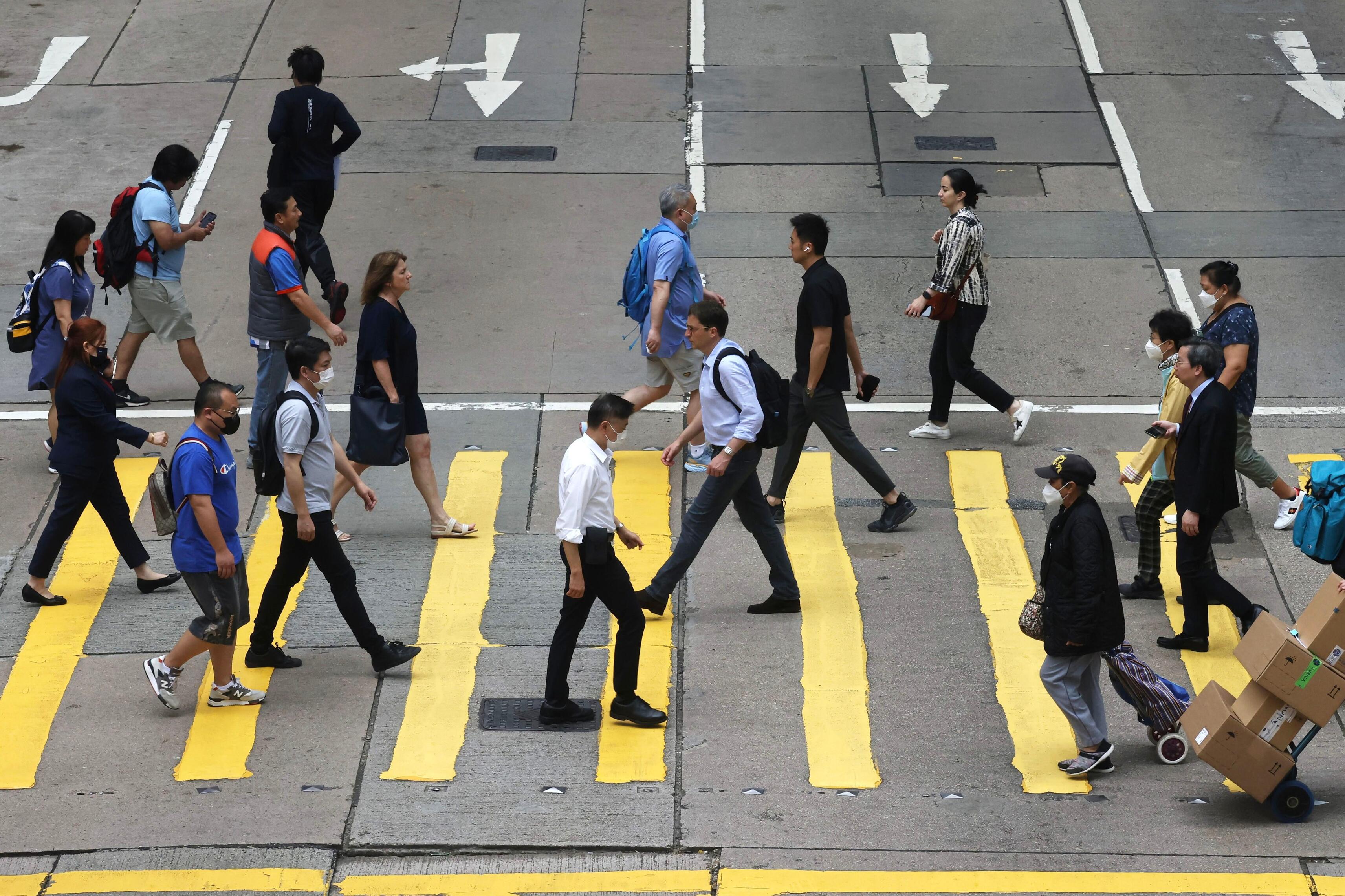
Hong Kong’s restaurant industry is confronting an “irreversible” shift. Diners are increasingly flocking to neighbouring Shenzhen for better value and more exciting experiences. This has forced local restaurants, from major chains to independent eateries, to think outside the box.
Take Hong Kong restaurant group Tam Jai International, for example. Scroll through its mobile apps, and you will encounter a wave of perks, menu offerings and other choices laid out to tempt you to its staple offering, noodles.
The apps are among several strategies, along with adding new items to its breakfast, lunch, tea and dinner menus, that the chain has recently introduced.
Ronald Wong Kin-pong, the firm’s chief marketing officer, said such measures were needed to tackle the “tough trend” of Hongkongers heading north to mainland China to spend their money.
“Locals ... are spending more time across the border in the Greater Bay Area cities. That is why we’ve been seeing ... weak weekend sales, weak holiday sales,” he said.
“And secondly, the tourists are not coming back as much as we expected. So that gives us extra pressure. And then add the competition from across the border.”
But Tam Jai’s efforts were paying off, Wong said. Its dinner business had jumped 10 per cent over the past few months compared to before its programme revamp.
After the group’s digital transformation, half of its revenue came from known customers, a significant increase from the previous “20-something per cent”.
But industry leaders warn that only establishments offering superior quality and service will survive in a market that has structurally shrunk.
Samme Cheng Pak-man, vice-chairman of catering trade body the Institute of Dining Professionals, offered a sobering forecast for 2026. He said consumer trends had changed the industry landscape.
“It is totally irreversible. Going to Shenzhen at weekends has already become a part of Hong Kong people’s routine. We simply cannot compete with the price that Shenzhen offers,” Cheng said.
Official data highlights this shift. Hong Kong’s outbound travel via land ports to the mainland surged from 53.6 million trips in 2023 to 87.1 million in 2025, with total resident departures hitting 114.6 million last year.
Cheng noted that the industry’s rigid cost structure, including wages and raw materials, was unchangeable. Even if rents fell, providing some relief, the impact would ultimately be limited.
Staff writers
Question prompts
1. Which of the following is false, according to the information in News?
(1) Tam Jai’s dinner business has jumped 10 per cent over the past few months compared to before the group implemented new digital strategies.
(2) The percentage of Tam Jai’s revenue that comes from known customers has significantly decreased.
(3) Hongkongers made 87.1 million trips via land ports to the mainland in 2023.
(4) In total, Hong Kong residents made 114.6 million outbound departures last year.
A. (1), (2) only
B. (1), (4) only
C. (2), (3) only
D. (3), (4) only
2. What is the “tough trend” that Ronald Wong Kin-pong describes, and how does it relate to News?
3. To what extent do Hongkongers’ travels to Shenzhen affect Hong Kong’s restaurant industry? Explain using News and your own knowledge.
Illustration

Question prompts
1. Describe what you see in the illustration and how it relates to News.
2. Based on the information in News, what “outside the box” measures have Hong Kong restaurants taken to counter the food and beverage sector’s decline?
Issue: What can Hong Kong restaurants do to win diners back?
-
City’s eateries must counter cross-border consumption
-
Strategies could include increasing collaborations and improving food quality and service
Hong Kong public relations professional Chan Ching-yee is a frequent spender in Shenzhen. She said her tastes had evolved from bargain hunting to seeking high-concept entertainment and fine dining with the opulence of ancient times, an experience she said was impossible to find in Hong Kong.
Chan and her friends travel to Shenzhen at least twice a month to Xuyan, a Tang dynasty-themed banquet hall in Nanshan district that offers an immersive 90-minute theatrical performance for around HK$500 (US$64).
“The service and experience are unbeatable for the price. Hong Kong restaurants are simply too cramped for us to dress up, dance and take photos on their open floor,” the 34-year-old said. “Shenzhen has filled a gap that Hong Kong’s dining scene just cannot reach.”
Hong Kong’s restaurant receipts suggest this is a popular sentiment, dipping 0.1 per cent in 2024 to HK$109.3 billion before falling 0.4 per cent year on year in the first three quarters of 2025.
Tam Jai International is a subsidiary of Tokyo-listed restaurant group Toridoll Holdings. According to Toridoll’s financial results for the six months ended September 30, 2025, Tam Jai’s revenue decreased by 7.4 per cent year on year to 25.26 billion yen (US$3.2 million). It was also affected by the closure of unprofitable stores in mainland China and Singapore.
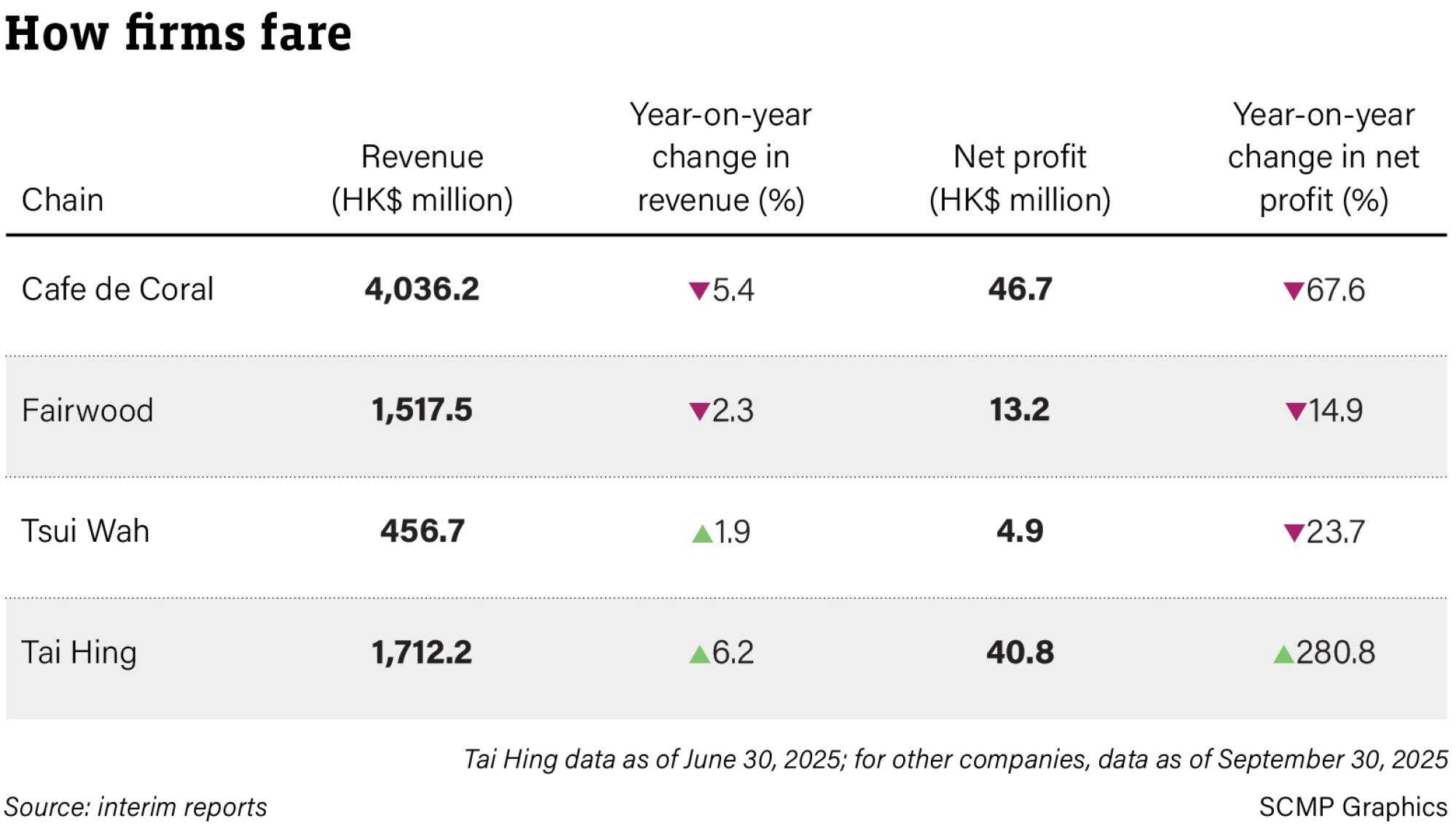
Cha chaan teng operator Tsui Wah’s net profit fell by 23.7 per cent to HK$4.9 million, partly due to higher selling and distribution expenses and finance costs.
Still, Tsui Wah Holdings said it would counter “cross-border consumption” by aggressively re-establishing its presence in core tourist districts like Central and Tsim Sha Tsui to capture “mega-event” foot traffic.
It is also expanding in transport hubs across the Greater Bay Area, with two new outlets slated for Guangzhou Baiyun Airport’s Terminal 3 in the first quarter of 2026.
Moving beyond traditional restaurant operations, Tsui Wah is also diversifying through “cross-industry collaborations”. These include a strategic alliance with Hong Kong Express Airways to serve its signature curry beef brisket on flights.
But is that enough? Economist Simon Lee Siu-po of the Shenzhen Finance Institute at the Chinese University of Hong Kong urged operators to focus on superior quality and a radical improvement in service attitude to justify premium prices.
“The outlook for 2026 is driven by a market that has shrunk to a fixed number of people who are willing to stay in Hong Kong, where only the restaurants providing superior service and products will survive,” he said.
“Screening out menu items that don’t sell well or have a low profit margin will not only save unnecessary costs, but also allow you to excel at what you’re already good at – making the trip worthwhile for the customer.”
Staff writers
Question prompts
1. List TWO potential reasons Chan Ching-yee chooses to travel across the border and spend money in Shenzhen rather than in Hong Kong.
2. Using Issue, explain how Tsui Wah is trying to counter the “cross-border consumption” trend.
3. Suggest THREE additional ways that Hong Kong restaurants can increase their profits. Explain using News, Issue, Glossary and your own knowledge.
Chart
Question prompts
1. Describe these firms’ change in year-on-year net profits.
2. Based on the information in Issue, what does this chart illustrate about the current state of Hong Kong’s food and beverage sector?
Glossary
known customers: returning customers, sometimes called repeat diners or regulars
“mega-event”: events in Hong Kong, such as international conferences, expos, art exhibitions and fairs, sports tournaments and concerts that the government believes will bring tourists to the city and benefit the economy
foot traffic: a term used in business to describe the number of customers that walk into a store, shopping centre or restaurant
screening: the evaluation or investigation of something as part of a survey, usually to assess if something is suitable or profitable

Sample answers
News
-
C
-
Ronald Wong Kin-pong described a “tough trend” of Hongkongers heading north to mainland China to spend their money. He said locals spend more time across the border in the Greater Bay Area cities, especially on weekends and holidays. This relates to News as this money includes dining, with Hong Kong residents choosing to eat on the mainland rather than in the city.
-
Hongkongers’ travelling to Shenzhen greatly affects Hong Kong’s restaurant industry. As Ronald Wong puts it, Hong Kong locals are spending time on the mainland, and there are also not enough tourists coming to Hong Kong. This creates competition from across the border, adding pressure to Hong Kong’s restaurant industry. Samme Cheng Pak-man said consumer trends have fundamentally altered the industry’s landscape, adding that this one in particular is “totally irreversible” as going to Shenzhen on weekends has become part of Hong Kong people’s routines. Due to the Hong Kong restaurant industry’s rigid cost structure, including wages and raw materials, as well as high rents and living costs, it simply cannot compete with Shenzhen’s lower, more affordable prices.
Illustration
-
The illustration depicts a restaurant as a box with a staff member inside, popping out of the box. The staff member, who might be a chef since he is holding cooking utensils, is holding a graph showing that the food and beverage (F&B) sector is declining or incurring losses. The restaurant staff member appears to be contemplating potential ideas, indicated by the yellow bulb lights around his head. This relates to News, as Hong Kong restaurants must think “outside the box” to survive the trend of diners heading north to spend money there rather than in the city.
-
Hong Kong restaurant group Tam Jai International has updated its digital mobile apps, adding a wave of perks, menu offerings and other choices to tempt you. The group has also filled all dining segments, including breakfast, lunch, tea and dinner, with new menu items. Dinner business has jumped by 10 per cent, and half of the revenue now comes from known customers, an increase from 20 to 50 per cent. These customers dine at the restaurant regularly, which means they are not just satisfied with their initial service but are happy to return and spend money again.
Issue
-
Chan Ching-yee would rather travel across the border and spend in Shenzhen than stay in Hong Kong because she enjoys high-concept entertainment and fine dining with the opulence of ancient times, an experience she said was impossible to find in Hong Kong. She finds Hong Kong restaurants too cramped for diners to dress up, dance and take photos. In addition, the service and experience are unbeatable for its relatively affordable price – HK$500 (US$64) for an immersive 90-minute theatrical performance – compared with Hong Kong.
-
Cha chaan teng operator Tsui Wah Holdings is “aggressively re-establishing its presence” in popular tourist areas such as Central and Tsim Sha Tsui, to capture foot traffic at home when there are travellers in town for mega-events. Across the border, it has plans to open two new outlets at Guangzhou Baiyun Airport’s Terminal 3 in the first quarter of 2026. Tsui Wah is also collaborating with brands in other industries. One strategic alliance is with local budget airline Hong Kong Express Airways, which is serving Tsui Wah’s signature curry beef brisket on flights.
-
Additional ways Hong Kong restaurants can increase their profits include improving food quality to justify premium prices. As seen by Chan Ching-yee’s decision to travel across the border and economist Simon Lee Siu-po expert opinion, the outlook for 2026 will be driven by known customers –people in Hong Kong who are willing to stay, not travellers from the mainland or tourists. Hongkongers will only visit and return if the quality justifies the high cost. Hong Kong restaurants can also work on a “radical improvement in service attitude” that convinces people to spend on the entire experience, not just the meal. Finally, screening out menu items that do not sell well will save on unnecessary costs.
Chart
-
A number of listed food and beverage operators recorded double-digit declines in net profits in their latest financial reports. This includes Cafe de Coral, which saw a net profit slump of 67.6 per cent, and Fairwood, which fell by 14.9 per cent. However, while Tsui Wah’s net profit fell by 23.7 per cent, its year-on-year change in revenue has actually increased marginally by 1.9 per cent. Tai Hing appears to be an outlier, with a stable increase in year-on-year revenue and net profit.
-
This chart shows that Hong Kong’s food and beverage sector is struggling, mainly due to diners choosing to eat outside the city, turning to eateries in the mainland. You can see a significant year-on-year drop in net profits for Hong Kong chains Cafe de Coral and Tsui Wah, and a relatively concerning drop for Fairwood, which also saw a year-on-year decline in revenue. This shows that the sector on the whole is in decline, and restaurants must make changes now.