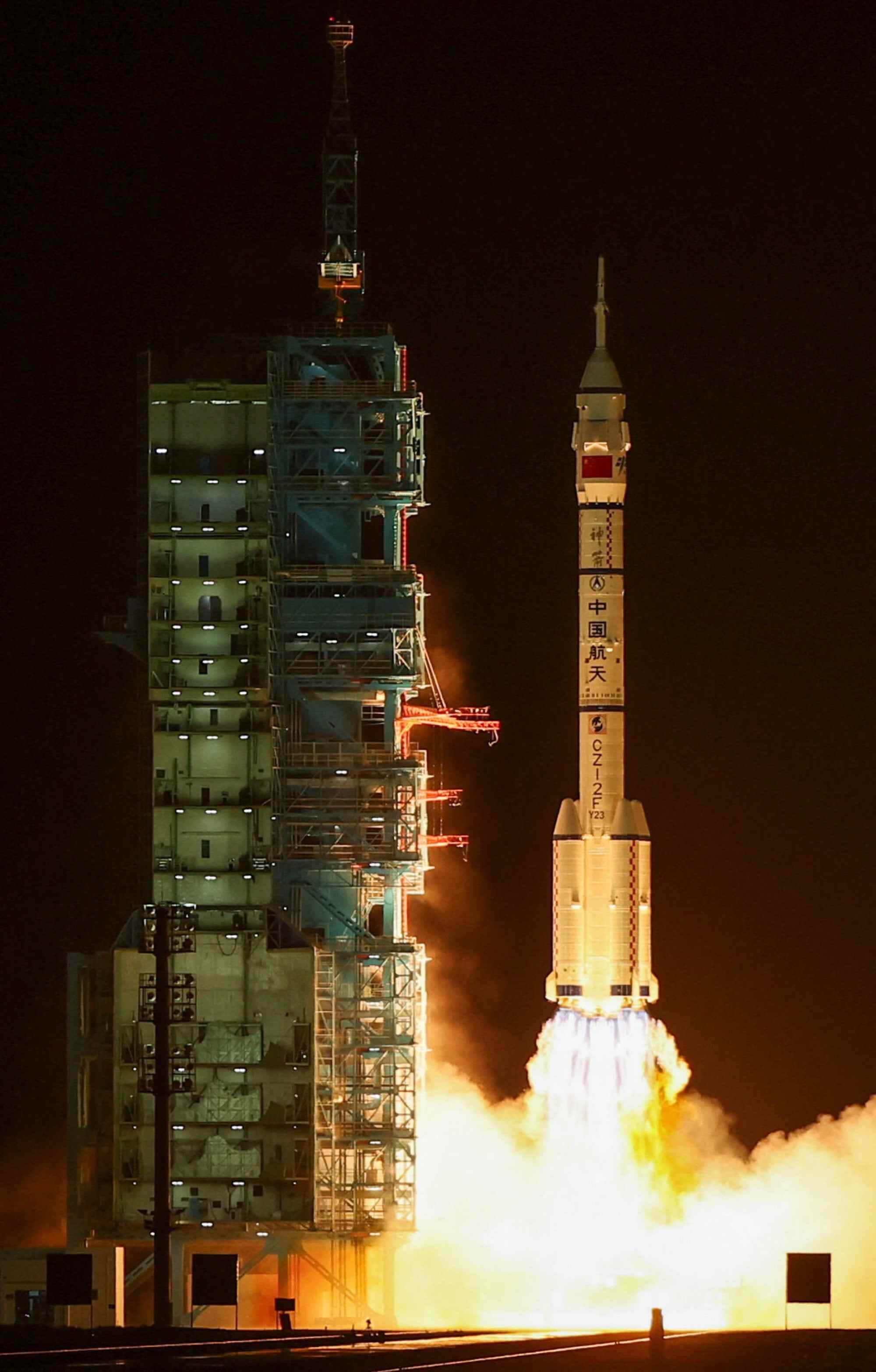
Hong Kong’s first astronaut lifted off on Sunday night, as part of China’s latest space mission. The Long March-2F rocket carrying the Shenzhou-23 spacecraft blasted off from the Jiuquan Satellite Launch Centre in northwestern China’s Gansu province at 11.08pm local time on Sunday, according to the China Manned Space Agency.
The rocket left the launch pad with a deafening blast, sending massive clouds of sand high into the sky.
Mission control declared the launch a success about 20 minutes after lift-off.
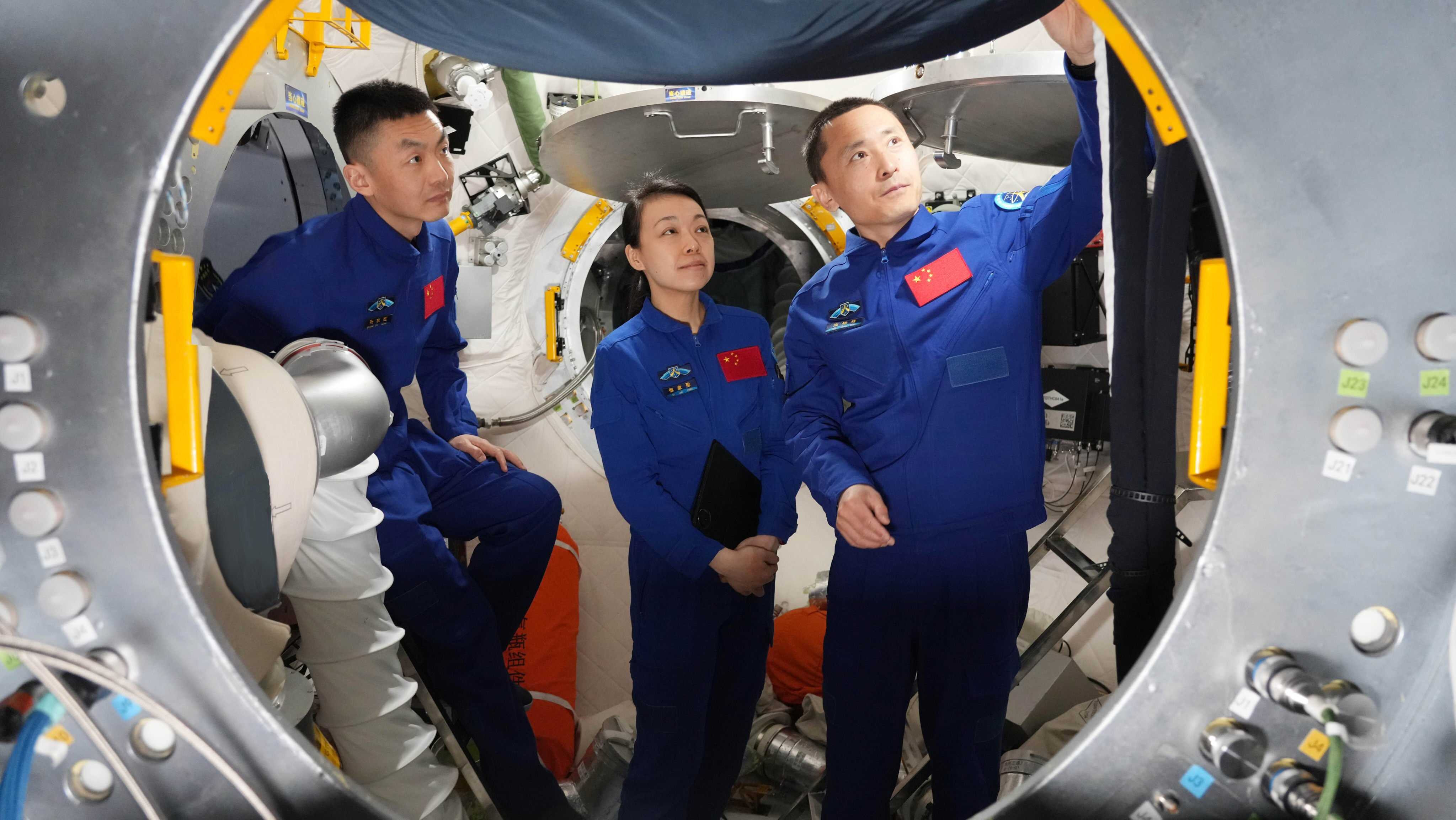
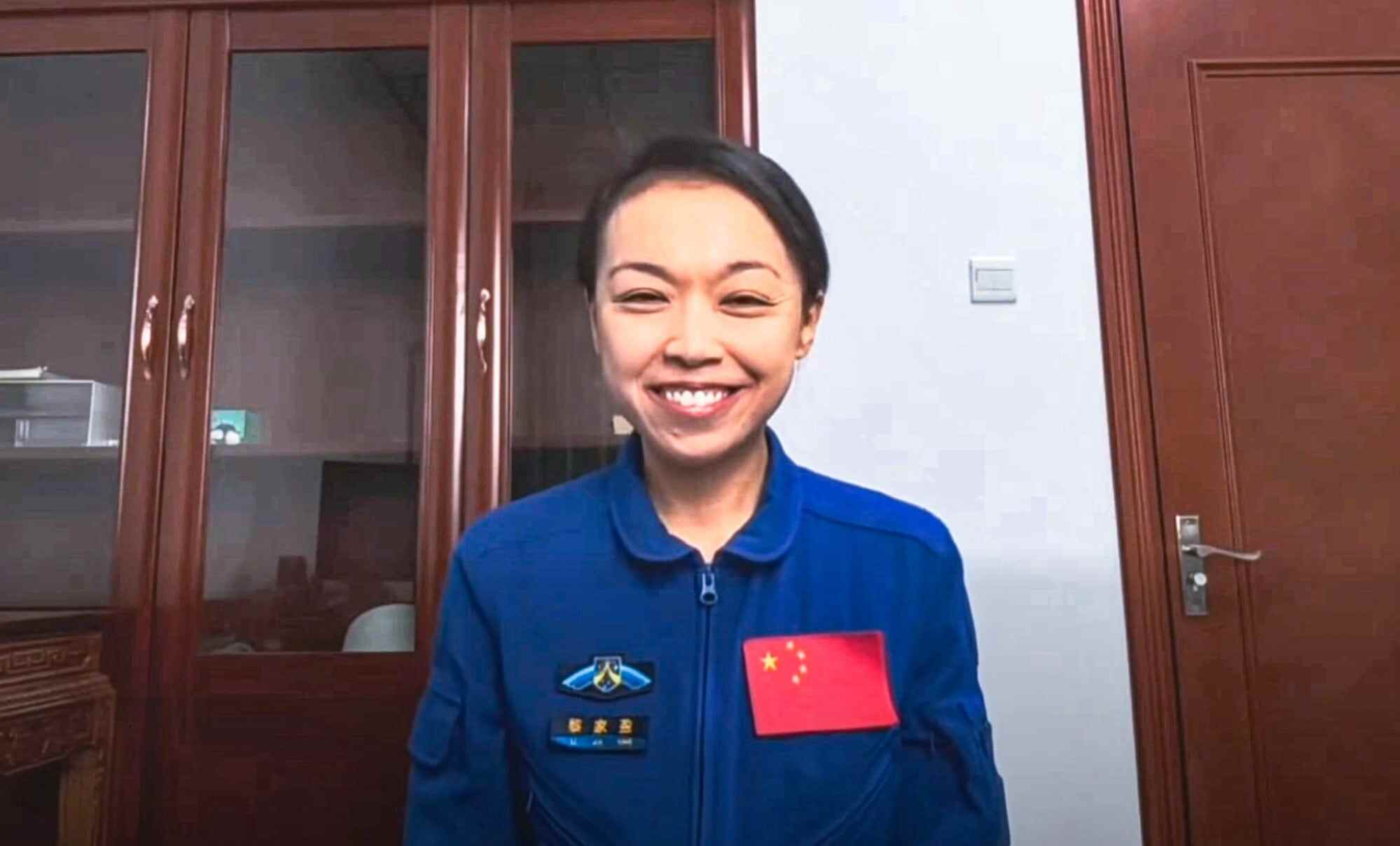
The crew included Lai Ka-ying, a Hong Kong police superintendent and tech specialist, who will serve as the payload specialist. According to the live stream on state broadcaster CCTV, Lai’s first words in space to the command centre were “feeling good”.
The mission will be commanded by Zhu Yangzhu, who was the flight engineer on the Shenzhou-16 mission, with Zhang Zhiyuan piloting the vessel.
The crew are expected to take 3.5 hours to reach the Tiangong space station.
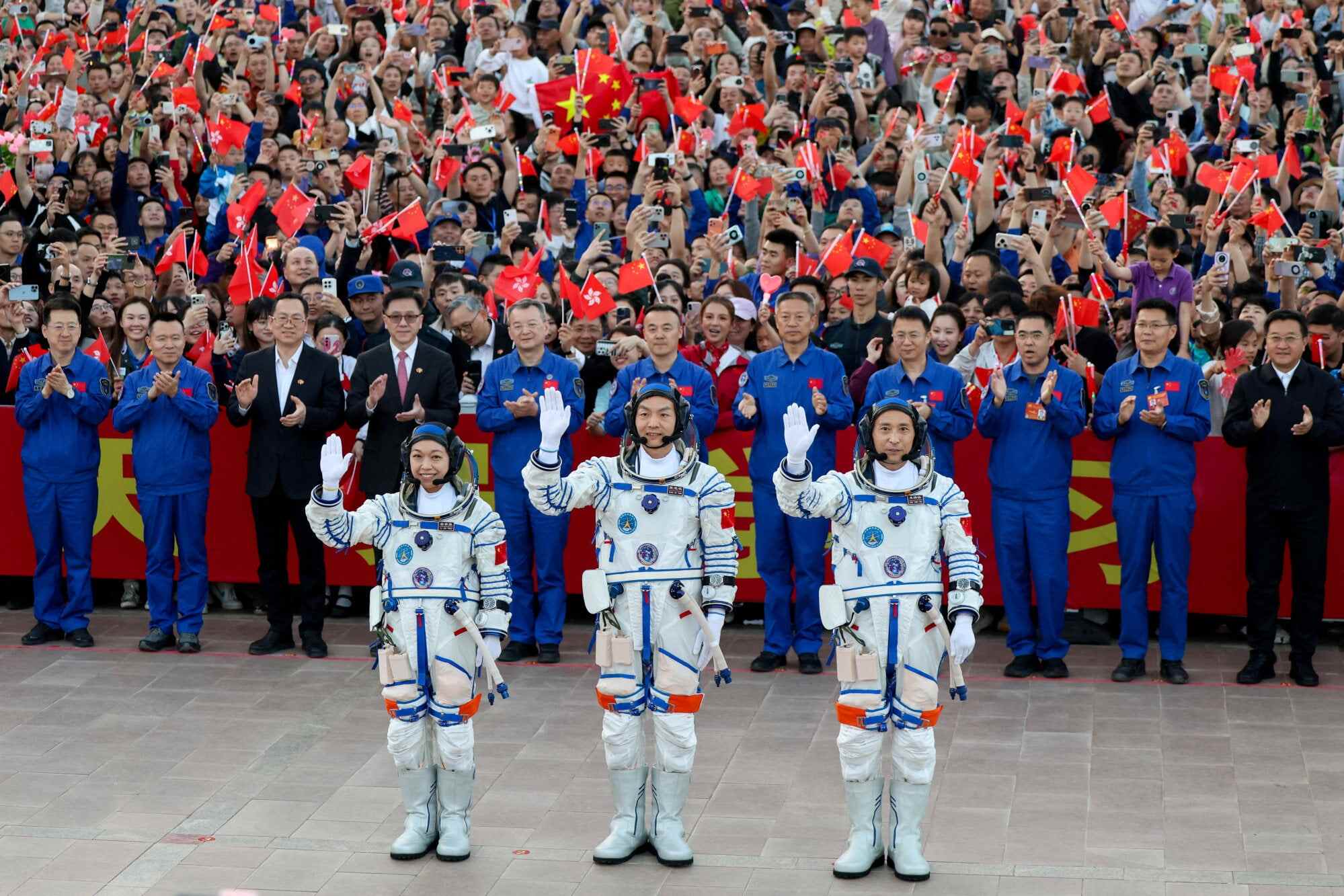
The crew were met with cheers at a send-off ceremony at the Wentian Pavilion at Dongfeng Aerospace City and then moved on to the launch site in the Gobi Desert.
The spectators included a Hong Kong government delegation, led by Secretary for Innovation, Technology and Industry Sun Dong.
The group also included Undersecretary for Security Michael Cheuk Hau-yip, Commissioner for Innovation and Technology Ivan Lee Kwok-bun, as well as experts, youth leaders and pupils.
Hong Kong Science and Technology Parks CEO Terry Wong Ping-sau and Chinese University of Hong Kong pro-vice-chancellor Jiang Liwen were also present for the send-off.
Hong Kong Chief Executive John Lee Ka-chiu congratulated those involved on the launch and sent his best wishes to the crew members.
“All citizens of Hong Kong are thrilled and proud,” Lee said.
A staff member working at the launch centre said she had watched many launches but was still very excited to see the mission lift off in person.
“Seeing a launch really gets my blood pumping every time,” she said.
She said she was most impressed by Lai: “I am really respect her spirit. As a mother to three children, she is still making a contribution to the aerospace development. I admire her courage.”
The mission plan is to keep one of the astronauts in space for a year. The astronaut will be chosen over the course of the mission, with the selection based on medical and psychological assessments conducted during the voyage. The other two crew members will return to Earth after about six months.
The longest continuous space voyage was carried out by the Russian astronaut Valeri Polyakov, who spent 437 days and 18 hours in orbit in 1994 and 1995.
Extended exposure to microgravity and radiation poses health risks for astronauts, including bone density loss, muscle atrophy, sleep disruption, and behavioural and psychological fatigue.
Richard de Grijs, executive director of the International Space Science Institute-Beijing, said “year-long missions are an important step towards future lunar and potentially deep-space ambitions” as China moved “from a ‘demonstration’ phase of human space flight into a genuinely operational phase”.
He added: “That changes expectations. The world at large increasingly judges Chinese crewed missions no longer as experimental achievements but as part of a routine, continuously functioning space infrastructure.”
While China “has become increasingly sophisticated” in its support for astronauts’ health, crew cohesion and operational issues, long voyages still presented cumulative challenges, he said.
“A year in orbit pushes both hardware and humans into a different operational regime compared with the shorter Shenzhou missions of the programme’s earlier phases,” said de Grijs, who is also a professor at the school of mathematical and physical sciences at Macquarie University in Australia.
The Shenzhou-23 trio will be relieving the Shenzhou-21 crew, whose spacecraft had to be used to bring home the Shenzhou-20 astronauts after they discovered a crack on the window of their vessel.
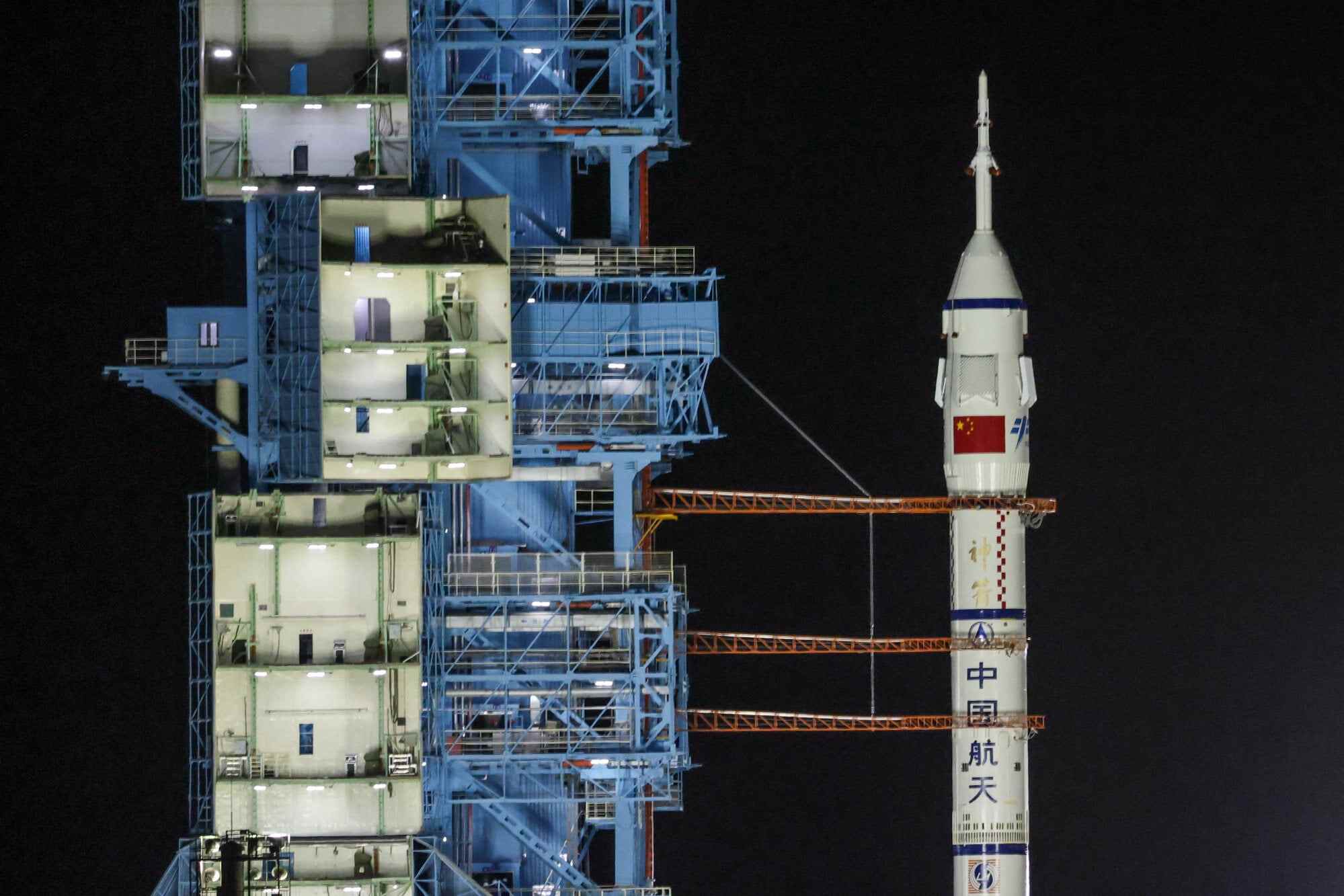
The Shenzhou-22, which will bring the current team home, was launched uncrewed in an emergency mission last November.
Zhang Jingbo, a spokesman for the manned space agency, said on Saturday that the operation had been a “successful example for the international space community in efficiently responding to emergencies” and had proved the worth of the “rolling backup” strategy of ensuring there was always a spacecraft in reserve.
De Grijs said he would be watching for “whether Chinese officials emphasise procedural robustness, reliability and crew safety more strongly in this mission’s public messaging”.
He said the Shenzhou-20 incident had prompted an increased focus on safety inside China’s space agencies.
“Chinese space flight culture is on the whole cautious and engineering-driven, and crewed missions are politically very high stakes,” he said. “Any anomaly involving spacecraft integrity or launch escape systems will attract intense internal review, even if relatively little detail emerges publicly.”
He said the incident showed that “redundancy and abort capability are absolutely central” to human space flight, but individual incidents needed a measured response.
“Every mature crewed programme accumulates technical scares and near misses over time. In many cases, the real test of programme maturity is not whether problems occur but how systematically they are analysed and mitigated afterwards,” he said.