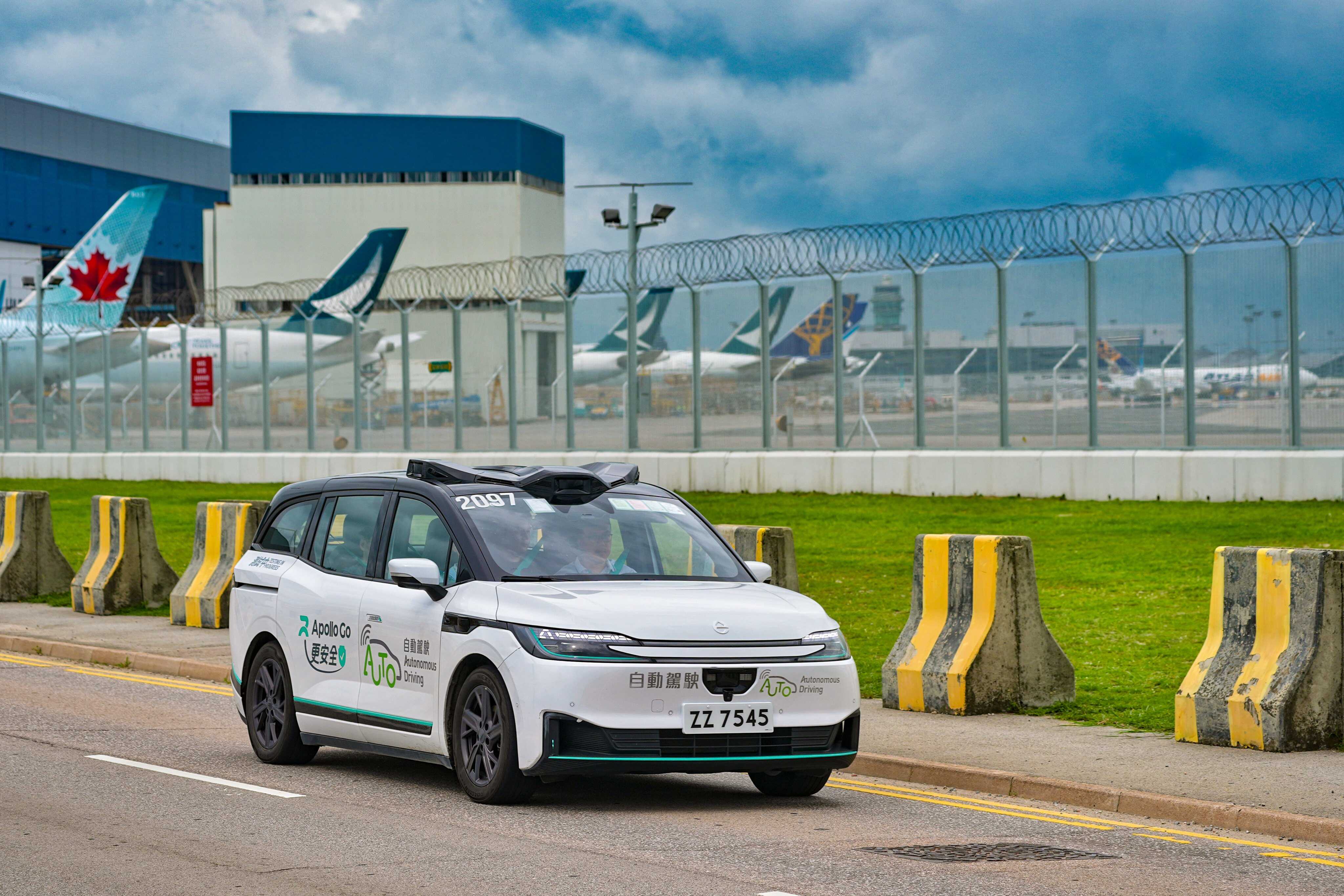
Hong Kong is moving forward with the implementation of driverless vehicles by permitting the testing of passenger cars without any human drivers at the airport.
On Thursday, the Transport Department revealed that it had broadened its trials of this technology at Chek Lap Kok, following a determination that prior remote-operation tests had satisfied safety standards.
“We are pleased to confirm that the autonomous vehicle tests have been ideal, safe and operating smoothly,” Commissioner for Transport Winnie Tse Wing-yee said.
Testing had previously been carried out along routes at the airport, but the vehicles were required to have a person inside. A second operator monitored the journey remotely from a control centre.
The latest arrangement allows for human drivers to be removed from the car entirely, although the vehicle will still be monitored remotely.
Chinese technology giant Baidu received Hong Kong’s first pilot licence for autonomous vehicles in November 2024.
Since then, the company has gradually expanded its testing programme from Chek Lap Kok to other parts of North Lantau, Kowloon East and Southern district, while increasing the number of vehicles, raising speed limits and conducting designated passenger test runs.
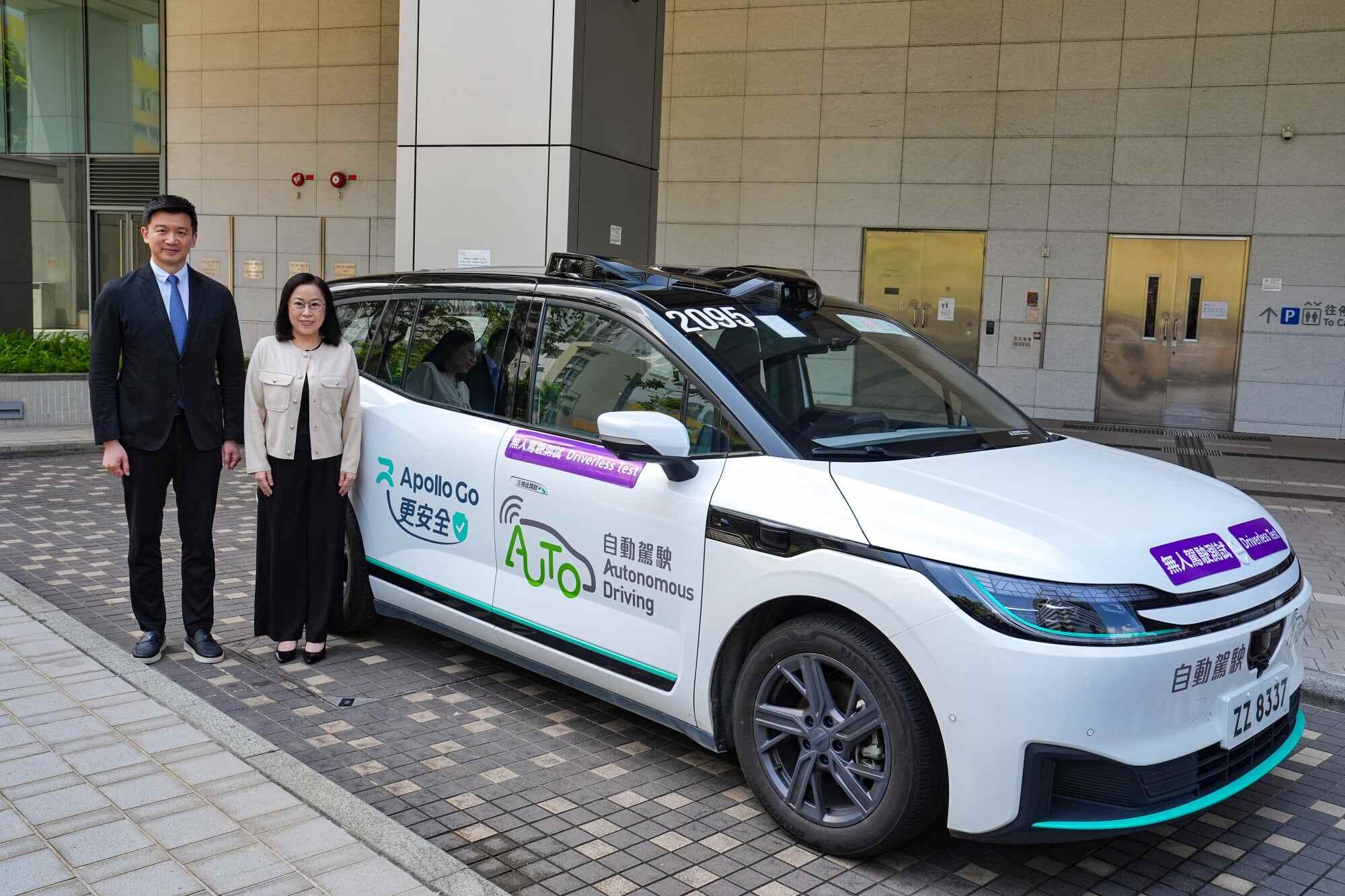
Tse said operators would be required to continue submitting monthly reports on the trial runs, adding that the department would carry out on-site inspections and review operations at the remote control centre.
She also said that protecting the public would “always be [the government’s] top consideration” and noted operators were required to formulate detailed safety management and contingency plans covering vehicle, road and cybersecurity risks.
Each test vehicle must also carry valid third-party insurance and be equipped with an electronic data recorder, while new labels stating that a trial was in progress will need to be displayed to help other road users identify the vehicles.
Asked whether Hong Kong would need to amend its laws before autonomous vehicles could operate on public roads without on-board attendants, or what are globally classified as Level 4, Tse said the city’s existing legal framework was already capable of regulating the latest phase of testing.
“Our legislative framework has already provided a very flexible and robust framework to regulate and facilitate the development of autonomous vehicles in Hong Kong,” she said.
The classification is part of the globally recognised six-level automation standard developed by United States-based engineering standards body SAE International, which ranges from Level 0, with no driving automation, to Level 5, where vehicles drive on their own.
Tse added that authorities were processing applications for commercial autonomous vehicle operations and larger vehicle types, while any expansion of testing into new districts would depend on the operators’ business plans.
Tse declined to say when driverless testing would progress to the next stage.
She said the department would continue assessing operators’ monthly reports and conducting inspections, adding that meeting prescribed testing mileage alone would not automatically qualify a project to advance.
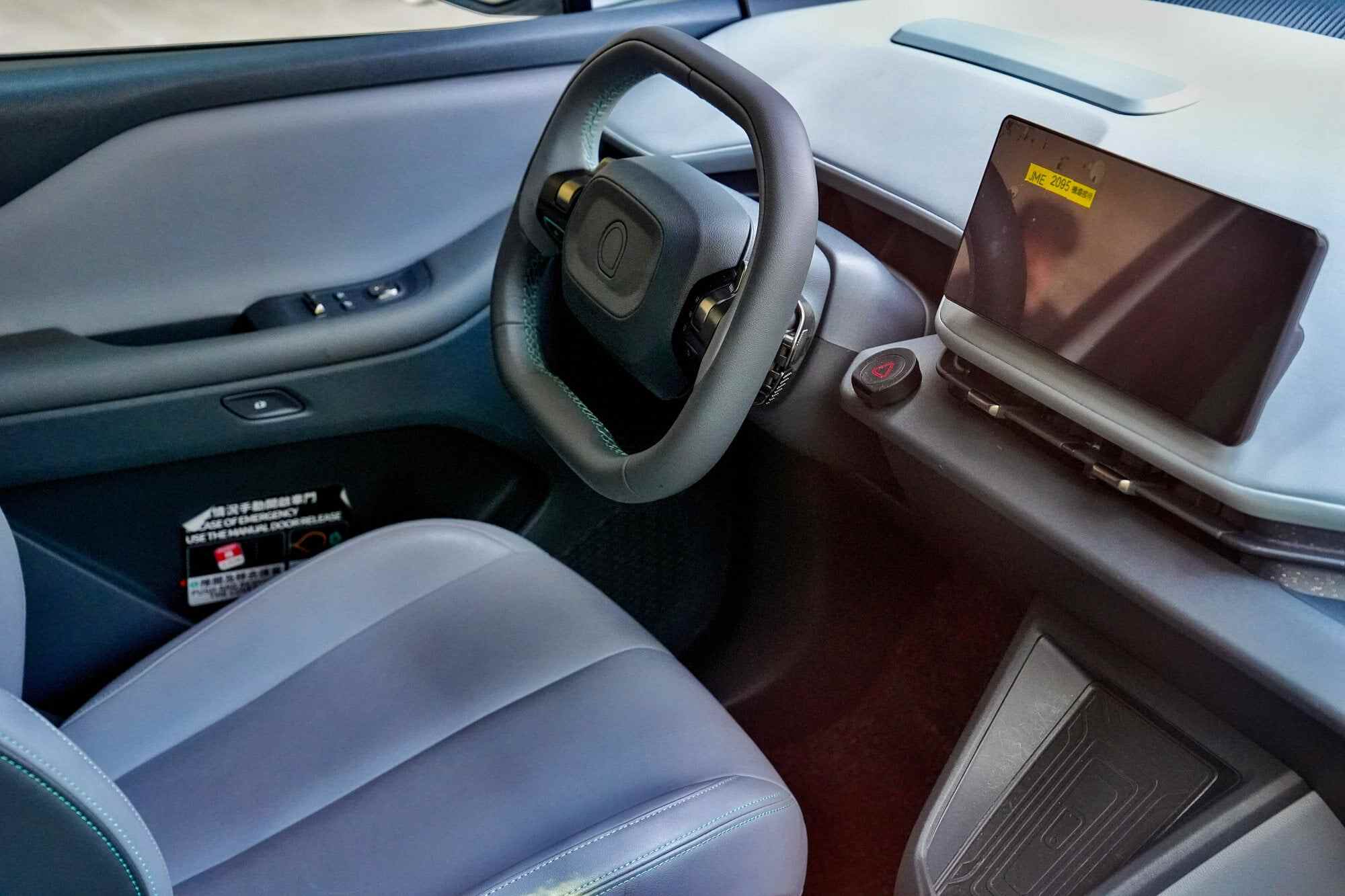
Baidu, whose Apollo Go platform is conducting the trial scheme at Chek Lap Kok, welcomed the approval and described it as “an important milestone” for the development of autonomous driving in Hong Kong.
Yang Nan, vice-president of Baidu and general manager of its overseas intelligent driving business, said the company would launch what it described as the world’s first driverless trial scheme in a right-hand-drive market later this month.
He said the company had spent more than a year testing in Hong Kong after receiving the licence in 2024.
By the end of May, Apollo Go vehicles had travelled more than 240,000km (149,000 miles) in Hong Kong, Yang said.
“We will continue to develop our autonomous driving business in Hong Kong in a safe and effective manner, accelerate unmanned and large-scale operations, and strive to achieve commercial operations as soon as possible,” he said.
The government has repeatedly said it wanted the autonomous technology to progress towards “driverless, scaled-up and commercialised” operations, although it has not specified what those services will ultimately look like or set a timetable for their roll-out.
Elsewhere, driverless ride-hailing services have already begun operating commercially.
Waymo operates autonomous taxi services in several cities in the United States, while Zoox, owned by Amazon, is testing purpose-built robotaxis in San Francisco and Las Vegas.
In mainland China, Apollo Go has deployed commercial robotaxi fleets in cities such as Shenzhen.