Triathletes must constantly adapt to their surroundings – waves might reach two metres high and thunderstorms could make their paths treacherous.
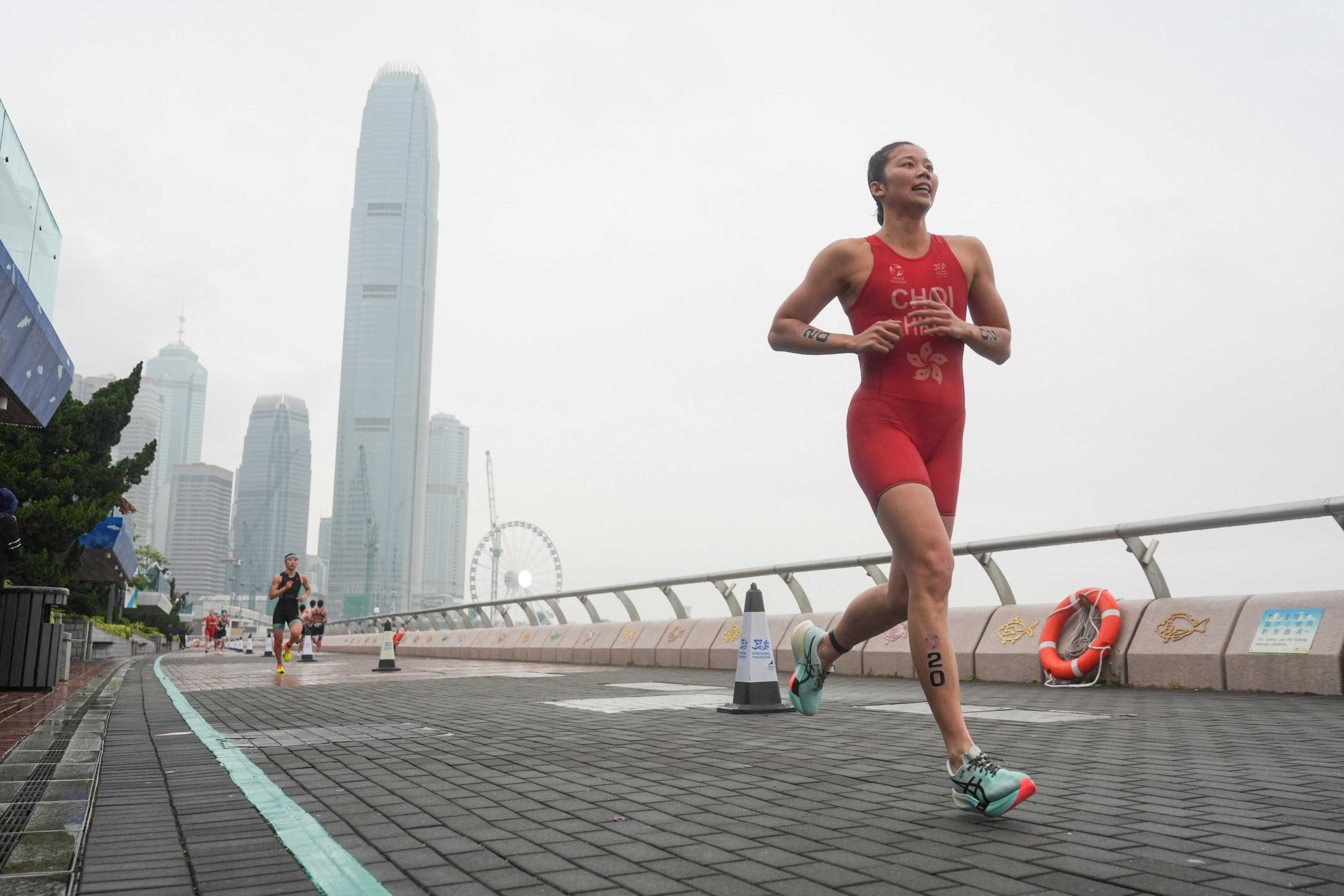
For Hong Kong triathlete Hilda Choi Yin-yan, that unpredictability is what draws her to this arduous sport in which athletes swim, cycle and run without any breaks.
“Every time I race in a new place, I naturally observe the city,” the 31-year-old said.
She analyses her surroundings using what she learned from studying geography and urban planning when she was a student at the Chinese University of Hong Kong.
“I’d notice, for example, there’s a park here – why did they decide to build it there? What’s around it? Even when swimming, I’m thinking if this is a lake where buoyancy is lower than in the sea. Is there a current?” she said.
“Learning how to adapt to each environment feels amazing to me.”
This week, Choi will take on a challenge close to her heart: racing in her city’s waters across Victoria Harbour as part of the 15th National Games triathlon event.
Preparing for her big race
Eight sports will be held in Hong Kong as it co-hosts the National Games with Guangdong province and Macau.
The Hong Kong triathlon team will compete in the individual and mixed relay races on November 15 and 16, starting from the Wan Chai Temporary Promenade and finishing at the Central Harbourfront.
Individual athletes spend about two hours tackling a 1.5km swim, 40km bike ride and 10km run. For the mixed relay, each member of the team must complete a 300-metre swim, 6.6km bike race and 1.8km run.
Choi said that whoever performs well in the individual race and is in good condition will be assigned to the relay.
“There isn’t a set group specifically training for relays – everyone is working towards improving ... overall,” she said.
Before the National Games, Choi trained for five weeks in Yunnan province. She said the first two weeks were tough as she adjusted to being 1,700 metres above sea level, where the air is thinner, making it harder to breathe.
“I was a bit too excited when I first got there and underestimated the adjustment process, so I didn’t pace myself well ... But now I’m on track,” she said.
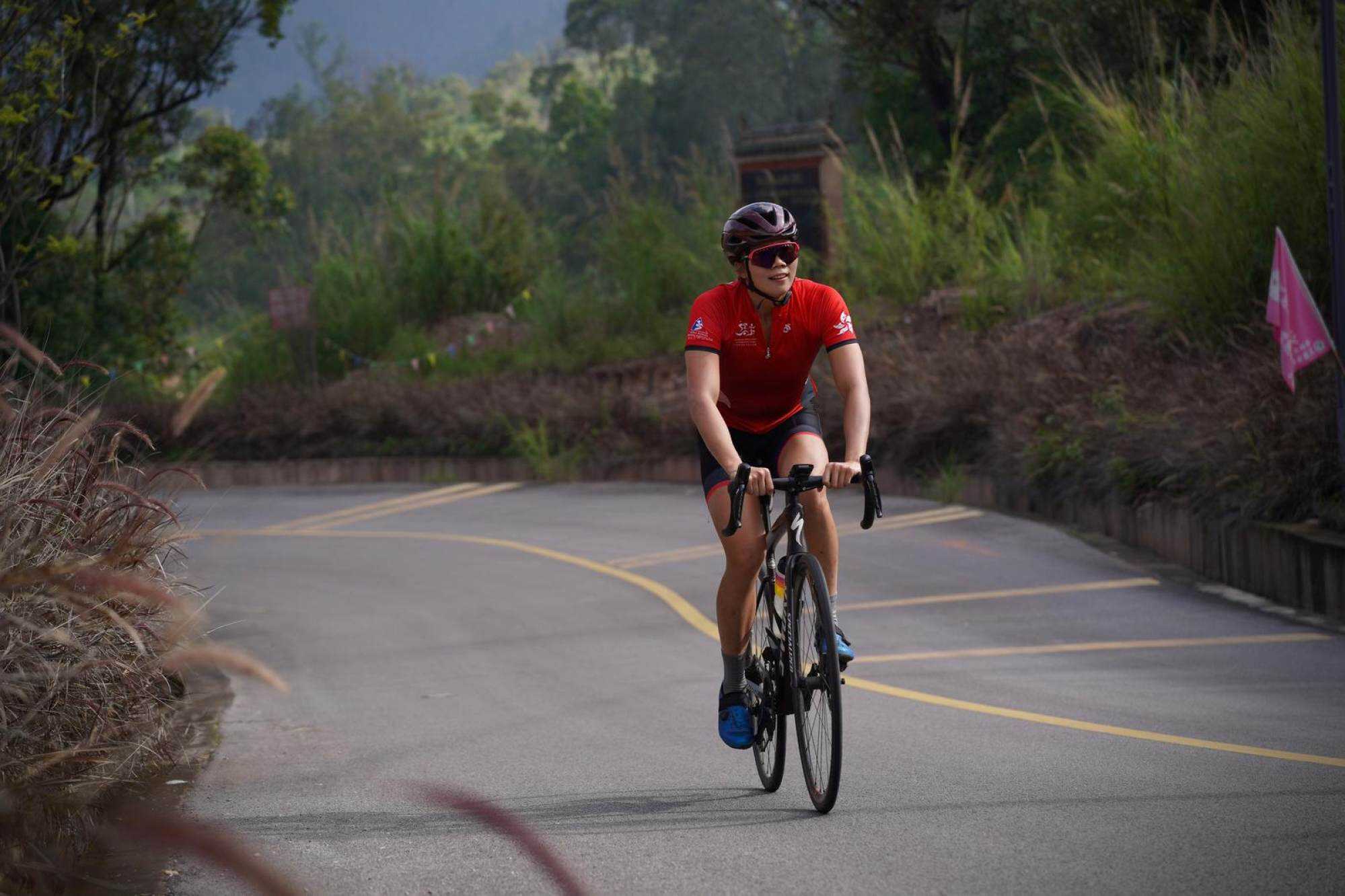
In Yunnan, Choi and her teammates trained with squads from mainland provinces, such as the Liaoning team, exchanging tips and pushing each other to improve.
At the National Games, Choi’s goal is to reach her full potential, especially in the swimming leg, which she said was her weakest discipline.
“My target is to come out of the water with the lead group or at least close to them,” she said.
She met her target earlier this year at the Asia Triathlon Championships in Turkey, exiting the water with the front of the pack and finishing eighth overall.
For the National Games’ cycling segment, Choi said the city’s course would be quite technical. At about 40km long, the event has over 100 turns across 10 laps.
“My goal is to ... ride efficiently and not burn too much energy, [so] my run will naturally be stronger,” she said.
Choi noted that she was looking forward to the chance to compete in her home city.
“That will give me extra motivation and energy to perform well throughout the competition,” she added.
A versatile sport for all
While many consider triathlons to be a tough sport, Choi said she noticed how popular they had become among Hongkongers in their forties and fifties.
“Triathlon might not be as popular as badminton or running, but it attracts people who genuinely want to test themselves and grow,” she noted.
The athlete recalled a moment when she met an older man who was cycling around the same path as she was.
“When we crossed paths, I said, ‘Uncle, you’re amazing! It’s so hot, and you’re still cycling.’ And he said he was training for a 70.3 race [a long-distance triathlon] to prove to himself that he can finish something big even at 50,” Choi said.
“That’s actually part of the charm of the sport – it’s not just about having physical ability; it’s about your mindset [and] your desire to challenge yourself.”
Even as an elite athlete, Choi said triathlons pushed her to be more versatile.
“You’re always learning something new – how to get the best performance and the best strategy under the unique conditions of that particular race,” she said.
Choi gave an example of the extreme conditions she has faced, recalling a race in Canada where the air was 7 degrees Celsius and the water was 16 degrees.
“After swimming ... my hands and toes were completely numb. It probably took me 30 seconds just to put on my running shoes,” she said.

One step, pedal and stroke at a time
While swimming is now what Choi struggles with most, it is also the sport that set the stage for her triathlon career, as she has been swimming since she was six years old.
“Swimming had already given me a good base in both endurance and strength – essential for triathlons,” she said.
A turning point came when a friend invited her to join a local aquathlon, which involves swimming and running. Choi entered the race and won.
“That gave me the idea that maybe I could try more of these combined events,” she said.
After joining a triathlon training programme, she progressed to the regional, national and elite squad.
With over a decade of triathlons under her belt, Choi is considering when to switch to longer distances.
“As we get older, our speed naturally declines, so moving towards longer distances ... still satisfies that desire to challenge myself while aligning with endurance strengths,” she explained, adding that she was still unsure if she would try to compete in next year’s Asian Games.
“I’ll see how I feel after the National Games – whether to close the short-course chapter or keep pushing for the Asian Games. I’m giving myself time to reflect.”
Choi’s hard-earned lesson after years in the sport comes down to two words: consistency and patience.
“Being an elite athlete is like a long-term investment ... You can’t just train for three years and expect to become a world or Olympic champion,” she said.
“The payoff might come after 10 or 15 years, and you need to ask yourself if you’re willing to keep going until then. For me, it’s been challenging, but I truly love staying active. That’s my purest reason.”