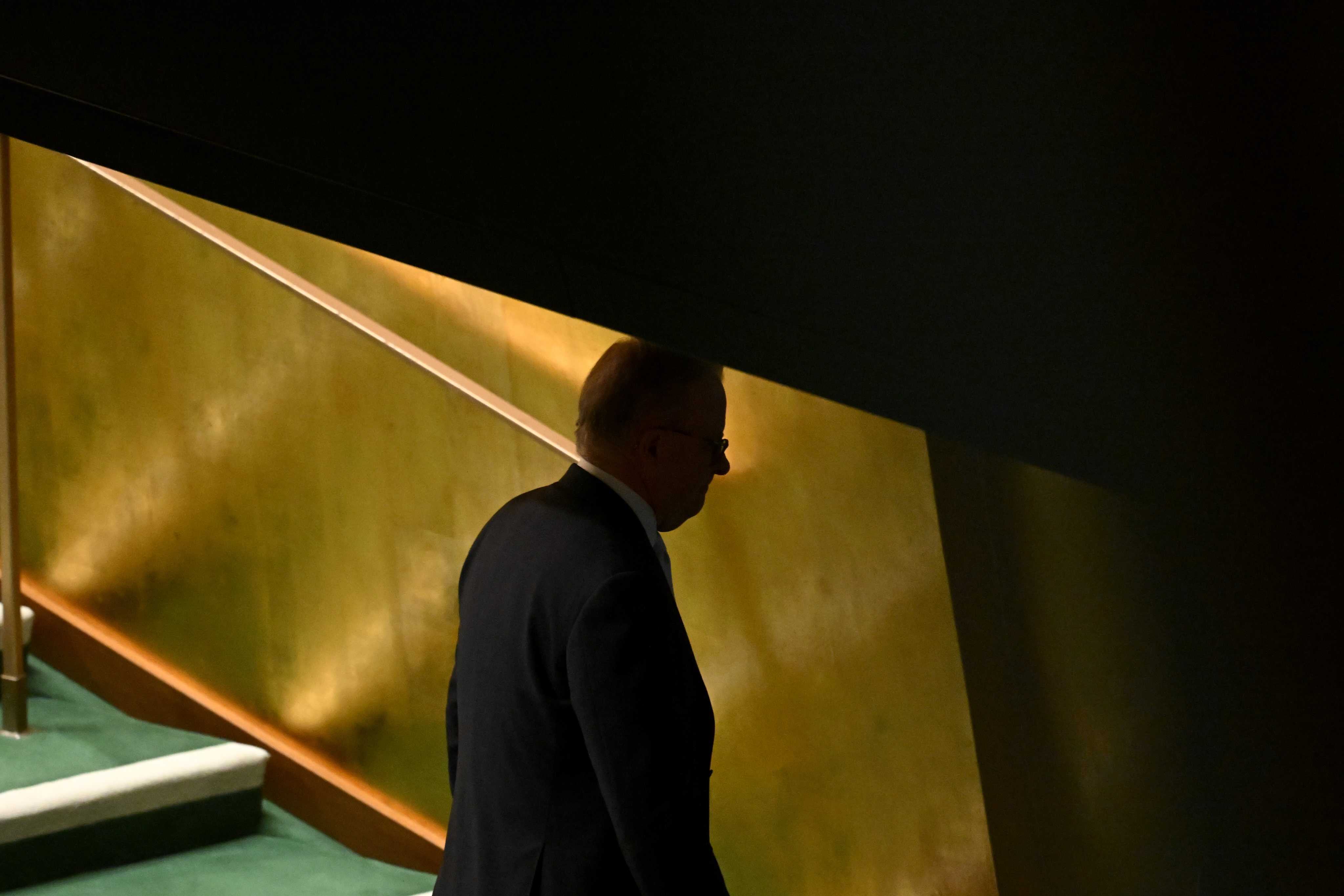
Australia’s prime minister, Anthony Albanese, promoted his government’s world-first social media ban for teens in New York this week, warning that the apps and platforms posed “constantly evolving” challenges for children.
Many, including other nations’ governments and global tech firms, have been closely following Australia and similar efforts to block or restrict the use of social media. Australia banned individuals under 16 from using social media last December.
The country has said it wants social media firms to employ minimally invasive methods to check the age of users, using artificial intelligence and existing behavioural data to estimate age rather than an “unreasonable” blanket age verification process.
“It isn’t foolproof, but it is a crucial step in the right direction,” Albanese said on Wednesday at the Protecting Children in the Digital Age event on the sidelines of the UN General Assembly in New York.
European Commission President Ursula von der Leyen said in a speech that she had been “inspired by Australia’s example”.
“We in Europe are watching and will be learning from you ... it is up to us to step up for the next generation,” she said.
Australia’s ban, which passed into law in November 2024, aimed to delay teens’ ability to set up social media accounts from the current age of 13 until the age of 16.
Albanese’s centre-left government proposed the law based on research that showed that the overuse of social media among young teens harmed mental health. This included misinformation, bullying and harmful depictions of body image.
Albanese called his government’s efforts a sensible but overdue step to protect children at a critical stage in their lives.
“The challenge we face is constantly evolving, and different countries are tackling it in different ways,” Albanese said, adding the law would give Australian teens “three more years of being shaped by real-life experience, not algorithms”.