Fear for her son’s fate kept Maisoun Shawamreh awake through the night in the occupied West Bank following the Israeli parliament’s approval of a law permitting the execution of Palestinians convicted of deadly attacks classified as “terrorism”.
The legislation orders West Bank military courts – which try only Palestinians – to make the death penalty the default sentence for those convicted, except in special circumstances.
“The mothers of prisoners – none of us slept last night,” Shawamreh said as she joined a protest in Ramallah against the law on Tuesday. Her son has been in detention for three years, awaiting sentencing on charges of attempted murder.
“He may or may not be subject to execution,” she said, uncertain of what lies ahead.
Because Palestinians in the territory are automatically tried in Israeli military courts, the measure effectively creates a separate and harsher legal track. In Israeli civilian courts, however, the law allows for either death or life imprisonment for those convicted of killing with the intent to harm the state.
The new law is set to take effect in 30 days but its implementation could be delayed by pending court proceedings at Israel’s highest tribunal.
The measure is not retroactive and will not apply to current prisoners. Still, it signalled an extreme hardening of Israeli penal policy that elicited fear from the protesters for all Palestinian prisoners in Israeli jails – emblems of national resistance.
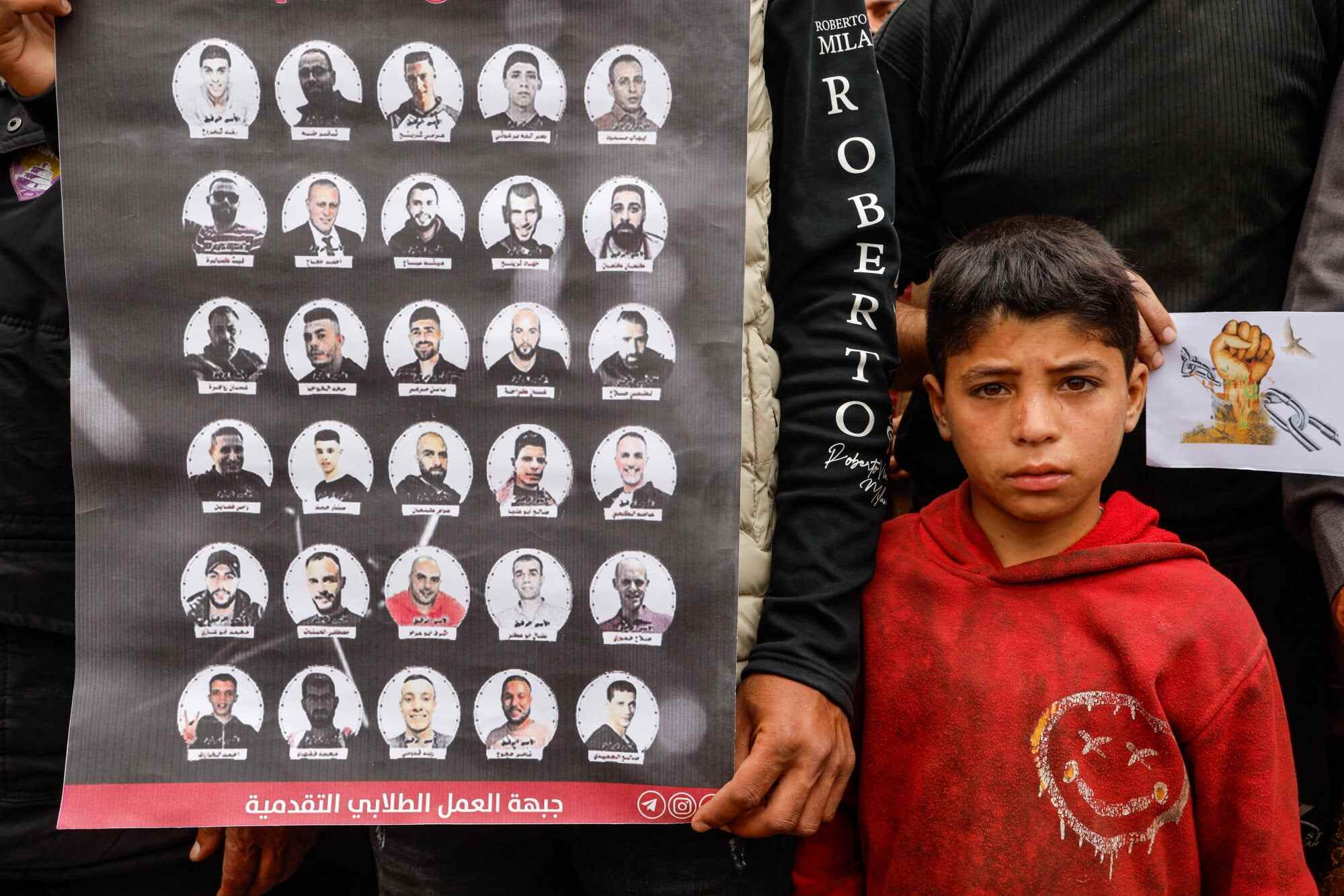
Protests erupt in West Bank
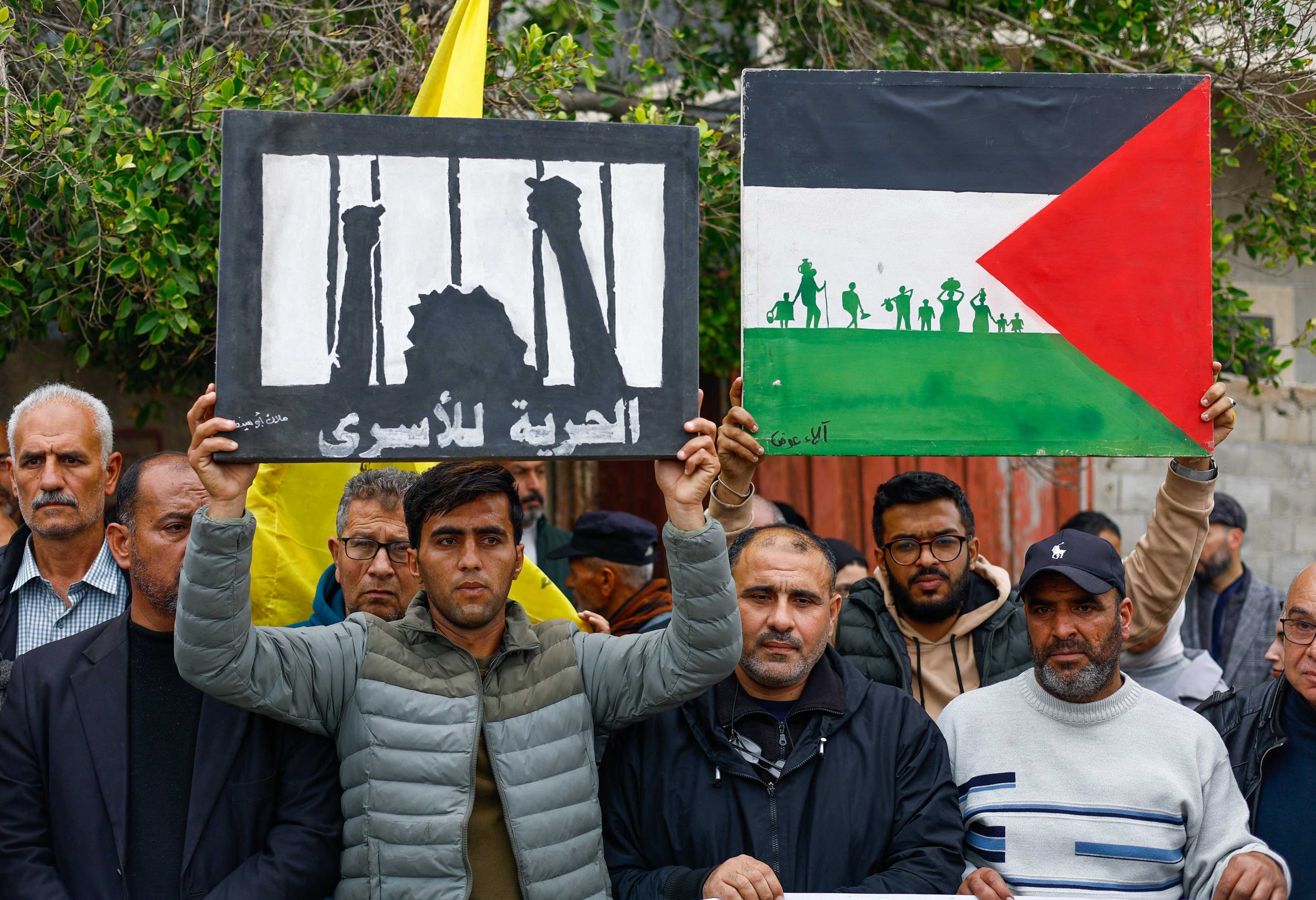
“You are the symbol of struggle, You are the symbol of steadfastness,” protesters in Nablus chanted, some holding up signs with the faces of friends and family currently in Israeli prisons.
Hundreds took to the streets across the embattled Palestinian territories. In Ramallah, dozens of activists, political factions and civil society groups gathered.
Some held placards depicting a blindfolded prisoner flanked by two hanging nooses – a stark image of what they fear lies ahead. “Stop the execution of prisoners law before it’s too late,” read the placards, held alongside portraits of imprisoned Palestinians.
The law mandates execution specifically by hanging, a provision experts said was included over concerns Israeli doctors would refuse to conduct lethal injections. It would generally require execution within 90 days of sentencing, with no right to clemency.
Israeli rights group B’Tselem said military courts in the West Bank, where only cases involving Palestinians are heard, have a 96 per cent conviction rate and a history of extracting confessions under duress or even through torture. Israel denies this.
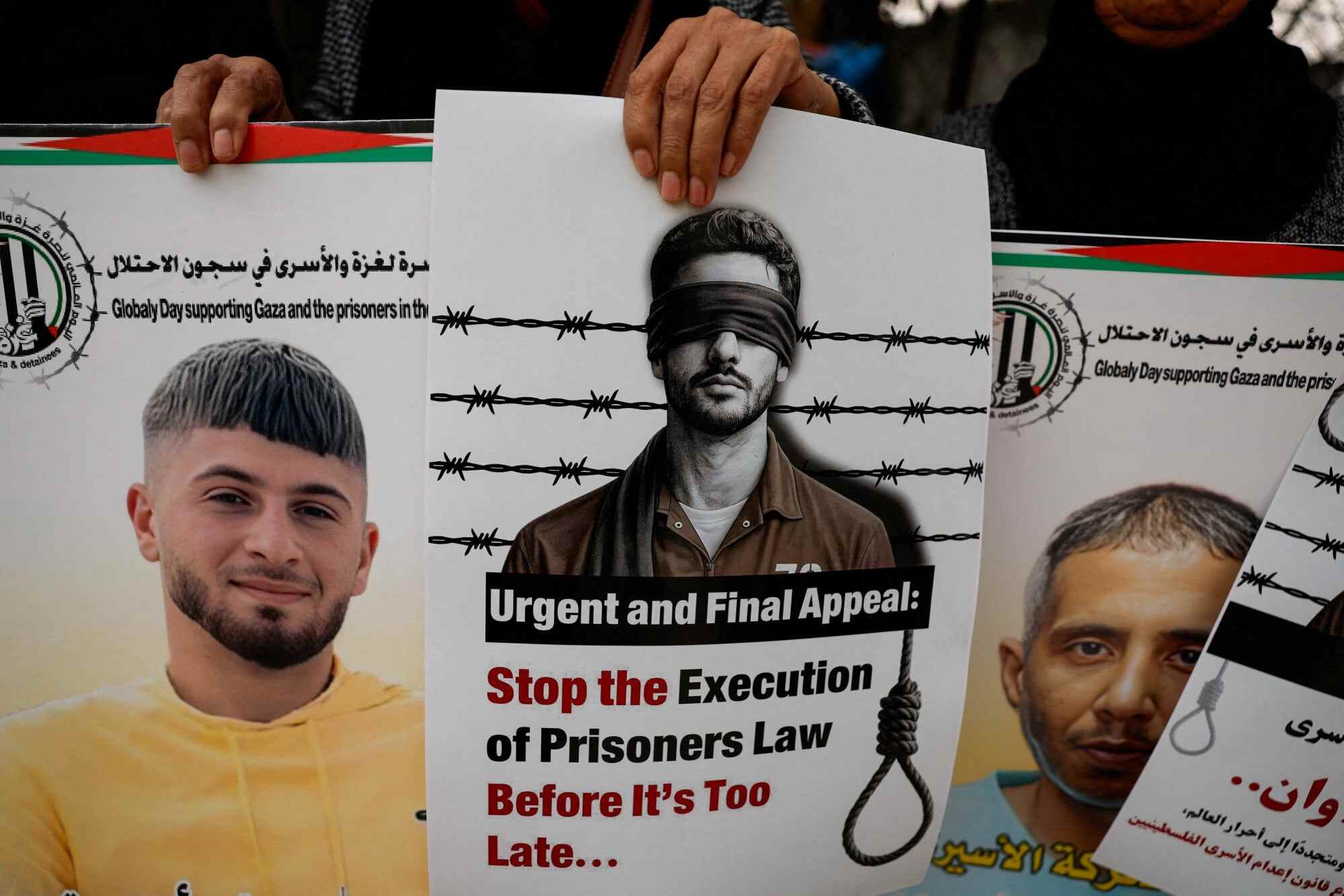
Experts say Supreme Court likely to strike down law
Abdullah al-Zaghari, director of the Palestinian Prisoners Club, condemned what he described as an openly discriminatory law.
“This fascist and racist legislation reflects the reality of the occupation,” he said. “It applies to Palestinians – not to Israeli Jews who carry out daily violence against Palestinian civilians.”
After lawmakers approved the bill, Israel’s far-right National Security Minister Itamar Ben Gvir celebrated its passage with a champagne toast in a parliamentary corridor, joined by some fellow legislators.
But the Fourth Geneva Convention of 1949 – which Israel has ratified – says that persons condemned to death cannot be deprived of the right of petition for pardon and lays down a minimum of six months between sentence and execution.
Mordechai Kremnitzer, a law professor with the Israel Democracy Institute, said the law is “a clear case that invites the Supreme Court to strike it down.”
“The likelihood of executions in the near future is not very high,” Kremnitzer said.
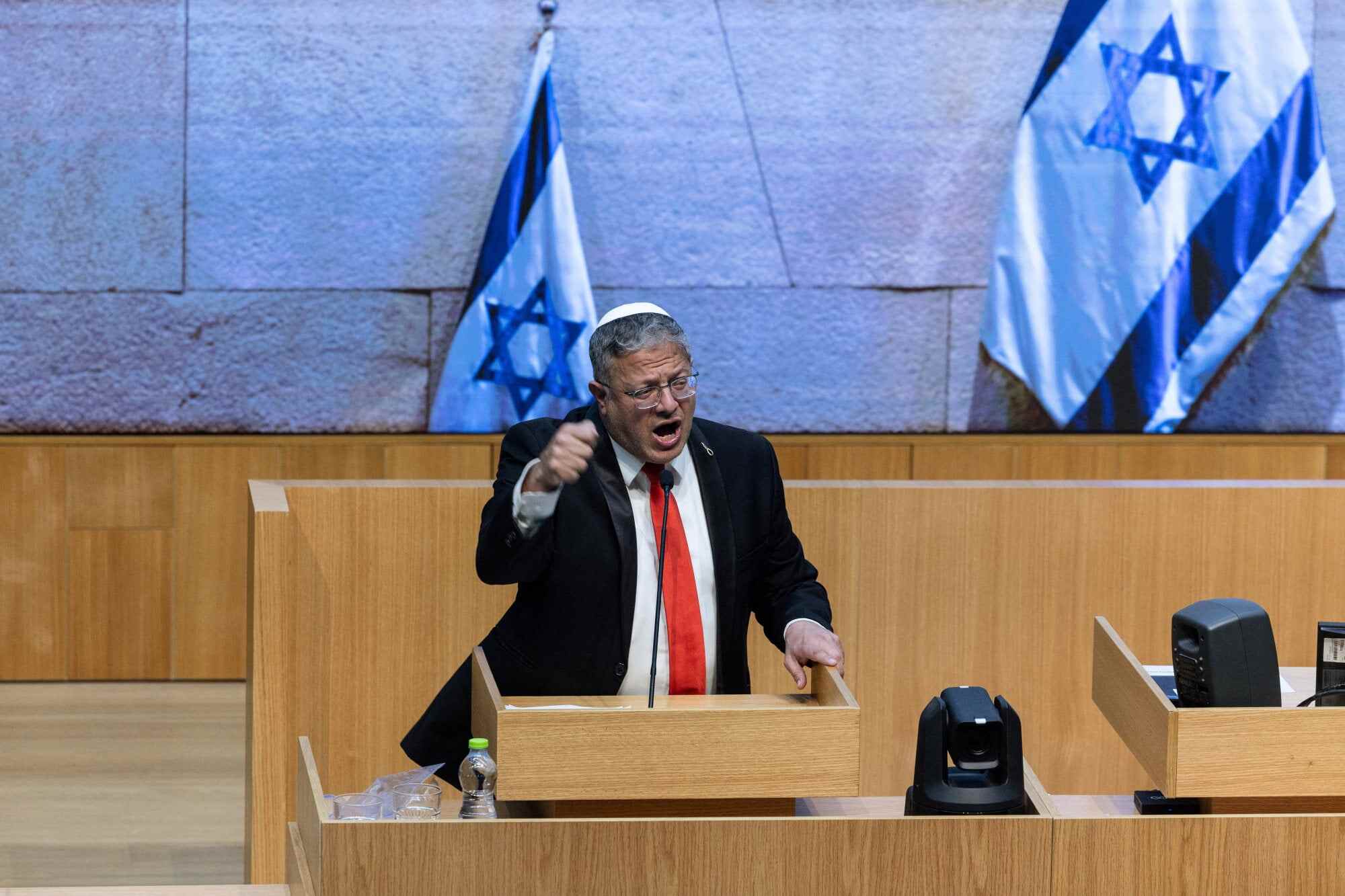
UN calls law ‘cruel and discriminatory’, international criticism of Israel builds
The legislation has drawn international criticism of Israel, which is already under scrutiny for increasing violence by settlers against Palestinians in the West Bank and for the war in Gaza.
Israeli settlers’ frequent attacks on Palestinians in the West Bank rarely end in military court indictments. Israeli monitoring organisation Yesh Din said the last case they had recorded of an Israeli citizen indicted for killing a Palestinian was from an attack in 2018.
On Tuesday, the United Nations warned that applying the law in the occupied Palestinian territory “would constitute a war crime”.
A spokesman for UN chief Antonio Guterres said the world body stood “against the death penalty in all its aspects, wherever”.
“The discriminatory nature of this particular law makes it particularly cruel and discriminatory, and we ask that the Israeli government rescind it and not implement it,” Stephane Dujarric told reporters in New York.
UN rights chief Volker Turk also called for the bill to be “promptly repealed”, warning that it was “patently inconsistent with Israel’s international law obligations”.
Also on Tuesday, Petra Bayr, President of the Parliamentary Assembly of the Council of Europe, said the law would “seriously jeopardise Israel’s observer status”.
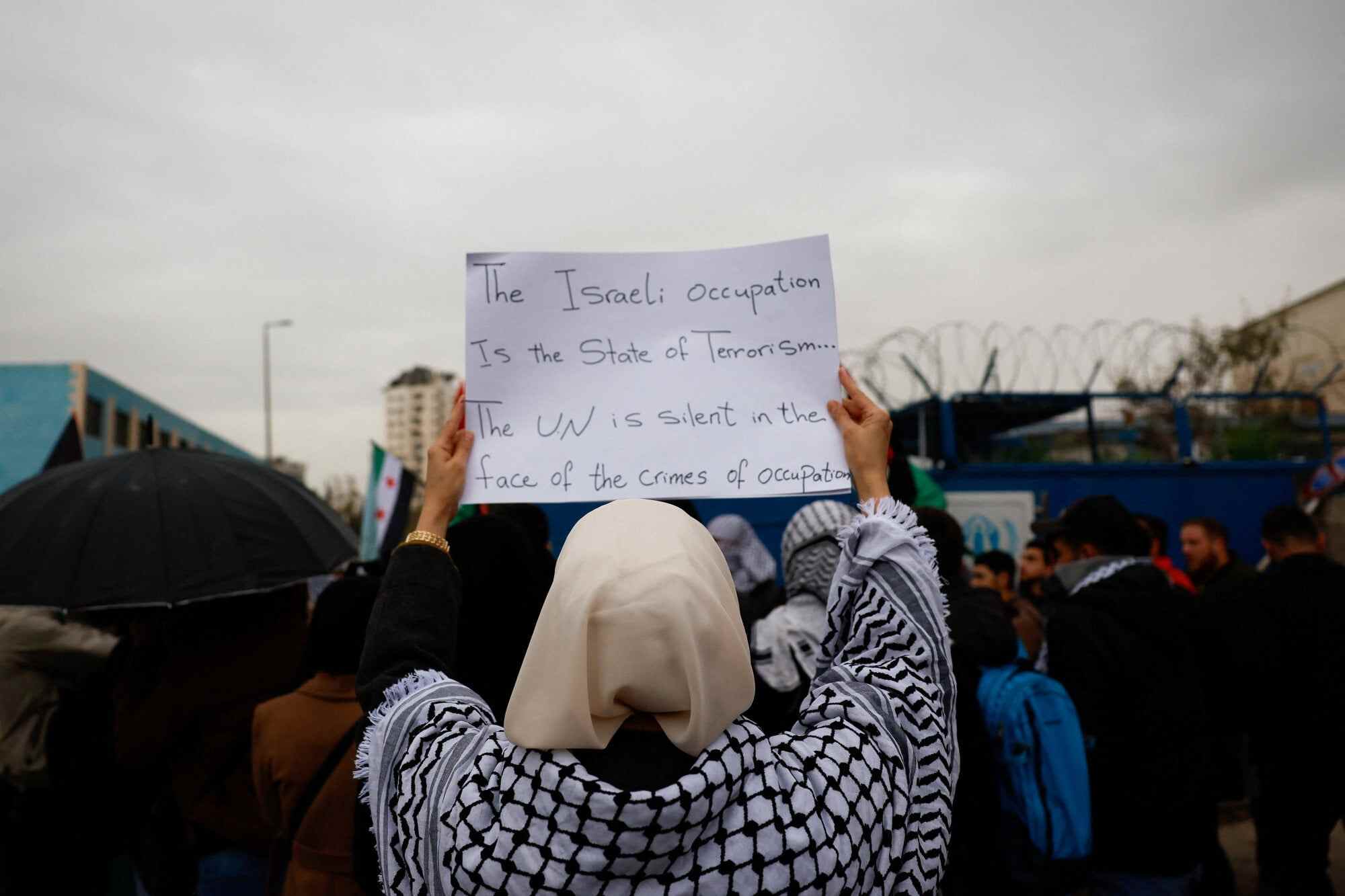
Amnesty International, which tracks countries imposing death penalty laws, says there “is no evidence that the death penalty is any more effective in reducing crime than life imprisonment”.
Several Israeli human rights groups, along with three members of parliament, filed petitions to the Supreme Court seeking to overturn the law.
Israel has only applied the death penalty twice: in 1948, shortly after the state’s founding, against a military captain accused of high treason, and then in 1962, when the Nazi war criminal Adolf Eichmann was hanged.
The Association for Civil Rights in Israel (ACRI) said the law created “two parallel tracks, both designed to apply to Palestinians”, and should be struck down on constitutional grounds.
Additional reporting by Associated Press, Reuters