




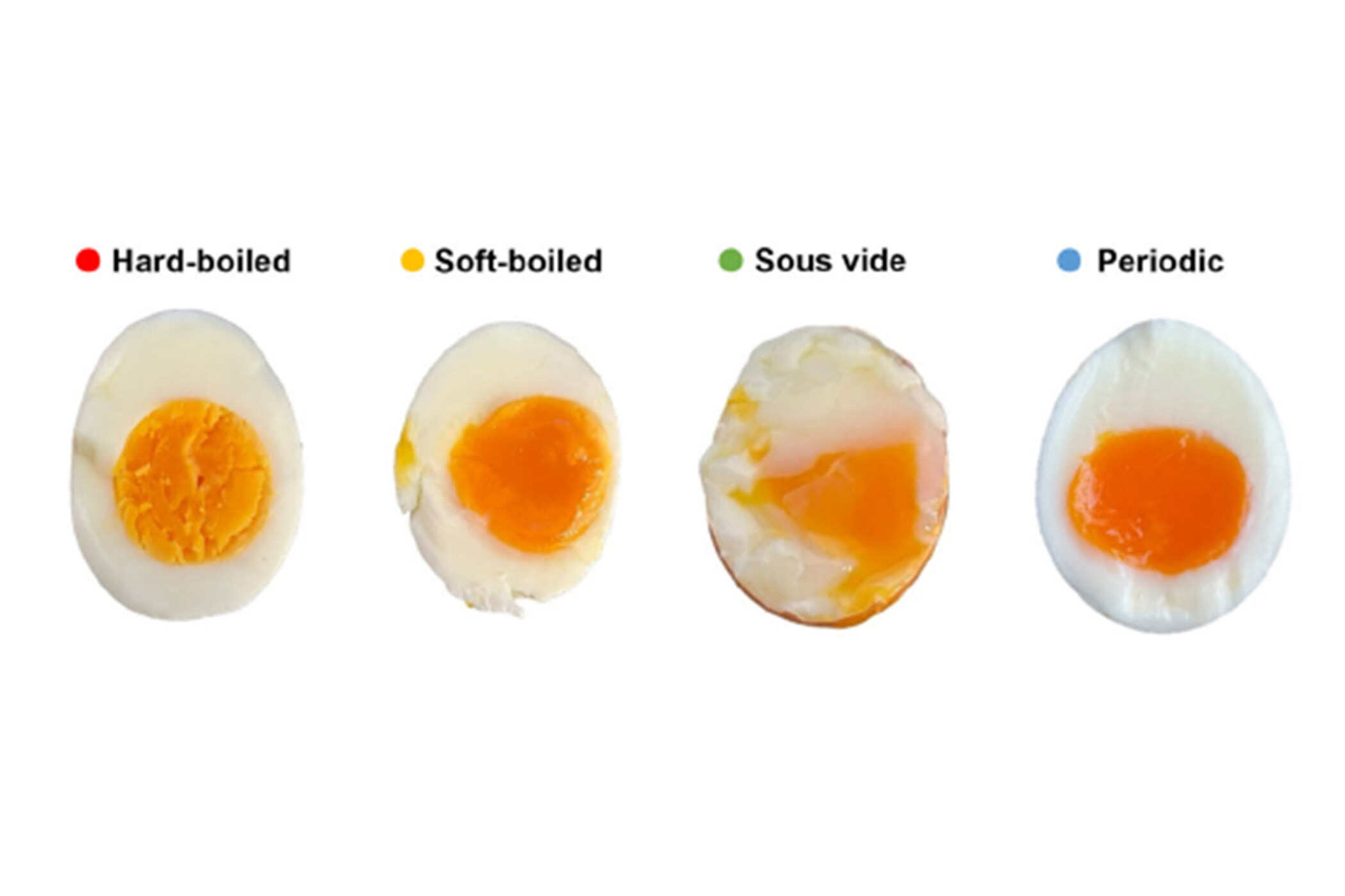
The perfect boiled egg has a velvety yolk along with a soft, solid white. However, getting this balance can be quite a challenge. This is because the yolk cooks at a lower temperature than the white.
Hard boiling an egg can give you a chalky yolk. On the other hand, cooking low and slow can make jellylike, undercooked whites.
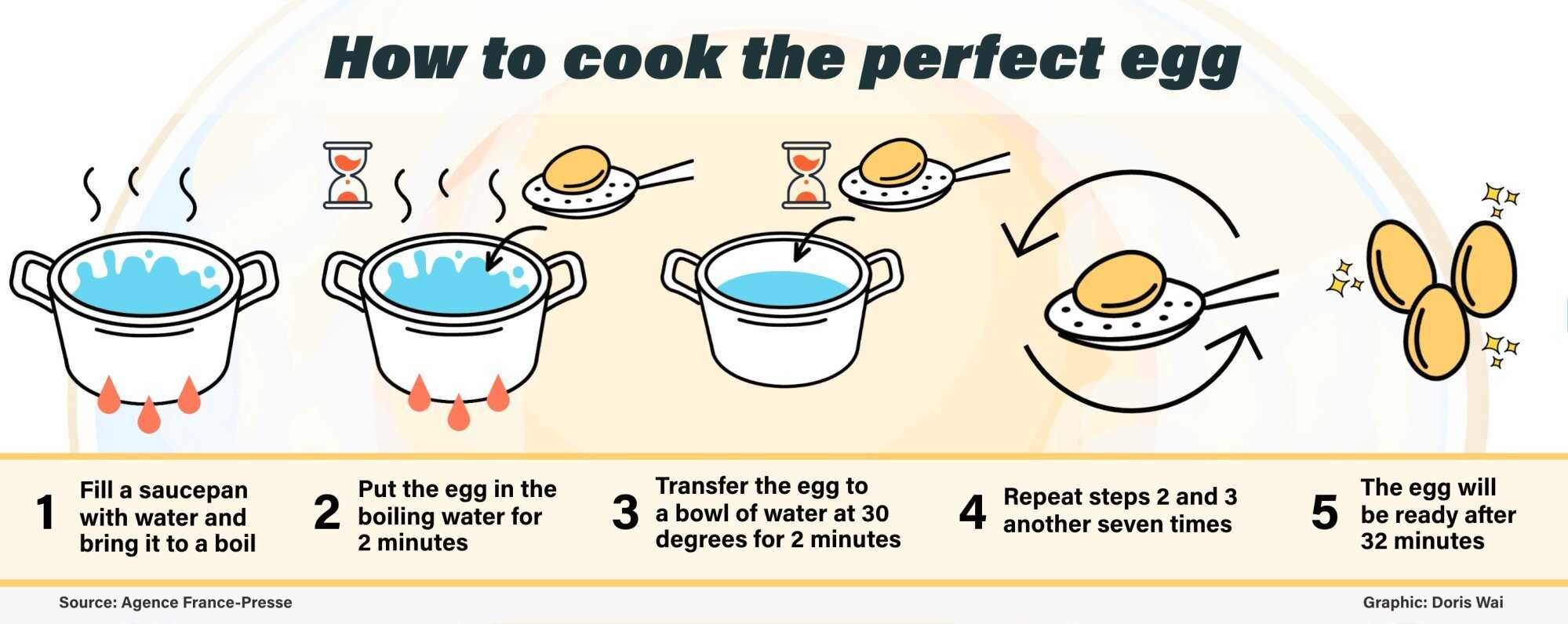
Researchers cooked hundreds of eggs and used maths to deal with this problem. Their final recipe involves transferring eggs in a steamer basket every two minutes between two bowls of water for a total of 32 minutes. One bowl has boiling water. The other bowl contains lukewarm water at 30 degrees Celsius (see graphic).
Gregory Weiss is a chemist at the University of California, Irvine, who was not involved with the research. “You could definitely do this at home with half a dozen eggs or so,” he explained.
The method proposed by the researchers is called periodic cooking. The egg whites are heated and cooled until fully set. The yolk, on the other hand, is held firm at a constant temperature and cooked until it is creamy.
“You can almost spread it, like on bread,” said study author Emilia Di Lorenzo from the University of Naples Federico II.
To confirm their process, the researchers tested the chemical make-up of the prepared eggs. The eggs were then served to a panel of eight tasters alongside traditional boiled eggs. The research was published last month in the journal Communications Engineering.
Associated Press
Why is it so hard to cook the perfect egg?
An egg yolk begins to solidify at 65 degrees Celsius and the white at 85 degrees.
In the case of a hard-boiled egg – cooked for 12 minutes at 100 degrees – all parts of the egg have a final temperature of 100 degrees, well above the ideal cooking temperature, particularly for the yolk.
In the case of egg sous vide, which is cooked between 60 and 70 degrees, the final egg is at a temperature of 65 degrees. But while this is the ideal temperature for the yolk, it is much too low for the proteins in the egg white to stick together.
As for the soft-boiled egg, cooked for six minutes at 100 degrees, the egg yolk ends up undercooked.
Agence France-Presse
