




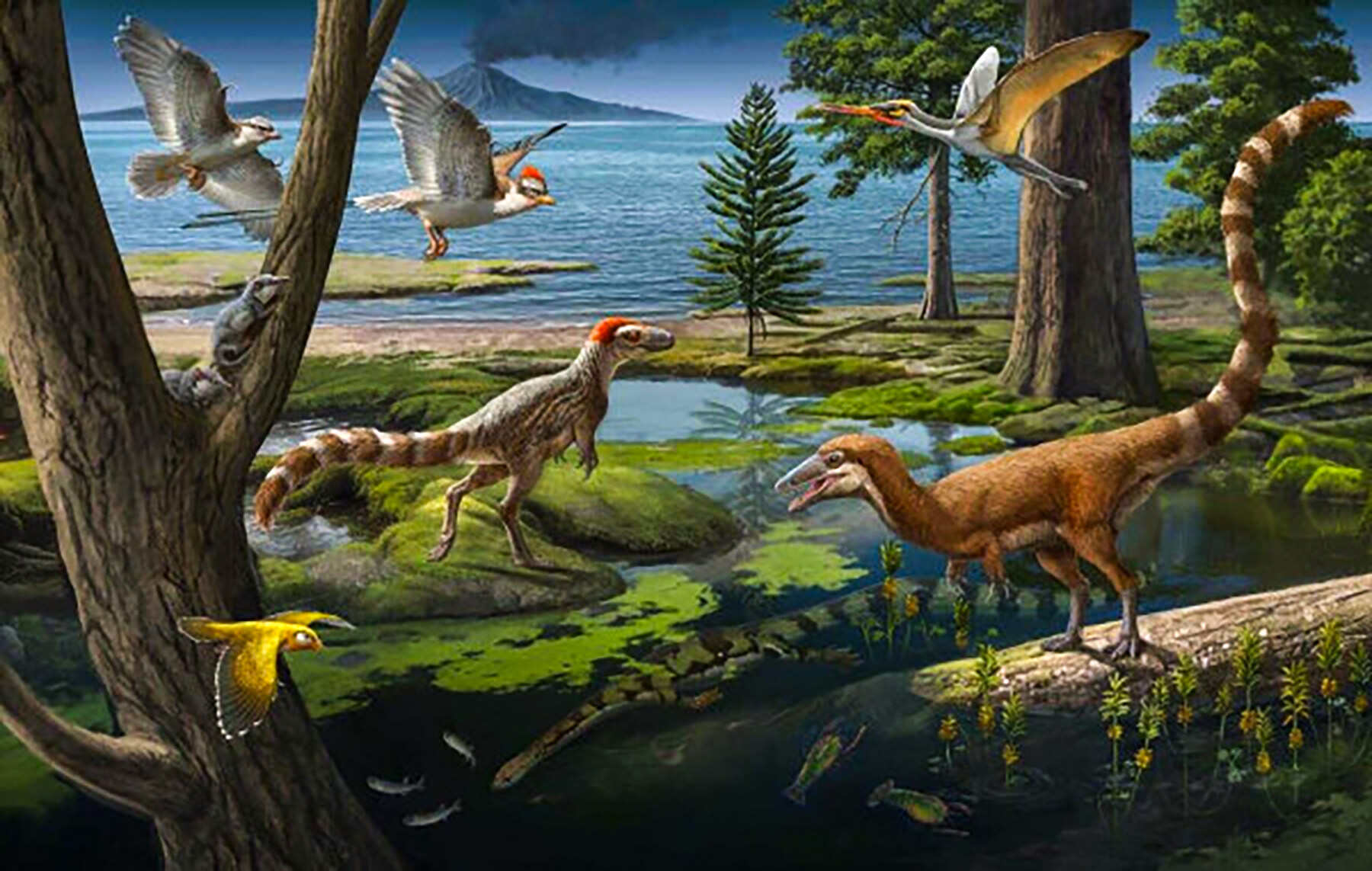
A fossil discovery in China shows a complex prehistoric food chain from 125 million years ago.
The fossilised remains of Huadanosaurus sinensis – a newly identified compsognathid-like theropod dinosaur – were found in Liaoning province.
Scientists discovered two small mammals inside the dinosaur’s stomach. One was an eutherian, a distant relative of modern mammals.
The second was a gobiconodontid, a group that includes the Repenomamus – a mammal about the size of a badger. The eutherian in its stomach was swallowed whole, suggesting Huadanosaurus likely killed its prey with a powerful bite.
Earlier fossils showed Repenomamus ate vertebrates. Previous findings and the new study suggest that creatures in the region may have formed a food web in which they were both predator and prey to each other.
