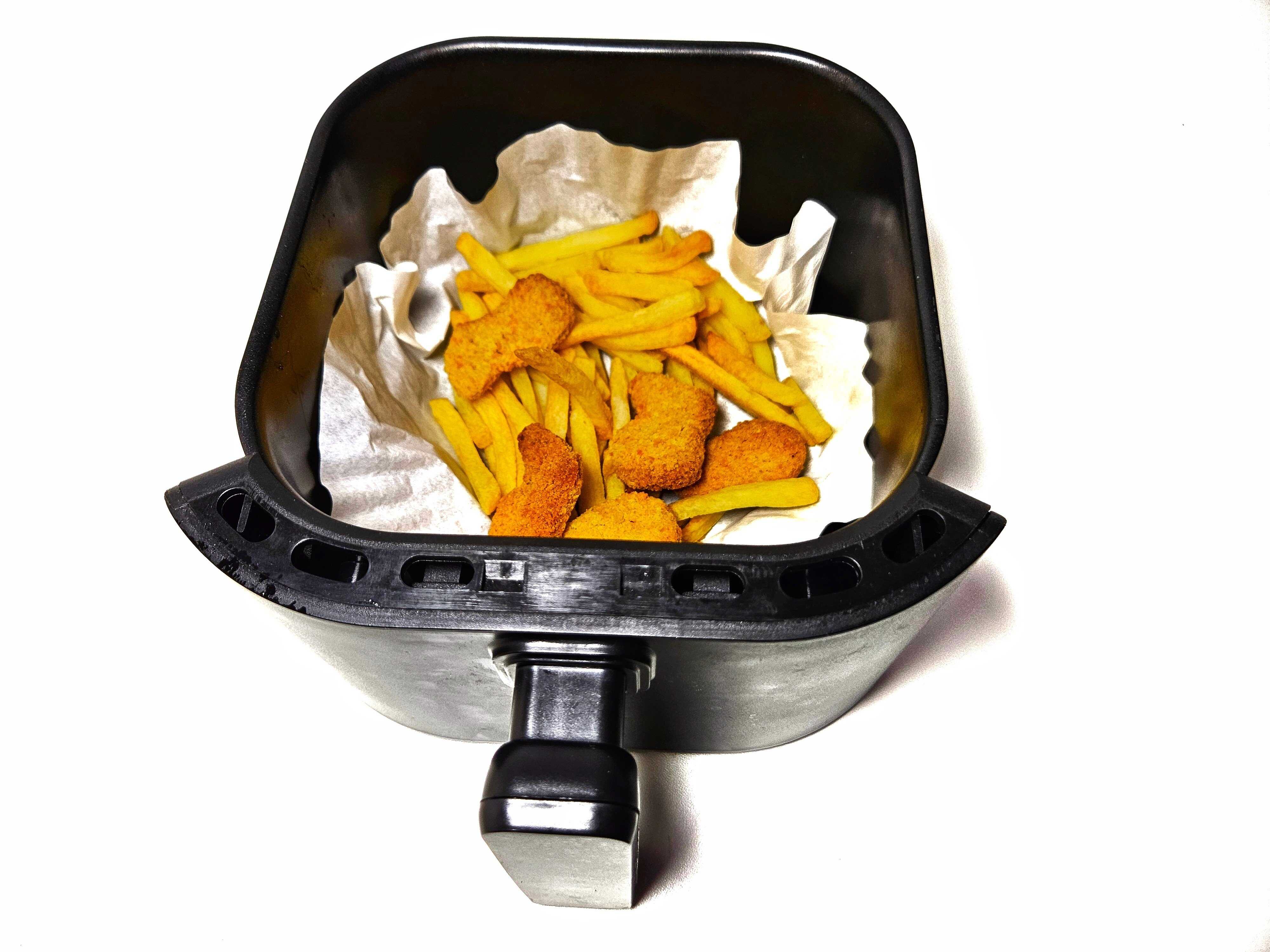
When we cook food, chemical reactions create flavours, textures and aromas that we love. Air frying and sous vide are cooking methods that have become popular. Here is how their chemical reactions create delicious food.
Two parts of frying
Instead of deep frying food in oil, air frying is a healthier way to get a crispy texture with less oil. Air fryers do this by circulating hot air around the food.
Frying always relies on two chemical processes: the Maillard reaction and caramelisation.
The Maillard reaction requires certain types of carbohydrates – called reducing sugars – and amino acids, which are the building blocks for protein. The process happens when reducing sugars and amino acids react under heat.
This creates many different molecules. Some of them are arranged in large ring structures that give the food a golden-brown colour. Other molecules in this process create the tastes and smells we enjoy.
In air frying, the high temperature causes the Maillard reaction. The fast circulation of hot air removes moisture from the food’s surface. The process gives food a tasty and crispy golden crust.
Caramelisation happens when sugars are heated and turned into a brown substance called caramel. In air frying, natural sugars found in vegetables and fruits caramelise, creating a delicious taste and brown colour.
Low and slow cooking
With sous vide cooking, food in a vacuum-sealed bag is placed in a water bath at temperatures ranging between 50 and 80 degrees Celsius. This method creates tender and flavourful meat. The secret lies in protein chemistry.
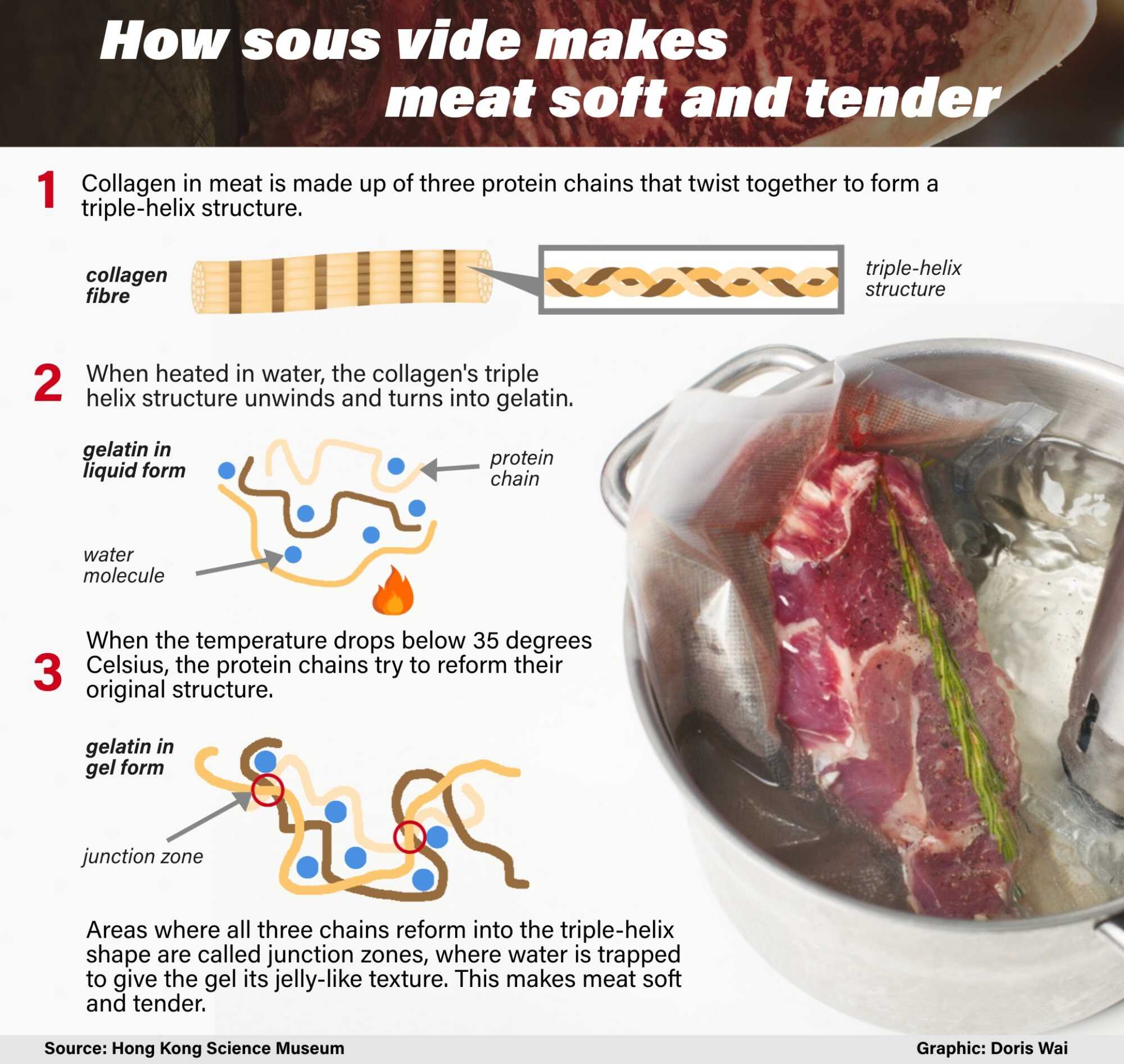
Collagen is a protein that gives structure to the connective tissues of bones and meat. When meat is cooked sous vide, it is held at a low temperature for a long time. This gentle cooking process slowly breaks down collagen into gelatin. The gelatin makes the meat more juicy and tender (see graphic).
Sous vide controls the protein’s breakdown. This controlled environment protects the meat’s natural flavours and moisture. In contrast, high-temperature cooking methods can cause protein to solidify and lose moisture.
Cooking is like a science experiment. The right combination of techniques and reactions is crucial to a tasty dish. So dive into the science of cooking and experiment with different ways to unlock a world of delicious food.