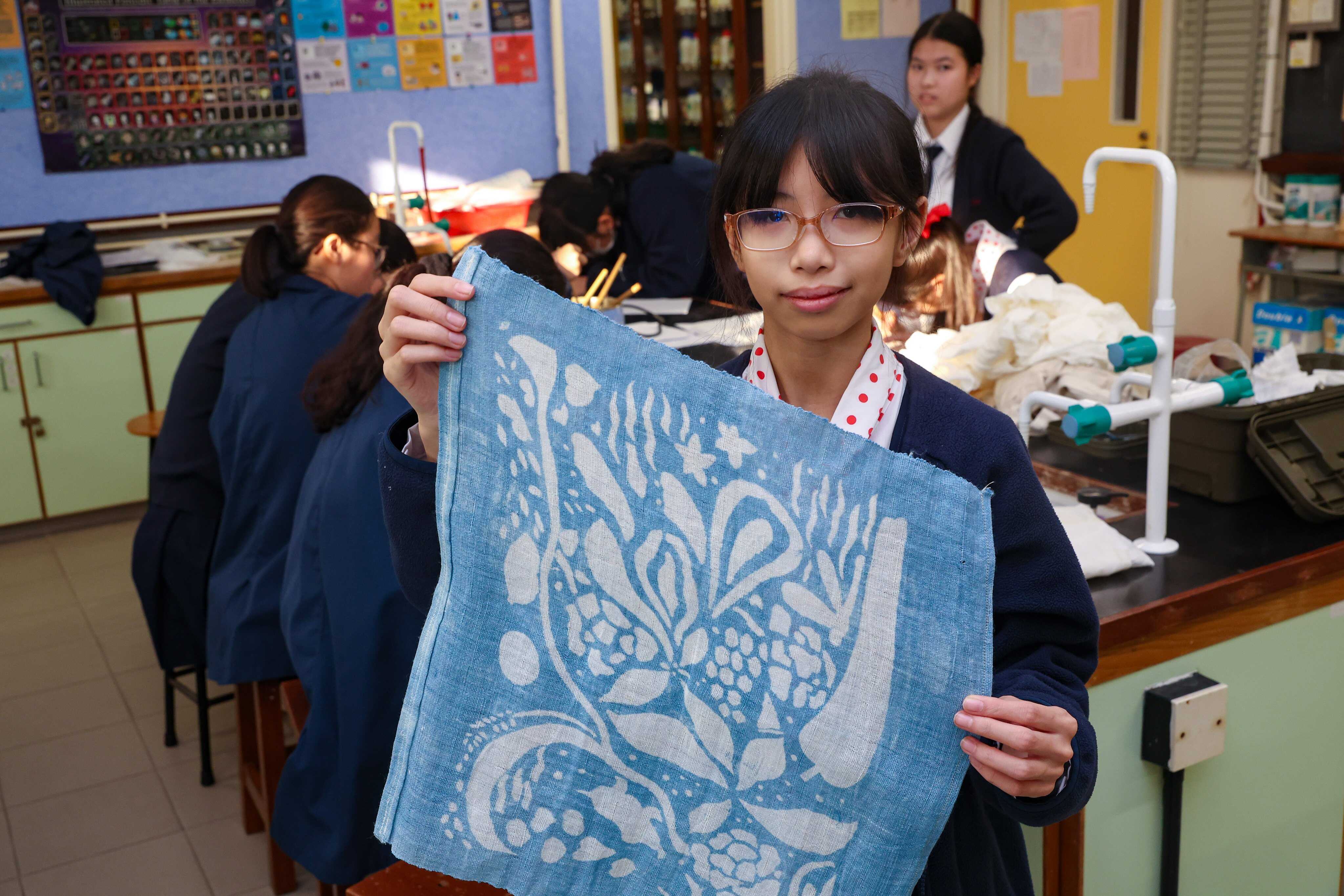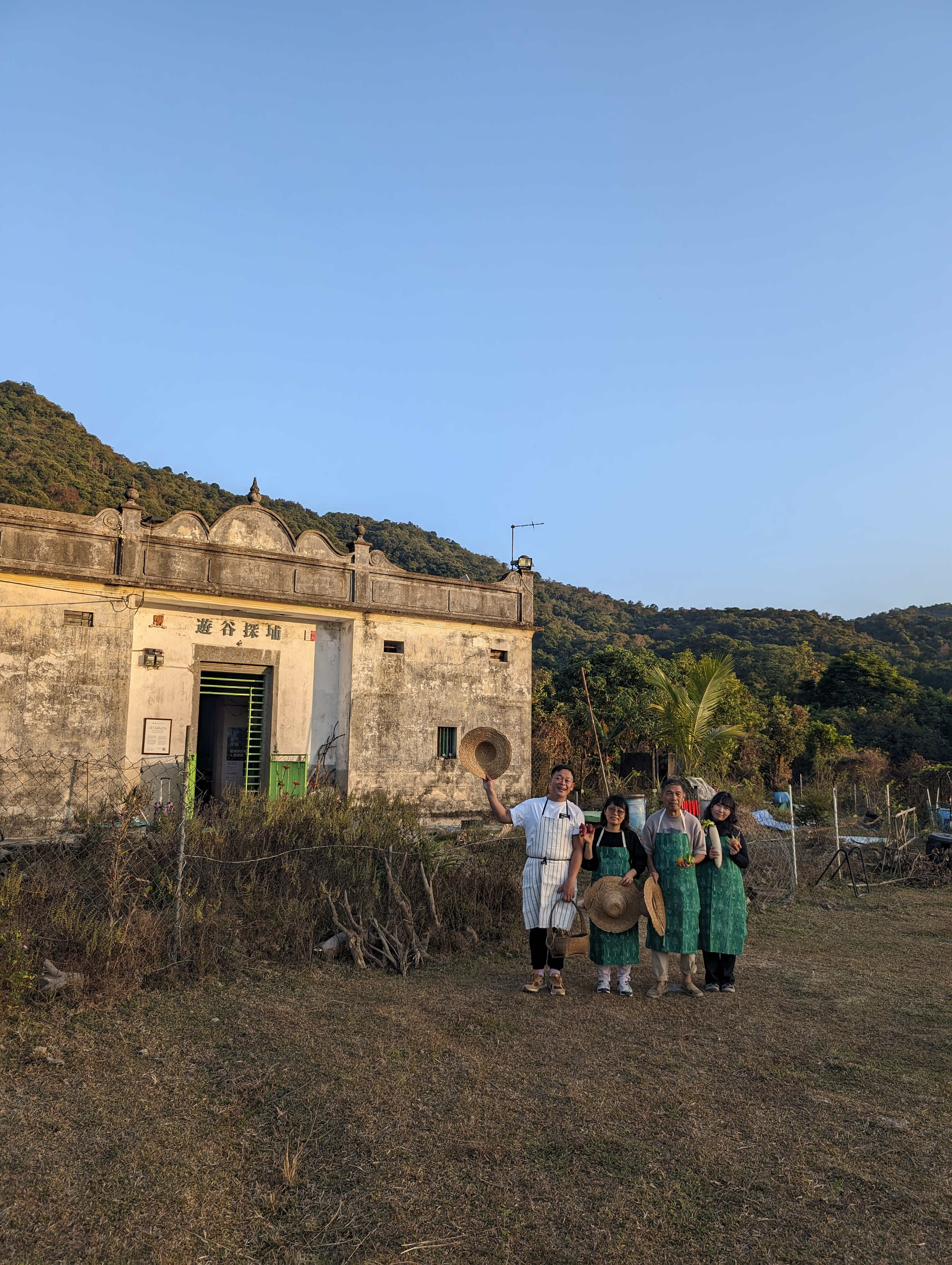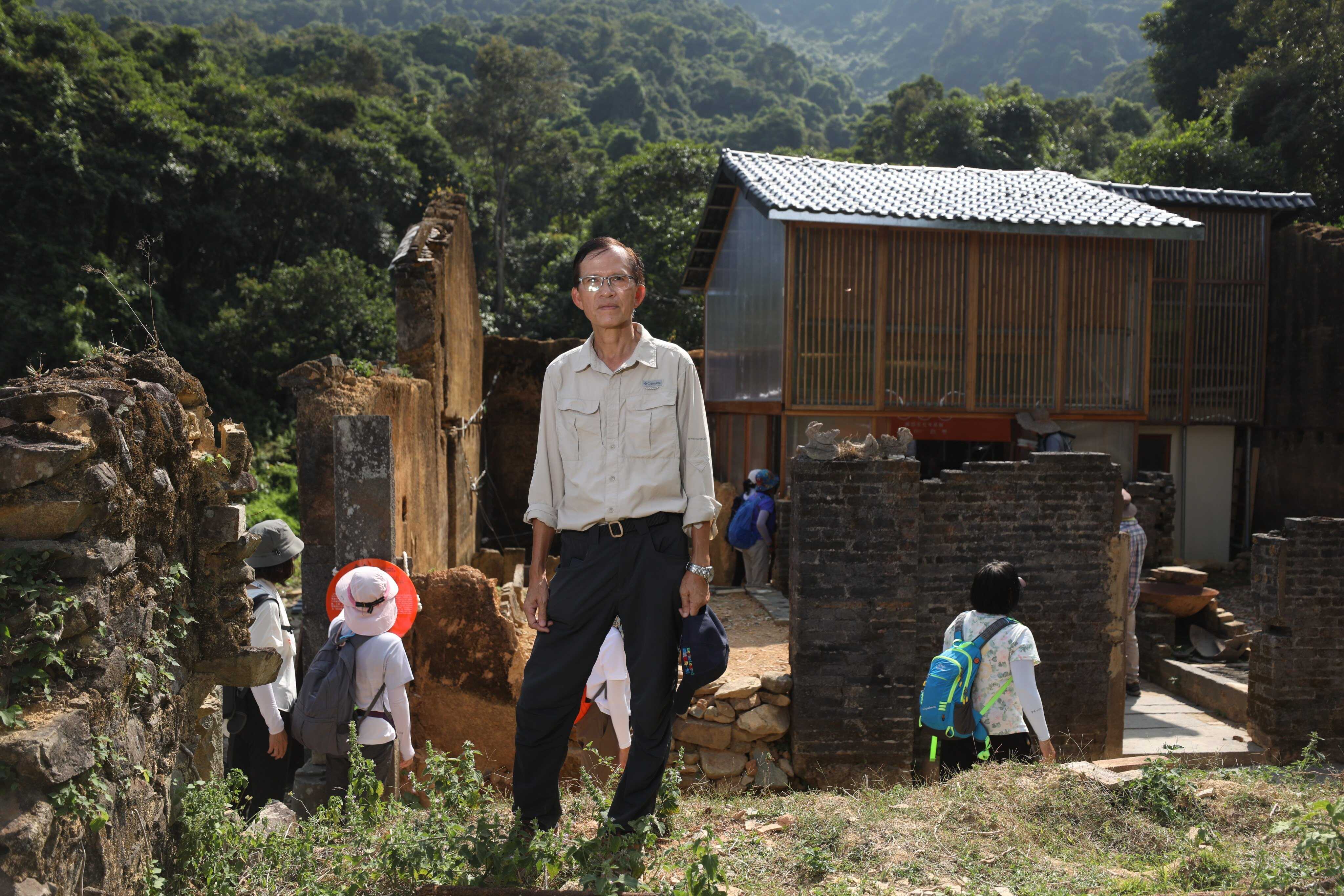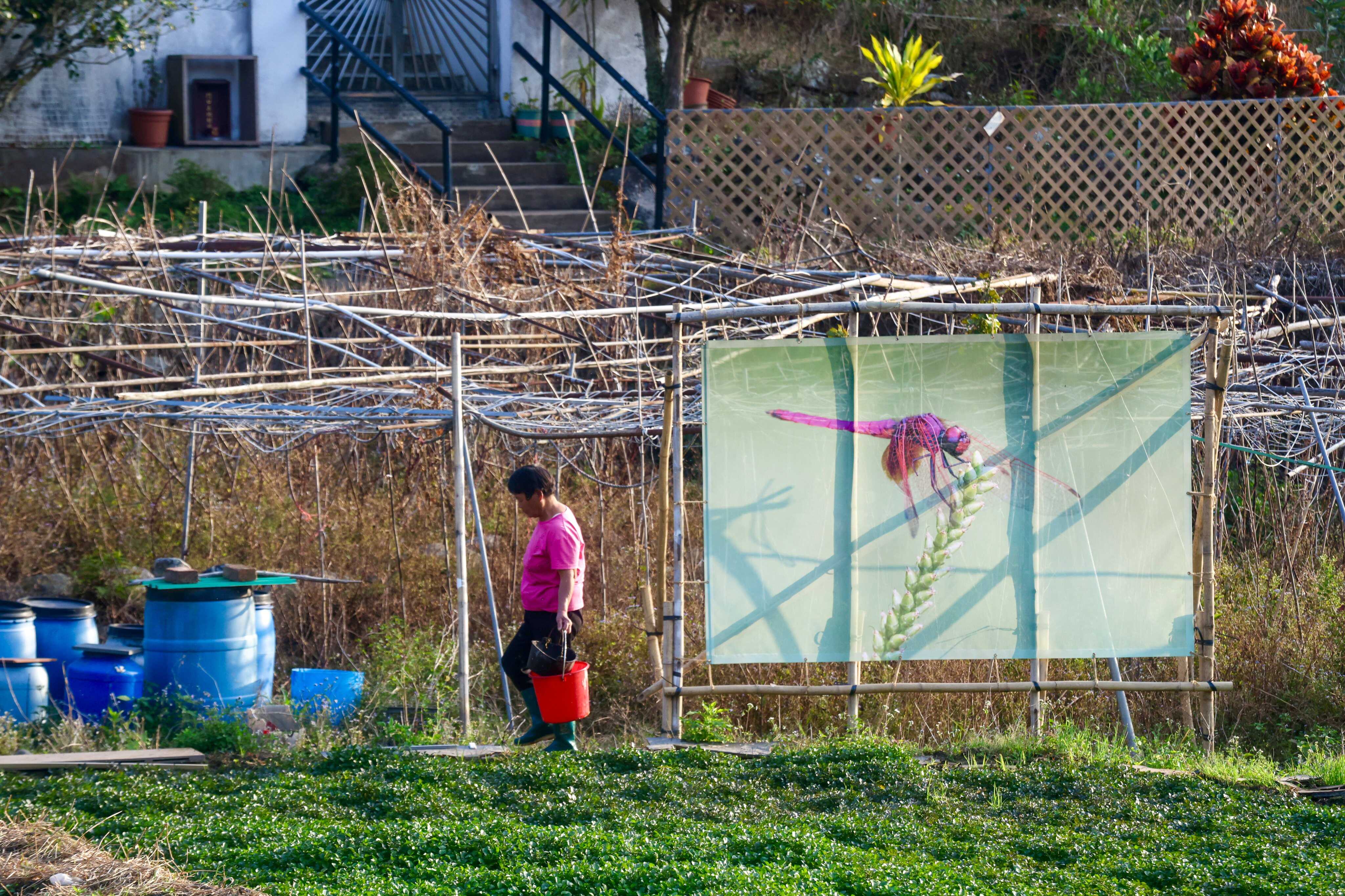
Lush watercress fields, flowing streams and rolling mountains surround Chuen Lung, a Hakka village in Hong Kong with hundreds of years of history. Close to the urban parts of Tsuen Wan district, yet distinctly rural, the village is creating a record of its changing way of life.
For the past few years, the Chuen Lung Visual Research Archive has brought together seven local artists to conduct research and document oral histories. Each artist selected a theme or story to explore, creating intimate portraits of village life.
“Even though it’s so close to the city ... you still get those countryside vibes with fields, ponds and traditional village structures,” said interdisciplinary artist Benjamin Hao Lap-yan.
What began as an art research lab has evolved into a collaborative community project with an exhibition titled “Flow with Big Mountain”, which runs until March 31. The works created by the artists begin at Koon Man Space and extend throughout the village, placing art within everyday rural rhythms.
The archive traces Chuen Lung’s transformation starting from the 1970s, when many residents balanced farming with jobs in factories, trading companies and electronics manufacturing.
“This village has always been part-time farming, part-time something else since the 70s,” Hao said.
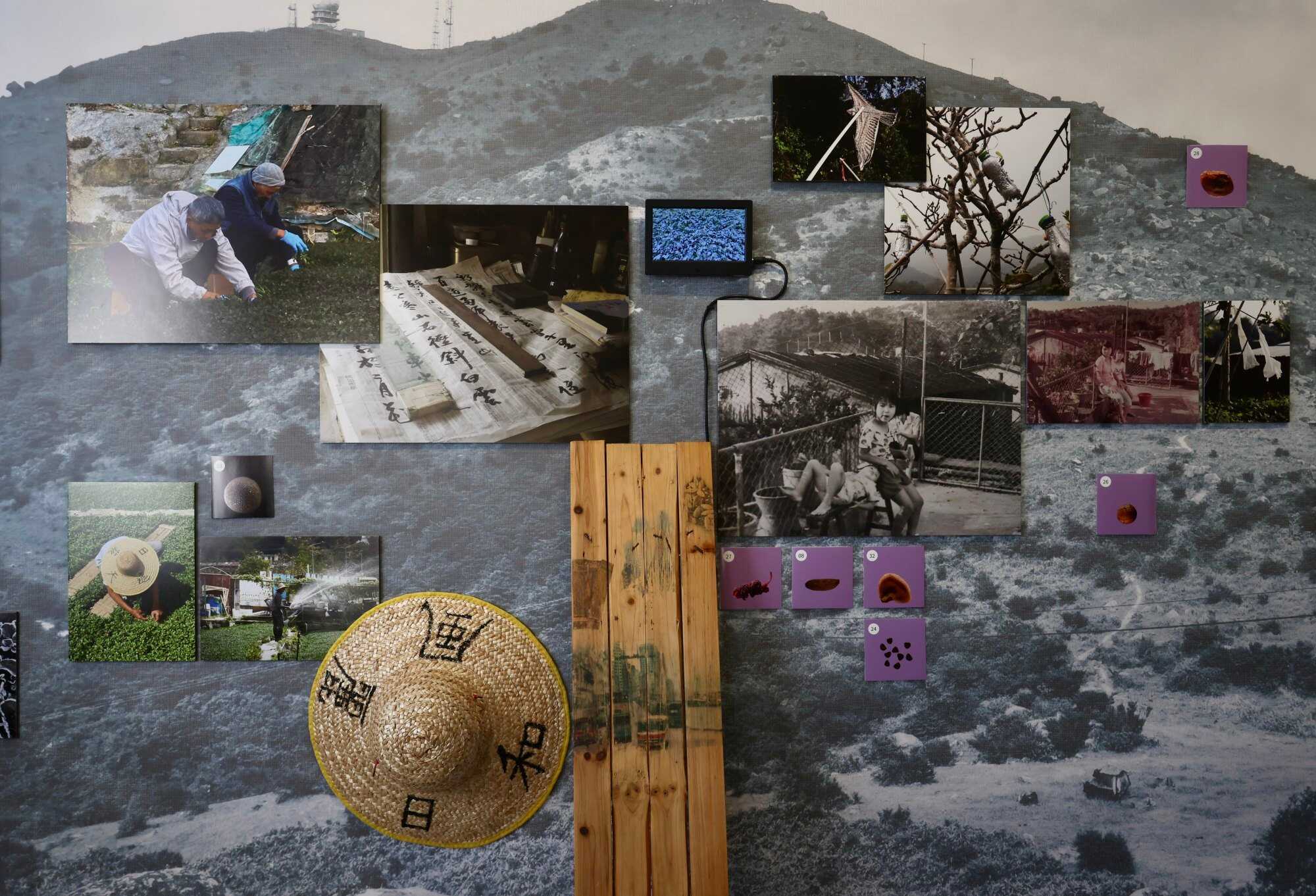
His final artwork integrates residents’ stories and images on wooden boards that resemble the stepping planks once used in farming.
Designed as a modular piece similar to a tangram puzzle, the work reflects the community’s adaptive spirit.
“I realised that their way of life shares one thing in common: it constantly adapts to what they need,”
Hao said. “They develop new skills and find their own ways to live. It’s like playing with a tangram: you mix and match the pieces to create new shapes and reinterpret the whole picture.”
The voices of the village
“Flow with Big Mountain” is shaped not only by the artists, but also by residents who have contributed their stories and memories.
One of these villagers, Chan, who preferred to share only her surname, has lived in Chuen Lung for more than 40 years.
“This school used to be abandoned ... Now, the government has allowed activities to be held here again.
It feels new – with modern technology – but you can still see the old things,” she said. “You can see the history from the school days and pass it on to the next generation.”
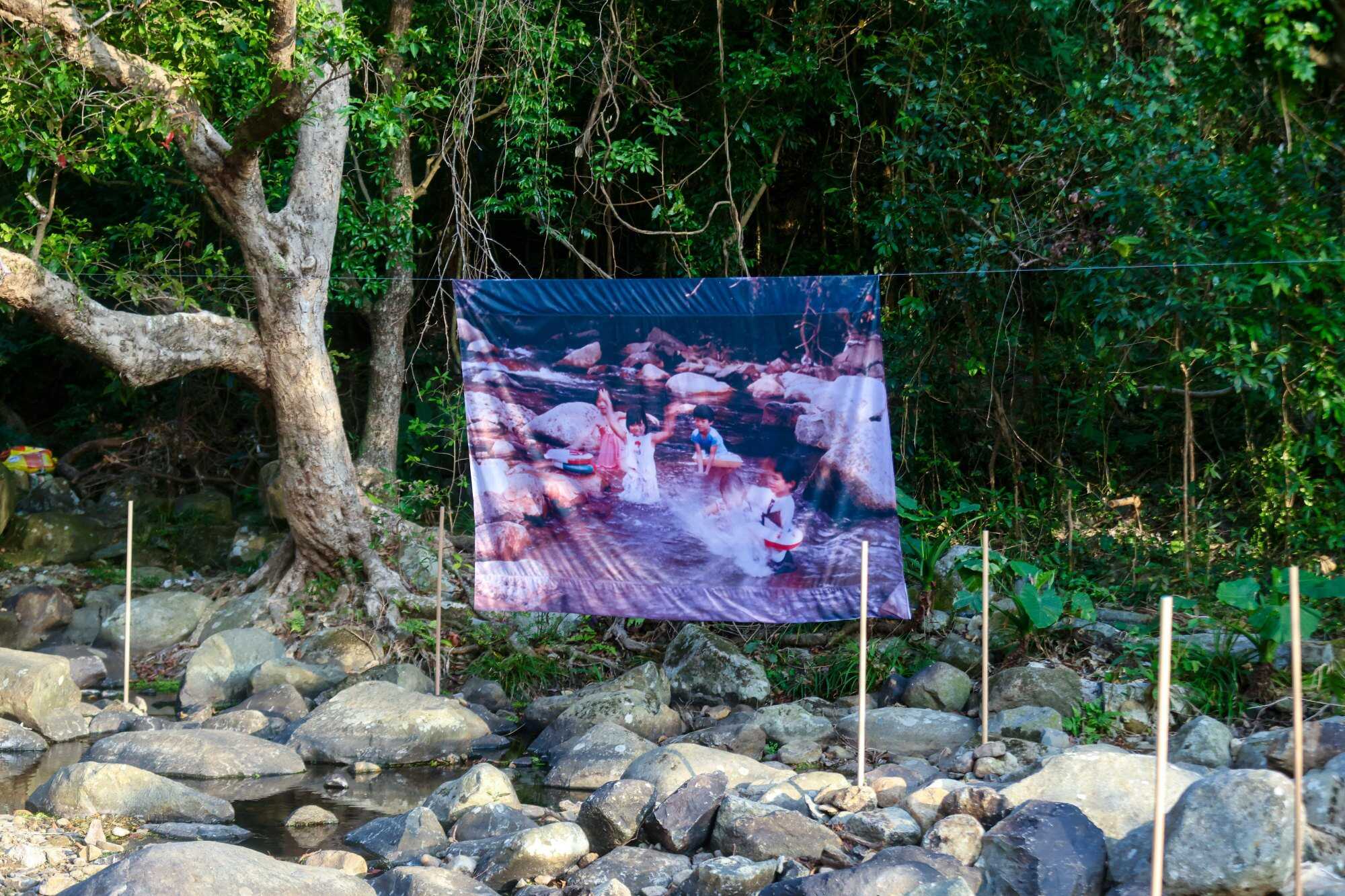
Her favourite place in the village is the stream known in Hakka as Ho Bui Lek.
“The mountain stream is the most beautiful. Everyone knows it. After you cross the bridge, you’ll see the watercress fields,” she said.
“My four children grew up playing in the stream. They’re married and have moved away now, but I still live here.”
Near the watercress fields, she added, is a rocky path where certain stones produce echoes when stepped on or tapped.
“Different stones make different sounds. It’s very special,” she said.
Another contributor to the archive is the late villager Tsang Kim-man, whose hand-drawn works bring a deeply personal voice to the project.
Curator Carol Chow described Tsang’s work as the soul of the archive.
“His memory was incredibly vivid. He could clearly recall things that happened when he was three years old, through his teenage years, his twenties and right up to recent times. His memories were very much alive. He also wrote his own books and enjoyed drawing,” Chow shared.
To better understand the spirit of this historic Hakka village, Chow lived in Chuen Lung for a year, during which she helped the team of artists connect with about 20 villagers, though she felt this was not enough.
“The idea was to gradually expand the network in a more dispersed way. But within just one year, you need time to slowly build relationships and trust,” she said.
“As a result, many of the people we interviewed were still from roughly the same group of about 20 villagers. The number of residents we were able to reach and collaborate with was, I think, still not enough.”
A living archive
A digital version of the archive will be launched by the end of March.
Chow noted that many archives are rarely used despite being publicly accessible. To encourage deeper exploration of Chuen Lung, the team is developing an interactive game that blends online and offline engagement.
“Players will search the archive for stories we’ve shared, but they will also need to physically walk into the village to explore and make their own discoveries. We welcome their input,” she explained.
“Chuen Lung is ... a living archive – a community that is still constantly evolving.”
Through art, memory and public participation, the Chuen Lung Visual Research Archive continues to grow, not as a fixed record of the past, but as an evolving story shaped by the community.
“We hope to encourage more people to become not perfect creators, but active co-creators – participants who continue shaping this living archive,” Chow said.