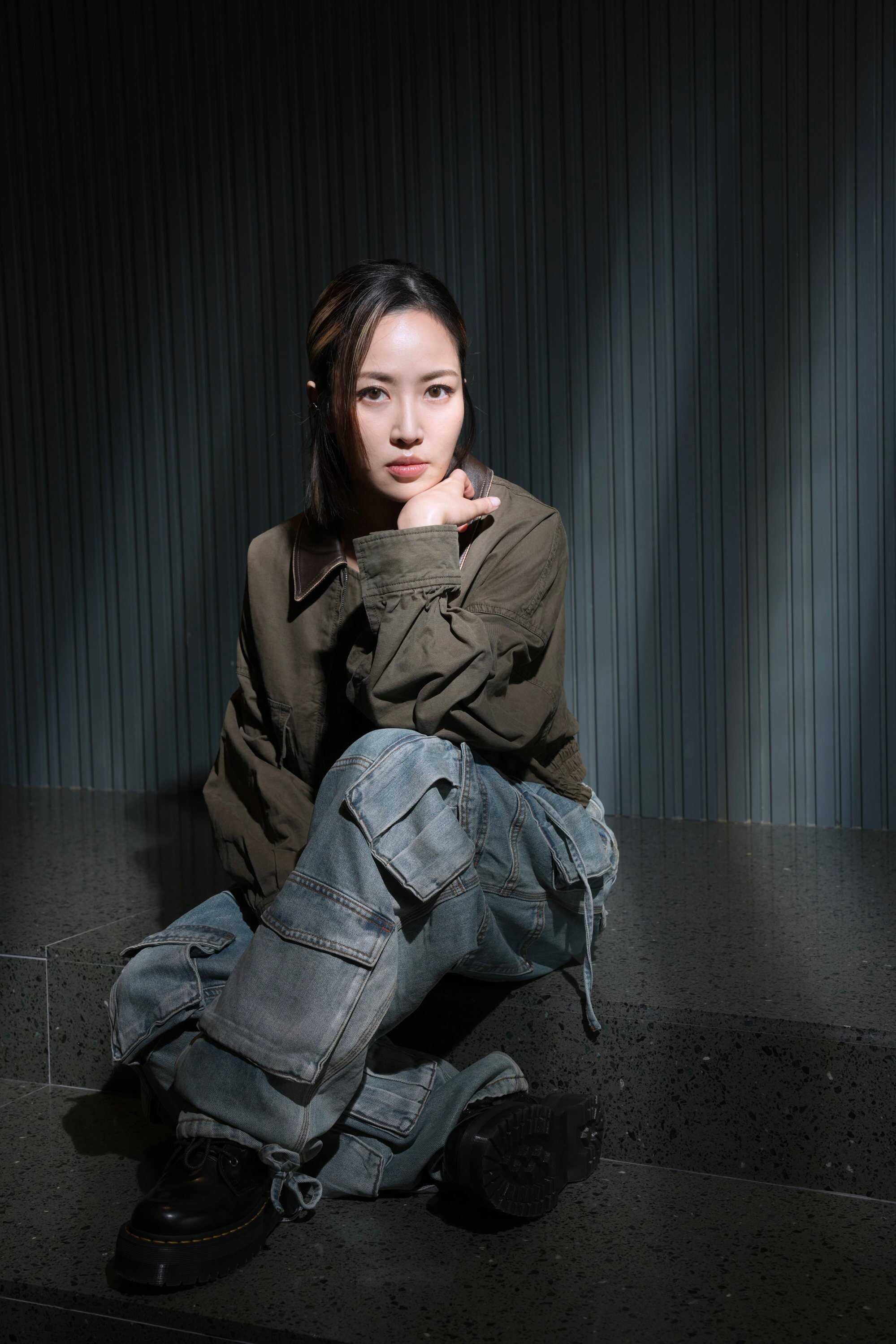
If her life were a film, singer-songwriter Kiri Tse Hiu-ying says it would be a stand-up comedy set – with a touch of dark humour. In many ways, Tse, who is known by her stage name Kiri T, sees herself as a bit of a comedian within Hong Kong’s music scene.
“I love how comedians like Jenny Tian or Jimmy O. Yang turn embarrassing stories, even trauma, into something really funny,” she said.
Self-made, experimental and delightfully offbeat, Tse is among a wave of musical artists ushering in a new era of Cantopop. Her songs often tackle heavier topics with a touch of humour, poking fun and leaning into the drama.
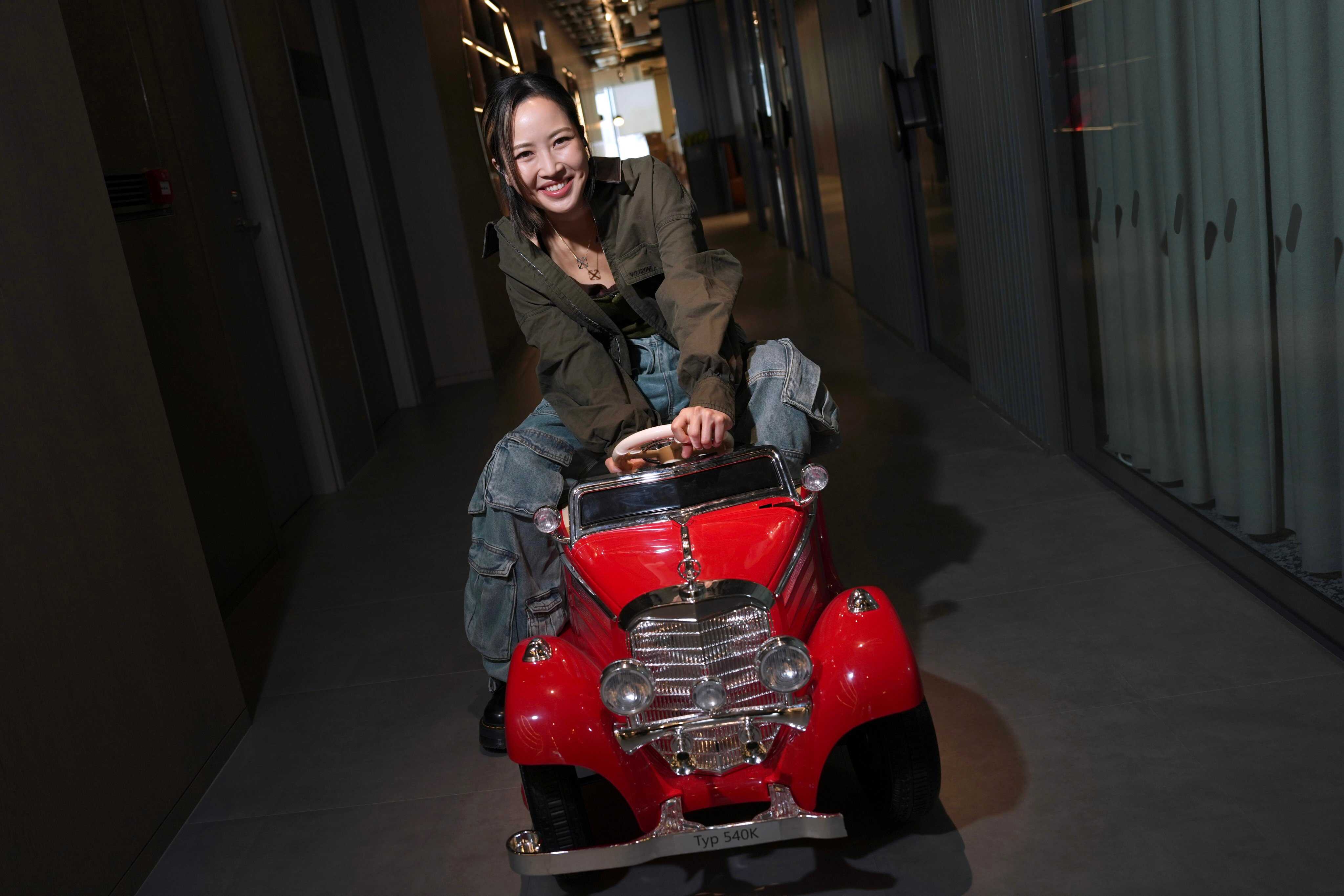
Her music videos match that playful mood, with one featuring her in a spacesuit helmet as she plays a battered piano on a truck and another showing her riding a bright red toy Mercedes-Benz through Causeway Bay.
In her pop-rock ballad “中暑傷風加失戀x2 (Arctic Summer)”, Tse compares breaking up to catching a chill in a Hong Kong summer, contrasting sweltering heat with cold feelings of loss. Painful moments are transformed into tongue-in-cheek lyricism, with comedic punchlines and an exaggerated portrayal of a heartbreak’s “symptoms”.
Oddly enough, these songs are relatable to many people in Hong Kong.
“I like talking about dark stuff with a smile. It’s one of my quirks,” Tse said. “Sometimes when I’m sad, I laugh. Even when I hear bad news, I might smile just to cope. So when I write about break-ups or failure, I try to laugh it off.”
Left on ‘Read’
Kiri Tse’s latest single “藍剔未必是壞習慣 (Read)” tackles a modern relationship dilemma that many may resonate with: messaging someone you are secretly crushing on – only for them to leave you on read.
“But my spin on it is that I actually kind of appreciate the space of not having to jump into a relationship,” she said. “It’s not just about romance. It’s about embracing the unknown because not everything needs closure.”
Instead of focusing on speedy replies and quick flings, the singer wanted the song to capture a slow burn, feelings that take time to unfold and develop. In a way, Tse said she was nostalgic for an older way of life when love was not instant.
“I feel like nowadays people don’t talk much about quietly admiring someone over time. It’s usually, ‘I like you, let’s date,’ or nothing at all. But I kind of miss that in-between stage from the past,” she said.
“I was so shy that I’d go an entire year liking someone without ever speaking to them,” the singer recalled with a grin. “I’d just … observe from afar. So this song is about bringing back that slow, awkward magic of admiring someone in silence.”

Surprising hits
Her Cantonese songs have gained steady traction, but Tse admitted she is still surprised by her fans’ support: “I’m still wrapping my head around the fact that people actually want to hear more of my music.”
Tse said she hoped listeners would also revisit her earlier English-language music, including “10,000ft.” and “Fairytale”. The latter, Tse said, is the song she holds closest to her heart. “Fairytale” speaks on her innermost thoughts – wanting to accept herself as she is and wishing the same for the people she loves.
“I’m trying to promote my old songs more,” she said. “It’s important for people to know that side of me, too.”
Sharing secrets
The music video for her breakout pop track “至少做一件離譜的事 (You Gotta Screw Up At Least Once)” has racked up more than 9.6 million views on YouTube since its release last year. The song resonated with young Hongkongers navigating the chaos of growing up.
Listeners are encouraged to embrace mistakes as a part of life, being told that failing is better than never trying at all. Fans have called the song therapeutic and inspiring, speaking to the feeling of being lost as a young person and giving them the courage to take risks and pursue what they never thought they could.
Music has become a space to share the things Tse has struggled to say aloud: “I feel like my fans and I share secrets through music.”
Tse said she hoped her fans would enjoy her music as much as she enjoyed making it.
“If you happen to like my songs, I hope you really listen to the lyrics because if you do, then you’re basically [learning] my secrets,” she added.
Hong Kong’s Cantopop scene
If she had not become a singer-songwriter, Tse said she imagined she might have taken a very different path.
“Maybe a social worker. If I were good at studying, maybe I’d be a psychologist,” she said, laughing. “Or a music therapist.”
Like many Cantonese-speaking singers today, Tse spoke lovingly of the golden years of Cantopop. Female artists in particular, she said, wore unconventional fashion and made boundary-pushing music. Tse pointed to the legendary Anita Mui, feminine yet androgynous, and the trailblazing Faye Wong as stand-out singers who filled this era with vitality.
While the genre had seen something of a decline since the 1990s, Tse said she felt the Cantopop scene today is blooming with new artists and diverse styles.
“I see a lot of people stepping outside the Cantopop formula but still getting so much love and attention,” she said. “It’s cool to see the public being so receptive to new stuff.”
She highlighted singers Marf, from girl group Collar, and Jace Chan as examples of the current experimental turn.
“I think this era is pretty cool,” she explained. “I feel like anything is possible now.”