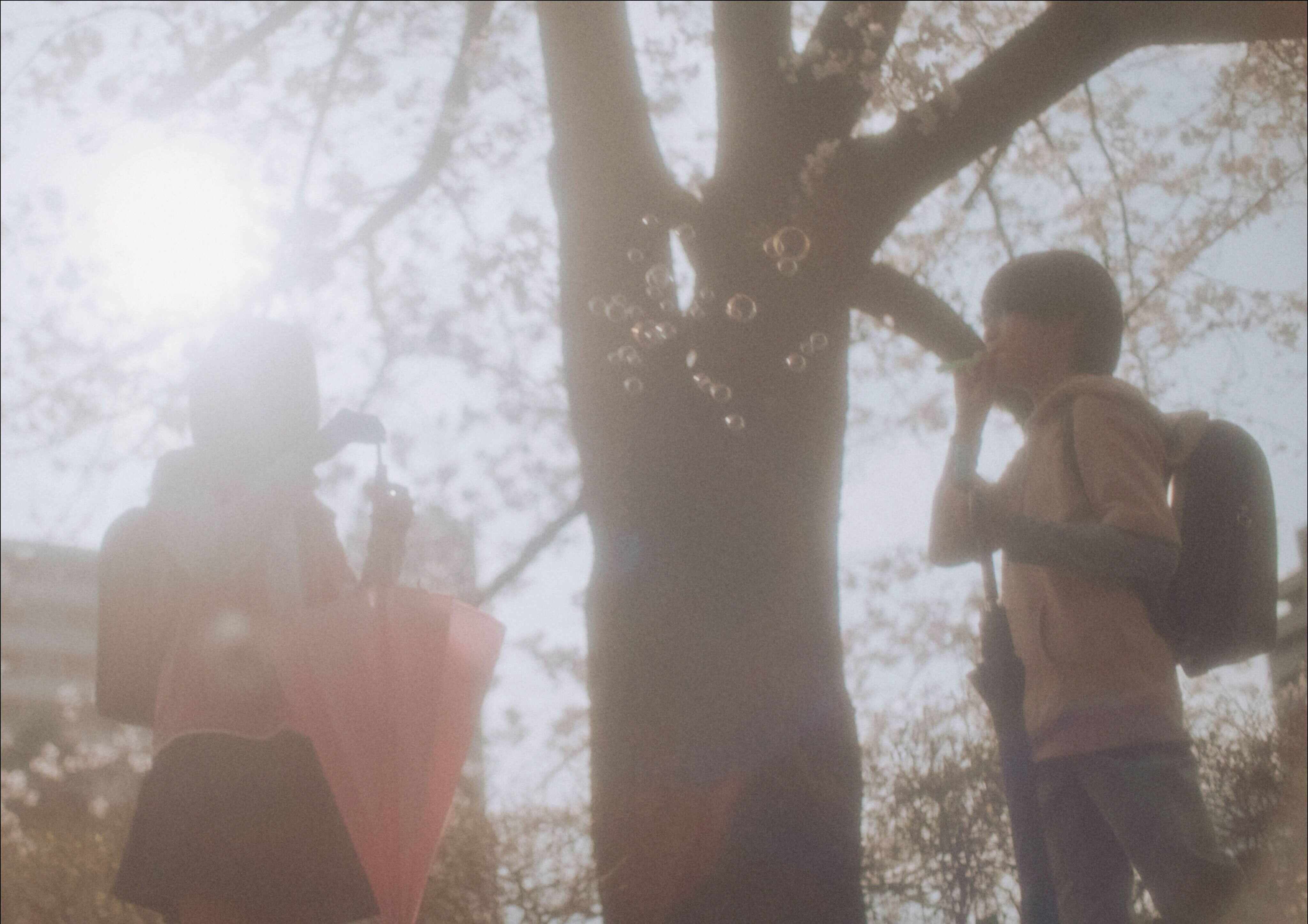
Cherry blossom petals fall at a speed of 5cm per second – a delicate metaphor for the quiet, almost inevitable way human hearts drift apart over time.
This melancholy defines Japanese filmmaker Makoto Shinkai’s 2007 anime classic, 5 Centimetres per Second. Nearly two decades later, the story returns in live‑action form, arriving in Hong Kong cinemas yesterday as a dreamy reminiscence on the fragile timing of love.
Directed by rising filmmaker Yoshiyuki Okuyama, the adaptation seamlessly weaves the three-part narrative into a single coming‑of‑age feature.
Faithful to the original’s emotional depth, it captures the ache of knowing that some people remain frozen in our hearts while others – no matter how desperately we try otherwise – drift further away.
The live-action film traces the life of Takaki Tono, beginning from his tender childhood bond with transfer student Akari Shinohara over their love of nature and astronomy. Their connection is tested when Akari’s family relocates, leaving their relationship suspended across time and distance. They continue to exchange letters and make promises to reunite but eventually lose touch.
The latter part of the story follows Takaki into his late twenties as he drifts through an unfulfilling life in Tokyo.
Throughout Takaki and Akari’s journeys, their shared memories surface with aching clarity, alongside the uncertainty of whether they will reunite – and finally voice what has long been unspoken.
One limitation of the original anime was its restrained character development, a result of its 63-minute runtime.
The live‑action adaptation addresses this by expanding the story into a 121‑minute feature, creating space for deeper character exploration – particularly for Akari, whose family life and personal relationships were largely absent from the original.
Audiences see glimpses into Akari’s relationships with her colleagues through a series of quietly meaningful conversations. These moments reinforce the film’s central idea that memories are not merely remnants of the past, but living parts of who we are.
Hokuto Matsumura, a member of idol group SixTONES, stars as Takaki, while acclaimed actress Mitsuki Takahata portrays Akari.
In a press release, Makoto Shinkai, the director of the original animation, noted that he was “deeply moved” by the live-action remake.
“At the beginning of the film, I felt somewhat uncomfortable. Like I had handed off a baton that was incomplete and premature to the young creators,” he said.
“But halfway through, I was swept up by the visuals, and by the end, to my surprise, I found myself crying. I couldn’t tell if I was crying over the elements from the original story, or if the Okuyama crew had made me cry, or if I was crying for a lost era – the 2000s.”
He added that 5 Centimetres Per Second was a strange story because it had “no grand dramaturgy, no thrilling action sequences, no heroes or villains”.
“People get hurt for no reason, and they’re always left wanting,” he said. “But 20 years ago, that ‘nothingness’ was a reflection of ourselves [and] our lives, and I wanted to make an animated film that expressed that.”
While the film shows the speed of modern technology through rocket launches and high-speed trains, Takaki’s emotional life is stalled, particularly in his romantic relationships after he loses contact with Akari.
Ultimately, the film reflects on the helpless nature of human relationships and the quiet sorrow of paths that fail to realign.
Enhancing this atmosphere is a moving soundtrack by Ayatake Ezaki, featuring the theme song “1991” by Kenshi Yonezu. The film closes with Masayoshi Yamazaki’s “One More Time, One More Chance”, a poignant nod to the original anime’s legacy.
First released in 2007 as Shinkai’s second film, 5 Centimetres per Second has long been regarded as a defining exploration of human relationships and emotions over a distance.
In its live‑action form, the story feels no less intimate – a reminder that even as time moves forward, some separations and heartbreaks remain unchanged.